Transformer factory testing process: from raw materials to delivery
In actual projects, many problems can already be identified during the factory FAT (Factory Acceptance Test) stage. Once abnormal test data appears, immediate corrective action can usually be taken without affecting the delivery schedule.
In a previous Middle East power project we participated in, a problem was discovered only after the equipment arrived at the site. The cost of handling it was more than an order of magnitude higher than detecting it in the factory — on-site retesting required work stoppage, returning the equipment required waiting for shipping schedules, and involving third-party inspection agencies made the process even more complicated.
Therefore, at Zisheng Electric, our approach is to move quality control checkpoints forward. Any issue that can be identified and solved in the factory should never be allowed to leave the production line. This approach saves far more time and effort than dealing with problems after delivery.
Below, we will break down the transformer inspection process from raw materials to final delivery, covering core, winding, insulation, assembly, testing, and FAT — explaining what is inspected at each stage and why these inspections are necessary.
1. Why Should Transformer Factory Testing Be Strictly Controlled?
A transformer is a highly integrated system involving electromagnetic design, material control, mechanical manufacturing, insulation treatment, and performance testing. Any deviation in one stage may lead to operational problems over the transformer’s service life.
Common issues include:
Unqualified core materials → increased no-load losses, resulting in unnecessary energy costs;
Poor winding manufacturing accuracy → uneven heating when the transformer operates under load;
Insufficient insulation treatment → reduced service life, potentially causing failures after only a few years of operation;
Poor sealing performance → transformer oil leakage and significantly increased maintenance costs.
Therefore, transformer quality is not something that can be “tested into” the product through final inspection. It is created throughout the entire manufacturing process.
According to the IEC 60076 series of standards, power transformers must undergo routine tests, type tests, and special tests. The purpose is to verify whether the transformer’s electrical performance, insulation level, and long-term operational reliability meet the required standards.
Overview of Main Transformer Factory Inspection Items
| Inspection Stage | Main Inspection Items | Inspection Purpose |
|---|---|---|
| Raw Material Inspection | Core materials, copper conductors, insulation materials, transformer oil | Ensure basic materials meet design requirements |
| Manufacturing Process Inspection | Core processing, winding production, active part assembly, insulation treatment | Control manufacturing quality and process consistency |
| Electrical Performance Testing | Winding resistance, transformer ratio, no-load loss, load loss | Verify operational parameters |
| Insulation Performance Testing | Insulation resistance, power frequency withstand test, induced voltage test | Verify insulation system reliability |
| FAT Factory Acceptance Test | Document review, witnessed testing, visual inspection | Confirm equipment meets project requirements |
2. Raw Material Inspection — Preventing Material Problems from Entering the Manufacturing Process

To build a reliable transformer, simply being “careful during assembly” is not enough. If the quality of raw materials cannot be controlled, even the most precise manufacturing process will not deliver a reliable product.
At Zisheng Electric, every batch of key materials undergoes incoming inspection, including core materials, conductor materials, insulation materials, and transformer oil.
2.1 Core Material Inspection
The core is the heart of the magnetic circuit, and its performance directly determines transformer efficiency.
We inspect the following items:
- Silicon steel sheet grade;
- Thickness;
- Specific core loss;
- Magnetic performance parameters.
High-quality core materials can reduce no-load losses, lowering heat generation and operating noise.
During actual production, we verify the material certificates (MTC) provided with each procurement batch and combine them with our own loss test data to prevent performance variations between different batches from affecting the final transformer performance.
In high-temperature regions such as the Middle East, core loss control becomes even more critical. A slightly higher loss means more heat generation, which increases the cooling burden during operation.
2.2 Winding Conductor Material Inspection
The winding is responsible for electrical energy conversion.
For conductor materials, we inspect:
- Specifications;
- Electrical resistivity;
- Dimensional tolerances;
- Insulation layer quality.
Poor material consistency can lead to uneven winding resistance, causing significant three-phase current imbalance. During site commissioning, such issues are often detected immediately and may result in project delays.
2.3 Insulation Material Inspection
The insulation system determines how safely and reliably a transformer can operate over its service life.
We test:
- Insulation paper performance;
- Thermal class;
- Transformer oil breakdown voltage;
- Moisture content.
In regions with high ambient temperatures, such as parts of the Middle East, insulation materials must have excellent thermal stability. Therefore, insulation selection and design requirements must be carefully controlled from the beginning.
3. Manufacturing Process Quality Control
Only materials that pass inspection are released into production.
The manufacturing process includes:
- Core processing;
- Winding production;
- Active part assembly;
- Drying treatment;
- Final assembly;
- Testing.
Each stage has clearly defined quality control checkpoints.
3.1 Core Manufacturing and Assembly
Core manufacturing focuses on controlling:
- Cutting accuracy;
- Lamination quality;
- Joint structure;
- Assembly dimensions.
If cutting accuracy is insufficient, laminations are misaligned, or joint gaps are too large, magnetic flux losses will increase.
A one-millimeter deviation on the drawing may seem insignificant, but in actual transformer performance, it can lead to noticeable changes in losses.
3.2 Winding Manufacturing and Assembly

The winding process is one of the most critical manufacturing stages.
Key controls include:
- Winding dimensions;
- Turn-to-turn insulation;
- Layer insulation;
- Clamping structure.
For large industrial projects and renewable energy projects, transformers are expected to operate continuously for long periods. The mechanical strength of the winding and the reliability of the insulation system directly determine how long the equipment can operate safely and stably.
3.3 Vacuum Drying and Insulation Treatment

In oil-immersed transformers, insulation treatment directly affects the service life of the equipment.
The process starts with vacuum drying to remove moisture from the active part, followed by vacuum oil filling and oil treatment to ensure that the insulation system meets the required standards.
Poor moisture control can reduce insulation strength and may even cause failure during the withstand voltage test.
4. Factory Testing Process

After manufacturing is completed, the transformer enters the factory inspection stage.
This is the key process for verifying whether the transformer performance meets the requirements and serves as the final quality checkpoint before shipment.
According to IEC 60076, transformers must undergo routine tests as standard. Depending on project requirements, additional type tests or special tests may also be required.
4.1 Appearance and Structural Inspection
The inspection covers:
- Overall dimensions;
- Nameplate parameters;
- High-voltage and low-voltage terminal markings;
- Tank structure;
- Anti-corrosion coating;
- Accessory installation.
For Middle East projects, additional confirmation is required to ensure that the protection design can withstand harsh outdoor environmental conditions.
4.2 Winding Resistance Test
This test verifies winding manufacturing quality and connection reliability.
The key checks include:
- Whether the resistance value meets the design requirements;
- Whether three-phase resistance is balanced;
- Whether electrical connections are reliable.
If the three-phase resistance imbalance exceeds the allowable limit, it indicates potential issues with the winding or lead connections.
4.3 Transformer Ratio Test
This test confirms the voltage conversion relationship between the high-voltage and low-voltage sides.
The test verifies:
- Transformer ratio;
- Tap changer position;
- Three-phase connection configuration.
Excessive ratio deviation may create difficulties during site commissioning and grid connection.
4.4 No-Load Loss Test
The transformer is tested under no-load conditions to measure:
- No-load loss;
- No-load current.
These values reflect the quality of core manufacturing and magnetic circuit design.
For equipment operating over many years, even a small reduction in no-load loss can generate significant energy savings throughout the transformer’s lifecycle.
4.5 Load Loss and Impedance Test
Under rated load conditions, the transformer is tested for:
- Load loss;
- Short-circuit impedance;
- Three-phase consistency.
These parameters directly affect whether the transformer can properly match the power system requirements.
Insulation Performance Tests
The insulation tests include:
- Insulation resistance test;
- Power frequency withstand voltage test;
- Induced voltage withstand test.
These tests simulate operating voltage conditions to verify whether the insulation system can withstand electrical stress.
If the transformer fails the withstand voltage test, the insulation structure, assembly process, or manufacturing procedures must be investigated. After corrective actions are completed, the test must be repeated.
5. FAT (Factory Acceptance Test) — A Critical Requirement for Middle East EPC Projects
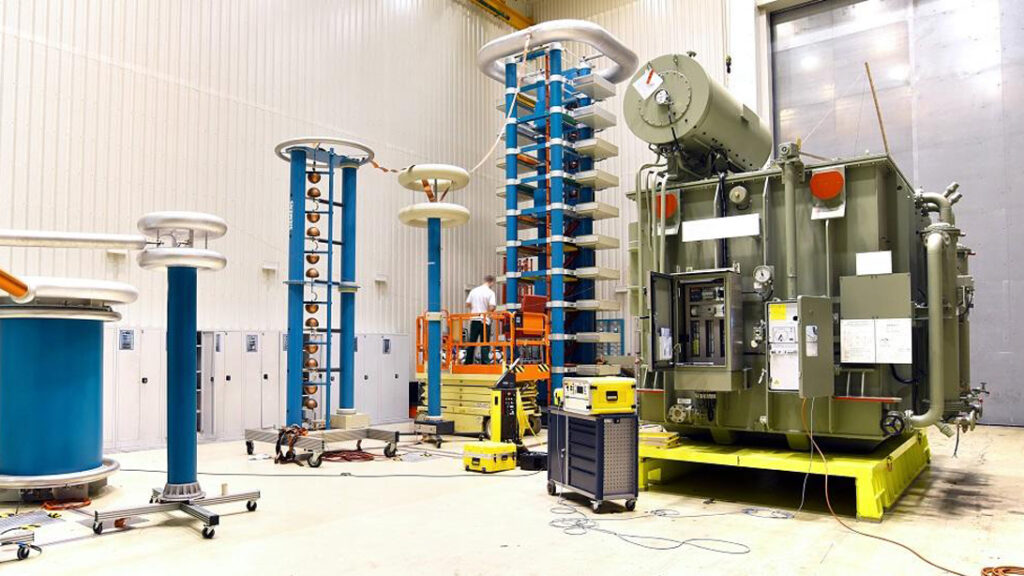
Large-scale energy, grid, and industrial projects usually require owners and EPC contractors to conduct FAT (Factory Acceptance Test).
FAT means that before shipment, the product performance, manufacturing quality, and technical documentation are comprehensively reviewed and verified.
The main FAT inspection items include:
- Technical document review;
- Product parameter verification;
- Witnessing of factory tests;
- Test report review;
- Visual quality inspection;
- Accessory configuration verification.
For renewable energy, grid, and industrial projects in the Middle East, FAT allows project teams to understand equipment status in advance and reduce risks during on-site installation and commissioning.
At the same time, FAT is also an important benchmark for owners to evaluate a supplier’s manufacturing capability and quality management level. A single factory visit can reveal the supplier’s real technical foundation and production capability.
6. Special Requirements for the Middle East Region
Different climates require different inspection and design considerations. Middle East projects have their own specific requirements.
Environmental Adaptability Requirements for Transformers in the Middle East
| Environmental Factor | Impact on Transformer | Key Design Considerations |
|---|---|---|
| High Temperature Environment | Increases thermal stress and affects insulation life | Heat dissipation, temperature rise control, high-temperature insulation materials |
| Sand and Dust Environment | Affects protection performance and cooling efficiency | Enclosure protection rating, sealing structure |
| Salt Mist Environment | Accelerates metal corrosion | Anti-corrosion coating, surface treatment |
| Long-Term Continuous Operation | Accelerates aging | Material selection, manufacturing process, reliability design |
6.1 High Temperature Environment
In the Middle East, summer temperatures of 50°C are common.
Transformer design and manufacturing must focus on:
- Heat dissipation capability;
- Temperature rise control;
- Cooling configuration;
- Insulation thermal class.
If high-temperature conditions are not considered during the design stage, excessive temperature rise may occur after installation. The only solutions may be derating the transformer or adding external cooling systems — both are reactive measures and not ideal solutions.
6.2 Corrosion Protection Performance
Coastal areas experience salt mist conditions, requiring higher corrosion resistance for outdoor equipment.
The following aspects must be properly controlled:
- Tank corrosion protection;
- Coating thickness;
- Surface treatment;
- Sealing structure.
If the coating thickness is insufficient, corrosion may appear after only a few years. By then, corrective action will already be costly and inconvenient.
6.3 Sand and Dust Environment
Desert environments often experience strong winds and sandstorms, where dust can easily accumulate and block cooling equipment.
Transformers require:
- Reliable enclosure protection;
- Effective sealing performance;
- Proper cooling structure;
- Adequate insulation clearance.
Dust accumulation on radiators is a common issue in Middle Eastern projects, so preventive design must be considered from the beginning.
7. Typical Product Technical Parameters
Zisheng Electric designs, manufactures, and tests transformers according to IEC 60076 standards. Products comply with IEEE and IEC requirements and have obtained certifications such as CQC, UL, CE, and DNV-GL.
Typical transformer parameters commonly used in Middle East projects are shown below:
| Parameter | Oil-Immersed Transformer | Dry-Type Transformer | Test Standard |
|---|---|---|---|
| Voltage Level | 10kV – 35kV | 10kV – 35kV | IEC 60076 |
| Capacity Range | 100kVA – 3150kVA | 100kVA – 2500kVA | IEC 60076 |
| Tap Range | ±2×2.5% | ±2×2.5% | IEC 60076 |
| Temperature Rise Limit (Top Oil/Winding) | ≤55K / ≤65K | ≤80K (Winding) | IEC 60076 |
| Protection Rating | IP55 / IP65 | IP20 – IP54 | IEC 60529 |
| Corrosion Protection Grade | C4 – C5-M | C4 – C5-M | ISO 12944 |
| Insulation Class | Class A / B | Class F / H | IEC 60085 |
| Cooling Method | ONAN / ONAF | AN / AF | IEC 60076 |
Parameters can be customized according to project requirements. We do not apply a one-size-fits-all approach.
8. Zisheng Electric’s Experience in the Middle East

Zisheng Electric regards the Middle East as a key market and continues to participate in renewable energy, power grid, and industrial projects.
Technical Team
We have qualifications for import and export of goods and technology. Our engineering team has extensive experience in international project coordination. Core members have many years of transformer design experience and are familiar with IEC standards and the requirements of power utilities in Middle Eastern countries.
Saudi Arabia NEOM New City Solar PV Project
For a 200MW photovoltaic project, we supplied 12 units of 35kV oil-immersed step-up transformers.
The site experiences summer temperatures of 50°C with strong desert winds and sand conditions. During the early project stage, we maintained close communication with the EPC contractor and optimized the radiator design and temperature rise calculation to ensure that the top oil temperature rise remained below 55K under 50°C ambient conditions.
The transformers were designed with:
- Enclosure protection rating: IP55;
- Corrosion protection grade: C4.
The owner visited our factory in China to witness the complete FAT process. The equipment was delivered in Q4 2025 and successfully completed grid connection.
Abu Dhabi Industrial Zone Distribution Project, UAE
For a coastal industrial base, we customized SCB13-2000/10 epoxy resin cast dry-type transformers, with a total quantity of 8 units.
Due to severe coastal salt mist conditions and strict industrial noise requirements, we implemented:
- Low-noise design;
- Measured noise level: 52dB;
- C5-M corrosion protection coating.
Complete bilingual technical documentation, including drawings, test reports, and operation manuals, was provided. The equipment passed local utility acceptance and has been successfully put into operation.
Qatar Oil & Gas Facility Distribution Project
For the expansion of an oil and gas processing facility, we supplied 6 units of 35kV oil-immersed transformers.
Oil and gas facilities have strict safety requirements and tight project schedules. Our engineering team provided factory coordination support, optimized sealing performance and explosion-proof design, and completed manufacturing and factory testing within 75 days.
The owner conducted FAT witnessing before shipment. The transformers were delivered on schedule and have been operating safely.
Continuous Development
Considering the Middle East’s high temperature, sand and dust, and salt mist environments, we apply comprehensive designs in:
- Mechanical structure;
- Protection systems;
- Long-term reliability.
In October 2025, we participated in the Riyadh Power & Energy Exhibition in Saudi Arabia and continued discussions with local EPC contractors and project owners.
9. Frequently Asked Questions
Q1: What does FAT include?
According to IEC 60076 and project specifications, FAT includes comprehensive testing and inspection, typically covering:
- Winding resistance test;
- Transformer ratio test;
- No-load loss test;
- Load loss test;
- Insulation performance tests;
- Visual inspection.
Owners can witness the tests on-site, and shipment will only proceed after approval.
Q2: Why do transformers in the Middle East require special design?
Because extreme conditions such as:
- High temperatures (above 50°C);
- Sandstorms;
- Coastal salt mist;
can affect heat dissipation, sealing performance, and corrosion resistance.
Therefore, transformers require:
- Optimized temperature rise design;
- Higher protection ratings (IP55/IP65);
- Advanced corrosion protection (C4/C5-M);
- Higher thermal class insulation materials.
Q3: Which data should be reviewed in transformer factory test reports?
Key parameters include:
- No-load loss;
- Load loss;
- Impedance voltage;
- Insulation test results;
- Temperature rise test data.
Q4: How to select a transformer supplier for Saudi Arabian projects?
Three key factors should be considered:
- Whether the supplier has IEC 60076 compliance and testing capability;
- Whether they have a complete quality management system and FAT experience;
- Whether they can provide customized designs for 50°C high-temperature environments and complete bilingual technical documentation.
Q5: How should dry-type and oil-immersed transformers be selected in the Middle East?
Dry-type transformers are suitable for locations with high fire safety requirements, such as:
- Commercial buildings;
- Hospitals;
- Data centers.
They require less maintenance but usually have lower single-unit capacity.
Oil-immersed transformers are suitable for:
- Outdoor large-scale projects;
- Solar PV plants;
- Wind farms;
- Substations.
They provide better heat dissipation performance and larger capacity, making them more suitable for high-temperature outdoor environments in the Middle East.
The final selection depends on application conditions, environmental requirements, and project budget.
Conclusion
Transformers are critical equipment in power systems. Their quality directly affects project safety and power supply reliability.
From raw material inspection to manufacturing control, from IEC testing to FAT acceptance, every step influences the final operating performance.
The Middle East’s energy transition and infrastructure development continue to accelerate. High-reliability transformers and a complete quality management system are the foundation for successful project implementation.
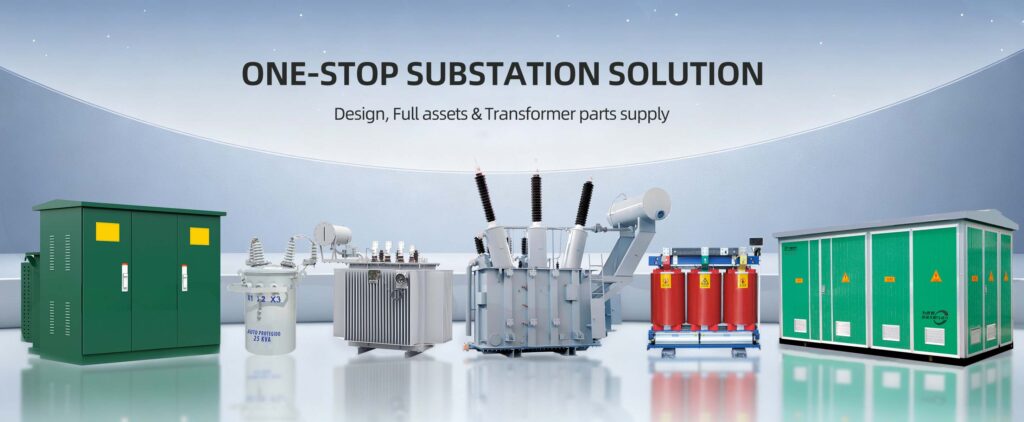
Zisheng Electric will continue improving manufacturing processes and testing capabilities, providing reliable power equipment solutions for renewable energy, power grids, industrial facilities, and infrastructure projects, including:
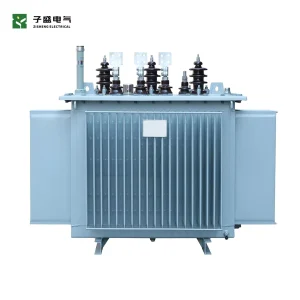
- Oil-immersed transformers;
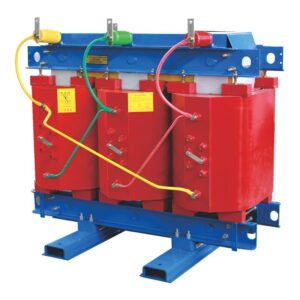
- Dry-type transformers;
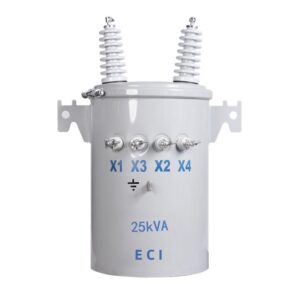
- rod transformer;
- Prefabricated substations integrating medium and low-voltage switchgear.
Ensuring every required inspection is completed before shipment and minimizing problems after installation — this is our most basic and practical commitment to EPC projects.
About ZISHENG ELECTRICAL
Zisheng are a professional 19+ years manufacturer in producing Oil-Immersed Transformers, Compact Substation, Pad Mounted Transformers, Pole Mounted Transformers and Dry Type Transformers. We own the certificates of ISO/CE/IEC 60076 and TUV Rheinland.
Transformers undergo rigorous FAT and type testing, support voltage/capacity customization. Welcome to consult for Catalog and Product. you can contact us at email [email protected].