Peru Mining Transformer Bid Review: Harmonic Guarantees and Short-Circuit Evidence
A Peru mining transformer bid review should turn supplier promises into decisions that the project team can defend. At Zisheng Electric, the useful starting point is a common evidence schedule: what loading case was assessed, which design is offered, and what documents demonstrate the promised capability. A competitive price and a completed datasheet do not, by themselves, establish that two offers cover the same duty.
This review focuses on two questions that frequently cross the boundary between the process plant designer and the transformer supplier: how nonlinear loads are included in the thermal assessment, and how external short-circuit withstand is substantiated. It is intended for EPC engineers and procurement teams comparing bids before an order is placed. The broader Peru mining transformer selection guide addresses the surrounding site, process-load and logistics inputs.
Set one basis for the Peru mining transformer bid review
Begin with a controlled input package. Identify the mine, transformer tag, installation location, single-line diagram revision and operating cases. A general description such as “mine supply transformer” leaves too much room for different interpretations. One bidder may include the planned drive expansion; another may quote only the initial operating load. Their guaranteed temperature rise then refers to different duties.
Record the confirmed connection voltage and frequency from project documents rather than treating a country name as an electrical specification. Obtain the surveyed installation elevation and approved environmental data. If the transformer will operate at elevation, require the supplier to state how the specified conditions enter its insulation and cooling assessment. Do not insert a generic altitude correction into the commercial comparison without an agreed technical basis.
Freeze the cases that can change the award
The comparison should identify normal production, reduced production, the agreed contingency arrangement and future load additions separately. A process plant may run fewer drives during a contingency while retaining essential pumping or ventilation. The relevant question is which equipment remains connected, for how long, and under which cooling availability. These are project inputs, not assumptions to be left to the equipment vendor.
Keep a revision register beside the bid comparison. When the drive list or system study changes, mark the affected supplier assessments for confirmation. An attractive guarantee based on superseded inputs should remain unresolved until the supplier accepts the new basis.
Ask for harmonic evidence at the transformer terminals
A statement that equipment is “suitable for harmonics” is difficult to evaluate. Ask the process electrical designer and drive suppliers for the expected current spectrum at the relevant transformer terminals, with the operating case, load level and aggregation assumptions identified. A single distortion percentage should not replace this information in a detailed capability review.
The official description of IEEE C57.110-2018 identifies methods for evaluating transformer capability under nonsinusoidal load currents and application information for specifying new equipment. If this recommended practice forms part of the proposed assessment, ask the supplier to identify the edition, applicability and calculation inputs. Its title alone is not evidence that an offered design has been assessed for the project load.
Separate the electrical input from the thermal guarantee
The buyer needs a clear chain from the specified current waveform to the supplier’s stated operating capability. Request the adopted current basis, relevant loss assessment, cooling condition and resulting loading restriction, if any. Where detailed design calculations are confidential, agree a reviewable summary and a route for technical clarification rather than accepting an unqualified checkbox.
Ask whether the assessment includes the complete specified duty or only one nominal operating point. Clarify what happens when a filter is unavailable, a drive package changes or a future feeder is connected. These changes do not automatically invalidate the design, but they can invalidate the inputs on which a guarantee was made.
A generic K-factor statement, a larger nameplate rating or a reference to a harmonic-duty product should not close the question. Require an explanation of how the offered design and guaranteed operating envelope meet the specified current duty. For related procurement considerations, the article on transformer harmonic loading in copper processing plants provides another industrial application context; its site inputs should not be transferred to a Peruvian project.
Keep network acceptance and equipment capability distinct
The grid-interface study and the transformer capability assessment answer different questions. Identify who is responsible for each deliverable and which project acceptance criteria apply. A statement about distortion at a connection point does not describe every assumption used in an individual transformer’s thermal assessment. Likewise, a supplier’s loading guarantee does not establish compliance for the entire plant connection.
Close the interface with a short responsibility record: the designer supplies the approved load cases, the drive supplier provides its supporting data, and the transformer supplier confirms the equipment assessment. The EPC team reconciles inconsistent revisions before accepting the combined package.
Review short-circuit withstand through traceable evidence
IEC 60076-5:2006 addresses the ability of power transformers to withstand overcurrents arising from external short circuits without damage. Its published scope distinguishes thermal capability assessment from the assessment of dynamic effects. The bid specification should identify the agreed evidence route and acceptance responsibilities, rather than asking only for a general statement of compliance.
Request the short-circuit study inputs relevant to the transformer: system configurations, fault locations, source contributions and applicable clearing durations. The designer must identify the cases to be assessed. A maximum fault-current figure without its location, configuration and duration is an incomplete basis for comparing offers.

Check the relationship between a report and the offered design
A supplier may submit a previous test report or a design assessment. Record the document identity and the equipment to which it applies. Ask the supplier to explain its relevance to the offered transformer and identify differences requiring assessment. A photograph of a winding assembly, a test certificate cover page or a company reference list cannot establish this relationship.
The reviewer should be able to follow the offered design revision into the assessment package. Where a reference design is used, require the technical rationale for its applicability through the contractually agreed process. Do not assume that matching MVA ratings alone establish equivalent withstand capability. Equally, do not reject evidence solely because its format differs from another bidder’s; assess it against the same agreed requirements.
Keep special evidence separate from routine factory checks
Do not write the purchase order as though a full short-circuit withstand test were an automatic routine test on every delivered unit. Agree the required assessment, any special testing, witness arrangements and document review before manufacturing commitments are made. Factory routine test records remain useful, but they do not automatically answer every short-circuit design question.
Confirm that the approved transformer parameters will reach the protection study owner. If a parameter changes during design, the relevant study assumptions need review. The procurement team should track this interface without inventing relay settings or clearing times in the equipment order.
Use an evidence matrix to compare bids
The following matrix is a procurement review aid, not a substitute for the project specification. Give each unresolved item an owner and a closure date. An entry marked “subject to confirmation” remains an open technical condition until the required evidence is accepted.
| Bid claim | Evidence to request | Decision before award |
|---|---|---|
| Suitable for the mine’s nonlinear loads | Identified terminal current data, operating cases and supplier capability assessment | Confirm that the guaranteed loading envelope covers the approved cases |
| Site conditions included | Explicit elevation, environmental and installation inputs with the supplier’s response | Resolve exclusions that could change insulation, cooling or scope |
| External short-circuit duty covered | Agreed thermal and dynamic evidence tied to the offered design and study inputs | Accept the evidence route and close design applicability questions |
| Reference report is applicable | Report identity, tested or assessed equipment identity and documented applicability rationale | Record approval or require further assessment under the contract |
| FAT package is complete | Inspection and test plan separating routine checks, special requirements and document reviews | Agree deliverables and witness points before production |
| Future expansion is included | Named future load case and confirmed equipment operating limits | Avoid paying for an undefined margin that cannot be verified |
Compare exclusions with the same care as guaranteed values. A lower-priced offer may depend on the buyer providing harmonic mitigation or on a restricted contingency load. Those conditions can be acceptable when the project has planned for them. They become a problem when the commercial comparison silently treats the offers as equivalent.
Turn clarifications into an award recommendation
Consider a hypothetical comparison: one bidder offers a broad suitability statement, while another identifies its assessed load cases and limits. The second submission is easier to review, but document volume alone should not decide the award. Send the first bidder a precise request for the missing basis, then compare both against the approved duty. Avoid awarding extra technical credit for a longer catalogue.
Group open points by consequence. Some affect equipment design or the guaranteed operating envelope; others affect inspection scheduling or document presentation. The award recommendation should identify the unresolved technical conditions and the party accepting them. A procurement note such as “supplier to comply” does not replace a recorded resolution when the original offer contains a specific exclusion.
Keep the clarification log specific enough to survive a change of reviewer. Record the supplier’s answer, the supporting document revision and the reason for acceptance. If closure depends on a later design submission, identify that hold point in the purchase documents and assign its release to the responsible engineer. This prevents a provisional bid-stage answer from being mistaken for final design approval.

Carry the accepted basis into manufacturing and delivery
After award, preserve the link between the accepted bid, approved drawings, assessment documents and inspection plan. Require changes affecting the agreed duty to enter the project’s change process. The final equipment data should identify the approved configuration, while installation and operating instructions should communicate any restrictions accepted during procurement.
At document handover, check that the package is usable by the mine’s engineering team. A folder containing reports from several revisions creates unnecessary uncertainty during later expansion or replacement studies. Include an index stating which documents are final and which project inputs supported the accepted assessment. This is particularly useful when procurement, design and site operation are handled by different organisations.
Prepare a reviewable enquiry for Zisheng Electric
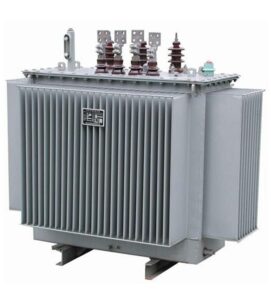
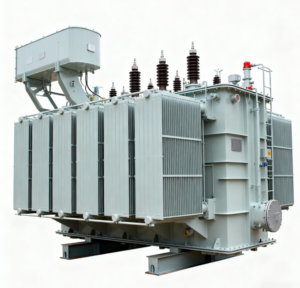
A Peru mining transformer bid review is most effective when the enquiry makes its evidence expectations explicit. Zisheng Electric’s 10 MVA 33/11 kV oil-immersed power transformer and 35 kV–46 kV power transformer range provide product starting points for discussion. These ratings are examples of available configurations, not prescribed connection voltages for a mine in Peru; the project specification governs the selection.
Send drawings, equipment datasheets, the load list, technical specifications, the single-line diagram, confirmed grid parameters, environmental conditions and installation-site conditions. Include drive data and the relevant system-study inputs so the requested guarantees can be tied to an identifiable duty. Our engineering team will review the requirements and respond to project inquiries within 24 hours.
About ZISHENG ELECTRICAL
Zisheng are a professional 19+ years manufacturer in producing Oil-Immersed Transformers, Compact Substation, Pad Mounted Transformers, Pole Mounted Transformers and Dry Type Transformers. We own the certificates of ISO/CE/IEC 60076 and TUV Rheinland.
Transformers undergo rigorous FAT and type testing, support voltage/capacity customization. Welcome to consult for Catalog and Product. you can contact us at email [email protected].