
محول مغمور بالزيت بجهد 33 كيلو فولت لمشاريع «جلف الصناعية»: دليل المشتريات والتوافق
A 33kV oil immersed transformer for a Gulf industrial project must be specified around the actual site and network interfaces. The voltage class alone does not define the duty. High ambient temperature, solar gain, airborne dust, possible coastal salinity, motor starting, nonlinear loads, restricted transport routes and utility protection interfaces can all change the design or the installation plan.
Zisheng Electric uses the project data sheet and interface documents as the starting point for technical review. This article gives EPC contractors and industrial buyers a practical procurement sequence: establish the site basis, define the electrical duty, control civil and cable interfaces, compare bids on one basis, and close FAT and delivery requirements before release. It is a planning guide, not a claim about a specific completed project.
Define the Gulf Project Before Requesting a 33kV Oil Immersed Transformer
“Gulf conditions” is not a complete design basis. An inland process plant, a coastal pumping station and an urban utility substation may share a broad climate zone while presenting very different temperature, contamination, access and maintenance conditions. The enquiry should identify the country, utility or private network owner, site coordinates, altitude, distance from the coast, maximum design temperature, minimum temperature, humidity basis, dust severity, corrosion category and installation arrangement.
The same discipline applies to electrical data. State the nominal system voltage and highest voltage for equipment required by the governing specification, frequency, grounding method, fault level, protection clearing time, insulation coordination and neutral arrangement. Do not assume that a previous project’s tap range, vector group or insulation level is automatically acceptable. The local utility and project consultant must confirm those values.

Separate confirmed requirements from bidder assumptions
A clear tender schedule has three columns: purchaser requirement, bidder offer and deviation or note. When data is not yet confirmed, mark it “TBC by purchaser” and assign a due date. Allowing each bidder to fill the gap silently produces offers that appear similar but contain different temperature, insulation, loss or accessory assumptions.
Procurement Data That Changes Transformer Design
| مدخلات المشروع | Design or interface affected | Risk if incorrect | Purchaser check |
|---|---|---|---|
| Maximum ambient and daily profile | Cooling surface, fan duty, temperature guarantees | Reduced thermal margin and accelerated insulation aging | Use the project design basis, not a city average |
| ارتفاع | Cooling and external insulation clearances | Inadequate dielectric or thermal performance | State site elevation and applicable correction rules |
| Dust and salinity | Bushing creepage, coatings, cabinets and ventilation | Tracking, corrosion or blocked cooling surfaces | Confirm inland/coastal exposure and maintenance plan |
| Load profile and motor starts | MVA rating, voltage drop and thermal cycling | Excessive dip, overheating or process trips | Attach load list and motor-starting study |
| طيف التوافقيات | Additional losses and hot-spot assessment | Unexpected winding or structural heating | Provide VFD/rectifier data and operating cases |
| System fault level | Impedance selection and short-circuit withstand | Switchgear overstress or transformer mechanical damage | Attach maximum/minimum fault study |
| Cable entry and termination | Cable box, glands, clearances and phase sequence | Site rework, unsafe bends or delayed energization | Freeze cable schedule and termination drawing |
| Transport envelope | Shipping dimensions, removable parts and oil shipment | Route obstruction, crane change or site delay | Complete route survey before final GA approval |
Rating the 33kV Oil Immersed Transformer for Real Loads
Nameplate MVA should follow the credible operating cases, not the simple sum of connected equipment. Develop a load list by operating mode: normal production, start-up, shutdown, future expansion, emergency generation and the largest motor start. Apply justified demand and diversity factors, then check both steady-state current and voltage dip.
Large motors, compressors, pumps and crushers can dominate the transformer’s short-duration duty. Variable-frequency drives may reduce starting current but introduce harmonic currents and reactive-power behavior that must be represented. If the plant will expand, decide whether the first transformer must carry the future load, whether a second unit will operate in parallel, or whether spare civil and switchgear bays are sufficient. Each choice changes impedance, bus rating, protection and capital cost.
A useful tender states required continuous rating at the specified site conditions and identifies any temporary overload or cyclic duty separately. It also states whether fan-assisted cooling is permitted, required or reserved for contingency. Fans should not become an undocumented method of meeting a base rating that the operator expected to be naturally cooled.
Voltage Ratio, Tap Range and Network Compatibility
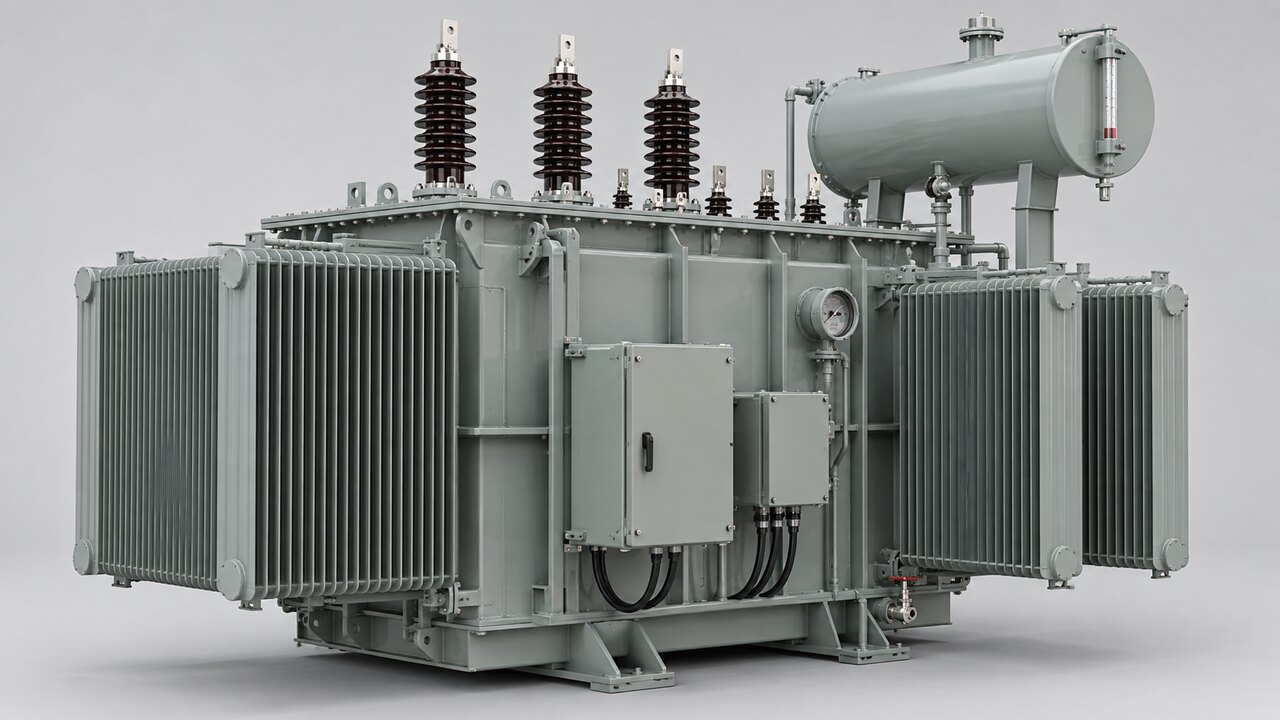
بالنسبة لـ 33kV oil immersed transformer, the LV voltage may be selected to suit the plant distribution system, major drives or a downstream switchboard. Confirm the actual voltage band at the point of connection, feeder drop, desired LV bus voltage, motor-starting performance and inverter or drive limits. These inputs determine the ratio and tap arrangement.
A de-energized tap changer can suit a network where seasonal adjustment is sufficient and planned outages are practical. An on-load tap changer may be justified when voltage varies materially during normal operation or the process requires active regulation. The decision affects cost, control wiring, protection, maintenance and spares. State the normal tap, full range, step size, control philosophy and remote indication requirements.
Impedance must also be coordinated. A higher value can restrain fault current but increases voltage drop; a lower value can improve regulation but raise LV switchgear duty. Zisheng Electric’s regional article on مراجعة مناقصة المحولات الصناعية discusses impedance, vector group and parallel-operation checks in a procurement context. The principles are useful, but the Gulf project’s own utility and fault studies remain controlling.
Thermal and Environmental Requirements for Arid or Coastal Sites
Use the project’s specified ambient values. Meteorological averages are not enough for equipment design, and the temperature inside a compound can be higher than the published air temperature because of solar radiation, wind shielding and heat from adjacent equipment. If a sun canopy is required, coordinate its height and airflow so it does not obstruct radiator convection or lifting access.
Dust affects radiator cleanliness, fan performance, cabinet seals and maintenance frequency. A fully sealed control cabinet still needs suitable glands, door seals and a defined approach to condensation. Coastal salt contamination increases external insulation and corrosion concerns. Confirm bushing creepage requirements with the insulation-coordination and pollution assessment, and specify a coating system appropriate to the project’s verified category rather than using a generic “marine paint” note.
IEC’s official description of its oil-immersed transformer loading guide notes that ambient temperature and load conditions affect transformer life. The purchaser should cite the current adopted edition and any local amendments in the project schedule; the IEC publication record also flags that the earlier edition has been revised. This is important because copied legacy references can create conflicting bid bases.
Grounding, Protection and Control Interfaces
The single-line diagram should show how the 33 kV winding and LV system are grounded, where CTs are located and which devices define the differential zone. Specify neutral terminals, CT ratios and accuracy classes, winding and oil temperature indicators, pressure-relief contacts, gas relay functions where applicable, oil-level alarms and trip allocation. The transformer marshalling kiosk must match the EPC control voltage, terminal numbering and cable-entry direction.
Protection coordination needs maximum and minimum fault currents, transformer energization assumptions, CT saturation checks and upstream/downstream clearing times. Inrush restraint settings should be reviewed with the selected relay. If several transformers may be energized together or from a weak source, an energization study can prevent nuisance operation and unacceptable bus voltage depression.
For other demanding site interfaces, the دليل مشروع محولات التعدين في غرب أفريقيا provides a useful method for organizing generator, load-stage and remote-logistics inputs. For corrosive pumping environments, the Morocco desalination transformer article illustrates how large pumps and coastal exposure affect procurement decisions. These are planning references rather than substitutes for the new project data.
Civil, Cable and Fire-Safety Coordination
Issue the preliminary general arrangement early enough for civil design. The foundation must consider operating and transport mass, center of gravity, jacking points, rail gauge or skid base, anchor-bolt layout and dynamic handling loads. Oil containment, drainage and fire separation must follow the project authority’s requirements. Do not use a generic bund volume without confirming the governing rule and site arrangement.
Cable boxes need the cable count, size, conductor material, insulation type, bending radius, gland type and termination kit. Check phase sequence and the approach direction on drawings. A mismatch here often appears late, after civil works and cable procurement are already committed. The same applies to the marshalling kiosk: door swing, bottom-entry space and the route to the control building should be visible on the coordinated drawing.
Transport and Delivery Planning Before Design Freeze
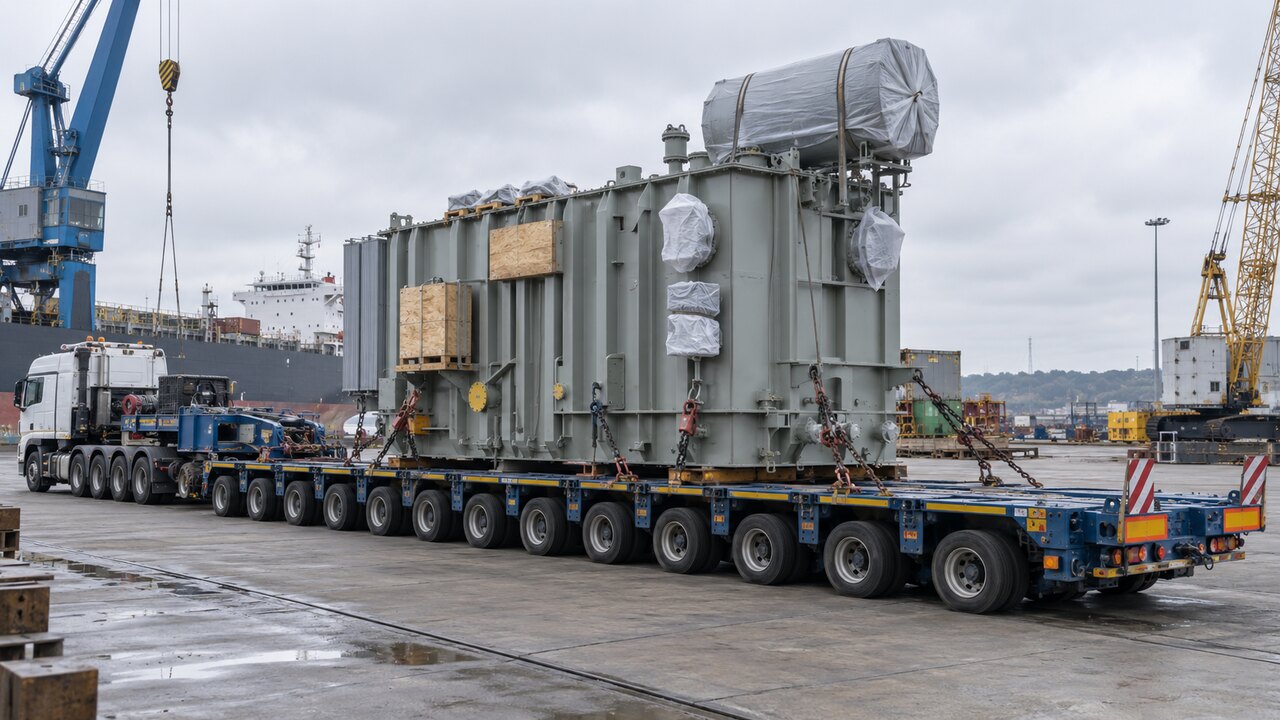
A route survey should begin before the transformer outline is frozen. Record port handling limits, road axle restrictions, bridge clearances, turning radii, overhead obstructions, site gate dimensions and crane positions. Confirm which radiators, conservator, bushings and accessories will be removed for shipment, how openings will be sealed, and whether the main tank ships with oil, reduced oil or dry gas according to the agreed logistics plan.
The supplier should return transport dimensions and masses for the main unit and each package. The EPC team should connect these values to the method statement, temporary works and lifting plan. Shock indicators, moisture protection, storage instructions and arrival inspection should be stated in the purchase order. If long-term outdoor storage is possible, define preservation inspections and auxiliary power needs.
FAT, Documentation and Release Controls
The inspection and test plan must identify tests, review points, witness points and document submittals. Typical routine-test review includes ratio and phase displacement, winding resistance, insulation-related tests, no-load current and loss, load loss and impedance, and functional checks of alarms, trips, cooling equipment and control wiring as applicable to the approved specification.
Before shipment release, close all technical deviations and confirm that final drawings match the tested unit. Review the nameplate, terminal markings, tap schedule, wiring diagrams, accessory list, packing list, preservation procedure, oil documentation, transport drawings, erection instructions, recommended spares and commissioning forms. A photograph of a transformer in a test bay is supporting documentation only when it is tied to the unit serial number and approved inspection record.
Illustrative purchaser schedule
The values below are placeholders and do not represent a real project:
- Installation: outdoor industrial substation, country and utility [confirm]
- Rated voltage: 33 kV / [LV kV], highest voltage for equipment [confirm]
- Rating and cooling: [MVA] ONAN / [MVA] ONAF if required
- Frequency: [confirm from utility/project]
- Vector group, neutral and grounding: [confirm from single-line and study]
- Impedance: [study value and tolerance], principal tap
- Ambient and altitude: [project maximum/minimum/average], [m]
- Pollution/corrosion basis: [project environmental report]
- Loss guarantees: no-load, load and auxiliary power at stated references
- Transport constraints: maximum shipping mass and envelope [route survey]
Send the Project Package to Zisheng Electric
Zisheng Electric can review a 33kV oil immersed transformer enquiry against the verified electrical, environmental and logistics requirements. Relevant product references include the 35 kV and 46 kV power transformer range, محول 400 kVA مغمور بالزيت و معدات التبديل ذات الجهد المتوسط. Final selection depends on the approved data sheet and system studies.
Send the drawings, transformer data sheet, load list, technical specification, single-line diagram, grid parameters, motor and harmonic studies, environmental conditions, route survey and installation-site constraints. “Our engineering team will review the requirements and respond to project inquiries within 24 hours.”
عن شركة ZISHENG ELECTRICAL
زيشينغ هي شركة متخصصة ذات خبرة تمتد لأكثر من 19 عاماً في التصنيع والإنتاج المحوّلات المغمورة بالزيت, المحطات الفرعية المدمجة, المحوّلات المركبة على القواعد, المحوّلات المثبتة على الأعمدة و المحوّلات الجافة. نحن نمتلك شهادات ISO/CE/IEC 60076 وTUV Rheinland.
تخضع المحولات لاختبارات FAT واختبار المواصفات النوعية بشكل صارم، وتدعم تخصيص الجهد/السعة. نرحب باستشارتكم بشأن كتالوج و المنتج. يمكنك الاتصال بنا عبر البريد الإلكتروني [email protected].