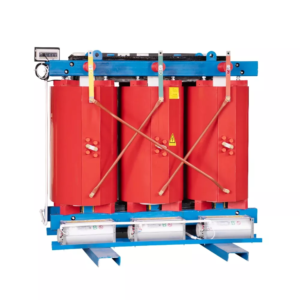
Dry Type Transformer Condensation: Safe Restart Decisions
Dry type transformer condensation calls for a condition review before energization. Restoring room temperature or wiping away visible droplets does not, by itself, establish that the insulation, connections and surrounding installation are ready for service. Zisheng Electric recommends linking the exposure history, manufacturer instructions and agreed inspection evidence to a controlled restart decision.
This engineering guide is for maintenance engineers and plant teams bringing an indoor dry-type transformer back after shutdown or storage. It includes a hypothetical industrial-room scenario, not a completed project or measured test. It is applicable to discussions in Central Asia and Latin America without assigning one humidity limit, voltage or local operating rule to those markets.
Why dry type transformer condensation appears after shutdown
Condensation is liquid water forming when moist air contacts a sufficiently cold surface. The dew point is the temperature at which that air reaches saturation. A transformer or enclosure that remains cold while warmer humid air enters the room can therefore develop moisture even when there is no roof leak.
Vaisala’s dew-point explanation provides the physical basis for this comparison. Room air temperature alone is not the relevant measurement. The assessment needs the moisture condition of the air and the temperature of the vulnerable surfaces, with suitable allowance for measurement uncertainty and changing conditions.
Shutdown changes the building-services problem. Equipment heat may disappear, ventilation may stop, doors may remain open for contractors, and previously cold equipment may encounter a different air mass. Treat the shutdown environment as a defined operating state in the maintenance plan rather than assuming the normal production arrangement will protect an idle installation.
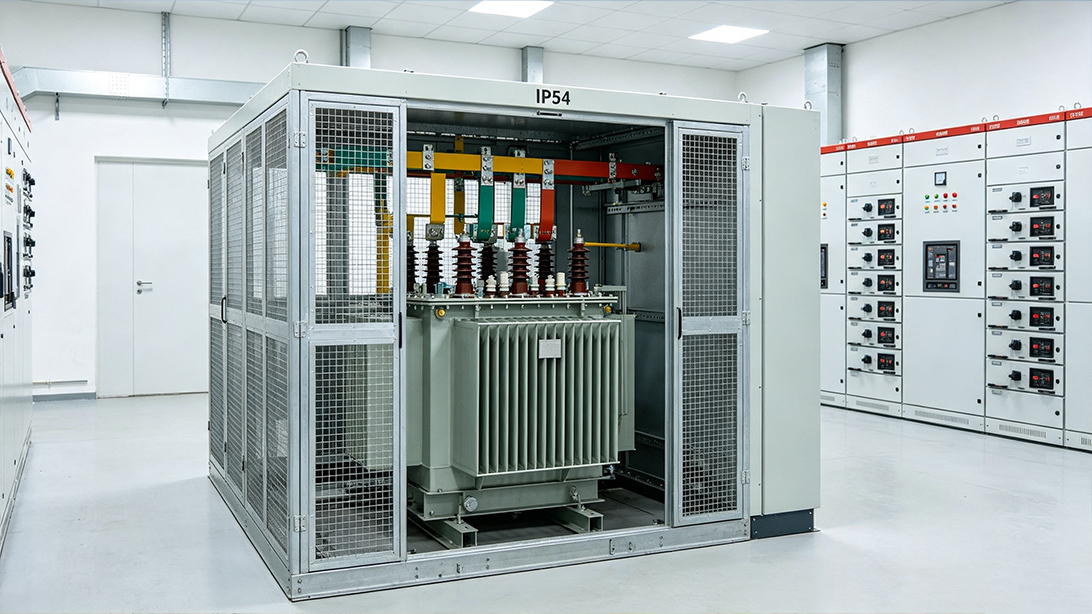
Separate humid storage, condensation and direct water entry
Start a dry type transformer condensation review by recording what actually happened. Humid air during storage, visible condensation, dripping water and immersion are different exposure histories. Include the duration, affected area, condition of packaging or enclosure, relevant alarms and any construction or maintenance activity. Avoid recording every moisture event as simply “high humidity.”
Hammond Power Solutions distinguishes humid storage from direct liquid exposure in its troubleshooting guidance. It also cautions that an acceptable insulation-resistance reading after dripping-water exposure may not be sufficient evidence on its own. The actual manufacturer must determine the assessment and recovery requirements for the equipment involved.
Qualified personnel should establish the required isolation and safe access before inspection or testing. If water exposure is suspected, follow the site’s authorized operating response and contact the responsible manufacturer. Do not use an energization attempt as a method of warming or drying unexplained wet equipment.
| Reported condition | Evidence to collect | Question to resolve |
|---|---|---|
| Humid shutdown with no visible droplets | Preservation record, environmental trend and storage duration | Were the manufacturer’s storage and pre-energization requirements maintained? |
| Droplets on enclosure or accessible insulation surfaces | Location, timing, photographs taken under safe access and temperature/dew-point information | What was exposed, and is the moisture source controlled? |
| Roof, pipe or drain leakage | Water path, affected components and repair record | Does the event require a broader liquid-exposure evaluation? |
| Unknown liquid or contaminated water | Liquid identity where known and contamination history | What manufacturer evaluation is needed before cleaning or recovery? |
A hypothetical room review: why the morning reading is incomplete
Consider an industrial plant preparing to restart after a weekend shutdown. In this fictional example, room air is 22°C and its dew point is 18°C. An accessible, safely measured enclosure surface is 14°C. The surface-to-dew-point difference is 14 − 18 = −4°C, indicating conditions in which condensation can occur on that surface.
These temperatures are assumed for explanation only. They are not national climate values, actual site measurements or a release limit. They also do not establish the temperature of hidden winding surfaces. A surface measurement is evidence about the measured location, not a complete map of the transformer’s internal condition.
The team should ask when humid air entered, whether colder locations remain, and what the environment will do after ventilation or air conditioning changes state. A later room-temperature reading cannot reconstruct the earlier exposure. Where historical data are missing, record the uncertainty and let the responsible engineer define the additional investigation.
This example changes the work order. Instead of “switch on the room fan and restart,” it becomes a coordinated review of moisture source, equipment condition, environmental controls and manufacturer acceptance requirements. Each issue needs evidence and a named reviewer.
Control the environment throughout the idle period
A preservation plan should identify who maintains the room during shutdown, which environmental equipment remains available and how loss of that service is detected. Include construction access, open doors, nearby wet work, leaking services and the condition of the ventilation system. Moisture control is a continuing responsibility, not a single pre-start walkdown.
Schneider Electric’s storage guidance for its low-voltage dry-type transformers emphasizes controlled, dry storage and addresses condensation prevention. Its specified equipment scope matters: heater arrangements or drying instructions for one product must not be copied to a different cast-resin or medium-voltage design.
If heating or dehumidification is proposed, have the responsible designers and manufacturers approve the arrangement, controls, power supply and equipment limits. Do not install an improvised heat source near insulation or assume a heater’s presence proves it operated. The maintenance record should show the relevant control state and any interruption.
Ventilation also needs a defined purpose. Normal room heat removal and shutdown moisture control are related building-services tasks, but the same fan command does not automatically satisfy both. Our room ventilation guide addresses heat rejection from transformer losses; a condensation review additionally considers the moisture condition of incoming air and the surfaces it contacts.
Make the shutdown environmental log usable
Record sensor locations, time references, instrument identification and any gaps in the trend. A reading at the room entrance may answer a different question from one near a cold wall or enclosure. Identify which measurements were actually taken and which conditions are only inferred from weather or building records.
Link the log to events such as a door opening, ventilation restart, heater-supply interruption or nearby wet work. This helps the reviewer test an explanation against the sequence rather than assuming that the most recent reading describes the whole shutdown. If no historical measurements exist, state that plainly and ask the responsible engineer what additional evidence is needed.
Agree the equipment assessment before choosing a drying method
The manufacturer needs the transformer model, winding construction, voltage rating, exposure history and condition evidence to recommend the next action. An instruction for a small low-voltage ventilated transformer is not a universal procedure for an enclosed medium-voltage cast-resin unit.
Ask whether the proposed work is inspection, cleaning, controlled drying, component replacement or a more extensive evaluation. Request the method, responsibilities, permitted conditions, completion evidence and acceptance authority. This keeps an urgent outage from becoming a trial-and-error sequence of heating, testing and attempted energization.
Where insulation-resistance testing is required, agree the test arrangement, voltage, duration, isolation of connected devices, temperature information and acceptance basis. Our insulation-resistance comparison guide explains why readings need a comparable baseline. A result cannot be interpreted reliably without knowing what was tested and under which conditions.
Do not use this article to set a universal megohm threshold, drying temperature or treatment duration. The useful purchasing requirement is a manufacturer-reviewed recovery plan for the identified equipment, followed by the specified evidence. If direct water entry or contamination occurred, keep that history attached to the evaluation even after visible surfaces appear dry.

Build a transformer condensation restart record that can be reviewed
The restart package should make the decision traceable. Collecting documents is useful only when they answer the outstanding technical questions. A concise record can link each question to its evidence, reviewer and disposition.
- Identify the transformer and the limits of the affected installation, including cables, terminals and associated enclosures where relevant.
- Describe the exposure with dated observations, environmental records and any limitations in the available history.
- Confirm that the moisture source or preservation failure has been addressed and document how the environment will remain controlled.
- Attach the manufacturer’s assessment and any approved inspection, cleaning, recovery or testing requirements.
- Reconcile the completed work and results with those requirements, recording unresolved findings rather than hiding them in a general signoff.
- Leave energization approval and the operating sequence with the authorized site authority under the applicable project and utility procedures.
For example, a maintenance contractor may complete an approved drying activity while a roof-leak repair remains unverified. That is progress on one action, not closure of the complete restart decision. Assign the building and electrical interfaces to named roles so each party knows which evidence it must provide.
After authorized return to service, retain the environmental-control and equipment records required by the operating plan. If condensation recurs, the earlier exposure history and corrective actions provide a baseline for investigation. Repeating the same temporary recovery without addressing the source is a maintenance-planning failure.
What to send with a technical enquiry
For a dry-type transformer enquiry or recovery discussion, send Zisheng Electric the nameplate, installation arrangement, exposure history and available inspection and test records. Explain whether the equipment is in storage, installed but idle, or awaiting a post-shutdown restart.
For new procurement, include expected shutdown duration and the environmental services available while the transformer is idle. Ask which preservation instructions and site-condition evidence belong in the supply and handover package. This turns dry type transformer condensation from a last-minute restart argument into a defined installation and maintenance responsibility.
About ZISHENG ELECTRICAL
Zisheng are a professional 19+ years manufacturer in producing Oil-Immersed Transformers, Compact Substation, Pad Mounted Transformers, Pole Mounted Transformers and Dry Type Transformers. We own the certificates of ISO/CE/IEC 60076 and TUV Rheinland.
Transformers undergo rigorous FAT and type testing, support voltage/capacity customization. Welcome to consult for Catalog and Product. you can contact us at email [email protected].