Transformer Selection for Ethiopian Industrial Parks: Voltage Stability, Altitude and Motor Loads
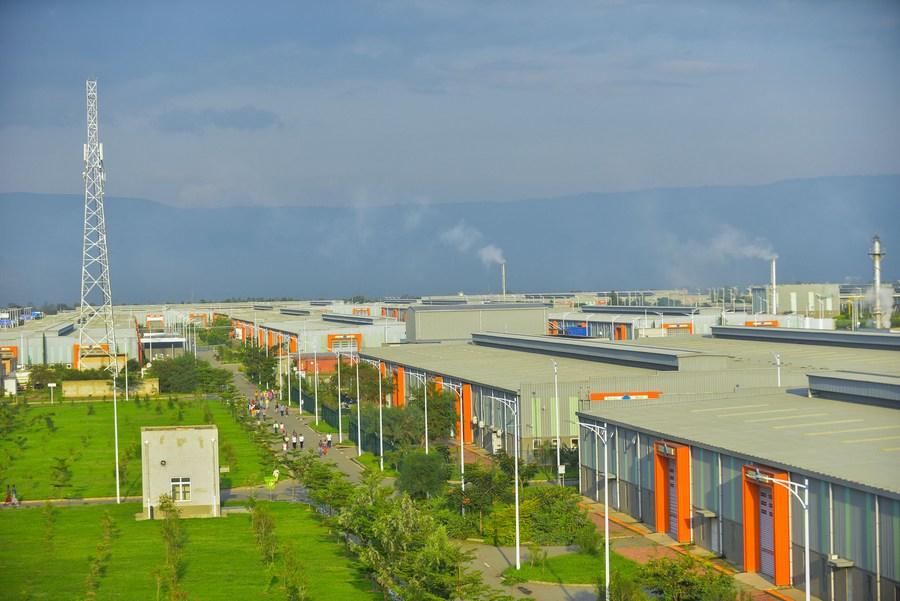
Industrial-park transformer selection in Ethiopia is rarely a simple capacity exercise. The electrical chain may include a utility point of connection, a long medium-voltage feeder, the main transformer, generator or standby source, switchgear, large motors, process lines, and sensitive controls. A transformer can be correctly rated on paper and still create production problems if the source is weak, the site elevation is ignored, or motor starting is checked only after equipment arrives.
At Zisheng Electric, when we review transformer requirements for an industrial park project in Ethiopia, we normally start with the single-line diagram and load schedule rather than a catalogue rating. We ask where the point of common coupling is, how far the feeder runs, which loads start simultaneously, what production can tolerate during an outage, and whether future expansion has been reserved. These questions shape the transformer rating, impedance, tapping arrangement, cooling, protection, and redundancy philosophy.
Ethiopian Electric Utility has published customer research describing outages and voltage fluctuation as concerns raised by industrial customers. That does not mean every site has the same supply quality. It means the EPC team should obtain project-specific utility data and measure the actual source where possible instead of assuming a stiff, stable network.
Why Ethiopian Industrial Parks Need a Project-Specific Transformer Study
Industrial parks bring dissimilar loads onto one distribution system. Textile lines, compressors, pumps, chillers, welding machines, conveyors, furnaces, lighting, offices, and data systems do not behave alike. Some draw a steady load. Others create short starting peaks or harmonic current. A nameplate sum does not show coincidence, duty cycle, restart sequence, or the effect of a temporary production expansion.For critical industrial loads, the EPC team should request the minimum and maximum short-circuit level at the PCC rather than relying only on the nominal utility voltage. Where available, minimum and maximum operating voltage, feeder impedance and recorded voltage profiles should also be included in the system study.
The source also matters. A transformer connected close to a strong substation sees a different voltage profile from one at the end of a long feeder. When the upstream network is weak, motor starting can pull the low-voltage bus down far enough to trip contactors, variable-frequency drives, PLC power supplies, or process controls. Increasing transformer kVA without checking the feeder may add cost while leaving the real constraint untouched.
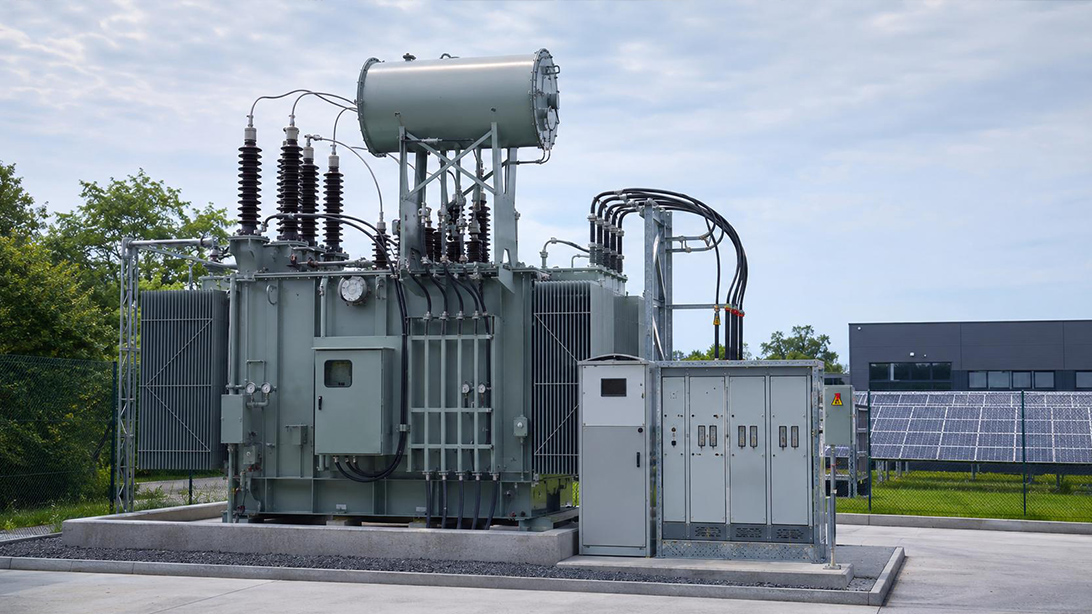
| Project Condition | Impact on Transformer | Main Engineering Risk | Recommended Check |
|---|---|---|---|
| Long or weak utility feeder | Lower and more variable primary voltage | Low LV bus voltage, unstable motor starting, nuisance trips | Obtain minimum and maximum PCC voltage, feeder impedance, and measured voltage profile |
| High-elevation site | Reduced air density affects cooling and external insulation performance | Temperature rise or dielectric margin below project requirement | State site altitude in the datasheet and confirm applicable correction or design provision |
| Large motors and compressors | High short-duration current and voltage dip | Failed starts, contactor dropout, process interruption | Review motor list, starting method, simultaneous starts, and acceptable bus dip |
| Frequent outages or transfer to generator | Repeated de-energization, re-energization, and source changes | Inrush, incorrect protection coordination, unstable restart | Define transfer sequence, neutral arrangement, protection logic, and staged load restoration |
| Planned factory expansion | Higher future loading and fault level | Early overloading or oversized first-stage equipment | Separate firm phase-one load from reserved future capacity and check switchgear ratings |
Confirm the Utility Interface Before Selecting kVA
The utility application, approved single-line diagram, and connection agreement should define the point of supply and the voltage conditions that the transformer must accept. The enquiry must state nominal voltage, highest voltage for equipment, frequency, earthing arrangement, short-circuit level, allowable voltage variation, and any utility-specific metering or protection requirement. If these values are not available, mark them as open technical points. Do not copy another park’s voltage schedule into a new project.
Ask for source data at both normal and abnormal conditions. The minimum operating voltage is important for motor torque and low-voltage equipment. The maximum voltage affects insulation coordination and tap selection. The fault level governs transformer mechanical duty, switchgear rating, protection settings, and the thermal duty of cables. These inputs should remain traceable through transformer design, FAT documentation, and commissioning.
Tap range must solve a defined voltage problem
An off-circuit tap changer is useful when the long-term source level differs from the transformer ratio, but it cannot regulate a bus that changes throughout the day. An on-load tap changer can provide active regulation on suitable transformer ratings, yet it adds drive controls, position feedback, maintenance, and protection interfaces. The correct choice depends on the measured voltage profile and process tolerance.
At the design review, compare the expected primary range with the required LV voltage under load. Include transformer impedance and feeder drop. A tap range selected by habit may place the preferred operating point near an end position, leaving little margin for seasonal or network changes.
Calculate Load as an Operating Scenario, Not a Spreadsheet Total
The load schedule should identify connected kW, power factor, efficiency, demand factor, duty cycle, starting method, harmonic characteristics, and criticality. Separate continuous process loads from intermittent machines and future loads. Then build operating cases: normal production, maximum coincident demand, largest-motor start, post-outage restart, generator operation, maintenance outage, and expansion stage.
Transformer kVA should support the worst credible operating case with a documented thermal margin. A blanket oversizing factor can hide poor load data and increase initial cost and no-load losses. Depending on the selected transformer impedance and upstream system strength, it may also affect prospective fault current and downstream switchgear duty.Conversely, selecting exactly at the calculated peak leaves no allowance for production changes, ambient conditions, harmonics, or forecast error.
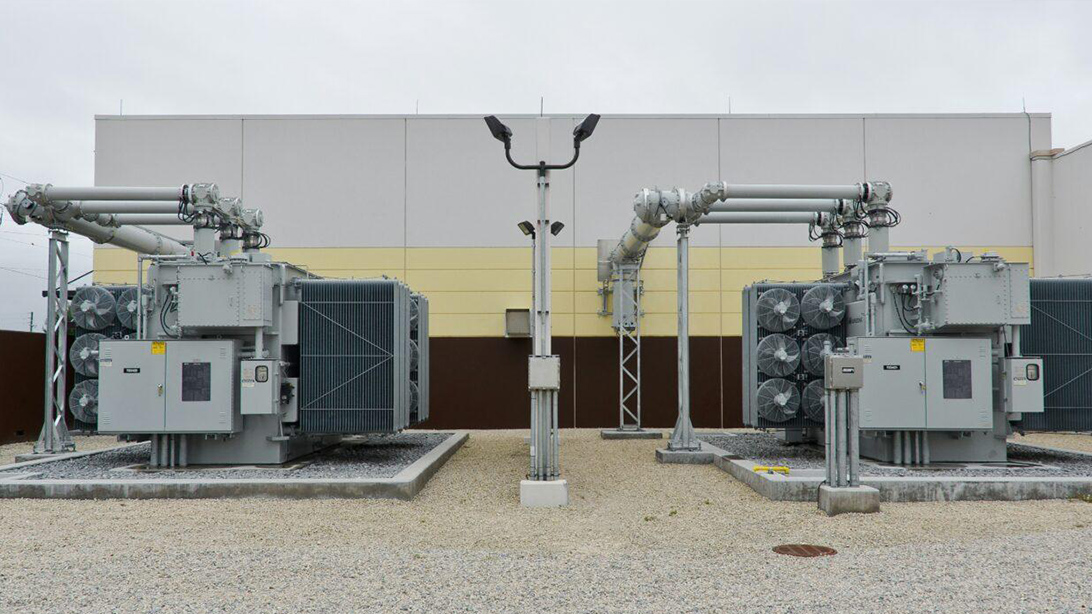
Motor starting can decide the transformer rating
Induction motors may draw several times rated current during direct-on-line starting. The actual effect depends on motor size, locked-rotor current, starting power factor, transformer impedance, feeder impedance, source strength, and the mechanical load. Star-delta, soft starters, and variable-frequency drives change the current profile but introduce their own interface and harmonic questions.
For EPC enquiries, our engineers usually ask for the motor list with rated kW, voltage, starting method, starts per hour, acceleration time, and simultaneous-start logic. We then review bus-voltage dip and the torque available at the motor terminals. If the voltage falls too far, the motor may accelerate slowly, draw high current longer, and pull the bus down further. The problem becomes self-reinforcing.
The same engineering logic appears in our guide to transformer procurement for Nigerian industrial plants, but the Ethiopia project still needs its own source study, site altitude, load sequence, and utility interface.
Altitude and Local Site Conditions Must Enter the Datasheet
Ethiopia includes highland and lowland project locations, so a country name cannot replace a site-condition schedule. Record the installation altitude, maximum and minimum ambient temperatures, daily temperature cycle, dust exposure, humidity, indoor or outdoor location, ventilation, and seismic or transport requirements stated by the project.
At higher altitude, reduced air density can weaken natural cooling and affect external insulation performance. The design response may involve additional cooling margin, revised temperature-rise assessment, or insulation provisions under the applicable standard and project specification. The manufacturer cannot evaluate this if the enquiry merely states “Ethiopia” and leaves altitude blank.
Indoor dry-type installations need a ventilation calculation, not just an enclosure IP code. Outdoor oil-immersed units need radiator clearance, solar exposure review, corrosion protection, drainage, oil-containment coordination, and maintainable access to valves and accessories. Dust screens that are never cleaned can become a cooling restriction; specify access and maintenance responsibility.
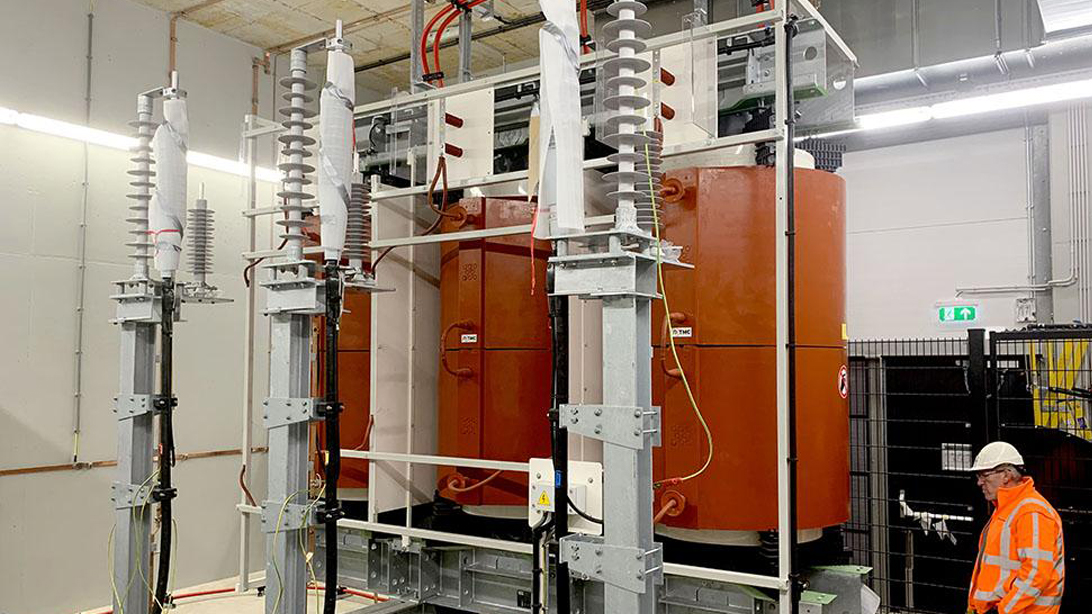
Choose Oil-Immersed or Dry-Type from the Installation Risk
Oil-immersed transformers generally provide strong outdoor performance, efficient cooling, and flexibility across a wide rating range. They require appropriate fire separation, oil containment, drainage, and maintenance planning. Dry-type transformers avoid liquid dielectric and are often preferred inside production buildings, but they are not maintenance-free. Dust, blocked air paths, high ambient temperature, and undersized ventilation can reduce their thermal margin.
Our comparison of oil-immersed and dry-type transformer selection explains the wider trade-off. For an industrial park, decide at room and substation level: fire strategy, cable route, ventilation, noise, environmental containment, replacement access, and the outage consequence if a unit fails.
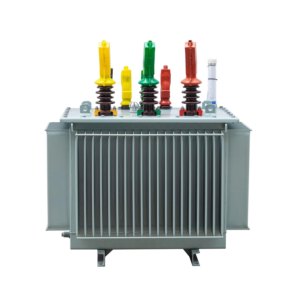
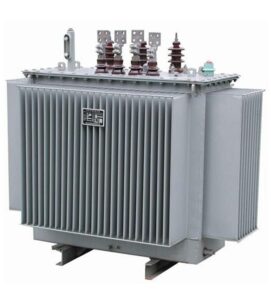
Relevant product references include the 400 kVA oil-immersed transformer, the 200 kVA dry-type transformer, and higher-voltage duties represented by the 35–46 kV power transformer. These are configuration references; final ratings and interfaces must be matched to the project data.
Redundancy, Generator Transfer and Restart Philosophy
A single transformer may be adequate for a noncritical process with tolerable outage time. Plants with continuous production, temperature-sensitive materials, water treatment, compressed air, or safety systems may need two transformers, bus sectionalization, generator support, or a defined spare strategy. Redundancy is not achieved by drawing two transformer symbols. The switchgear, protection, cables, auxiliary supplies, and operating procedures must allow the intended transfer.
When a generator is included, confirm transformer energization sequence, inrush capability, neutral earthing, protection references, synchronization or open-transition logic, and which loads return first. Starting all motors immediately after an outage can create a deeper voltage dip than normal production. A staged restart schedule often gives better reliability than simply increasing transformer capacity.
| Design Input | Why It Matters | Procurement Check |
|---|---|---|
| Single-line diagram and bus arrangement | Defines source, transformer, tie and load interfaces | Confirm normal, maintenance and emergency operating states |
| 12-month load profile and expansion plan | Separates real demand from connected load | State current duty, reserved duty and expected energization date |
| Motor and VFD list | Determines starting dip, harmonics and thermal duty | Provide starting method, duty, acceleration time and simultaneous sequence |
| Utility and generator fault data | Controls impedance, switchgear and protection coordination | Calculate minimum and maximum fault cases for every source state |
| Site condition schedule | Drives cooling, insulation and enclosure design | Record altitude, ambient, dust, humidity, ventilation and installation type |
| Critical-load and restart schedule | Defines redundancy and outage recovery | Identify load shedding, transfer time and staged restoration |
Protection and FAT Must Reflect the Actual System
Transformer protection should coordinate with the upstream feeder, LV switchgear, generator, large motors, and earthing system. Overcurrent settings copied from a standard sheet may trip during motor starting or fail to protect the minimum fault case. Differential protection, restricted earth fault, temperature devices, Buchholz relay, pressure relief, and winding-temperature indication should be included only where appropriate to rating and design, with complete alarm and trip interfaces.
FAT should verify the guaranteed electrical characteristics and the accessory interfaces required by the purchase specification. Typical records include winding resistance, ratio and vector group, impedance and load loss, no-load loss and current, dielectric tests, functional checks, nameplate review, and wiring verification. The exact routine, type, and special test scope must follow the approved standard and contract.
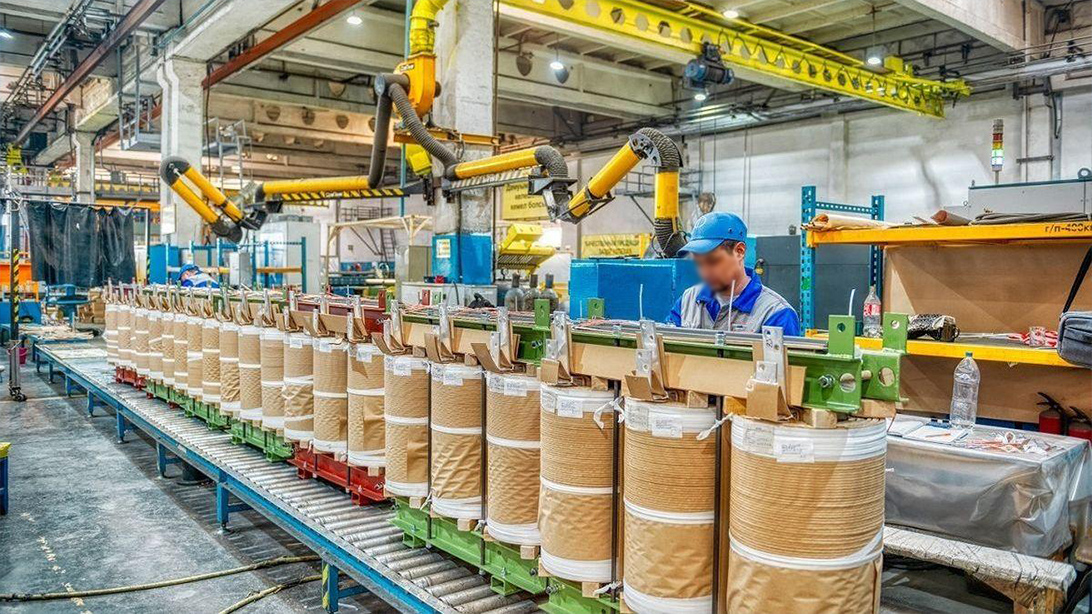
The manufacturing sequence described in our IEC transformer manufacturing process guide helps procurement teams identify useful inspection and witness points. For projects where feeder stability and expansion dominate, the Zambia mining transformer procurement guide provides another comparison without replacing the Ethiopia-specific study.
What to Send for an Ethiopia Industrial Park Transformer Review
A reliable Ethiopia industrial park transformer enquiry should include the single-line diagram, utility connection data, transformer datasheet, load schedule, motor and VFD list, site altitude, ambient conditions, room or outdoor layout, generator details, protection philosophy, expansion plan, and required FAT documents. If measurements from the point of connection are available, include minimum and maximum voltage and the time profile.
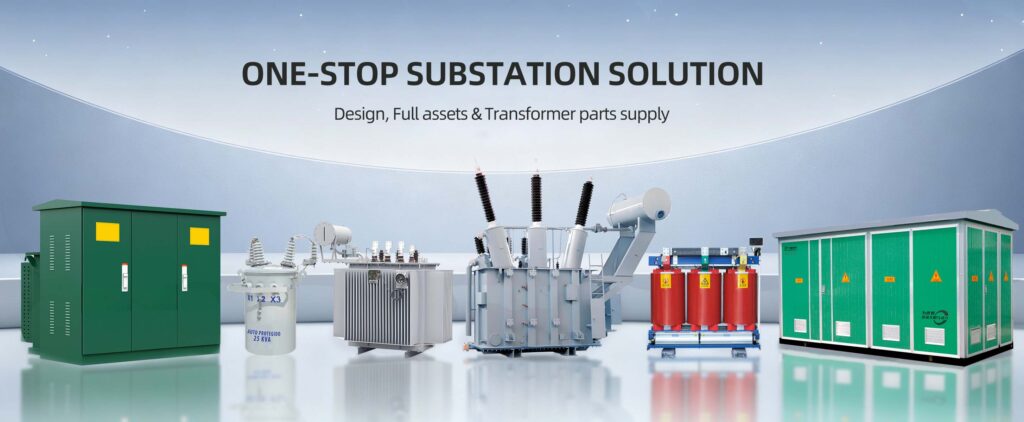
Zisheng Electric can provide technical matching for oil-immersed transformers, dry-type transformers, power transformers, compact substations, medium-voltage switchgear, and related distribution equipment based on project capacity, voltage level, environmental conditions, and technical specifications. Our engineering team will review the requirements and respond to project inquiries within 24 hours.
About ZISHENG ELECTRICAL
Zisheng are a professional 19+ years manufacturer in producing Oil-Immersed Transformers, Compact Substation, Pad Mounted Transformers, Pole Mounted Transformers and Dry Type Transformers. We own the certificates of ISO/CE/IEC 60076 and TUV Rheinland.
Transformers undergo rigorous FAT and type testing, support voltage/capacity customization. Welcome to consult for Catalog and Product. you can contact us at email [email protected].