Power Transformer Design & Manufacturing: Complete Guide

How are power transformers designed and manufactured: A complete analysis from design to finished product delivery.

How are power transformers designed and manufactured: A complete analysis from design to finished product delivery.

1 power transformer manufacturing factory

Power transformer design and manufacturing is a complex process that requires careful engineering, precision manufacturing, and rigorous testing.I have been responsible for transformer design and overseas project technical support at Zisheng Electric for many years. I have worked on projects across the Middle East, Africa, and other international markets, covering industrial power distribution, renewable energy, and infrastructure applications.

When communicating with overseas EPC contractors, engineering companies, and project owners, I am often asked the same question:

How many steps does a power transformer go through from the moment you provide the requirements to the final energization on site?

From the buyer’s perspective, they see a piece of equipment that arrives, is installed, and starts operating. But from the perspective of a manufacturer’s engineer, the reliability of a transformer is not created by a single process.

From project requirement analysis, technical solution confirmation, electromagnetic design, and material selection, to manufacturing, testing and verification, and delivery support, every stage contributes to the final reliability of the transformer.

If any link is not handled properly, problems will eventually appear later and require additional corrections.

In this article, I will share how we transform a transformer from an initial project requirement into a finished product through our actual project experience.

I. Design Stage: Starting from Project Requirements

2 transformer engineering design engineer

Transformer design is not simply about selecting a model from a capacity table. This is especially true for overseas projects. Engineers need to fully understand the actual project environment and operating conditions before starting the design process.

Normally, the design evaluation needs to consider multiple factors, including rated capacity, primary and secondary voltage levels, load characteristics, short-circuit level, installation environment, ambient temperature, altitude, and IEC standard requirements.

Different regions have completely different priorities.

For Middle East projects, extreme temperatures of 50°C are common, and environmental factors such as dust and salt fog must also be considered.

For African projects, grid stability and long-term maintenance conditions are often the key considerations.

For renewable energy projects, load fluctuations are significant and continuous operation requirements are high, so the design approach is different again.

A single design template cannot be applied everywhere.

For example, in one African project, the local grid experienced severe fluctuations. We specifically increased the short-circuit impedance level by one grade during the design process. Otherwise, frequent protection trips could occur during operation, causing serious inconvenience for the project owner.

II. Confirmation of Main Technical Parameters

Before starting the detailed design, engineers need to confirm all critical technical parameters with the customer. This stage cannot be handled casually. If any parameter is incorrectly defined, the entire project may deviate from the original requirements.

Parameter Design Consideration
Rated Capacity Determined based on the project’s maximum load demand and future expansion requirements
Voltage Level Selected according to the local grid system and grid connection requirements
Impedance Voltage Affects short-circuit current levels and overall system stability
Cooling Method Selected based on transformer capacity and installation conditions, such as ONAN or ONAF
Insulation Level Determined according to voltage level and operating conditions
Temperature Rise Requirements Designed according to ambient temperature and actual load conditions

III. Core Manufacturing Process

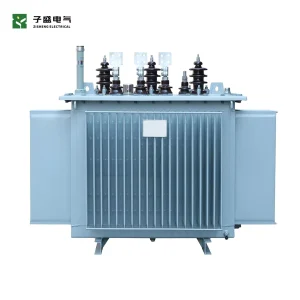
A complete oil-immersed power transformer goes through many manufacturing stages from raw materials to final delivery.

The process includes raw material inspection, core manufacturing, winding production, active part assembly, vacuum drying, tank fabrication, vacuum oil filling, final assembly and commissioning, and factory testing.

Every step is essential.

Among all manufacturing processes, the core, windings, and insulation system are the three key elements that determine the long-term reliability of a transformer. Any failure in these areas can lead to significant operational problems later.

IV. Core Manufacturing: The Foundation of Loss Control

3Transformer core manufacturing with silicon steel laminations

The core is the central component of the transformer’s magnetic circuit. If the core quality is not properly controlled, there is no point in proceeding with the following manufacturing processes.

The quality of the silicon steel sheet material, cutting accuracy, and core stacking process are all closely connected. The quality of core manufacturing directly affects three key performance indicators:

  • No-load losses
  • Operating noise level
  • Overall operating efficiency

Therefore, production control requirements for core processing are extremely strict. The core joint losses must be minimized, and this is a critical performance requirement that cannot be compromised.

V. Winding Manufacturing: Determining Mechanical Strength and Reliability

5 Vacuum drying process for oil immersed transformer manufacturing

The winding is responsible for electrical energy conversion, and it is also the first line of defense against short-circuit forces.

During winding design, multiple factors must be considered together, including conductor specifications, turn distribution, electric field distribution, mechanical strength, and temperature rise control.

Especially for overseas projects, the requirements for windings are much higher in industrial and renewable energy applications. It is not simply a matter of winding the coils and putting them into operation.

For example, in a previous wind power project, the project owner had extremely strict requirements for short-circuit withstand capability. We reinforced the winding support structure specifically for this requirement and only finalized the design after successfully passing multiple rounds of short-circuit tests.

VI. Insulation Treatment and Vacuum Drying

The service life of a transformer largely depends on the reliability of its insulation system.

During the manufacturing process, one of the most critical procedures is vacuum drying. This process removes as much moisture as possible from the active part of the transformer, improving overall insulation performance.

If moisture is not properly controlled, a series of problems may occur:

  • Reduced insulation strength
  • Increased risk of partial discharge
  • Accelerated aging of insulation materials

These issues can create a chain reaction that affects the transformer’s long-term reliability.

Therefore, we maintain strict control over both the duration and quality of this process to ensure the insulation system meets long-term operating requirements.

VII. Testing and Quality Control

6 Vacuum drying process for oil immersed transformer manufacturing

International projects have very clear requirements for transformer testing. Before shipment, every transformer must complete a comprehensive testing process, including winding resistance testing, turn ratio testing, no-load loss testing, load loss testing, impedance testing, insulation testing, and partial discharge testing.

The IEC 60076 series of standards serves as the fundamental reference for our transformer design and testing procedures.

Test Item Purpose
Winding Resistance Test Verify the quality of winding connections
Turn Ratio Test Confirm the accuracy of voltage transformation ratio
No-load Loss Test Evaluate core performance
Load Loss Test Check winding losses
Insulation Test Verify insulation strength and reliability
Partial Discharge Test Identify potential insulation defects

VIII. Overseas EPC Project Delivery

For overseas projects, completing the transformer manufacturing process at the factory only means half of the work is finished.

A complete delivery process also includes technical document preparation, drawing approval, FAT (Factory Acceptance Test), packaging and transportation, on-site installation support, and commissioning assistance.

Every stage requires careful management and coordination.

Nowadays, EPC customers no longer select suppliers based only on equipment price. The ability to provide complete technical support, the efficiency of drawing responses, and the capability to solve problems during site execution often have a greater impact on supplier selection than the quotation itself.

IX. Zisheng Electric’s Overseas Project Experience

After many years working on overseas projects, I increasingly believe that the success of a transformer is not determined only during the manufacturing stage.

Starting from the initial technical communication, manufacturers need to truly understand the customer’s actual requirements instead of simply designing products according to their own standard practices.

For example:

  • In high-temperature regions, cooling capacity and thermal performance must be considered in advance.
  • In renewable energy projects, load variations and system integration requirements need special attention.
  • In industrial applications, long-term continuous operation reliability becomes the primary consideration.

Different application scenarios have different priorities, and the design approach must be adjusted accordingly.

These accumulated experiences are continuously integrated into our transformer design and manufacturing processes, creating a continuous improvement cycle.

About Zisheng Electric

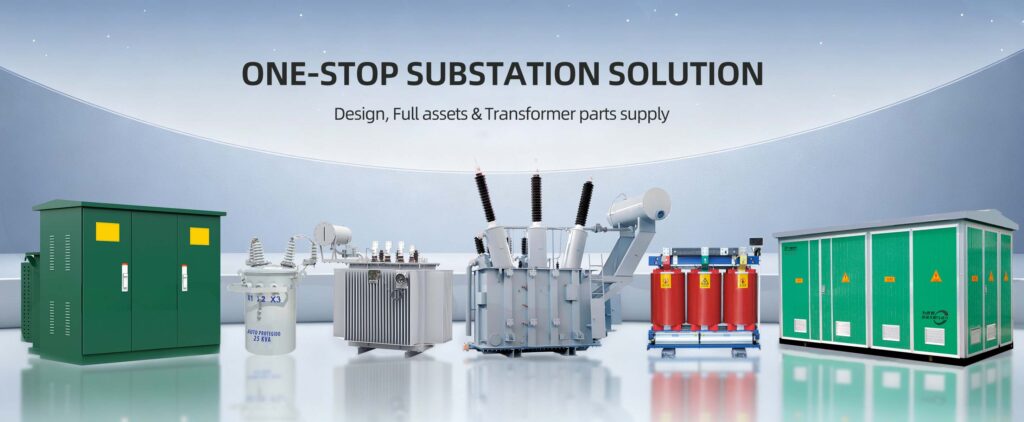
Zisheng Electric specializes in transformer design, manufacturing, and overseas power project technical support. Our product portfolio covers Oil-Immersed Transformers, Compact Substation, Pad Mounted Transformers, Pole Mounted Transformers and Dry Type Transformers. as well as medium-voltage distribution equipment and complete power solutions.

If you have an ongoing project and need support with equipment selection, technical solutions, or parameter confirmation, feel free to send us your project details.

Our engineering team will provide professional technical analysis based on your actual requirements and respond within 24 hours.

About ZISHENG ELECTRICAL

Zisheng are a professional 19+ years manufacturer in producing Oil-Immersed Transformers, Compact Substation, Pad Mounted Transformers, Pole Mounted Transformers and Dry Type Transformers. We own the certificates of ISO/CE/IEC 60076 and TUV Rheinland.
Transformers undergo rigorous FAT and type testing, support voltage/capacity customization. Welcome to consult for Catalog and Product. you can contact us at email [email protected].
+86-191-3128-5373 +86-191-3128-5373 [email protected]