UAE Data Center Transformer Selection: Harmonics, Redundancy and High-Ambient Design
Transformer procurement for a UAE data center is not a normal commercial-building exercise with a larger load schedule. The supply chain is different, the operating profile is unforgiving and the consequences of a weak interface appear during commissioning, when the transformer, generators, UPS systems, switchgear and cooling plant must operate as one electrical system.
At Zisheng Electric, enquiries for critical facilities are reviewed from source to load: utility connection → MV switchgear → transformer → LV switchboard → UPS or power distribution unit → IT load, with standby generators and automatic transfer logic connected to the same sequence. This is the practical starting point for UAE data center transformer selection.
Start With the Electrical Architecture, Not the Transformer Rating
A transformer capacity cannot be selected responsibly from the total IT megawatts alone. The engineering team needs the single-line diagram, the division between critical and non-critical loads, the redundancy philosophy, future deployment stages and the operating state after one component is removed from service.
An A/B power path, N+1 equipment arrangement or distributed redundant layout changes transformer loading. One unit may operate lightly during normal conditions yet carry a high step load during transfer or maintenance. In our design review, we therefore look at the normal, maintenance, transfer and single-failure states separately rather than sizing from the final connected load alone.
Cooling loads also matter. Chillers, pumps, computer-room air-handling equipment and ventilation motors can be a large part of the site demand. Some start through variable-frequency drives; others may transfer to generator supply under emergency conditions. Their acceleration time, current profile and restart sequence affect transformer voltage drop and generator compatibility.
| Project Condition | Impact on Transformer | Recommended Procurement Action |
|---|---|---|
| A/B critical power paths | Normal and contingency loading can be very different | Provide load flow for normal, maintenance and single-failure states |
| UPS rectifiers and switched-mode loads | Current harmonics increase RMS current, stray loss and neutral duty | Submit harmonic spectrum and operating load factor for thermal review |
| Standby generator operation | Transformer inrush and step loading can depress generator voltage | Coordinate energization sequence, generator subtransient data and inrush study |
| Hot outdoor compound | High ambient temperature and solar gain reduce thermal margin | Specify site design temperature, sun exposure, ventilation and required loading profile |
| Coastal humidity and airborne salts | Corrosion and surface leakage can affect enclosures, radiators and terminals | Define corrosion system, material interfaces, creepage basis and maintenance access |
| Phased IT deployment | Low initial loading can make no-load loss commercially important | Compare total cost at realistic annual load points, not only full-load efficiency |
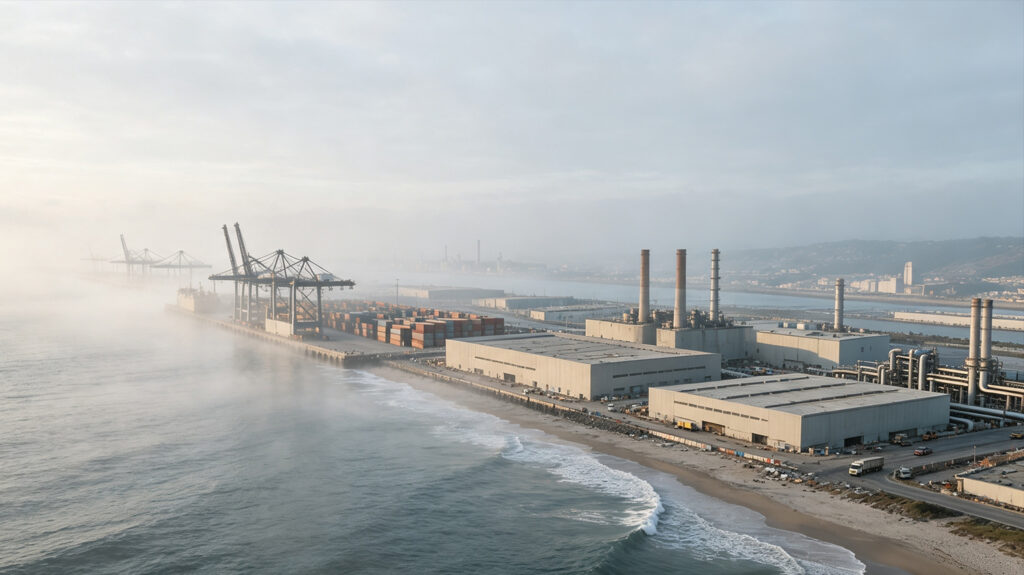
Use the UAE Connection Data That Belongs to the Actual Project
The UAE is not one utility specification. Requirements vary by emirate, network operator, voltage level and connection agreement. Before we freeze the transformer design basis, we need the actual utility and consultant requirements for the project’s point of connection.
Abu Dhabi Department of Energy Electricity Supply Regulations state a nominal frequency of 50 Hz at the connection point. The same regulations require installations to avoid harmful voltage fluctuations, dips, unbalance and harmonics, with permitted limits defined through the applicable distribution or transmission code. They also identify system voltage, prospective short-circuit current, earthing arrangement and X/R ratio as information relevant to a connection.
Those inputs directly affect the transformer. Frequency influences volts-per-hertz and core design. Prospective fault current and X/R ratio affect mechanical short-circuit duty and switchgear coordination. Earthing determines neutral insulation, earth-fault protection and whether a separately derived neutral is required. Harmonic limits affect the study at the point of common coupling, not just the transformer nameplate.
A quotation that says “UAE standard” without naming the utility, connection voltage, frequency, earthing and fault level is not technically closed.
Harmonic Loads Must Be Converted Into a Thermal Design Case
Do Not Replace a Harmonic Study With a Label
UPS inputs, VFD-driven cooling equipment, server power supplies and other power-electronic loads draw non-sinusoidal current. Harmonics increase winding eddy loss and structural stray loss. Triplen components can add in a four-wire neutral. The resulting heating depends on the spectrum, magnitude, winding construction and actual operating profile.
A generic “K-rated transformer” request may be familiar in some markets, but it should not replace the project’s governing standard and harmonic data. For IEC-based procurement, submit the expected current spectrum, total RMS current, neutral current, load factor and duty cycle. The manufacturer can then evaluate conductor sizing, winding temperature, stray-loss control, shielding and enclosure ventilation.
During our design review, we normally ask whether the harmonic figures describe measured equipment, a simulation case or a tender assumption. We also ask whether the stated spectrum applies at 25 percent, 50 percent or full load. A severe spectrum at a low current can impose less heating than a moderate spectrum at high RMS current; both values are needed.
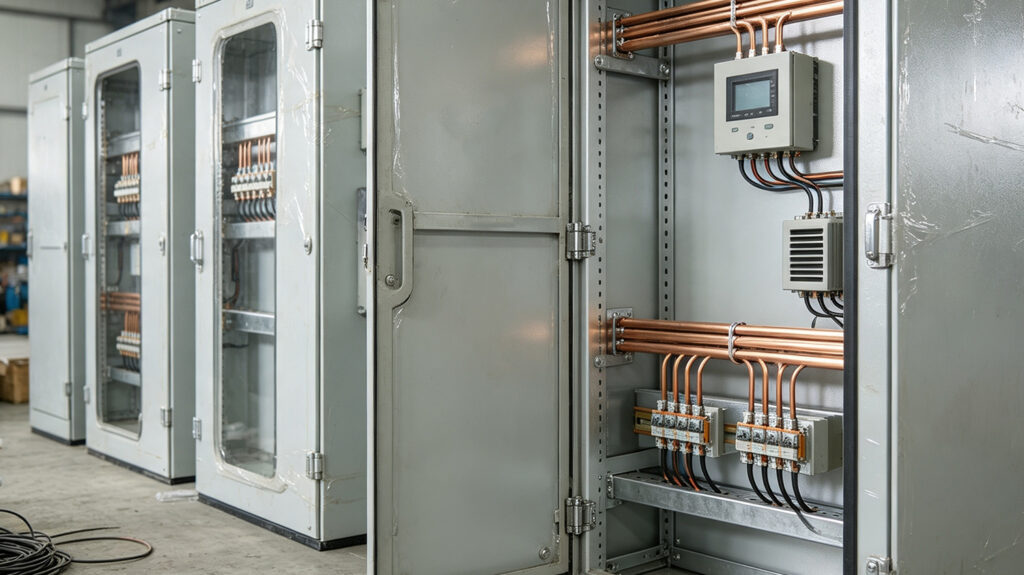
Dry-Type or Oil-Immersed: Decide From Location and Risk Control
An indoor transformer close to the load center can reduce LV cable length and voltage drop. A cast-resin dry-type transformer may suit an electrical room where oil containment and external fire separation would complicate the layout. The design still needs room ventilation, enclosure airflow, noise control, access for coil inspection and a credible forced-cooling philosophy if fans are used.
An outdoor oil-immersed unit can offer strong thermal performance and convenient separation from occupied spaces. The project must coordinate bund capacity, fire strategy, radiator clearance, corrosion protection, cable routing and replacement access. A substation transformer should not be selected before the civil and fire layouts are mature.
Where the MV transformer, RMU and LV assembly are packaged together, a compact arrangement can simplify site interfaces, but heat rejection becomes a system-level question. The transformer enclosure, switchgear compartment and LV section cannot each be checked in isolation. For suitable distributed loads, the project can also review a medium-voltage oil-immersed distribution transformer against the actual utility voltage and load block.
Impedance Is a Coordination Value, Not Just a Tender Percentage
Transformer impedance limits fault current and contributes to voltage drop. Raising impedance may reduce LV switchgear duty, but it can worsen voltage regulation and motor-start performance. Lower impedance improves regulation while increasing prospective short-circuit current. The correct value comes from a coordinated study involving the transformer, upstream source, cables, generators, LV bus and protective devices.
For parallel transformers, percentage impedance and X/R characteristics should be compatible with the intended load sharing. Nameplate ratios alone do not guarantee balanced parallel operation. If the A and B paths can ever be tied, even temporarily, that operating condition belongs in the study.
To close the impedance decision, we normally need the maximum and minimum utility fault levels, generator contribution, LV board rating, cable data and protection philosophy. The technical offer then needs to state the guaranteed transformer impedance and its applicable tolerance clearly. A transformer selected before the short-circuit study is finished often pushes an avoidable problem into the switchgear package.
Generator Energization and Inrush Need One Shared Study
A utility source can often absorb transformer inrush that a standby generator cannot. When a transformer is energized from a generator, residual flux, closing angle, core design, transformer size and generator subtransient reactance influence the voltage dip. The UPS and cooling controls may interpret the dip as a power-quality event and transfer or trip.
The solution is not automatically an oversized generator or a reduced-flux transformer. What matters is the actual restoration sequence: generator start, bus build-up, transformer energization, UPS ramp, cooling restart and the subsequent load blocks. Controlled switching, sequential energization, pre-insertion methods or revised protection delays may be considered where justified by the system study.
The transformer vendor needs the generator data and energization philosophy early. Waiting until SAT to discover that the emergency source cannot energize the selected transformer is a project-control failure, not a commissioning surprise.
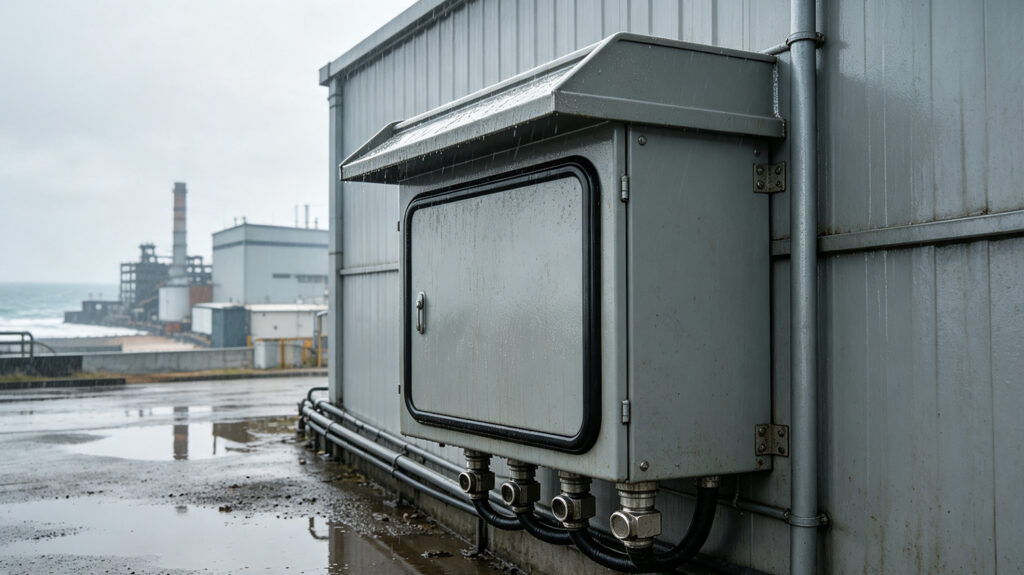
Thermal Design for High Ambient Temperature and Partial Loading
For a UAE data center, the country name is not enough to define transformer thermal duty. We need the contractual ambient profile: maximum temperature, daily average, annual average, solar exposure, room inlet temperature and altitude.. Maximum temperature, daily average, annual average, solar exposure, room inlet temperature and altitude all influence thermal performance. An outdoor oil-immersed transformer and an indoor dry-type transformer experience different microclimates on the same site.
Data centers add another complication: staged deployment. A transformer may operate at low load for months and then move quickly to a new steady state as server halls are fitted out. The commercial evaluation should include no-load loss during early phases and load loss at expected mature utilization. Buying the lowest full-load loss is not automatically the lowest lifecycle cost.
Temperature monitoring should match the technology. Dry-type units commonly use embedded winding sensors and a controller for alarm, trip and fan stages. Oil-immersed units may use top-oil and winding-temperature indication, pressure devices, oil level and remote contacts. Alarm and trip values must be coordinated with the BMS, SCADA and protection cause-and-effect matrix.
FAT Requirements That Matter for a Critical Facility
| FAT Item | Main Risk if Poorly Defined | What Should Be Confirmed |
|---|---|---|
| Ratio, vector group and winding resistance | Incorrect connections, tap progression or phase identification | All required taps, temperature correction and approved terminal schedule |
| Load loss, no-load loss and impedance | Thermal and protection studies use values different from the delivered unit | Guaranteed values, tolerances and reference-temperature corrections |
| Applied and induced dielectric tests | Insulation duty is not demonstrated against the agreed design | Test levels, duration, frequency method and witnessed acceptance record |
| Temperature-control and accessory checks | BMS alarms, fans or trips fail during commissioning | Sensor simulation, contact logic, terminal numbers and cause-and-effect response |
| Dimensions and interfaces | Cables, busduct, ventilation or replacement route do not fit | Approved GA, terminal orientation, clearances, lifting points and enclosure airflow |
The FAT should use the approved datasheet and drawing set. Red-line corrections must flow into final drawings and the site test package. A successful electrical routine test does not excuse an unclosed busduct opening, wrong CT secondary or inaccessible cable box.
Compare Bids on a Common Technical Baseline
Data-center transformer bids become misleading when each supplier prices a different duty. One offer may assume sinusoidal current and a moderate room temperature; another may include harmonic derating, higher enclosure protection and duplicated sensors. The price difference is then a scope difference, not a manufacturing advantage.
Create a deviation schedule that covers losses, impedance, temperature rise, sound level, harmonic basis, accessories, enclosure, corrosion system, documentation and witnessed tests. Require each bidder to state exclusions against the same datasheet. Review the guaranteed values before commercial ranking. This makes lifecycle cost, commissioning risk and replacement strategy visible to procurement rather than leaving them inside engineering correspondence.
Build the Procurement Package Around Decisions
For UAE data center transformer selection, send the single-line diagram, utility connection data, load schedule, redundancy states, UPS and VFD harmonic spectra, generator parameters, short-circuit study, protection philosophy, room or outdoor ambient profile, fire requirements, cable or busduct drawings and monitoring I/O list.
Regional exposure also deserves a project-specific review. Our article on coastal corrosion protection for power distribution equipment explains why coating, sealing and material interfaces need one consistent specification. The tropical coastal transformer project review gives another engineering view of humidity and salt exposure without assuming that all sites share the same conditions.
Zisheng Electric can provide technical matching based on project capacity, voltage level, environmental conditions and technical specifications. Our engineering team will review the requirements and respond to project inquiries within 24 hours.
About ZISHENG ELECTRICAL
Zisheng are a professional 19+ years manufacturer in producing Oil-Immersed Transformers, Compact Substation, Pad Mounted Transformers, Pole Mounted Transformers and Dry Type Transformers. We own the certificates of ISO/CE/IEC 60076 and TUV Rheinland.
Transformers undergo rigorous FAT and type testing, support voltage/capacity customization. Welcome to consult for Catalog and Product. you can contact us at email [email protected].