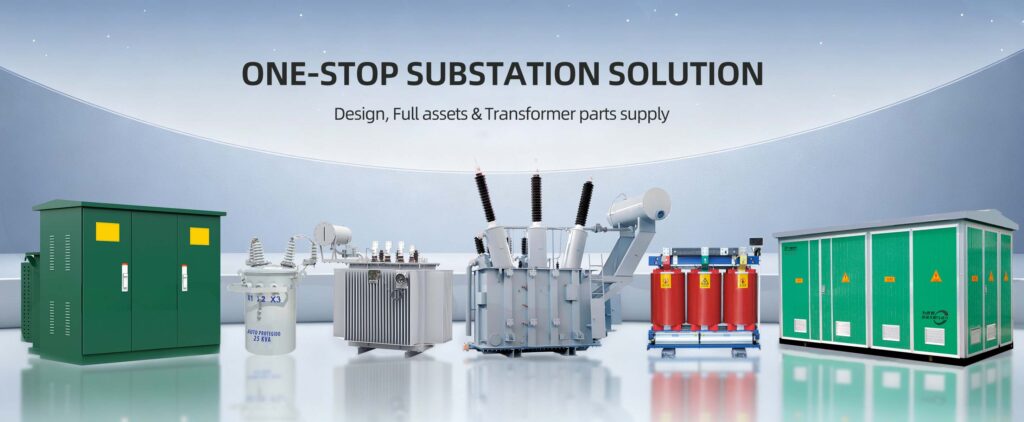
Analysis of the 300 kVA and 1000 kVA Distribution Transformer Project in Tropical Coastal Suriname
Project Overview: Building Reliable Power Distribution Solutions for Complex Environments
For global power projects, transformer procurement is not simply a matter of matching capacity and comparing prices. Especially in tropical coastal regions, equipment operation is continuously affected by multiple factors, including high temperatures, high humidity, salt spray corrosion, grid fluctuations, and maintenance conditions. If these factors are not fully considered during the initial design stage, equipment that meets basic technical specifications may still experience reduced efficiency, accelerated insulation aging, and increased maintenance costs during long-term operation.
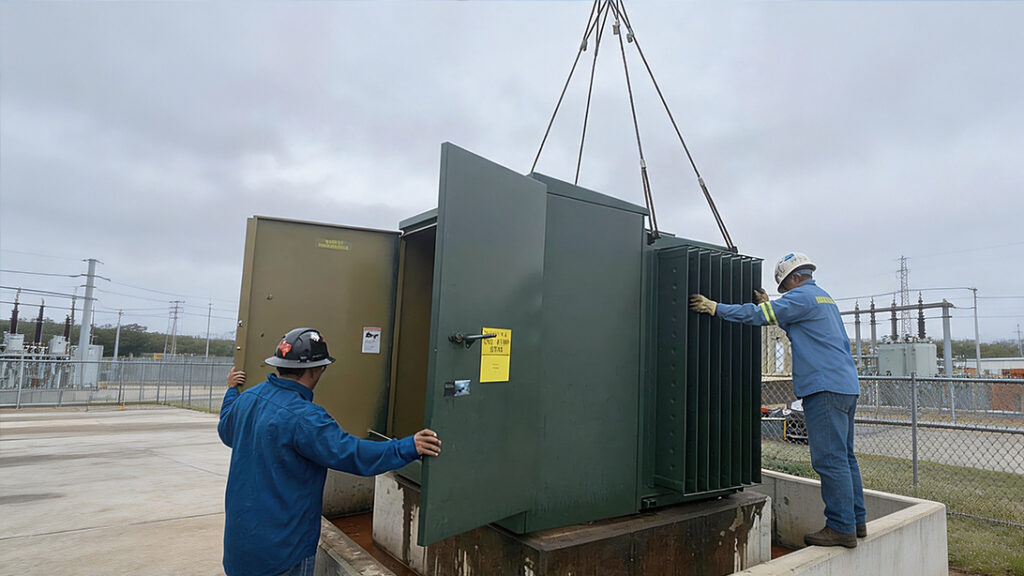
On July 25, 2026, Zisheng Electric successfully completed the delivery of two three-phase distribution transformers for the Suriname market. The products included a 300kVA distribution transformer and a 1000kVA distribution transformer. Designed specifically for local commercial and industrial power distribution requirements, the transformers adopt a 12.4kV medium-voltage input and 480V low-voltage output system, matching the characteristics of the Suriname power grid. The products were designed, manufactured, and tested in accordance with IEC international standards.
This project delivery represents more than the export of two transformer units. It demonstrates Zisheng Electric’s comprehensive capabilities in handling complex climatic conditions, adapting to diverse grid environments, and delivering reliable overseas power solutions.
Located in northeastern South America and facing the Atlantic Ocean, Suriname is a typical tropical coastal country. In recent years, with the continued development of urban construction, industrial expansion, and energy infrastructure upgrades, demand for grid expansion and power distribution system modernization has been steadily increasing.
For markets like Suriname, customers are not only concerned about whether equipment can be delivered on time, but also whether:
- The equipment can withstand long-term high-humidity environments;
- The transformer can resist coastal salt spray corrosion;
- Stable operation can be maintained under voltage fluctuations;
- Long-term maintenance costs can be effectively controlled;
- The supplier has the capability to provide long-term overseas support.
Therefore, during the project design phase, Zisheng Electric did not simply manufacture the transformers based on conventional distribution transformer solutions. Instead, the company analyzed local operating conditions and carried out targeted optimization in terms of product structure, protection level, insulation system, and heat dissipation design.
I. Analysis of Suriname’s Power Environment: Why Customized Transformer Solutions Are Required
1. Impact of Tropical High-Humidity Conditions on Long-Term Transformer Operation
Suriname has a typical tropical rainforest climate, with relatively stable temperatures throughout the year but consistently high humidity levels.
The main environmental characteristics include:
| Environmental Factor | Typical Conditions in Suriname |
|---|---|
| Average Annual Temperature | Approximately 23-27℃ |
| Relative Humidity | 80%-90% |
| Annual Rainfall | 2000-2500mm |
| Geographic Environment | Tropical coastal region |
| Main Risks | Humidity, salt spray, corrosion |
For conventional power distribution equipment, the biggest challenge caused by high humidity is not immediate failure, but long-term accumulated damage.
For example:
- Excessive humidity can cause insulation materials to absorb moisture;
- Metal components exposed for long periods may suffer corrosion;
- Poor sealing in connection areas may lead to condensation;
- Reduced insulation performance can increase the risk of partial discharge.
Transformers are typically designed for a service life of more than 20 years, meaning environmental adaptability directly determines equipment reliability throughout its lifecycle.
For the Suriname project, Zisheng Electric focused on improving the transformer’s long-term environmental adaptability by strengthening sealing performance, corrosion protection, and insulation design, ensuring stable operation under hot and humid conditions.
2. Corrosion Challenges Caused by Coastal Salt Spray Conditions
Northern Suriname is located close to the Atlantic Ocean, and coastal areas are continuously influenced by marine climatic conditions.
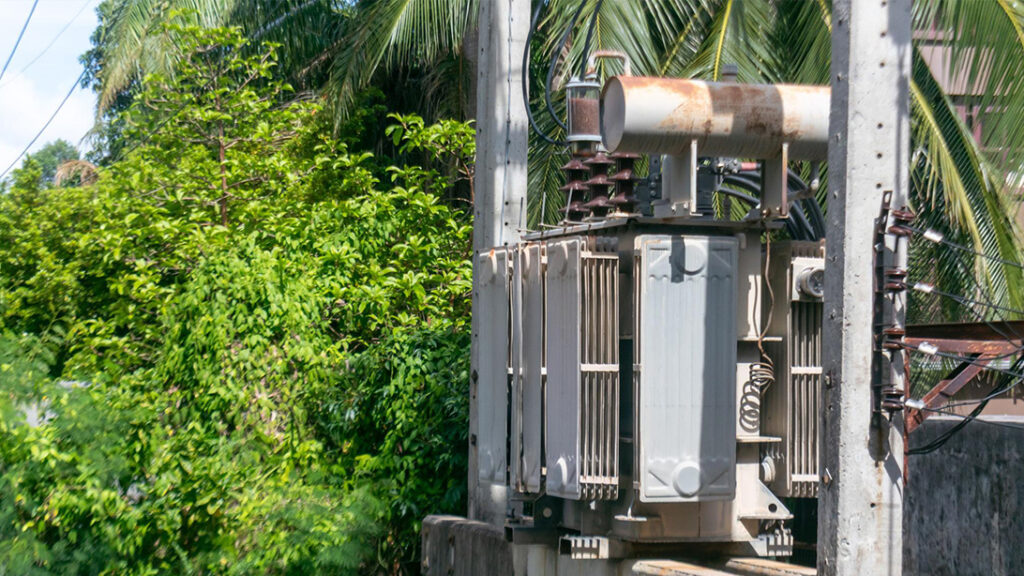
The chloride ions contained in salt spray are highly corrosive and can accelerate:
- Corrosion of steel transformer enclosures;
- Oxidation of fasteners and hardware components;
- Aging of electrical connection components;
- Reduction of the service life of outdoor accessories.
For pad-mounted transformers installed in urban distribution areas, industrial parks, or outdoor public spaces, corrosion resistance of the enclosure is a critical factor.
Therefore, the equipment in this project adopts an enhanced anti-corrosion protection solution for external protection, including:
- Optimized steel enclosure structure;
- Multi-layer anti-corrosion coating system;
- Enhanced surface weather resistance treatment;
- Additional corrosion protection for critical connection points.
Compared with conventional outdoor products, this design provides better adaptability for long-term operation in coastal environments.
3. Suriname Power Grid Characteristics and Transformer Matching Requirements
Suriname’s power system adopts a 60Hz grid frequency system, similar to the North American power network.
The main parameters are as follows:
| Item | Parameter |
|---|---|
| Grid Frequency | 60Hz |
| Medium Voltage Side | 12.4kV |
| Low Voltage Side | 480V / 480-277V |
| Application Type | Commercial, Industrial, Public Facilities |
For this project:
300kVA Transformer
Mainly used for:
- Small and medium-sized commercial loads;
- Distribution branch power supply applications.
1000kVA Transformer
Designed for higher-load applications, capable of supporting:
- 480V three-phase power loads;
- 277V single-phase lighting systems;
- Industrial equipment power supply requirements.
This 480/277V dual-voltage output configuration is widely used in commercial and industrial projects across North America and the Caribbean region, improving equipment compatibility and application flexibility.
4. Transition from Overhead Lines to Underground Distribution Drives Growth in Pad-Mounted Transformer Demand
In recent years, urban areas in Suriname have gradually promoted the development of underground power distribution systems.
Compared with traditional pole-mounted transformers, pad-mounted transformers offer significant advantages:
Higher Safety Performance
The equipment is installed on a concrete foundation and equipped with a lockable metal enclosure, reducing the risk of unauthorized access and improving operational safety.
Better Suitability for Urban Environments
Underground cable distribution systems can:
- Reduce the number of overhead power lines;
- Improve urban aesthetics;
- Minimize the impact of severe weather conditions.
Easier Expansion Capability
Commercial parks, residential communities, and industrial projects can configure transformers with different capacities according to actual load requirements.
With Suriname’s continued modernization of its power grid, pad-mounted transformers will become one of the key solutions for urban power distribution upgrades.
5. Customer Project Requirement Analysis
For this project, the customer required two three-phase pad-mounted distribution transformers. The main technical specifications are as follows:
| Parameter | 300kVA Unit | 1000kVA Unit |
|---|---|---|
| Rated Capacity | 300kVA | 1000kVA |
| Phase | Three Phase | Three Phase |
| Primary Voltage | 12.4kV | 12.4kV |
| Secondary Voltage | 480V | 480/277V |
| Frequency | 60Hz | 60Hz |
| Cooling Method | Oil Immersed Natural Cooling | Oil Immersed Natural Cooling |
| Connection Method | Radial Distribution | Radial Distribution |
| Standard | IEC | IEC |
From the technical requirements, it can be seen that the key objective of this project was not simply high-capacity power supply. Instead, the focus was to achieve:
- Long-term stable operation;
- Low maintenance requirements;
- Strong environmental adaptability;
- Reliable project delivery.
These factors are also the core considerations that Zisheng Electric consistently focuses on during overseas project design and implementation.
II. In-depth Product Analysis: Transformer Design Solutions Developed for Suriname’s Operating Environment
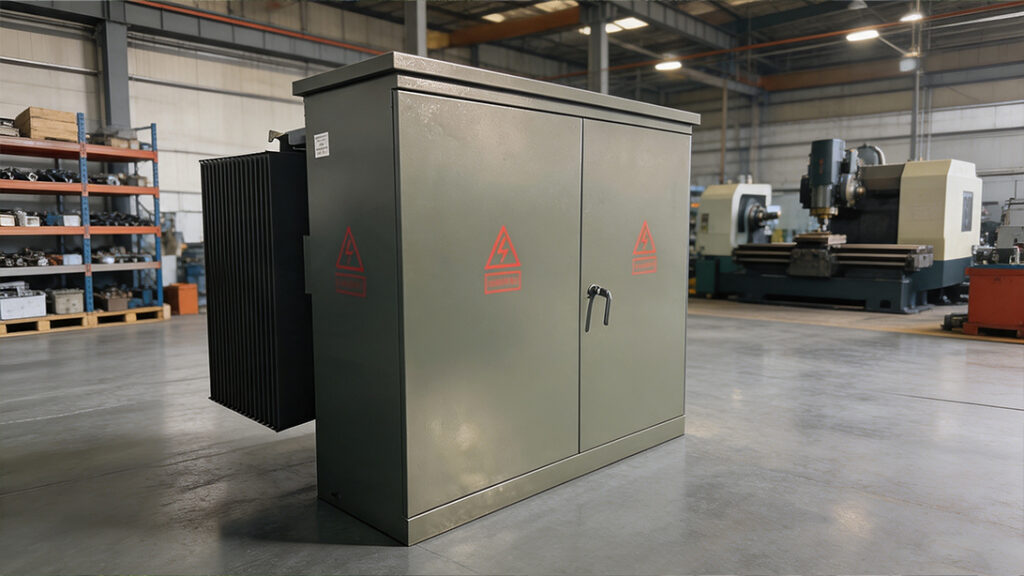
For power projects, transformer procurement is not simply a matter of comparing capacity, voltage levels, and prices.
Especially in tropical coastal countries like Suriname, the long-term operating environment is significantly different from that of traditional industrial regions. High temperatures, high humidity, heavy rainfall, salt spray corrosion, and grid fluctuations can directly affect transformer service life and maintenance costs.
Therefore, the 300kVA and 1000kVA three-phase pad-mounted distribution transformers supplied for this project were not based on a standardized product solution. Instead, they were specifically designed according to the local climate conditions, power grid characteristics, and customer operational requirements.
From the transformer core, windings, and insulation system to the tank structure, corrosion protection level, and connection configuration, every design detail focused on one core objective:
To ensure long-term stable operation in complex environments while reducing the customer’s future maintenance burden.
1. Core Design: Reducing Losses and Improving Long-Term Operating Efficiency
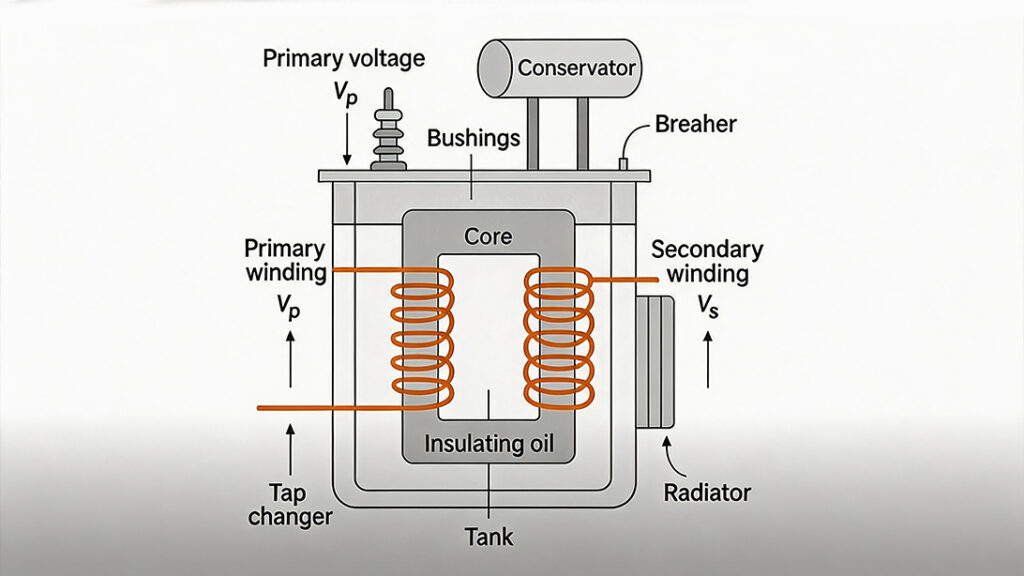
The transformer core is the key component responsible for electrical energy conversion. Its performance directly determines the transformer’s no-load losses, operating temperature rise, and long-term energy efficiency performance.
For the Suriname project, Zisheng Electric adopted high-quality grain-oriented silicon steel sheets as the core material and optimized the magnetic circuit design to improve overall transformer efficiency.
(1) High-Performance Silicon Steel Sheets Reduce Long-Term Energy Consumption
Even when a transformer operates without load, the core continues to generate no-load losses.
For commercial buildings, industrial parks, and public power distribution systems, transformers typically operate continuously throughout the year. Therefore, reducing no-load losses can directly lower long-term energy consumption.
Compared with conventional silicon steel materials, high-grade grain-oriented silicon steel features lower hysteresis losses and eddy current losses, effectively reducing:
- No-load losses;
- Core temperature rise;
- Excitation current;
- Operating noise.
For high-temperature environments such as Suriname, lower core losses mean reduced internal heat accumulation, providing greater temperature-rise margins during full-load operation.
This helps the transformer maintain stable performance even under continuous high-load conditions.
(2) Step-Lap Core Structure Optimizes Magnetic Flux Path
In terms of core structure design, Zisheng Electric applies Step-Lap technology.
With traditional butt-joint core structures, the connection area may cause:
- Magnetic flux concentration;
- Increased local magnetic resistance;
- Enhanced leakage flux;
- Localized core heating.
Especially during long-term operation, these issues can increase transformer temperature rise and negatively affect equipment service life.
The Step-Lap structure uses multiple layers of silicon steel sheets arranged with staggered joints, allowing magnetic flux to pass through the core joint area more smoothly.
Its advantages include:
- Reducing magnetic flux distortion;
- Lowering local hot-spot temperatures;
- Reducing no-load losses;
- Minimizing operating noise.
For overseas power distribution projects requiring long-term reliability, this structural optimization significantly improves transformer operating stability and service life.
2. Winding Design: Balancing High-Temperature Conditions and Load Variations
The transformer winding carries electrical current loads over long periods and is one of the most important components affecting equipment service life.
Suriname’s year-round high humidity and high-temperature environment means that the winding insulation system must withstand not only electrical stress but also continuous thermal stress and moisture impact.
Therefore, during the winding design stage of this project, the transformers were developed with particular focus on:
- Insulation reliability;
- Heat dissipation performance;
- Short-term overload capability;
- Long-term operating stability.
(1) High-Grade Insulation System Enhances Environmental Adaptability
Conventional transformer designs are usually based on standard environmental operating conditions.
However, in Suriname:
- Annual average humidity is 80%-90%;
- Annual rainfall exceeds 2000mm;
- Coastal areas are exposed to salt spray conditions.
These environmental factors can accelerate the aging of insulation materials.
Therefore, Zisheng Electric adopted an insulation material system with higher heat resistance and moisture resistance, improving winding stability under complex environmental conditions.
This design effectively reduces:
- Risk of insulation moisture absorption;
- Risk of partial discharge;
- Long-term thermal aging rate.
As a result, the transformer service life is extended and operational reliability is improved.
(2) Optimized Cooling Structure Improves Heat Dissipation Efficiency
During transformer operation, the windings generate a significant amount of heat.
If heat dissipation capability is insufficient, even when electrical parameters meet requirements, excessive temperature rise may result in:
- Accelerated insulation aging;
- Reduced load capacity;
- Increased probability of failure.
Considering Suriname’s high-temperature environment, this project adopts an optimized cooling channel design.
By arranging the internal oil flow paths of the windings more effectively, the cooling medium can remove heat more efficiently.
Compared with conventional structures, this solution provides:
- More uniform temperature distribution;
- Lower hot-spot temperature rise;
- Better continuous operating capability.
It is particularly suitable for applications such as:
- Industrial parks;
- Commercial buildings;
- Data center supporting facilities;
- Public power grid upgrade projects.
3. Enclosure and Anti-Corrosion Design: Addressing Tropical Coastal Environment Challenges
For the Suriname project, corrosion protection is not an additional feature, but a critical factor determining long-term equipment reliability.
Because northern Suriname is located near the Atlantic coast, the air contains salt particles, while humidity remains high throughout the year.
After long-term outdoor operation, conventional equipment may experience:
- Enclosure corrosion;
- Fastener corrosion;
- Oxidation of cable connection points;
- Reduced sealing performance.
Therefore, the transformers in this project adopt an enhanced protection design.
Fully Sealed Steel Enclosure Structure
The equipment enclosure adopts a high-strength steel structure with sealing treatment.
Its main functions include:
Preventing Moisture Intrusion
In high-humidity environments, moisture entering the transformer interior may cause:
- Reduced insulation performance;
- Oil contamination from moisture absorption;
- Corrosion of metal components.
The fully sealed structure effectively reduces the risk of external moisture entering the equipment.
Improving Outdoor Operating Reliability
Pad-mounted transformers are commonly installed in:
- Urban distribution areas;
- Commercial parks;
- Industrial sites;
- Areas near roads.
Therefore, the equipment must provide not only electrical performance but also strong mechanical protection.
The lockable protective enclosure can:
- Prevent unauthorized operation;
- Protect internal connection components;
- Improve installation safety in public areas.
Multi-Layer Heavy-Duty Anti-Corrosion Coating System
To withstand coastal environmental conditions, Zisheng Electric applies a multi-layer anti-corrosion coating system:
First Layer: Zinc-Rich Primer
Functions:
- Provides cathodic protection;
- Enhances rust resistance.
Second Layer: Epoxy Micaceous Iron Intermediate Coating
Functions:
- Improves coating adhesion;
- Enhances shielding performance.
Third Layer: Weather-Resistant Polyurethane Topcoat
Functions:
- Resists ultraviolet radiation;
- Prevents chemical corrosion;
- Maintains long-term surface appearance quality.
This coating system effectively withstands:
- Salt spray;
- High humidity;
- Strong sunlight;
- Tropical climate variations.
It meets the requirements for long-term outdoor operation.
4. Oil System Design: Reducing Maintenance Costs Through Fully Sealed Structure
This project adopts an oil-immersed pad-mounted transformer structure.
Compared with traditional transformer designs equipped with conservator tanks, the fully sealed corrugated oil tank structure is more suitable for high-humidity environments such as Suriname.
Why Choose a Fully Sealed Oil Tank?
Traditional oil-immersed transformers usually include:
- Conservator tanks;
- Breathers;
- Silica gel moisture absorbers.
Although these systems can compensate for oil volume changes, they create additional maintenance requirements in humid environments.
For example:
When air humidity remains above 80% for long periods, silica gel in the breather can quickly lose effectiveness, requiring frequent inspection and replacement.
A fully sealed oil tank provides:
- Isolation from external air;
- Elimination of the need for a conservator tank;
- Reduced maintenance frequency;
- Lower risk of oil moisture contamination.
This is particularly important for overseas projects.
Many overseas installation sites are:
- Far from urban areas;
- Limited in maintenance personnel;
- Subject to long spare-parts supply cycles.
Reducing maintenance requirements directly improves project economic efficiency.
Corrugated Cooling Structure Improves Heat Dissipation
The fully sealed oil tank adopts a corrugated radiator structure.
Its advantages include:
- Increasing heat dissipation area;
- Accommodating oil volume expansion and contraction;
- Improving natural cooling performance.
The transformer oil circulates internally, transferring heat generated by the windings to the tank walls, and then releasing heat into the surrounding environment through the corrugated cooling fins.
Even during Suriname’s high-temperature seasons, the transformer can maintain stable operation.
IV. Quality Control and Compliance with International Standards: Ensuring Overseas Project Requirements Are Met
Suriname’s power system operates at a 60Hz frequency, and its distribution equipment requirements are relatively close to the North American power system.
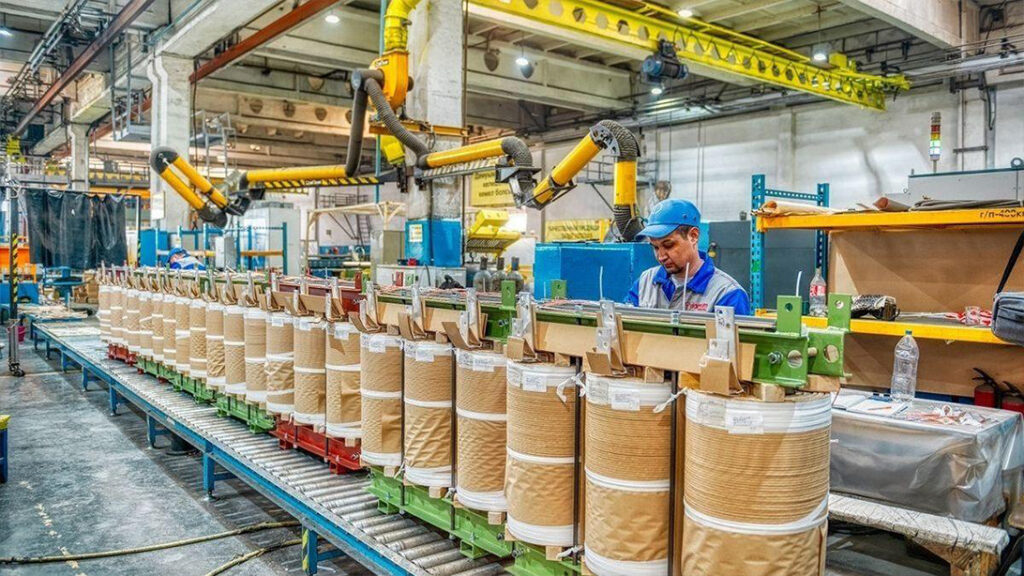
Therefore, during the design stage of this project, Zisheng Electric did not only manufacture the products according to the technical specifications provided by the customer. The company also integrated IEC international standards, local grid operating conditions, and actual installation environments to carry out targeted optimization of the transformer structure and performance.
1. Compliance with IEC 60076 Series Standards
The two distribution transformers supplied for this project were designed and tested in accordance with the IEC 60076 series of international standards.
The main applicable standards include:
| Standard | Main Requirements |
|---|---|
| IEC 60076-1 | General requirements for power transformers |
| IEC 60076-2 | Temperature rise tests and thermal performance requirements |
| IEC 60076-3 | Insulation levels and dielectric withstand test requirements |
| IEC 60076-10 | Sound level measurement requirements |
| IEC 60076 thermal environment requirements | Design reference for high-temperature applications |
These standards cover the entire transformer lifecycle, from design and manufacturing to final factory testing.
For tropical coastal countries such as Suriname, temperature rise control and insulation reliability are particularly important.
During long-term transformer operation, winding temperature directly affects the lifespan of insulation materials. Higher ambient temperatures and poorer heat dissipation conditions place greater demands on internal transformer design.
Therefore, during the design process of this project, Zisheng Electric focused on:
- Reducing core no-load losses;
- Optimizing winding heat dissipation paths;
- Improving insulation system heat resistance and moisture resistance;
- Enhancing enclosure corrosion protection levels;
- Increasing long-term operational reliability.
2. Strict Factory Testing Procedures Before Shipment
Before shipment, each transformer undergoes a complete factory testing process.
The main testing items include:
Routine Tests
Every unit must complete:
- Winding DC resistance test;
- Voltage ratio test;
- Polarity and phase relationship verification;
- No-load loss test;
- No-load current test;
- Load loss test;
- Short-circuit impedance test;
- Power frequency withstand voltage test.
These tests ensure that the actual equipment performance matches the design specifications.
Design Verification Tests
For projects involving special environmental conditions, additional verification focuses on:
- Temperature rise performance;
- Insulation withstand capability;
- Short-circuit withstand capability;
- Mechanical structural reliability.
Among these, temperature rise testing is especially important.
For a country like Suriname with year-round high humidity, insufficient heat dissipation design may cause the transformer to experience:
- Increased oil temperature;
- Accelerated winding aging;
- Reduced insulation lifespan;
- Higher probability of equipment failure.
Therefore, considering environmental conditions during the design stage is far more effective than solving problems after installation.
V. Installation Considerations for the Suriname Project
The stable operation of a transformer depends not only on manufacturing quality but also on proper site installation conditions.
For the Suriname project, due to the local characteristics of high rainfall, high humidity, and underground distribution applications, the following installation factors require special attention.
1. Foundation Design and Drainage Requirements
Pad-mounted transformers are typically installed on concrete foundations.
Suriname receives approximately 2000-2500mm of annual rainfall, and some areas have relatively high groundwater levels. Therefore, foundation design must fully consider waterproofing and drainage requirements.
Recommended Installation Requirements
Foundation Height
The top surface of the foundation should be above the surrounding ground level:
≥300mm
This helps prevent:
- Rainwater infiltration;
- Mud and sediment entering the bottom of the equipment;
- Long-term moisture exposure causing enclosure corrosion.
Drainage Design
The foundation area should include:
- Drainage channels;
- Proper drainage slopes;
- Anti-water accumulation structures.
It is recommended that the foundation surface maintain approximately a 2% drainage slope to allow rainwater to flow away quickly.
For tropical environments, effective drainage design can significantly reduce long-term equipment operating risks.
2. Medium- and Low-Voltage Cable Connection Requirements
This project adopts:
- 12.4kV primary-side input;
- 480V secondary-side output.
During installation:
High-Voltage Side
The 12.4kV cable connection requires:
- Voltage-rated termination accessories;
- Correct installation of stress cones;
- Proper control of electric field distribution at cable ends.
Otherwise, problems may occur, including:
- Partial discharge;
- Insulation breakdown;
- Long-term operational failures.
Low-Voltage Side
For 480V or 480/277V output connections, it is necessary to confirm:
- Correct three-phase phase sequence;
- Proper tightening torque of terminal connections;
- Adequate conductor size for the load requirements.
For the 1000kVA transformer, the larger output capacity results in higher low-voltage current. Therefore, connection quality directly affects operational safety and reliability.
3. Site Inspection After Sea Transportation
Since the equipment is transported over long distances by sea, a comprehensive inspection is recommended after arrival at the destination.
The inspection should include:
Insulation Inspection
Confirm:
- Winding insulation condition;
- Whether moisture absorption occurred during transportation.
Oil System Inspection
Confirm:
- Normal oil level;
- No oil leakage from the tank;
- Oil dielectric strength meets requirements.
Protection Device Inspection
Confirm that the following devices are operating normally:
- Temperature monitoring devices;
- Pressure relief devices;
- Oil level monitoring devices.
VI. Why Pad-Mounted Transformers Are Suitable for Suriname’s Grid Upgrade Projects
With Suriname continuously advancing urban grid modernization and underground distribution development, pad-mounted transformers are becoming one of the key components in future distribution systems.
Compared with traditional pole-mounted transformers, pad-mounted solutions provide significant advantages.
1. Better Suitability for Urban and Commercial Development
Most electricity demand in Suriname is concentrated in:
- Paramaribo;
- Urban commercial areas;
- Industrial parks.
These areas require higher levels of:
- Power supply reliability;
- Safety performance;
- Environmental compatibility.
Pad-mounted transformers provide:
- Compact installation footprint;
- Higher protection level;
- Easier maintenance;
- Better compatibility with underground cable systems.
Therefore, they are highly suitable for:
- Commercial buildings;
- Industrial facilities;
- Residential development projects;
- Public infrastructure projects.
2. Supporting Renewable Energy and Remote Area Power Supply
In recent years, Suriname has also been promoting:
- Solar photovoltaic projects;
- Energy storage projects;
- Microgrid development.
These renewable energy projects also require reliable distribution equipment.
Typical applications include:
- Solar step-up transformation;
- Energy storage grid connection;
- Small regional power networks.
Different transformer capacity levels can be flexibly configured according to project scale and power requirements.
VII. Our Capabilities: Providing Complete Transformer Solutions for Overseas Customers
The successful delivery of the Suriname project represents more than the export of two transformer units. It demonstrates the engineering response capability of Chinese manufacturing enterprises in handling complex international power projects.
As a professional transformer manufacturer, Zisheng Electric has long served overseas markets, with products including:
- Oil-immersed distribution transformers;
- Dry-type transformers;
- Compact substations;
- Power transformers.
The capacity range covers:
30kVA to 3150kVA and above.
Solutions can meet the requirements of:
- Commercial building power supply;
- Industrial park distribution systems;
- Renewable energy projects;
- Grid modernization projects.
1. Supporting Customized Project Design
Different countries have different grid standards and application requirements.
Therefore, Zisheng Electric provides customized solutions according to customer needs.
Voltage Customization
Examples include:
- 10kV;
- 11kV;
- 12.4kV;
- 20kV;
- 33kV.
Capacity Customization
Examples include:
- 100kVA;
- 300kVA;
- 500kVA;
- 1000kVA;
- 2500kVA.
Environmental Adaptation
Design adjustments can be made according to project location, including:
- Corrosion protection level;
- Insulation level;
- Heat dissipation design;
- Enclosure structure.
Especially for:
- Tropical regions;
- Island environments;
- Desert regions;
- High salt spray areas.
2. From Technical Confirmation to Delivery Support
The key concerns of overseas customers usually include:
- Does the product comply with local standards?
- Is the delivery schedule reliable?
- Are all technical documents complete?
- Is installation convenient?
Therefore, Zisheng Electric provides complete project support, including:
✔ Technical specification confirmation
✔ Product solution design
✔ Engineering drawing review
✔ Factory test reports
✔ Marine transportation packaging
✔ Installation guidance
✔ After-sales technical support
Helping customers reduce procurement risks and ensure smooth project implementation.
VIII. Conclusion: Designed for Suriname, Providing Reliable Power Protection for Overseas Projects
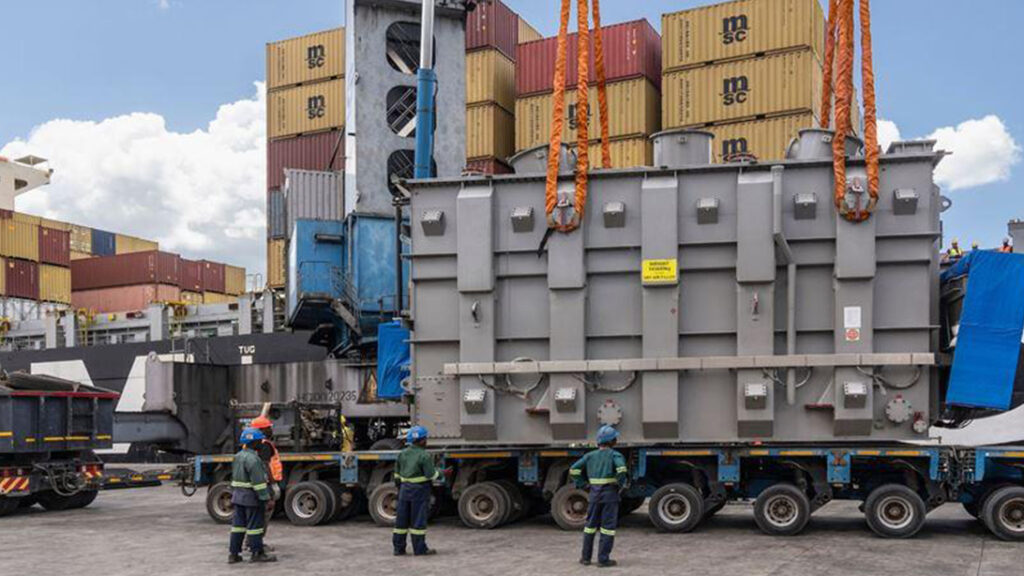
The 300kVA and 1000kVA Distribution Transformer Project in Suriname: An Engineering Optimization Case Designed for Special Operating Conditions
The Suriname 300kVA and 1000kVA distribution transformer project represents a typical engineering optimization case developed specifically for challenging operating environments.
The local conditions, including:
- High temperatures;
- High humidity;
- Heavy rainfall;
- Coastal salt spray exposure;
- Growing demand for grid modernization;
have placed higher requirements on power distribution equipment.
To address these challenges, Zisheng Electric implemented a series of targeted design improvements, including:
- High-performance grain-oriented silicon steel cores;
- Optimized magnetic circuit structures;
- Moisture-resistant insulation systems;
- Fully sealed oil tank designs;
- Heavy-duty anti-corrosion enclosure protection;
- Flexible voltage configuration solutions.
These measures ensure that the transformers can adapt to Suriname’s long-term operating environment while maintaining stable, reliable performance.
For overseas customers who are developing:
- Power grid construction projects;
- Industrial facilities;
- Renewable energy projects;
selecting the right transformer supplier is not only about choosing equipment—it is also about choosing a reliable partner who can help ensure smooth project execution according to schedule.
If your project is looking for:
- IEC-standard transformers;
- Reliable export suppliers;
- Customized power distribution solutions;
we welcome you to contact us.
Based on your requirements, including:
- Voltage level;
- Capacity requirements;
- Installation environment;
- Project schedule;
we can provide professional transformer selection recommendations and customized engineering solutions.
Ensuring that every power project moves forward without delays caused by transformer supply challenges.
About ZISHENG ELECTRICAL
Zisheng are a professional 19+ years manufacturer in producing Oil-Immersed Transformers, Compact Substation, Pad Mounted Transformers, Pole Mounted Transformers and Dry Type Transformers. We own the certificates of ISO/CE/IEC 60076 and TUV Rheinland.
Transformers undergo rigorous FAT and type testing, support voltage/capacity customization. Welcome to consult for Catalog and Product. you can contact us at email [email protected].