
Transformer Oil Processing Readiness Plan for African EPC Sites: Equipment, Utilities and Acceptance
A transformer oil processing readiness plan should be agreed before a specialist crew leaves its depot. Zisheng Electric can help EPC buyers connect transformer assembly requirements with the equipment, utilities and evidence needed at site. On an inland African project, a missing adapter, unavailable power supply or delayed laboratory result can consume an installation window even when the transformer itself has arrived on time.
This project-planning guide addresses the procurement and mobilization boundary for oil-handling work on a new or reassembled transformer. It is not an oil-processing procedure and describes no completed customer project. The transformer manufacturer, processing contractor and project owner must approve the actual method, limits and release criteria for the equipment and insulating liquid involved.
Buy a defined scope, not an unspecified filtration visit
Begin with the delivered condition of the transformer and the work remaining after receipt. Is oil shipped separately? Are radiators or other accessories fitted at site? Is the contractor processing delivered fluid, supporting an approved filling operation, or performing a different agreed activity? These tasks can require different equipment and different records. A quotation headed “oil filtration” does not explain which of them is included.
Obtain the manufacturer’s installation instructions, fluid specification, oil inventory and connection drawing before comparing contractor offers. State which party supplies the processing plant, vacuum equipment where required, storage vessels, hoses, adapters, temporary power, sampling materials, testing and supervision. The contract should identify exclusions in ordinary language and assign every excluded item to another named party.
Connect the scope to the shipping decision
The equipment arrangement at destination follows the agreed transformer shipping configuration. A split shipment transfers work to the installation site. Include that transferred work in the programme and budget, rather than assuming the oil contractor will absorb it within a standard attendance charge.
Agree who may authorize a change after mobilization. If a different fluid, connection or work sequence is proposed, the contractor should submit it for technical review before execution. An available machine is not automatically a suitable substitute for the one offered and approved.
Build the transformer oil processing readiness plan around evidence
Ask for an equipment-specific submission, not a generic company brochure. It should identify the plant to be mobilized, its documented capabilities, maintenance status, instruments and proposed accessories. Distinguish the machine’s advertised nominal flow from its capability under the actual fluid condition and approved operating method. A high catalogue capacity does not establish a guaranteed completion time for the whole site activity.
ENERVAC describes high-vacuum purification as a process that can remove water, dissolved gases and particles from insulating liquids. That is a description of process capability, not a universal acceptance criterion or permission to apply vacuum to every transformer compartment. The offered equipment and the transformer’s approved method must be reviewed together.
| Readiness item | Buyer question | Required evidence | Release owner |
|---|---|---|---|
| Work boundary | Which oil-handling and assembly tasks are included? | Scope schedule linked to manufacturer instructions | EPC installation lead |
| Processing plant | Is the identified machine suitable for the fluid and method? | Equipment data, capability review and maintenance record | Contractor and transformer manufacturer |
| Electrical supply | Can the site support the complete connected duty? | Supply survey, load schedule and approved connection arrangement | Site electrical team |
| Oil connections | Do the hoses and adapters match the actual interfaces? | Connection schedule, component ratings and inspection | Mechanical installation lead |
| Working area | Are access, weather protection and containment ready? | Walkdown record and approved layout | Site manager |
| Sampling and tests | Who collects, tests and accepts each required sample? | Inspection plan, laboratory arrangements and acceptance criteria | Owner’s quality representative |
| Interrupted work | How will the equipment be preserved if work stops? | Approved interruption and restoration arrangements | Manufacturer and commissioning lead |
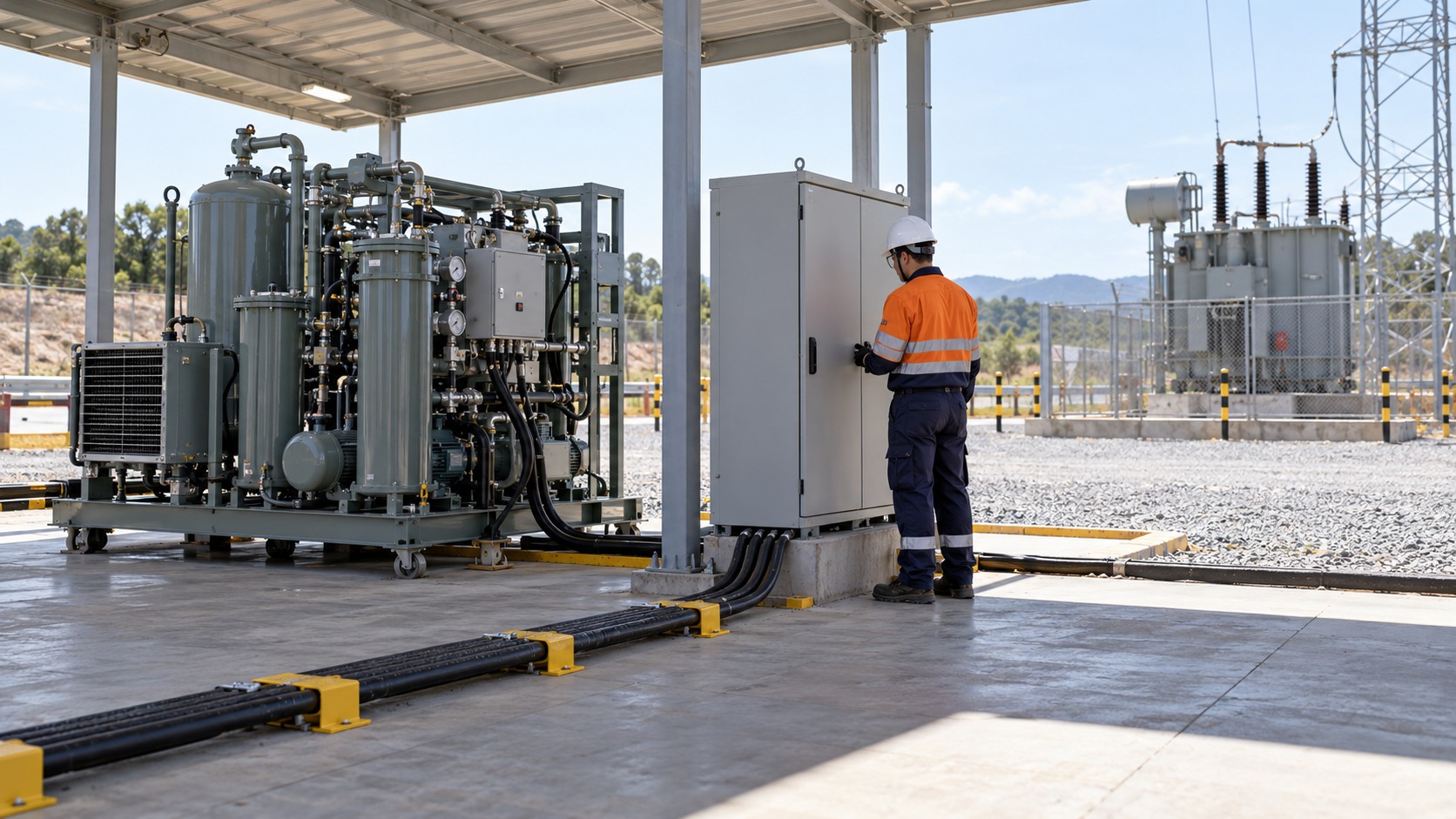
Turn the destination into a site resource schedule
A regional label cannot specify the conditions at an individual African installation. A coastal receiving yard, a high-altitude mine and an inland industrial estate may present very different constraints. Require a dated site survey covering access, working space, weather exposure, available services and local support. Each assumption should identify its source and the party responsible for confirmation.
Electrical supply and load duty
Confirm the voltage, frequency, phases, earthing arrangement and available capacity at the actual connection point for the contractor’s equipment. Do not copy the transformer’s grid-side rating into the temporary supply schedule. Obtain the processing plant’s full load list, including heaters, pumps and auxiliary equipment, and identify any significant starting or sequential duty that the supply designer must evaluate.
If a generator is proposed, have the competent electrical designer assess the complete load and connection arrangement. Record fuel responsibility, operating coverage and the response to a supply interruption. Utility or site-owner authorization must be obtained where applicable. No national voltage or frequency is assumed here: the approved local supply data govern the selection.
Heat, altitude and contamination exposure
Give the equipment supplier the confirmed ambient-temperature range and site elevation. Ask whether these conditions change the offered plant’s capability or operating requirements. Where dust, salt contamination, humidity or seasonal rainfall is relevant, translate that exposure into protected storage, covered connection work and inspection arrangements. Avoid a generic “tropical suitable” statement that leaves the contractor to decide the practical protection after arrival.
Review the work zone in the context of ongoing construction. Nearby earthworks, vehicle movements and cable installation can undermine an otherwise clean preparation area. Agree when the area is handed over to the specialist crew and who controls access during the work. This is often a programme coordination issue rather than an equipment purchasing issue.
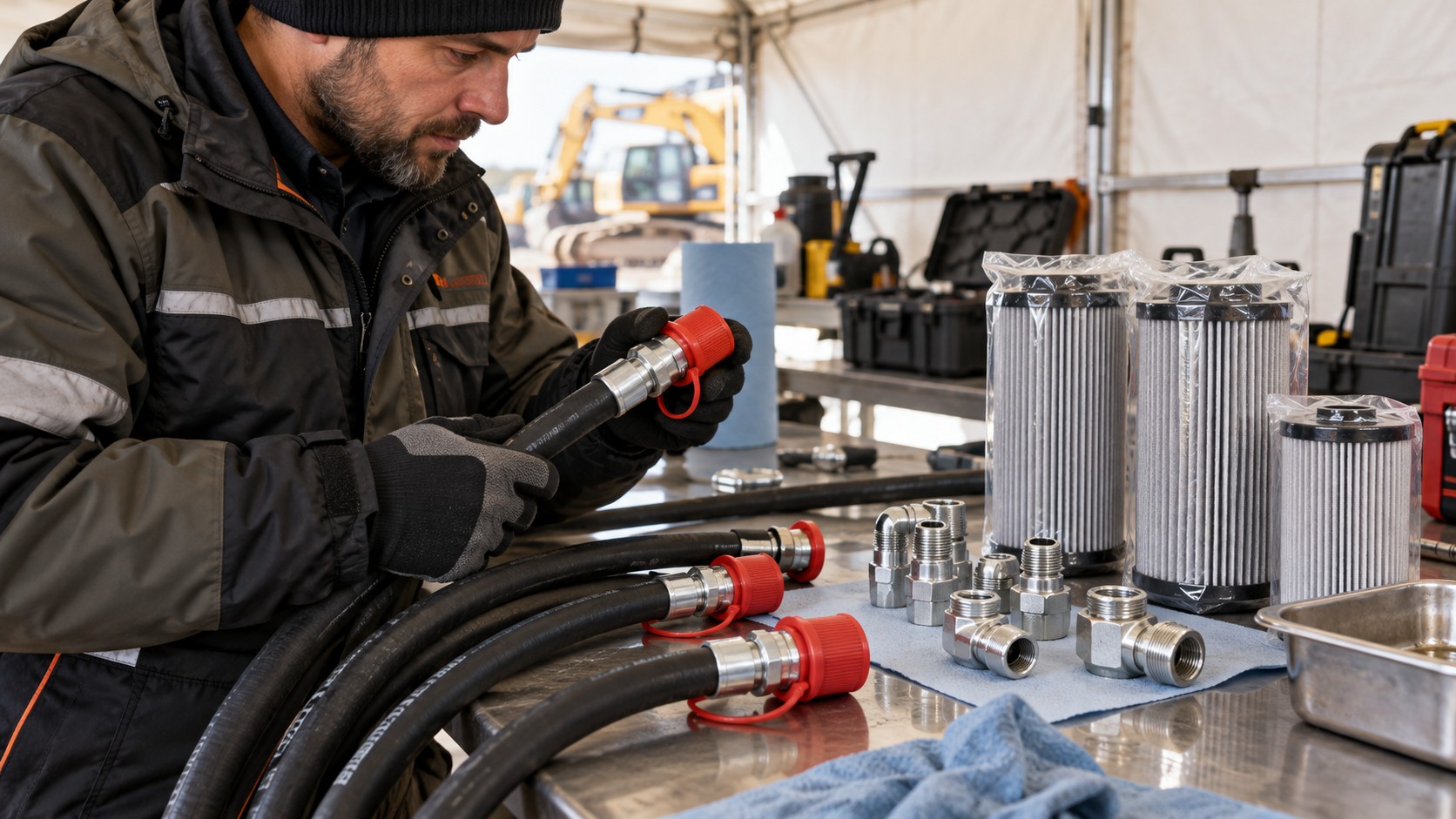
Inspect the complete connection kit before dispatch
Build a connection schedule from the approved drawings and verify it against the actual transformer and contractor equipment. Record the relevant fitting type, size, material and service limits, plus the owner of each adapter. Similar-looking threads and couplings should not be accepted on visual resemblance alone. Ask the responsible suppliers to confirm compatibility.
Hoses need suitable fluid compatibility, service capability, length and routing. Identify how they will be supported and protected from traffic, sharp edges and other site activity. Long hoses may solve a positioning problem but introduce additional handling and cleanliness concerns. Review the whole route, including access to emergency controls and equipment service panels.
Control previous service and cleanliness
For rented or shared equipment, request the relevant fluid-service history and the contractor’s approved cleaning or segregation arrangements. The project should establish what evidence is acceptable before equipment connects to the transformer. An unverified statement that a machine is “clean” is difficult to audit after the work has started.
Inspect caps, seals, storage containers and protected work surfaces before mobilization. List replacement filters, approved seals and other consumables by the actual equipment requirement. Keep these materials identifiable and protected during inland transport. The smallest missing fitting can become a major delay where an appropriate replacement is not locally available.
Plan time using the complete activity sequence
A realistic programme includes delivery, inspection, positioning, utility checks, approved preparation, processing activity, sampling, laboratory turnaround, review and restoration. Do not estimate the total outage or installation duration by dividing the oil volume by a nominal machine flow rate. That calculation omits activities that may control the completion date.
Ask the contractor to identify assumptions behind its proposed duration. Which operations can overlap? Which require a manufacturer witness or owner hold-point release? Is laboratory attendance needed on site, or will samples travel to another location? Where borders, remote roads or limited courier services are involved, obtain current arrangements from the responsible local providers rather than inserting a generic allowance.
Include spare equipment and technical support in the risk review. A reserve pump in another city is only useful if the project knows who can release it, how it will be transported and whether it is compatible. Agree escalation contacts and response coverage before work begins, especially if the processing crew operates across shifts or on a remote site.

Make sampling and acceptance independent of optimism
The inspection plan should specify the required tests, sampling points, timing, methods, acceptance basis and authorized reviewer. Those requirements must come from the contract, manufacturer and applicable project standards. This guide deliberately provides no universal moisture, gas, dielectric-strength or processing-time limit.
Connect the plan with the access provisions in our transformer oil sampling access guide. The team needs a practical way to take the specified samples without improvising a new connection or losing sample identity. Record the transformer, fluid compartment, sample point, date, time and relevant work status consistently.
Keep process records and acceptance results separate
A log showing that equipment ran for the planned duration is a process record. It is not, by itself, proof that the agreed oil condition was achieved or that the transformer is ready for energization. Likewise, an acceptable individual sample does not automatically close every assembly, electrical and protection check in the commissioning plan.
Preserve both sets of evidence and state what each release covers. If a result is outside the agreed acceptance basis, record the disposition and any approved repeat activity. Do not replace the original result with a later satisfactory value; the sequence may matter when the owner interprets the initial operating baseline.
Agree what happens if the work is interrupted
Plan for equipment faults, power loss, severe weather, missing materials and delayed approval before they occur. The responsible parties should define how the transformer and external equipment will be left in a controlled condition, how the interruption is recorded and what must be checked before work resumes. The actual preservation and restoration method remains specific to the transformer and activity.
Identify decision authority across shifts. A contractor should not improvise a substitute operating limit because the manufacturer’s contact is unavailable. Include a communication route, necessary photographs or readings, and a record of the instruction received. Clear escalation makes it easier to stop at the correct boundary without losing track of equipment condition.
Environmental arrangements also belong in readiness. Allocate containment, spill response materials, waste collection and disposal responsibilities under the site’s applicable rules. Obtain project-specific local requirements from the owner and competent local parties; do not assume that a contractor’s routine practice satisfies every destination.
Release mobilization only when the remaining gaps are visible
Use a short pre-mobilization meeting to close the resource schedule. Confirm equipment identity, crew competence, manufacturer attendance, temporary services, adapters, consumables, sampling arrangements and the expected site handover date. Record unresolved items with an owner, deadline and impact. An open item can be managed; an omitted item is discovered only when the crew needs it.
For a planning example, consider a transformer arriving before the permanent station-service supply is available. The programme should show an engineered temporary source and a verified connection arrangement for the processing plant. If that source has not been approved, the project has a readiness gap even when the contractor and machine are available. The correct decision follows the documented prerequisite, not the pressure to demonstrate progress.
At completion, collect the as-used equipment list, process logs, sampling records, acceptance results, restoration checks and outstanding-item closure into the transformer dossier. These records should identify the work actually performed and provide a useful starting point for later technical support.
Coordinate the transformer oil processing readiness plan with Zisheng Electric
When evaluating Zisheng Electric oil-immersed transformers or substation transformer configurations, include the transformer oil processing readiness plan in the delivery and installation discussion. The equipment offer and the site contractor’s scope should end at compatible technical boundaries.
Provide drawings, data sheets, load lists, technical specifications, single-line diagrams, grid parameters, environmental conditions and installation-site conditions. Add the shipping arrangement, proposed oil-processing equipment, temporary supply survey, available local support and inspection plan. Our engineering team will review the requirements and respond to project inquiries within 24 hours.
About ZISHENG ELECTRICAL
Zisheng are a professional 19+ years manufacturer in producing Oil-Immersed Transformers, Compact Substation, Pad Mounted Transformers, Pole Mounted Transformers and Dry Type Transformers. We own the certificates of ISO/CE/IEC 60076 and TUV Rheinland.
Transformers undergo rigorous FAT and type testing, support voltage/capacity customization. Welcome to consult for Catalog and Product. you can contact us at email [email protected].