How Can a Custom Transformer Be Designed to Meet Specific Project Requirements Efficiently?
Standard transformers often fail to meet unique project needs, causing inefficiencies and performance issues. Without customization, systems risk instability. Tailored solutions ensure precise performance, reliability, and long-term success.
A custom transformer design provides tailored transformer solutions based on specific electrical design parameters, including voltage and capacity customization. It integrates transformer engineering services, optimized materials, and certified transformer manufacturing to ensure performance, efficiency, and compliance across diverse power system applications.
Understanding how custom transformers are designed helps optimize system performance and meet specialized operational requirements.
What Is a Custom Transformer?
A custom transformer is a specially engineered device designed to meet unique project specifications that standard products cannot fulfill. Unlike off-the-shelf models, custom transformer design focuses on delivering tailored transformer solutions based on precise operational requirements.
These transformers are developed using detailed electrical design parameters, including load demand, voltage levels, environmental conditions, and installation constraints. Through transformer engineering services, manufacturers can adapt designs to meet specific industry needs.
Customization often includes voltage and capacity customization, enabling transformers to perform efficiently in specialized applications. This flexibility ensures compatibility with complex systems and improves overall performance.
As industries become more diverse and technically demanding, custom transformers play a critical role in delivering reliable and efficient power solutions.
Key Design Parameters for Custom Transformers
Designing a custom transformer requires careful consideration of multiple electrical design parameters. These include input and output voltage levels, power capacity, frequency, and load characteristics.
One of the most critical aspects is voltage and capacity customization, which ensures that the transformer meets the exact operational requirements of the system. Incorrect parameter selection can lead to inefficiency or equipment failure.
In addition, engineers must determine appropriate winding configuration options, which influence performance, efficiency, and thermal behavior. The selection of insulation levels and cooling requirements also plays a key role.
By carefully defining these parameters, manufacturers can deliver tailored transformer solutions that provide optimal performance and reliability in specific applications.
Engineering Process and Technical Requirements
The development of a custom transformer involves a comprehensive engineering process supported by advanced transformer engineering services. This process begins with requirement analysis and system evaluation to define technical specifications.
Engineers then create detailed design models, considering factors such as thermal performance optimization, electrical efficiency, and mechanical strength. Simulation tools are often used to validate design performance before production.
The process also includes prototype development, allowing manufacturers to test and refine the design. This ensures that the final product meets all technical and operational requirements.
Throughout the engineering phase, strict adherence to quality control standards is maintained to ensure reliability and compliance with industry regulations.
Material Selection and Core Design Options
Material selection is a critical aspect of custom transformer design, directly affecting performance, efficiency, and durability. The material selection process involves choosing appropriate core materials, conductors, and insulation systems.
The transformer core design plays a major role in determining energy efficiency and loss characteristics. Options may include silicon steel or advanced materials depending on project requirements.
Engineers must also consider insulation system design, ensuring that the transformer can withstand electrical stress and environmental conditions. Proper insulation enhances safety and extends service life.
Additionally, cooling method selection is essential for maintaining optimal operating temperatures. Effective cooling improves reliability and supports long-term performance.
By carefully selecting materials and design options, manufacturers can achieve high efficiency and durability in custom transformers.
Testing, Quality Control, and Certification
Ensuring the reliability of a custom transformer requires rigorous transformer testing procedures and strict adherence to quality control standards. Testing is conducted at multiple stages, from prototype evaluation to final product verification.
Routine tests, type tests, and special tests are performed to validate performance, safety, and compliance. These tests ensure that the transformer meets all specified requirements and operates reliably under real-world conditions.
Working with a provider of certified transformer manufacturing guarantees compliance with international standards and industry regulations. Certification also facilitates project approval and system integration.
Quality control processes are implemented throughout production to maintain consistency and prevent defects. This ensures that each transformer delivers reliable and long-lasting performance.
Integration with Specific Power System Applications
Custom transformers are designed to integrate seamlessly into specific power systems, ensuring optimal performance and compatibility. These systems may include industrial facilities, renewable energy installations, or infrastructure projects.
Through tailored transformer solutions, manufacturers can adapt designs to meet unique application requirements. This includes addressing space constraints, environmental conditions, and operational demands.
Integration also involves aligning the transformer with system-level requirements, such as load management and energy efficiency. Proper design ensures smooth operation within the overall power network.
By leveraging advanced transformer engineering services, custom transformers can be optimized for a wide range of applications, providing reliable and efficient power solutions.
Conclusion
Custom transformers deliver precise performance, reliability, and efficiency, making them essential for meeting specialized power system requirements and ensuring long-term operational success.
About ZISHENG ELECTRICAL
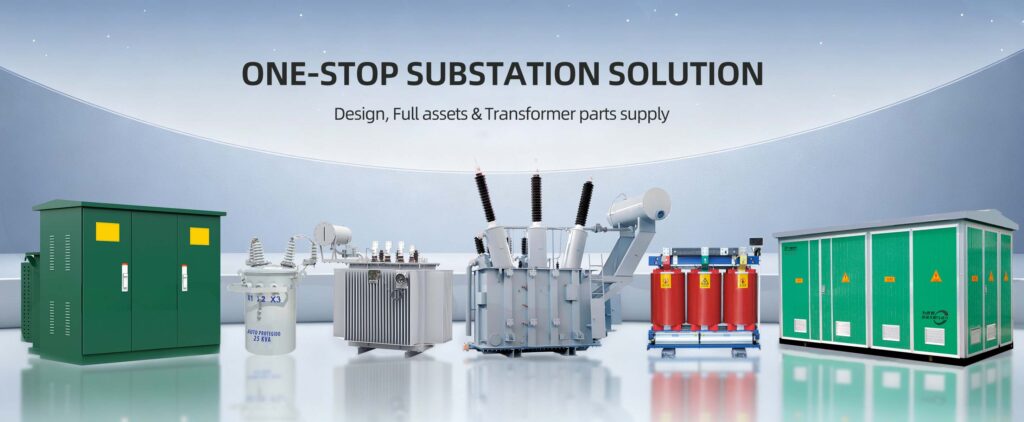
Zisheng are a professional 19+ years manufacturer in producing Oil-Immersed Transformers, Compact Substation, Pad Mounted Transformers, Pole Mounted Transformers and Dry Type Transformers. We own the certificates of ISO/CE/IEC 60076 and TUV Rheinland.
Transformers undergo rigorous FAT and type testing, support voltage/capacity customization. Welcome to consult for Catalog and Product. you can contact us at email [email protected].