From Principles to Operations and Maintenance: 16 Essential Facts About Transformers
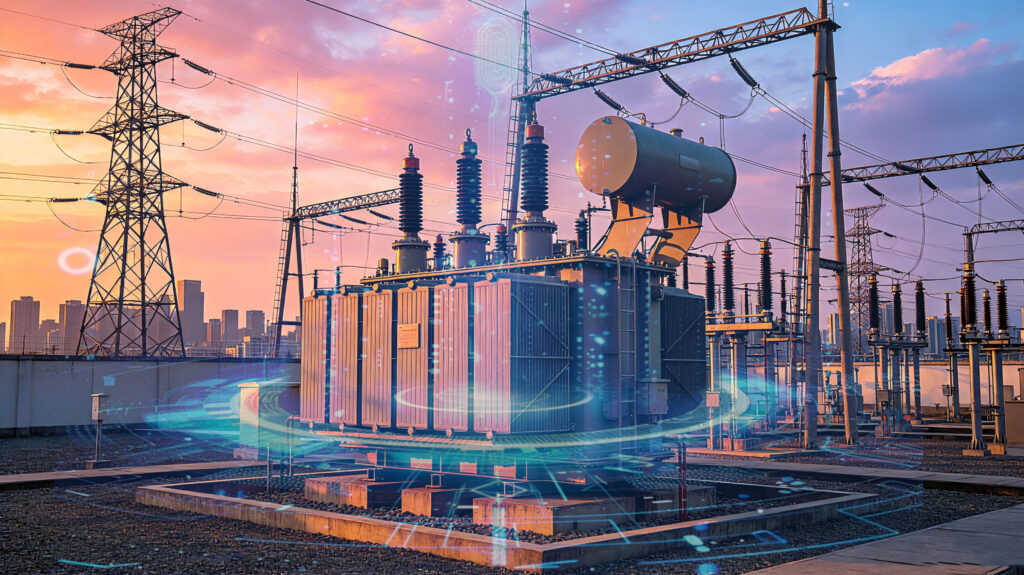
In modern power systems, transformers play a vital role in voltage transformation, power transmission, and load distribution. From stepping up voltage for transmission at the generation stage to stepping it down for supply to industrial parks and end-user equipment, transformers are indispensable across virtually all applications of electrical energy.
For electrical engineers, equipment operations and maintenance personnel, and power equipment procurement specialists, understanding the working principles, structural composition, performance parameters, and application characteristics of transformers is fundamental to ensuring the safe and stable operation of power supply systems.
The Middle East, in particular, places higher demands on transformer products due to conditions such as high temperatures, high humidity, and high salinity (salt spray), alongside the continuous growth of large-scale industrial projects. For instance, Jubail Industrial City in Saudi Arabia’s Eastern Province—a major global hub for petrochemicals and industrial manufacturing—hosts numerous industrial enterprises operating in temperatures around 50°C, necessitating strict standards for transformer reliability, heat dissipation capabilities, and protection ratings.
Drawing on real-world application cases from industrial projects in the Middle East and centering on 16 frequently asked questions, this article systematically introduces the fundamentals of transformers. It also analyzes specific products—such as S13 oil-immersed transformers, SCB13 dry-type transformers, and prefabricated box-type substations—to help readers build a comprehensive knowledge base that bridges theory and practice.
I. Understanding Transformers: Operating Principles and Basic Structure
1.What is a transformer?
A transformer is a static electrical device that converts alternating current (AC) voltage based on the principle of electromagnetic induction.
It can transform an input voltage into an output voltage of a different level while maintaining a constant frequency, thereby meeting the needs of power transmission, industrial production, and residential electricity consumption.
For example:
Power plants typically step up output voltage to hundreds of kilovolts to minimize transmission line losses during high-voltage transport; upon reaching industrial parks, the voltage is stepped down via distribution transformers to levels such as 10 kV or 0.4 kV to provide a stable power supply for production equipment.
Therefore, transformers primarily serve two core functions:
· Improving the efficiency of long-distance power transmission;
· Enabling the safe conversion between different voltage levels.
In large-scale petrochemical projects in Jubail Industrial City, Saudi Arabia, electrical energy typically undergoes the following:
Piezoelectric grid → 35kV/13.8kV substation system → 10kV power distribution → 0.4kV low-voltage equipment
This constitutes a complete power supply chain, with transformers at various voltage levels serving as key nodes.
2.How do transformers achieve voltage conversion?
The operation of a transformer is based on the principle of electromagnetic induction.
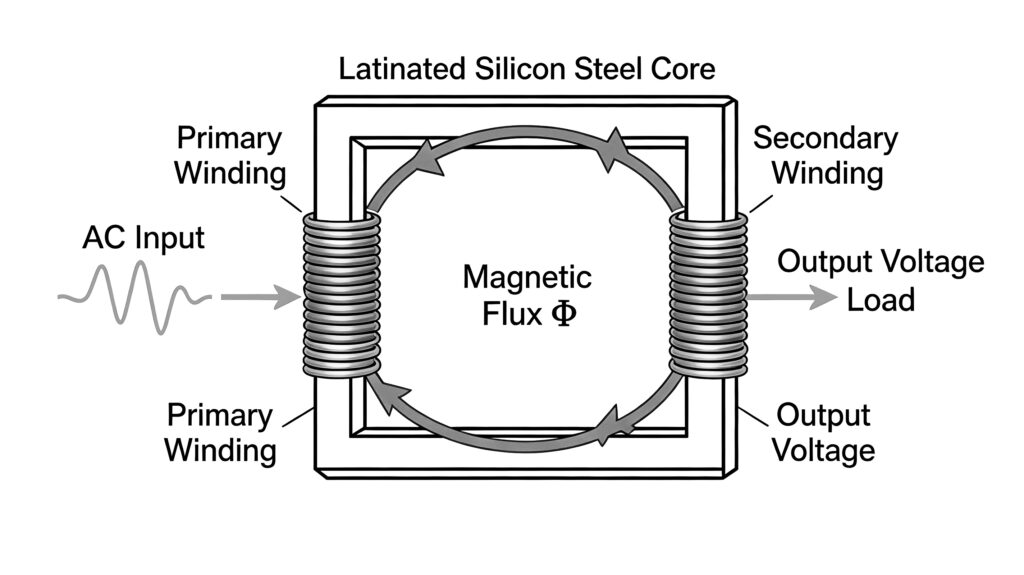
Its primary structure consists of a core and windings. The core is typically constructed from stacked silicon steel sheets to form a magnetic flux path, while the windings are made of conductive material and serve to facilitate the conversion of electrical energy.
A transformer consists of:
· Primary winding: connected to the input power source;
· Secondary winding: connected to the load equipment.
When alternating current flows through the primary winding, it generates an alternating magnetic flux in the iron core. This flux acts upon the secondary winding, inducing a voltage within it.
The voltage relationship is:
U₁/U₂ = N₁/N₂
Where:
U₁: Primary side voltage;
U₂: Secondary side voltage;
N₁: Number of turns in the primary winding;
N₂: Number of turns in the secondary winding.
Therefore:
Fewer turns in the secondary winding than in the primary winding → Step-down transformer;
More turns in the secondary winding than in the primary winding → Step-up transformer.
Practical Application Case: Power Distribution System for a Saudi Industrial Park
Taking an industrial plant in Jubail Industrial City, Saudi Arabia, as an example:
The project utilizes:
| Equipment Type | Model Example | Main Parameters | Application Location |
|---|---|---|---|
| Oil-immersed Transformer | S13-M-2000/35 | 2000kVA, 35/0.4kV | Main distribution substation in the plant |
| Dry-type Transformer | SCB13-1600/10 | 1600kVA, 10/0.4kV | Production workshops |
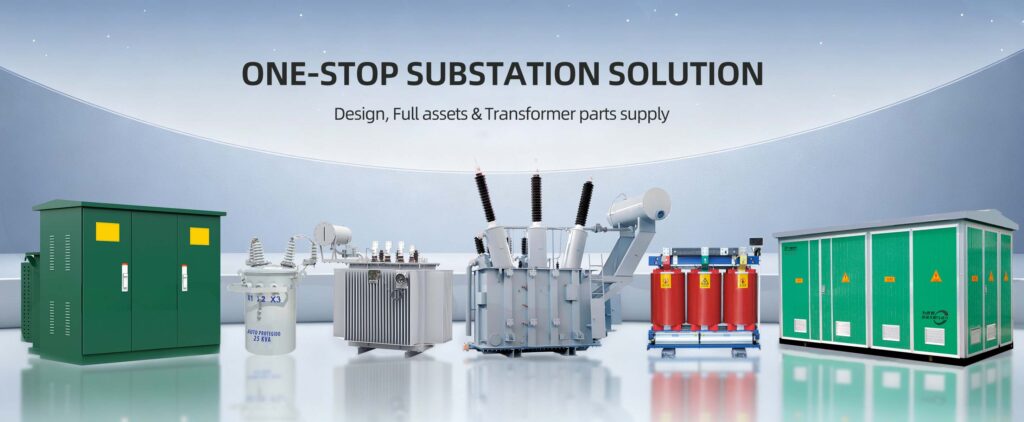
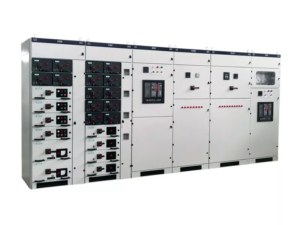
| Prefabricated Substation (Box-type Transformer) | YB-1000kVA | 10kV/0.4kV | Outdoor distributed power supply system |
Including:
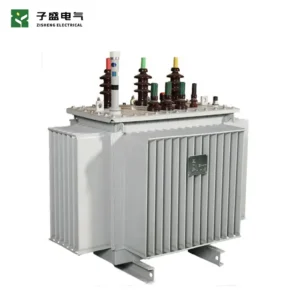
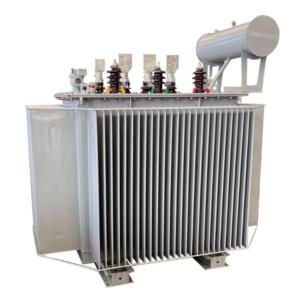
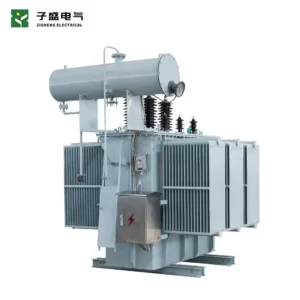
S13 series oil-immersed transformers
Primarily used for:
· Main power supply for industrial parks;
· Auxiliary systems for petrochemical plants;
· Power supply for large-scale power equipment.
Typical parameters:
| Parameter Item | Technical Specification |
|---|---|
| Rated Capacity | 2000 kVA |
| High Voltage Side Voltage | 35 kV |
| Low Voltage Side Voltage | 0.4 kV |
| Rated Frequency | 50 Hz |
| Cooling Method | ONAN (Oil Natural Air Natural Cooling) |
| Insulation Class | Class A |
| Ambient Temperature Design | Designed for 50℃ ambient temperature |
| Protection Requirements | Outdoor anti-corrosion design |
SCB13 Dry-Type Transformer
Due to the stringent fire safety requirements for industrial facilities in the Middle East, dry-type transformers are becoming increasingly widely used.
Typical Parameters:
| 参数项目 | 技术指标 |
|---|---|
| Model | SCB13-1600/10 |
| Rated Capacity | 1600 kVA |
| High Voltage Side Voltage | 10 kV |
| Low Voltage Side Voltage | 0.4 kV |
| Insulation Type | Epoxy Resin Cast Insulation |
| Cooling Method | AN/AF (Air Natural / Air Forced Cooling) |
| Protection Degree | IP23 / IP54 |
| Applicable Environment | Industrial Plants, Control Centers |
Compared to oil-immersed products, dry-type transformers offer the following advantages:
· No insulating oil;
· Superior fire resistance;
· Low maintenance requirements;
· Suitability for densely populated areas.
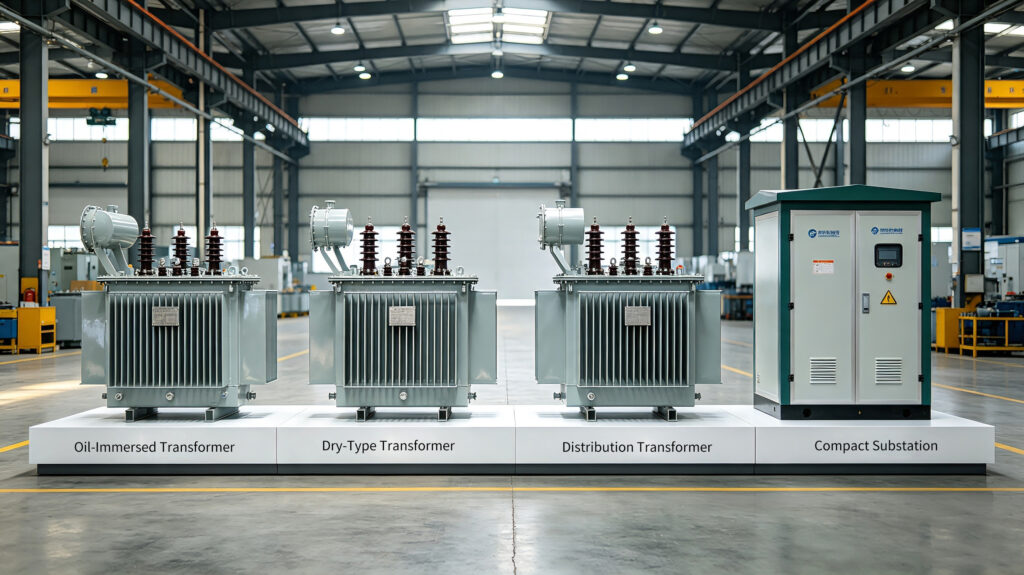
3.What are the types of transformers?
Transformers can be classified in various ways:
Oil-immersed transformers and dry-type transformers are the most widely used types in power systems.
Specifically:
Oil-immersed transformers offer a wide capacity range and excellent heat dissipation, making them common in power grids and industrial power distribution;
Dry-type transformers feature superior fire resistance and ease of maintenance, and are frequently used inside buildings and in special environments.
4.What are the main components of a transformer?
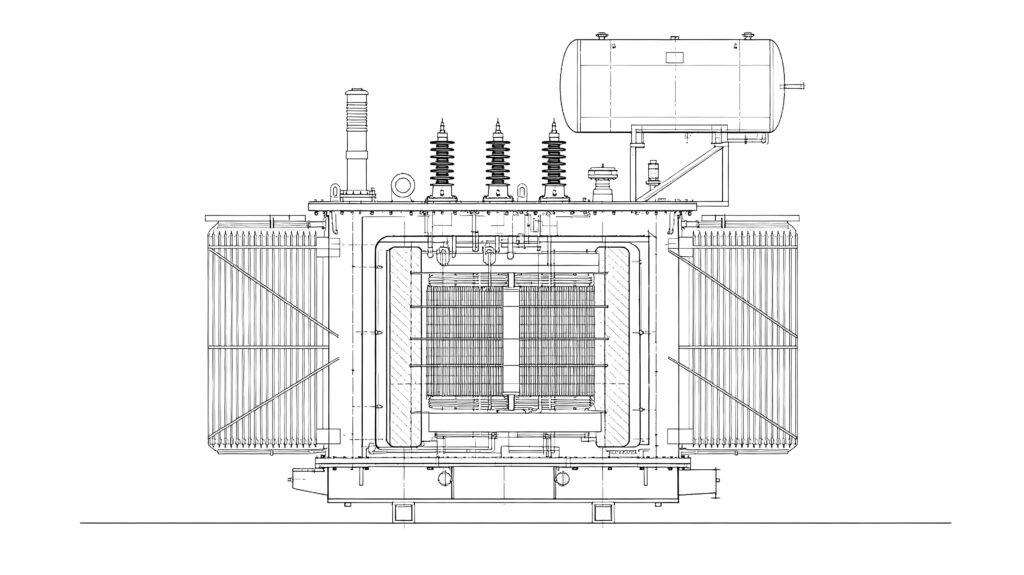
A transformer consists primarily of the following components:
Core
The core is a crucial part of the transformer’s magnetic circuit, serving to transmit alternating magnetic flux.
Windings
The windings are the core components responsible for electrical energy conversion; they are categorized into high-voltage and low-voltage windings based on voltage levels.
Tank
In oil-immersed transformers, the tank stores insulating oil and provides mechanical protection.
Insulating Bushings
These provide an insulated connection between the winding leads and the transformer tank.
Tap Changer
This is used to adjust the number of winding turns, keeping the output voltage within an appropriate range.
Oil Conservator
Some oil-immersed transformers are equipped with an oil conservator to compensate for volume changes in the transformer oil caused by temperature fluctuations.
5.What is the function of transformer oil?
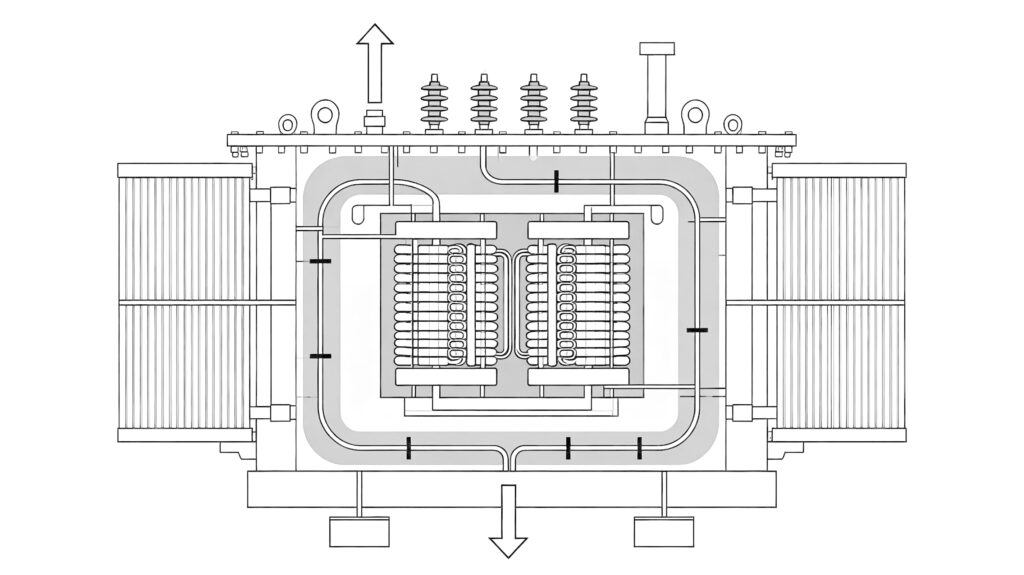
The insulating oil in oil-immersed transformers serves three primary functions:
(1) Insulation
It enhances the insulation performance between windings, as well as between windings and grounded components.
(2) Heat Dissipation
It transfers heat generated by the windings and the iron core to the transformer tank and cooling system, thereby lowering the operating temperature.
(3) Arc Extinction
In equipment equipped with tap-changing mechanisms, the insulating oil assists in cooling and extinguishing the electric arcs generated during the switching process.
Consequently, the quality of the transformer oil directly affects the equipment’s insulation performance and operational lifespan.
II. Special Structure and Key Performance Parameters
6.What is an autotransformer?
An autotransformer has a single continuous winding, with different voltage levels obtained via taps.
Compared to conventional two-winding transformers, an autotransformer transfers a portion of its energy through a direct electrical connection, resulting in:
· Smaller size
· Reduced copper consumption
· Higher efficiency
They are commonly used for voltage regulation, starting equipment, and in systems where voltage levels are similar.
7.How do voltage regulators achieve voltage adjustment?
Voltage regulators primarily adjust the output voltage by changing the effective number of winding turns.
Common methods include:
Off-load (or de-energized) tap changing
Adjusting the voltage by changing the tap position after the equipment has been de-energized.
On-load tap changing
Adjusting the output voltage using an on-load tap changer while the equipment is in operation.
Large transformers in actual power systems typically employ on-load tap changing to enhance power supply stability.
For example:
In large-scale industrial projects in Saudi Arabia, 35kV main transformers are usually equipped with on-load tap changers to ensure the stable operation of production equipment.
Typical parameters:
| Item | Parameter |
|---|---|
| Voltage Regulation Range | ±5% |
| Number of Adjustment Steps | 5–9 steps |
| Adjustment Method | Automatic Control |
8.What is the relationship between the primary and secondary currents of a transformer?
In an ideal transformer, voltage and current satisfy the power balance relationship.
Current relationship:
I₁/I₂ = N₂/N₁
In other words:
· The side with more turns has lower current;
· The side with fewer turns has higher current.
This is a key reason why transformers enable high-voltage power transmission and low-voltage, high-current power supply.
9.What is transformer voltage regulation?
When a transformer operates under load, the output voltage drops as the load increases due to the presence of winding resistance and leakage reactance.
The extent of this change is known as voltage regulation.
Calculation formula:
Voltage regulation = [(No-load voltage – Load voltage) / Rated voltage] × 100%
For standard power transformers operating at rated load, the voltage regulation is typically around 4% to 6%.
10.How is the transformer’s output voltage kept stable?
To ensure the voltage on the user side meets requirements, transformers typically employ tap-changing voltage regulation.
By changing the position of the winding taps and adjusting the effective number of turns, the output voltage is maintained within the permissible range.
Note the following:
· Standard off-circuit tap-changing transformers require a power outage for adjustment;
· On-load tap-changing transformers can be adjusted while in operation.
III. Losses, Selection, and Operational Management
11.What types of losses occur in transformers?
There are two main types of losses during transformer operation:
· Control power supply;
· Power supply for electronic equipment;
· Safety lighting systems;
· Power supply for small electrical equipment.
These applications are characterized by low capacity, simple structure, and stringent safety requirements.
12.Where are small transformers primarily used?
Small-capacity single-phase transformers are typically used for:
| Loss Type | Cause |
|---|---|
| Iron Loss (Core Loss) | Hysteresis loss and eddy current loss in the transformer core |
| Copper Loss | Power loss caused by the resistance of transformer windings |
Iron loss is primarily related to voltage and frequency and persists even when the transformer operates at no-load.
Copper loss, on the other hand, is related to load current; the heavier the load, the more significant the copper loss.
Methods to reduce losses include:
· Selecting an appropriate transformer capacity
· Avoiding prolonged operation at light loads or under overload conditions
· Choosing low-loss products
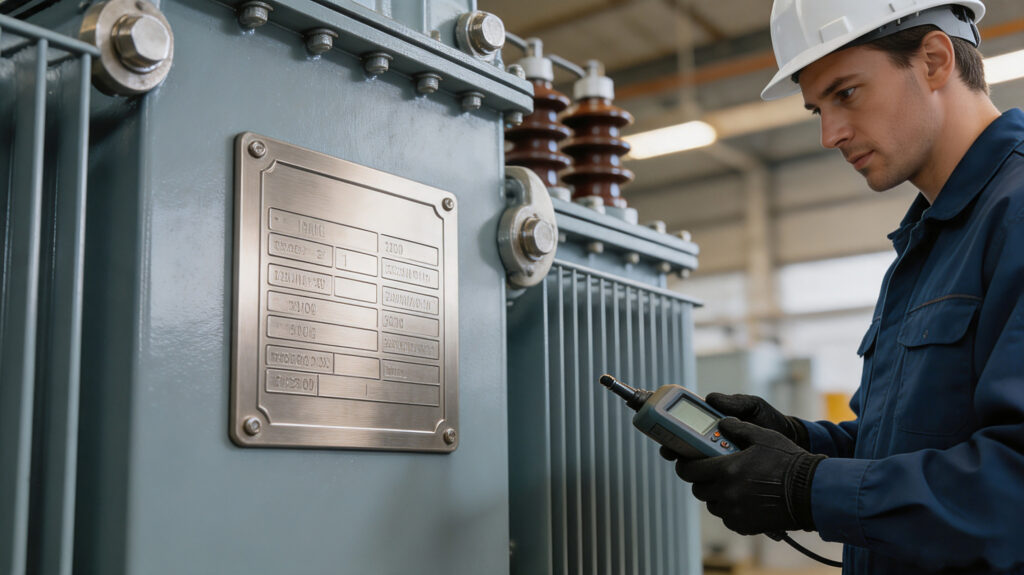
13.What are the key parameters on a transformer nameplate?
The transformer nameplate serves as a crucial reference for equipment operation and selection.
Key parameters include:
| Parameter | Definition | Example |
|---|---|---|
| Rated Capacity | Maximum output capacity of the transformer | 2000 kVA |
| Rated Voltage | Primary and secondary side voltage | 10/0.4 kV |
| Rated Current | Allowable continuous operating current | 2887 A |
| Rated Frequency | Operating frequency | 50 Hz |
| Impedance Voltage | Short-circuit impedance parameter | 6% |
| Vector Group | Winding connection configuration | Dyn11 |
| Cooling Method | Heat dissipation method | ONAN |
For example:
A unit commonly used in Saudi industrial projects:
S13-M-2000/10
Nameplate specifications:
| Item | Parameter |
|---|---|
| Capacity | 2000 kVA |
| High Voltage Side | 10 kV |
| Low Voltage Side | 0.4 kV |
| Frequency | 50 Hz |
| Vector Group | Dyn11 |
| Impedance Voltage | 6% |
| Cooling Method | ONAN (Oil Natural Air Natural) |
14.How do you select a transformer with the appropriate capacity?
Transformer capacity selection must be based on actual load conditions.
Generally speaking:
· The long-term operating load should not be too low;
· A certain margin for future growth should be reserved;
· Surge loads, such as those from motor starting, must be taken into account.
It is usually recommended to maintain the operating load factor within a reasonable range to balance economic efficiency and operational reliability.
Other factors to consider during selection include:
· Voltage level
· Installation environment
· Temperature conditions
· Nature of the load
IV. Key Issues in Operation and Maintenance
15.Why is long-term overload operation not permitted?
Overload operation refers to a transformer operating beyond its rated capacity.
Prolonged overloading leads to:
· Increased winding temperatures
· Accelerated aging of insulation materials
· Reduced equipment lifespan
In the event of a short-term emergency, some transformers may be permitted to operate under a certain degree of overload, provided this is done in accordance with manufacturing standards and operating procedures.
16.What inspections are required during transformer operation?
Common inspection items include:
| Inspection Item | Purpose |
|---|---|
| Temperature Inspection | Evaluate equipment heat dissipation performance and operating condition |
| Load Inspection | Assess transformer capacity utilization |
| Voltage Inspection | Verify power supply quality |
| Insulation Inspection | Evaluate insulation condition and safety performance |
Regular testing allows for the early detection of equipment anomalies, thereby reducing the risk of failure.
Summary: Mastering transformers requires understanding more than just specifications.
Although transformers may appear simple in structure, their operation involves various aspects such as electromagnetic conversion, insulation protection, heat dissipation control, and load management.
For power industry professionals, mastering transformer knowledge requires going beyond mere model numbers and technical parameters to understand the equipment’s operational logic:
Why voltage step-up and step-down are necessary
How losses impact economic efficiency
How capacity selection determines operational efficiency
How maintenance and management affect equipment lifespan
Only by understanding transformers from multiple perspectives—including principles, structure, selection, and operation & maintenance—can one truly achieve proper selection, safe operation, and efficient management.
About ZISHENG ELECTRICAL
Zisheng are a professional 19+ years manufacturer in producing Oil-Immersed Transformers, Compact Substation, Pad Mounted Transformers, Pole Mounted Transformers and Dry Type Transformers. We own the certificates of ISO/CE/IEC 60076 and TUV Rheinland.
Transformers undergo rigorous FAT and type testing, support voltage/capacity customization. Welcome to consult for Catalog and Product. you can contact us at email [email protected].