Transformer Customs Document Review for African EPC Deliveries: Invoice, Packing List and Shipment Identity
Transformer customs document review should connect the equipment being shipped to the commercial and transport records submitted for clearance. For African EPC deliveries, the practical challenge is often a split shipment: the main tank travels separately from radiators, bushings, oil drums or commissioning spares. A generic description such as electrical equipment can leave the broker and receiving team unable to reconcile the cargo.
This guide provides a project document-control workflow. The appointed customs broker and importer must confirm the destination-specific requirements, classification, valuation and submission rules. A complete engineering file does not itself authorize customs release, and clearance does not establish that a transformer is ready for installation.
1. Define the shipment and the responsible parties
Start with the purchase order, delivery terms, importer details, destination and proposed routing. Record who prepares the commercial invoice, who controls packing data, who approves technical descriptions and who submits the declaration. Name a deputy for each role so a question arriving outside factory working hours does not sit unanswered.
Distinguish the buyer, consignee, importer of record, notifying party and final site. They may be different organizations. Ask the broker to confirm which legal names, addresses and registration references belong in each document. Do not copy details from a previous project simply because the same port is involved.
For a shipment that crosses an intermediate country, ask the logistics team to identify the required transit arrangements and document owners. Keep these instructions in the shipment register. Country-specific permits, certificates and deadlines should come from the current local review, rather than an assumed single procedure for all African markets.
2. Build an equipment identity cross-reference
Transformer customs document review becomes easier when commercial descriptions and engineering identifiers refer to the same equipment. Create a cross-reference between purchase-order item, manufacturer model, transformer serial number, site asset tag and shipping package mark. Record which identifiers are assigned and which remain provisional.
The description should distinguish the transformer from separately packed accessories and consumables. The technical team can supply ratings, construction type and intended function, while the broker determines how those facts support the required declaration. Do not let an informal product nickname become the sole cargo description.
Compare this register with the transformer nameplate approval record. If a serial number is corrected after a draft invoice has circulated, identify every affected document and issue the change through one controlled channel. An email explanation should not leave two apparently valid versions in use.
| Record | Identity to reconcile | Typical question |
|---|---|---|
| Factura comercial | Order line and precise goods description | Does the description match the supplied configuration? |
| Lista de empaque | Package mark, contents and quantities | Can each crate be allocated to the correct unit? |
| Transport document | Shipment reference and package totals | Are the submitted totals based on the final packing list? |
| Factory release | Serial number and released accessories | Are held items mistakenly shown as shipped? |
| Site receiving register | Delivered package and discrepancy reference | Can the site distinguish missing cargo from a later shipment? |
3. Reconcile invoice and packing-list scope
Review the invoice and packing list together before either is treated as final. Check item descriptions, quantities, currency, agreed commercial references and shipment scope. The authorized commercial team owns values and transaction details; the engineering team should not improvise them to make the forms appear complete.
A packing list needs a physical breakdown that receiving personnel can use. Identify the main unit, accessory crates, loose components and separately supplied fluids as applicable. Keep package numbering stable through loading. If repacking changes the number of crates, update the list and communicate the impact to transport-document preparation.
Separate equipment mass, net cargo mass, packing mass and gross shipping mass. Their meanings are not interchangeable. Use the final verified packing information and declare units consistently. A transport planning figure from an early general arrangement drawing may no longer describe the cargo offered for shipment.
Maersk’s customs documentation guidance identifies commercial and transport records and notes that additional documents depend on the goods. Use the local broker to confirm the actual package for this shipment. This article does not prescribe a tariff code, duty rate or exemption entitlement.

4. Control accessories and split deliveries
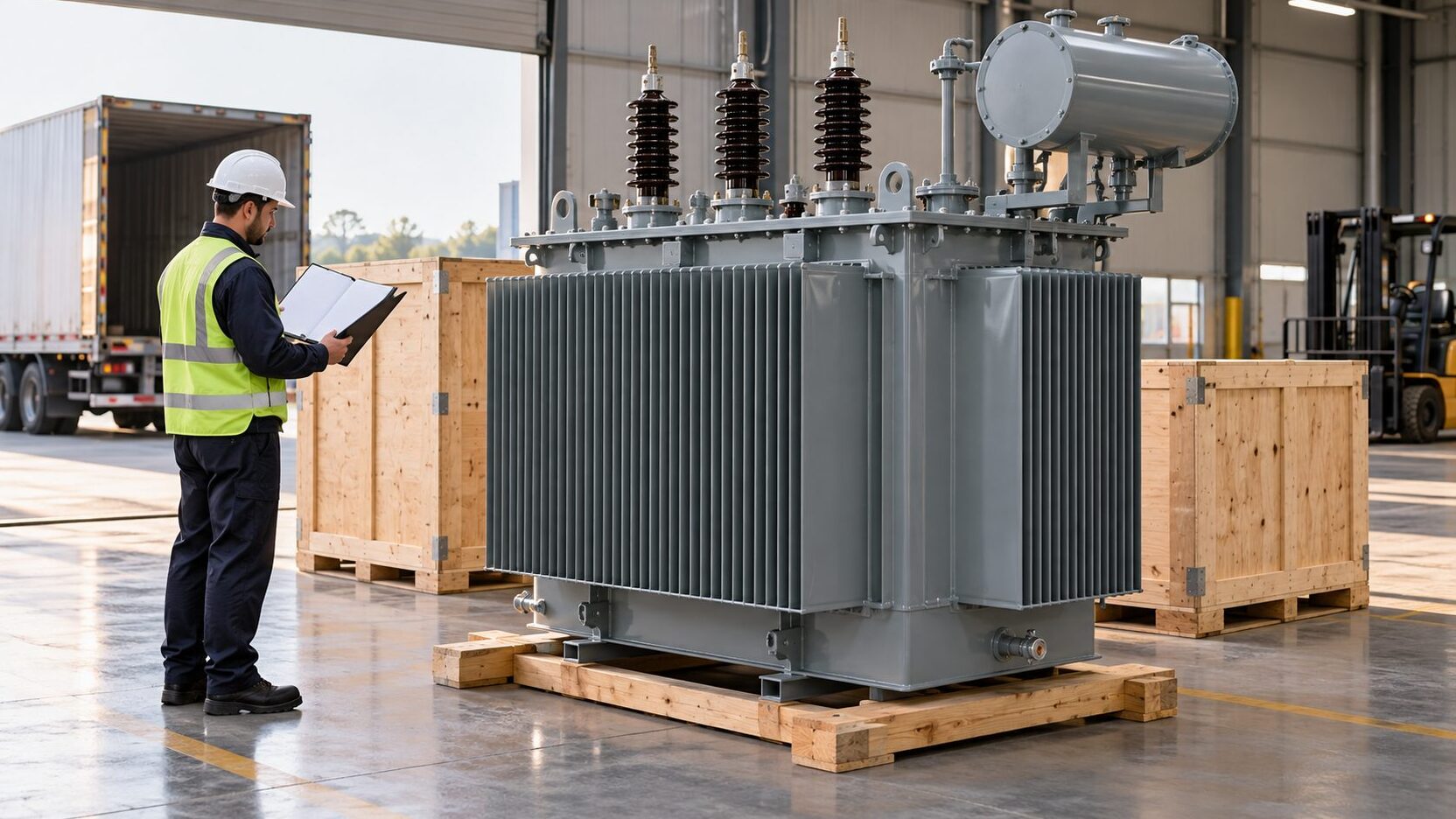
List what is physically installed for transport and what is packed separately. Radiator banks, conservators, bushings, monitoring equipment and loose fittings may follow different packing arrangements. A transformer customs document review should capture the approved shipment state without implying that all configurations are identical.
Assign every accessory package to its parent transformer or shared project allocation. For identical units, a statement such as accessories for two transformers may be inadequate for site receipt. Use an allocation schedule that identifies quantities, package marks and the relevant equipment references.
When an item is delayed, record it as an outstanding delivery and identify the revised shipment plan. Do not leave it on the current packing list merely because it remains in the purchase order. The commercial team and broker should determine how each shipment is documented and how related values are presented.
Oil, batteries or other separately packed materials may need additional transport review according to their actual classification and packaging. Obtain the relevant product information and route it to the competent logistics specialist. Do not infer the shipping treatment from a generic transformer description or from the treatment of a previous consignment.
5. Close discrepancies before document release
Use a short discrepancy register with the affected field, conflicting documents, responsible owner, required correction and closure evidence. Prioritize identity, party details, quantities, package totals and shipping configuration. A reviewer should be able to see both the original conflict and the authorized resolution.
Record document numbers, revisions, dates and approval status in one index. Mark obsolete drafts clearly within the project system and provide the broker with the agreed submission set. Keep a copy of the actual files transmitted, so later questions can be answered against the submitted version.
Check the physical dispatch release alongside the documentary review. The transformer lifting plan review addresses a different readiness boundary, but its approved transport configuration and package information should agree with the shipment records. Neither review should silently overrule the other.
6. Hand over a receiving package to the site
The site needs enough information to identify delivered packages, recognize partial shipments and record discrepancies. Provide the final packing list, equipment allocation, handling references and the logistics contact route before arrival. Keep restricted commercial or personal details within the authorized distribution list.
At receipt, compare package marks and condition against the approved records. Record shortages, damaged packaging and unidentified crates with photographs and delivery references. Preserve the distinction between cargo receipt, customs release and technical acceptance. A signed delivery note should state what was actually acknowledged.

Link the final shipment record to the asset history and transformer warranty evidence package. Future service teams may need to establish which accessories arrived with the unit and which were replaced or delivered later. Keep the archive accessible beyond the demobilization of the original logistics team.
Example: a radiator crate changes after draft approval
Consider a hypothetical EPC delivery where a radiator crate is split into two packages after a packing review. The transformer serial number remains unchanged, but package count, marks and gross masses change. The useful response is to revise the packing list, assess invoice and transport-document impacts with the responsible specialists, notify the broker and replace the site receiving copy.
This example is not a report of a completed Zisheng project. It illustrates why a document status of approved must refer to a defined revision and configuration. A final transformer customs document review should confirm that late physical changes have been reflected in the released records.
Preguntas frecuentes
Can one invoice cover the whole project?
The commercial arrangement and local requirements determine the appropriate treatment. Ask the commercial team and appointed broker to confirm it. Regardless of invoice structure, the project still needs a clear package-to-equipment allocation.
Does a factory test report replace a customs document?
No. It provides technical evidence within its stated scope. The broker should confirm whether any technical supporting documents are needed in addition to the commercial and transport records.
Who approves corrections after submission?
The document owner should authorize the correction, while the broker or submitting party follows the applicable amendment process. Preserve the revision trail and communicate the corrected information to affected receiving teams.
Prepare your shipment review request
For a project discussion with Zisheng Electric, provide transformer ratings, unit quantity, destination, intended delivery terms, accessory scope and target shipping date. Include the broker’s document checklist and any unresolved identity or packing questions. This allows the technical and commercial teams to define their respective deliverables before the shipment reaches a time-critical stage.
Acerca de ZISHENG ELECTRICAL
Zisheng somos un fabricante profesional con más de 19 años de experiencia en la producción de Transformadores Sumergidos en Aceite, Subestación Compacta, Transformadores Montados en Base, Transformadores Montados en Poste y Transformadores de Tipo Seco. Poseemos los certificados de ISO/CE/IEC 60076 y TUV Rheinland.
Los transformadores pasan por rigurosas pruebas FAT y de tipo, y apoyan la personalización de voltaje/capacidad. Bienvenido a consultar por Catálogo y Producto. puede contactarnos por correo electrónico [email protected].