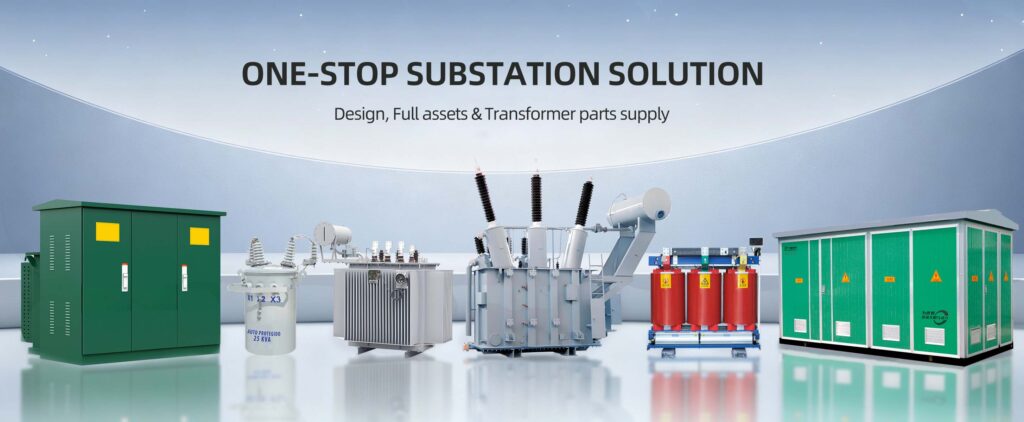
Containerized Transformer Substation for North African Solar Projects: Heat, Access and EPC Interfaces
Zisheng Electric helps EPC teams evaluate the interfaces that determine whether a containerized transformer substation can be transported, installed and maintained reliably at a solar site. The enclosure is only one part of the design. Transformer rating, medium-voltage switchgear, low-voltage distribution, ventilation, cable entry, earthing, lifting and access must work together under the project’s actual climate and logistics constraints.
What a containerized transformer substation must coordinate
A packaged substation typically combines a transformer with medium-voltage and low-voltage equipment in transportable enclosures. The precise arrangement varies with voltage level, power rating, utility connection, protection philosophy and the EPC scope. Before selecting a package, freeze the one-line diagram, equipment boundary, interface schedule and site layout. Clarify whether the package includes MV switchgear, protection relays, LV switchboard, auxiliary supply, metering, fire provisions, control wiring and communications. Ambiguity at this point often becomes a site change after foundations and cable trenches are complete.
For equipment within its scope, IEC 62271-202:2022 covers AC prefabricated substations up to 52 kV and frequencies up to 60 Hz, including service conditions, ratings, general structural requirements and test methods. The project specification must still identify the applicable edition, utility additions, site conditions and required tests; a general reference is not evidence that a particular package is compliant.
North African solar sites: convert climate data into design inputs
“North Africa” is not a single ambient condition. Coastal sites, inland plateaus and desert locations differ in maximum temperature, altitude, airborne dust, humidity, salt exposure and daily temperature swing. Use the project’s meteorological design basis and site survey rather than a regional average. State the maximum and minimum ambient temperatures, solar radiation assumptions, altitude, dust ingress expectation, corrosion environment and any enclosure shading. These inputs affect transformer thermal margin, ventilation sizing, enclosure finish, gasket selection, filter maintenance and the choice between natural and forced ventilation.
High ambient temperature reduces the temperature difference available for cooling. Dust can obstruct filters and heat-exchanger surfaces; salt-laden air can accelerate corrosion at cut edges and fasteners. The package supplier needs to know whether the site is coastal, whether dust storms are expected, and how frequently operators can inspect air paths. Do not specify an IP rating as a substitute for thermal calculations or an access/maintenance plan.
Start with the electrical duty, then fix the package boundary
Solar collector blocks and inverter outputs impose a duty that changes over the day and can include high loading during hot ambient conditions. Confirm the transformer MVA rating against inverter maximum apparent power, power factor requirements, overload policy, harmonic spectrum and the expected operating profile. Verify the voltage ratio and vector group against the inverter transformer interface and utility connection. Specify the tap range and tap changer type from the actual voltage-control study, not as a default option. Short-circuit withstand, impedance, neutral arrangement and protection coordination must be aligned with the network study.
The project team should identify whether the packaged substation is a generator step-up unit, a collector-system unit, or a distribution package serving auxiliaries. Those duties have different voltage levels, protection boundaries and redundancy requirements. Define the ownership boundary for metering CTs/VTs, relay settings, trip circuits and SCADA points. A package can meet its internal factory tests while still failing system integration if the interface list is incomplete.
Layout and thermal decisions that affect availability
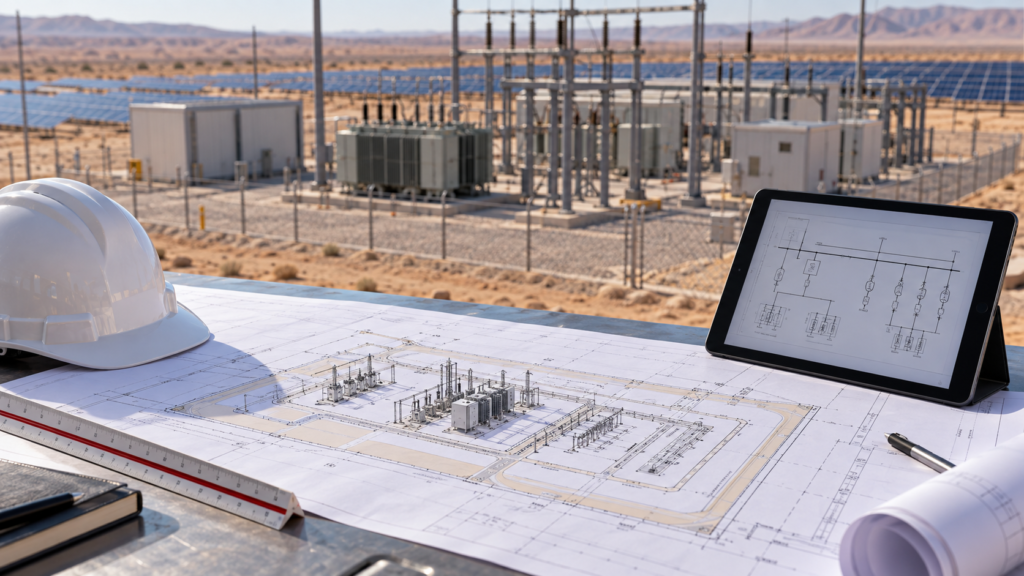
Place heat-producing equipment and air intakes so that exhaust air does not recirculate into the transformer or switchgear compartment. Confirm clearances around radiators, louvers and removable panels. Where forced ventilation is used, document fan duty, alarm contacts, redundancy philosophy, filter type, replacement method and the safe condition after a fan failure. Locate control electronics away from direct solar heating where possible. Verify that doors can open fully without obstructing walkways, adjacent equipment or cable routes.
For an outdoor container, shading can reduce solar gain but must not block airflow or crane access. A roof overhang may protect doors from direct exposure; it also changes overall transport dimensions and lifting geometry. Ask the supplier to provide the assembled dimensions, operating clearances and removal envelope for major components. The EPC should compare this drawing with the site general arrangement before the concrete plinth is released.

Practical interface checklist
| Interfaz | Information to freeze | Por qué es importante |
|---|---|---|
| Electrical | Voltage, frequency, MVA, vector group, impedance, tap range, fault level | Controls rating, protection and transformer design |
| Thermal | Ambient design range, altitude, solar exposure, dust, cooling method | Determines derating, ventilation and maintenance needs |
| Civil | Plinth levels, anchor points, cable trenches, drainage, access route | Prevents field cutting, water ingress and blocked maintenance access |
| Control | Trip matrix, alarms, remote signals, protocols, auxiliary voltage | Enables integration with plant SCADA and utility systems |
| Logística | Shipping split, gross mass, lifting points, route limits, storage plan | Affects permits, crane selection and delivery sequence |
Transport, lifting and site installation
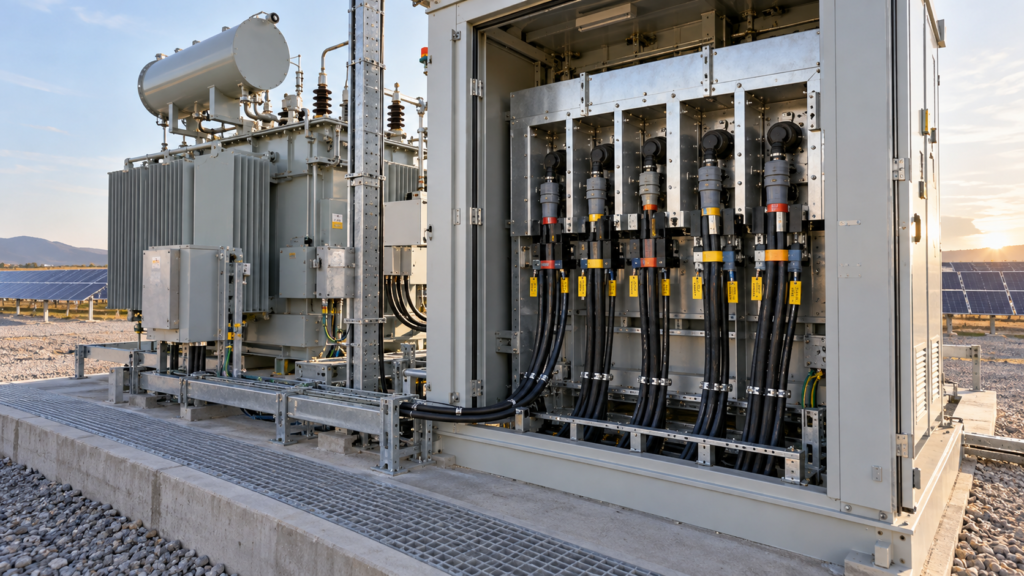
A containerized assembly may simplify site erection, but its shipping envelope and mass must be checked against the actual road, port and site access route. Request a transport drawing that identifies transport locks, lifting lugs, centre of gravity and any components shipped separately. The EPC logistics team should check bridge limits, turning radii, overhead clearances, road gradients, port handling capacity and crane setup area. The shipment plan should state which loose items must be protected from moisture and dust during storage.
On site, check foundation flatness and level, anchor locations, cable trench alignment and drainage before offloading. Keep the substation sealed until the work area is clean enough for controlled cable termination. Provide temporary protection for unused gland plates and openings. If the package is split for transport, agree the field reassembly procedure, torque records, gasket replacement, oil handling and post-assembly tests in the inspection and test plan.
Factory testing and EPC witness points
Agree the test schedule against the purchase specification and the applicable product standards. Review routine test certificates for each major item and identify which tests require witness or hold points. A useful FAT sequence includes document and nameplate checks, wiring verification, functional checks of alarms and trips, interlock demonstration, relay secondary injection, metering checks, communication point checks and package boundary inspection. Transformer routine tests should be defined by the governing transformer specification. Type and special tests should be called out only where required by the contract or design basis.
Use a cause-and-effect matrix for the package: each input, alarm, trip, interlock and output should have a defined source, destination, polarity, fail-safe state and test method. Capture approved redlines and test evidence in the turnover dossier. If any field setting or interface changes after FAT, record the revision and repeat the affected checks during commissioning.
Procurement data to request before purchase order
Ask bidders to return a compliance schedule, deviations list, equipment boundary drawing, single-line diagram, general arrangement, heat dissipation data, foundation loads, cable entry plan, lifting and transport drawings, protection and control schematic, terminal plan, communication list, test schedule, spare parts list and recommended maintenance tasks. Require each deviation to identify its technical consequence and the party that must resolve it. This makes bid evaluation more useful than comparing headline ratings alone.
Specify the utility’s exact requirements for voltage range, frequency, insulation level, clearances, metering and protection. Where the project is connected to a national utility, obtain the latest connection rules and approved equipment list directly from the utility or owner. Do not infer national requirements from a neighboring project.
Related engineering references
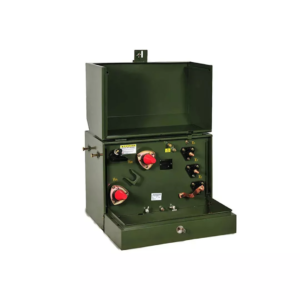
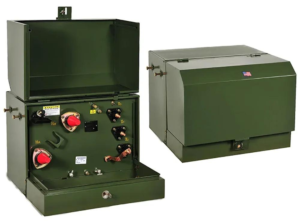
For distribution architectures, compare the package with Zisheng Electric’s pad-mounted transformer range y la Transformador trifásico tipo pedestal de 750 kVA. For project context, see the published guidance on transformer interfaces for island-grid applications y distribution transformer selection for African electrification. Confirm each product’s voltage and configuration against the project datasheet.
Switchgear, transformer and maintainability choices
Choose the medium-voltage arrangement from the collector topology, switching philosophy, fault duty and owner maintenance model. Confirm whether the package uses a ring-main unit, withdrawable switchgear or another approved configuration. The equipment schedule should state rated voltage, continuous current, short-time withstand, internal arc classification where required, operating sequence and cable termination type. The interface must match the incoming and outgoing cable design, including screen bonding, phase identification and safe access for testing. Do not assume that a compact enclosure automatically meets a project’s switching or maintainability needs.
For the transformer, coordinate the cooling method and monitoring accessories with the thermal study and operating strategy. List winding and oil temperature alarms, pressure or gas devices where specified, fan control, tap changer indication and trip contacts in the signal matrix. The package integrator should identify which circuits are powered from station auxiliary supply and what happens during loss of auxiliary power. Agree whether protection and control equipment is accessible without entering the transformer compartment, and confirm safe isolation boundaries in the operating procedure.
Solar plants can have a long equipment life and remote locations may make maintenance access costly. Identify routine tasks such as filter cleaning, fan replacement, inspection of cable seals, corrosion checks and verification of space heaters if fitted. Specify spare filter elements, fuses, indicator lamps and other recommended consumables by part number and storage conditions. These items should be derived from the selected design and vendor maintenance documentation rather than from a generic list.
Close interface actions before release for manufacture
Use a drawing review register that records each interface, drawing number, responsible party, open question, required response date and final disposition. Freeze the foundation, cable entry and transport drawings before civil construction or shipment planning advances. If an interface remains provisional, label it clearly and state the decision deadline that protects the manufacturing and site sequence. A late change to cable entry can affect structural steel, sealing, bend radius, fire stopping and the shipping split at the same time.
During design review, walk the package with electrical, civil, logistics, commissioning and operations representatives. Ask the commissioning lead to confirm access for primary injection, secondary injection and cable testing. Ask operations to review door swing, operating clearances, labels and emergency access. Record accepted deviations and verify that the final bill of materials and test dossier reflect the released revision.
Before the first shipment, align the packing list with the equipment boundary and mark which items must be assembled at site. Confirm the lifting method, temporary storage controls and inspection hold points with the logistics and quality teams. This is especially important when a delivery is split: loose accessories can be mislaid or exposed before the substation is sealed, while mismatched interface parts can delay energization. Record receipt checks against the approved drawing revision.
Close the design before the site is waiting
A containerized transformer substation is successful when electrical duty, cooling, civil interfaces, transport and controls have been resolved as one coordinated package. Zisheng Electric can review transformer and substation equipment schedules against the project documents. Provide the drawings, datasheets, load list, technical specification, single-line diagram, grid parameters, ambient and altitude data, and installation-site conditions. Our engineering team will review the requirements and respond to project inquiries within 24 hours.
Acerca de ZISHENG ELECTRICAL
Zisheng somos un fabricante profesional con más de 19 años de experiencia en la producción de Transformadores Sumergidos en Aceite, Subestación Compacta, Transformadores Montados en Base, Transformadores Montados en Poste y Transformadores de Tipo Seco. Poseemos los certificados de ISO/CE/IEC 60076 y TUV Rheinland.
Los transformadores pasan por rigurosas pruebas FAT y de tipo, y apoyan la personalización de voltaje/capacidad. Bienvenido a consultar por Catálogo y Producto. puede contactarnos por correo electrónico [email protected].