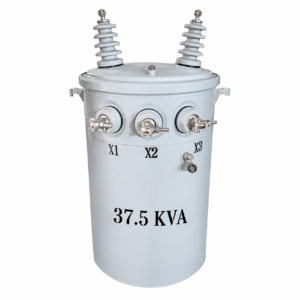
Electricity prices in Africa have gone up again. Have you calculated how much money is wasted annually if a transformer’s efficiency drops by 1%?
Zisheng Electric has been involved in transformer projects in Africa for several years, with extensive experience in power distribution systems. Over these years of visiting project sites, I have noticed a fairly common phenomenon.
Many factories have not changed their production output, but their electricity bills keep rising month after month. The first reaction from owners is usually to blame the electricity price. However, when we bring our equipment to the site for testing, we find that the problem is not entirely caused by the power grid. Losses within the power distribution system itself are quietly eating into profits.
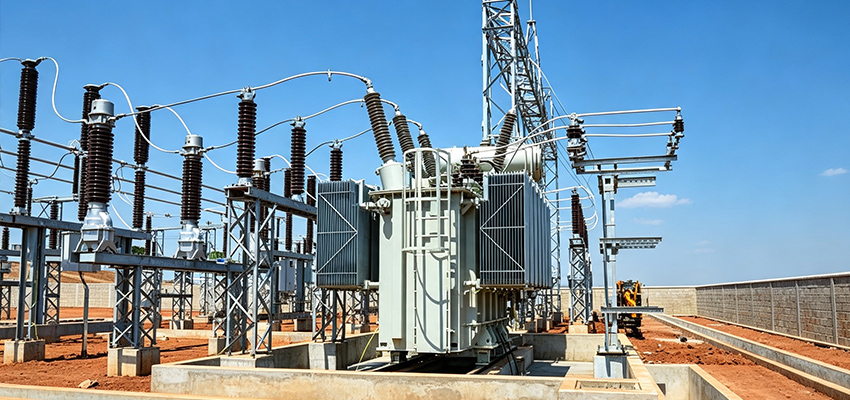
The easiest thing to overlook is the transformer.
Let me do a quick calculation with you: a transformer runs for thousands of hours throughout the year. A drop of one or two percentage points in efficiency may not seem significant, but accumulated over time, it means paying a large amount of extra money every year. Especially with the current rise in industrial electricity costs in Africa, this hidden cost will become bigger and bigger over time.
Previously, we evaluated an industrial project in Lagos, Nigeria involving a food processing plant. The 4000kVA transformer had been in operation for more than six years. The owner was also reporting that electricity bills were getting higher and higher, the temperature in the switch room was relatively high, and sometimes the protection system would trip during afternoon peak hours.
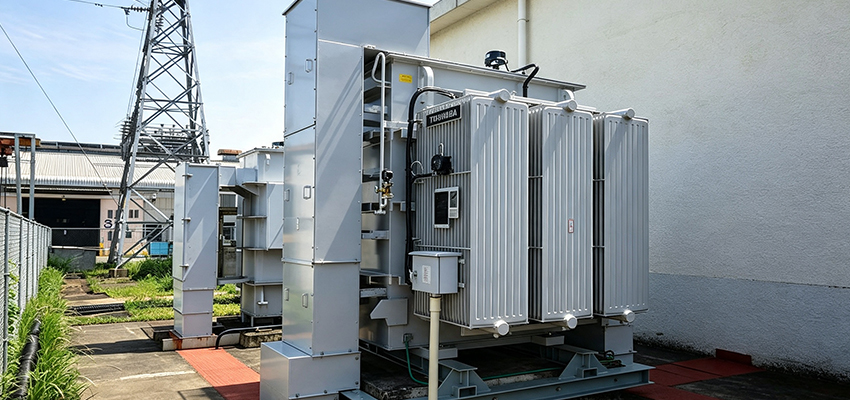
I brought a team to conduct a 72-hour power quality test. After exporting and analyzing the data, we found that the actual operating efficiency of this transformer had already dropped significantly below the nameplate parameters, and the losses were much higher than when the equipment was new.
1. Analysis of the Main Reasons for Transformer Efficiency Decline
1.1 High Ambient Temperature Causes Copper Loss to Increase
Transformer load loss is, simply put, the heat generated by winding resistance. As temperature rises, the resistance increases. Transformer copper loss also increases with rising temperature.
Under high-temperature conditions in Africa, long-term operation of transformers causes winding temperatures to rise, increasing operating losses.
During those days in Lagos, the ambient temperature was basically between 38℃ and 42℃. The transformer had been running continuously under such conditions, and the winding temperature was much higher than the factory test data. Naturally, copper loss increased. This is something that cannot be seen in laboratory testing.
According to our measurements, the test results showed that the load loss of this transformer had increased significantly compared with its initial operating condition, by approximately 10%. What does that mean? For a 4000kVA transformer, the additional electricity wasted in one year is enough to supply dozens of households for an entire year.
Regarding winding materials, both copper and aluminum have their own application scenarios. However, for industrial projects in Africa with high temperatures, continuous operation, and limited maintenance conditions, I personally prefer copper windings. They offer better conductivity and higher thermal stability, making them a more reliable choice in the long run.
1.2 Loose Connections Cause Localized Overheating
After a transformer has been operating for six or seven years, the connection points are affected by thermal cycling, and bolts may gradually loosen. Once contact resistance increases, localized temperature rises.
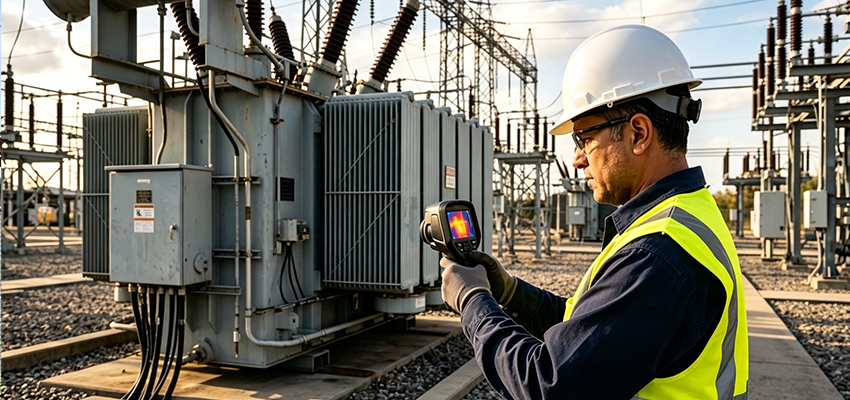
We scanned the entire unit with an infrared thermal imaging camera and found that the temperature of the high-voltage side B-phase terminal was significantly higher, nearly 30℃ above the adjacent phases. After disassembly, we found that the bolt torque was insufficient, and there was slight oxidation on the contact surface.
After polishing and tightening the connection, the temperature at that point dropped significantly. This is something I have encountered more than ten times during transformer maintenance at industrial sites in Africa — regularly tightening terminals and scanning with a thermal imaging camera can prevent many problems before they develop.
1.3 Low Power Factor Causes Unnecessary Current Increase
This food factory had many motors, cold storage compressors, air compressors, and water pumps, creating significant reactive power demand.
However, half of the capacitor banks in the compensation cabinet had already failed, and the power factor remained around 0.75 for a long time.
The equipment output remained unchanged, but the current flowing through the cables and transformer increased significantly. Once current increases, losses rise according to the square relationship of current.
We showed the owner two sets of comparative data: after improving the power factor from 0.75 to 0.95, the current on the transformer low-voltage side dropped by nearly 20%. This is not a high-tech solution, but it has a real impact on electricity costs.
2. Most Operating Costs Are Determined During the Transformer Selection Stage
In the African industrial projects I have participated in, I have seen many procurement teams spend a lot of time comparing prices while paying insufficient attention to long-term operating costs.
In reality, from the design stage of transformer selection, most future operating costs are already determined — core materials, winding structure, capacity size, and cooling methods are all decided before the equipment is put into operation. Changing them later is very costly.
Here are several points that I believe deserve more attention.
2.1 Core Selection Must Match the Load Pattern
A transformer consumes electricity even when it is running without load. This is called no-load loss.
I worked on a Kenya solar microgrid project where a 1.5MW system was installed. The system did not operate at full load for long periods every day and spent most of the time under light load or standby conditions.
In this type of application, amorphous alloy core transformers have advantages because of their lower no-load losses. The electricity savings during long standby periods can offset the initial price difference.
However, mining projects are different.
At a copper mine project in the Democratic Republic of Congo, crushers and ball mills had starting currents reaching six to seven times the rated current, and short-term overloads were common.
Such applications require oil-immersed transformers with grain-oriented silicon steel cores, which provide higher mechanical strength, stronger overload capability, and prioritize reliability.
2.2 Winding Material: Long-Term Reliability Matters More Than Initial Price Difference
In transformer selection for African industrial projects, I personally prefer copper windings as the first choice.
It is not because copper is considered more advanced. Rather, for high load factor, continuous operation, and industrial projects with limited maintenance conditions, copper windings generally provide better conductivity and thermal stability margins, making them widely used in applications with higher reliability requirements.
Copper windings have lower resistance losses, better thermal stability, and stronger capability to withstand load fluctuations.
Spending more at the beginning can save much more trouble later.
2.3 Bigger Capacity Is Not Always Better
If the capacity is too large, transformer no-load losses continue to exist, the initial investment is higher, and the equipment operates in a low-efficiency range for a long time.
If the capacity is too small, long-term overload operation causes temperature rise to increase and insulation life to decrease.
We encountered this situation at a Zambia mineral processing plant project — the transformer capacity was selected too small. Combined with the high local ambient temperature, when the afternoon load increased slightly during summer, the top oil temperature approached the alarm limit.
Eventually, the only solution was to reduce production on the load side.
Capacity design must consider current load, future expansion plans, motor starting methods, and ambient temperature correction factors.
Especially for transformer selection in high-temperature African environments, derating effects must be considered.
It is not simply a matter of buying one size larger and assuming the problem is solved.
3. Transformer Selection Priorities Vary Greatly Across Different Regions of Africa
Africa has huge regional differences.
Coastal areas, inland high-temperature regions, and mining areas all present completely different challenges for the same transformer.
3.1 High-Temperature Areas: Heat Dissipation Is the First Priority
In inland regions such as Mali, northern Niger, and Sudan, temperatures above 40℃ are common throughout the year.
When ambient temperature rises, transformer heat dissipation efficiency decreases, winding temperatures increase, insulation aging accelerates, and load capacity is reduced.
During the design stage, sufficient cooling margins must be reserved — radiator area, oil circulation methods, and tank structure all need optimization.
If a higher thermal insulation class is required, it should be selected rather than operating at the minimum standard limit.
3.2 Coastal Salt Mist: Corrosion Happens Slowly Over Time
We inspected several outdoor transformers at an industrial park project in Lomé Port, Togo. After approximately five years of operation, the paint coating at the bottom of the tanks had already blistered and peeled off, fasteners showed obvious corrosion, and some nameplates were difficult to read.
The impact of salt mist environments on outdoor transformers develops gradually. It is often invisible at the beginning, and by the time problems are discovered, it is usually already too late.
A solid transformer anti-corrosion design system is essential. Surface treatment cannot be neglected, and corrosion-resistant materials should be used for fasteners.
These differences are not visible at the time of delivery, but after three years, the gap becomes obvious.
3.3 Mining Area Dust: Sealing and Heat Dissipation Must Be Balanced
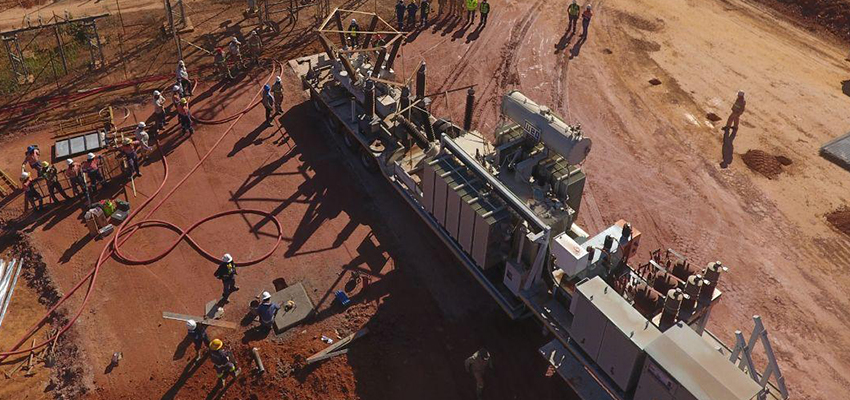
African mining projects are common, with high dust concentrations on site, large temperature differences between day and night, and limited maintenance conditions.
When dust blocks the radiators, heat dissipation efficiency drops significantly, temperature rise increases, and efficiency decreases.
In such applications, we usually recommend a fully sealed oil-immersed transformer structure, combined with proper cooling design, to minimize external maintenance requirements.
4. Different Applications Require Different Priorities
The following table summarizes our own transformer selection recommendations. It is not a standard answer, but for reference:
| Application Scenario | Recommended Solution | Key Considerations |
|---|---|---|
| Mining, quarry plants, industrial parks | Oil-immersed transformer (high-permeability core + reliable winding design) | Starting impact, overload capability, environmental adaptability |
| Solar self-consumption, solar-diesel hybrid microgrids | Renewable energy compatible oil-immersed transformer | Bidirectional power flow, harmonics, voltage fluctuations |
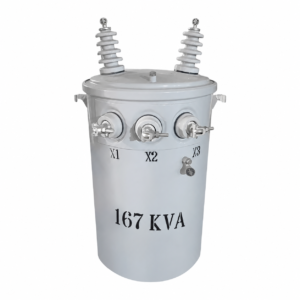
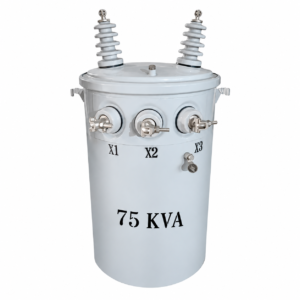
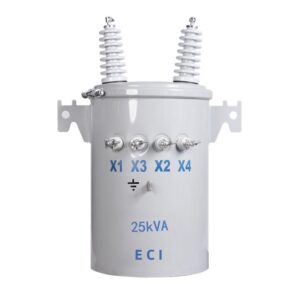
| Urban distribution, rural power grids | Pole-mounted transformer | Installation convenience, maintenance practices, reliable operation |
| Commercial parks, residential areas | Pad-mounted transformer | Land occupation, safety, protection level |
| Large industrial plants | Industrial substation transformer | Long-term loading, heat dissipation capability, operational stability |
| Indoor distribution rooms | Dry-type transformer | Fire protection requirements, environmental requirements, installation conditions |
| Remote area projects | Prefabricated substation | Fast installation, system integration, reduced on-site construction |
Actual selection still depends on voltage level, short-circuit capacity, load profile, environmental conditions, and local operation and maintenance capabilities. Comprehensive evaluation is required; there is no one-size-fits-all formula.
5. Do Not Only Focus on the Transformer — Look at the Entire Distribution System
When many owners discuss prices, they focus heavily on the transformer price.
However, actual operating performance depends on more than just the transformer.
A complete industrial power distribution system also includes high and low voltage switchgear, protection devices, reactive power compensation, harmonic mitigation, and monitoring systems.
We have encountered many cases where:
The transformer itself had no problem, but due to defects in system design, the overall efficiency could not be improved.
In addition, in recent years, photovoltaics, variable frequency drives, and energy storage equipment have become increasingly common, and harmonic issues are beginning to appear.
Harmonics can cause additional transformer losses and abnormal localized temperature rise.
For new projects, it is especially important to consider power quality issues during the design stage. This is much cheaper than adding filters after problems occur.
6. From Buying Equipment to Selecting Solutions
Previously, many projects followed this logic:
Need a transformer → ask several suppliers for quotations → choose the cheapest one.
For projects with long-term operation requirements, this approach has problems.
A more reasonable approach is to evaluate the project from the perspective of the entire power distribution system solution:
Load analysis, capacity calculation, power quality assessment, protection scheme design, and maintenance planning.
If EPC contractors complete these tasks properly during the early stage, many unnecessary costs can be avoided later — fewer equipment modifications, smoother commissioning, and lower operating costs.
After working on many African electrical projects over the years, Zisheng Electric increasingly believes this approach is the right direction.
What we provide is not just one piece of equipment, but a more suitable power distribution solution based on project environment, load characteristics, and operating conditions.
7. What Should Be Done When an Old Transformer Becomes Less Efficient?
Not every project needs to replace the transformer with new equipment.
Many existing transformers can continue operating, but due to long-term operation, incomplete system configuration, and insufficient maintenance, losses gradually increase.
My usual recommendation is to first conduct operating data analysis and then decide what actions to take.
The following methods often provide a good return on investment.
7.1 Improve Reactive Power Compensation
In African factories, motor-based loads account for a high proportion, and low power factor is extremely common.
Improving the reactive power compensation system can reduce reactive current, lower copper losses, and release distribution capacity.
Note:
It is not simply a matter of adding several capacitor banks. The design must consider load variation, motor starting methods, and harmonic levels.
7.2 Adjust Three-Phase Balance
For small and medium-sized processing plants and commercial distribution projects, three-phase imbalance is very common — too many single-phase loads, random later expansion, and insufficient distribution adjustments.
When the current in one phase becomes too high, localized heating occurs and additional losses increase.
Regularly measuring three-phase current and voltage, then redistributing single-phase loads, can significantly improve the situation.
7.3 Solve Harmonic Problems When Necessary
In recent years, African renewable energy projects have developed rapidly, with more and more photovoltaic systems, energy storage systems, and variable frequency equipment being installed.
The impact of harmonics on transformers includes:
· Increased additional losses;
· Higher localized temperature rise;
· Accelerated insulation aging.
For new projects, these issues should be considered during the design stage. Select renewable energy compatible transformers and evaluate harmonic impacts.
For existing projects, filters or active harmonic filtering equipment can be installed.
8. Photovoltaic and Solar-Diesel Hybrid Microgrids Bring New Requirements for Transformers
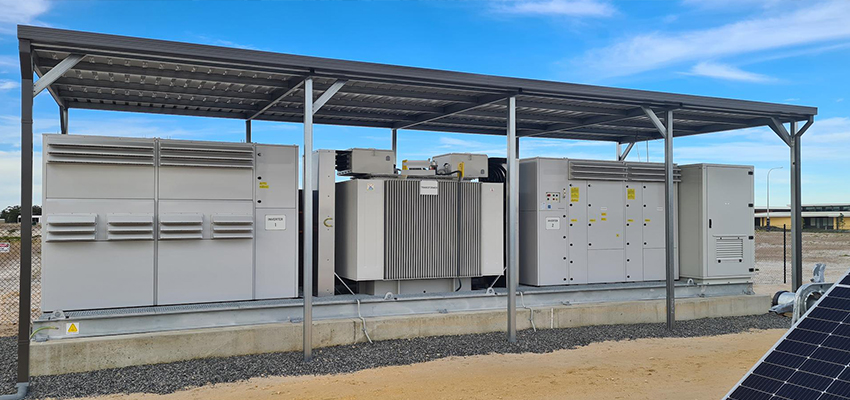
In the past, most industrial projects relied on a single power supply source.
Today, many companies in Africa have started building photovoltaic + grid power, photovoltaic + diesel generator, and photovoltaic + energy storage systems.
The goal is to reduce fuel consumption and improve power supply reliability. The direction is right.
However, for transformer operating conditions, the environment has changed.
Traditional transformer designs are based on unidirectional power flow, stable loads, and relatively low harmonic levels.
Renewable energy systems, however, bring:
· Changes in power flow direction
· Rapid load fluctuations
· Voltage fluctuations
· Increased harmonics
Therefore, for transformer selection in renewable energy projects, power quality is a key consideration.
8.1 Bidirectional Power Flow Needs to Be Considered
During the day, power may be delivered to the grid, while at night, power is drawn from the grid. The transformer must be able to adapt to this bidirectional operating mode.
8.2 Harmonic Impact Needs to Be Evaluated in Advance
The output quality of the inverter directly determines the harmonic level that the transformer will experience.
During the selection process, the harmonic performance indicators of the inverter must be carefully reviewed.
8.3 Load Fluctuation Requires Consideration of Dynamic Operating Conditions
Photovoltaic output changes with weather conditions, so transformer design needs to consider dynamic operating conditions.
9. Maintenance Determines How Long a Transformer Can Operate
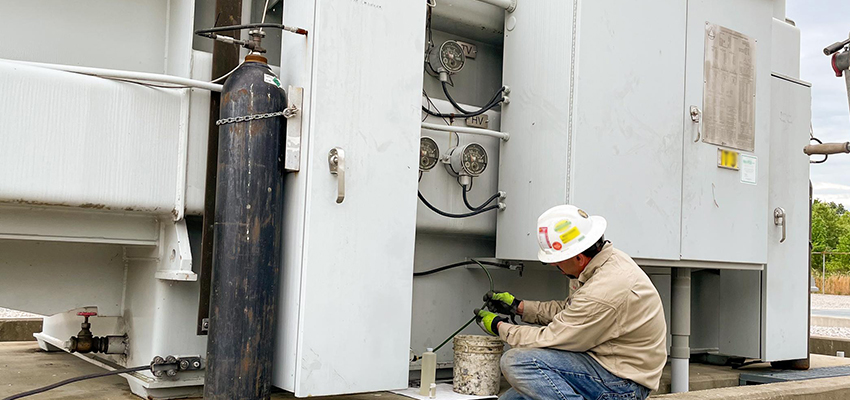
Many companies have a common misunderstanding:
Once the transformer is installed, they think there is no need to pay attention as long as it does not fail.
This is actually one of the important reasons why equipment efficiency declines year by year.
Small problems accumulate slowly and eventually become major failures.
Last year, at a mining project in Zimbabwe, the owner reported that the transformer oil temperature was much higher than in previous years.
After checking the site, we found that the surface of the radiators was covered with a thick layer of mineral dust, and the heat dissipation efficiency had basically been reduced by half.
After cleaning it with a high-pressure water jet, the oil temperature dropped by 12℃.
It was such a simple issue, but they had not done it for several years.
There is also transformer insulating oil testing. Regular oil analysis can help identify many problems in advance —
moisture content, insulation strength, and oil quality changes. These indicators do not suddenly become worse; they deteriorate gradually over time.
Terminal connections are the same. Thermal cycling, vibration, and environmental changes can slowly loosen bolts.
Regular infrared temperature scanning and tightening maintenance can control the risks caused by increased contact resistance.
These tasks are not complicated. The key is to build a habit and include them in the transformer maintenance plan.
10. One Sentence Summary
For transformer selection in African industrial projects, the logic should not be:
“Buy whoever offers the lowest price.”
The correct approach is to calculate the total cost —
initial investment, operating losses, maintenance costs, and downtime risks.
A piece of equipment that is several thousand dollars cheaper at the beginning may cost much more later if production is affected due to high losses and frequent failures.
Selecting a transformer requires comprehensive consideration of:
· Project environment
· Operating mode
· Load characteristics
· Future maintenance conditions
This is also why more and more industrial customers are shifting from “buying equipment” to “selecting solutions.”
11. Frequently Asked Questions (FAQ)
11.1 Q: Why do African industrial projects pay special attention to transformer efficiency?
Industrial transformers operate continuously throughout the year. A one or two percentage point difference in efficiency can accumulate into a significant electricity cost.
Core losses, winding losses, ambient temperature, load rate, harmonics, and maintenance conditions all affect efficiency.
For continuously operating projects such as mines and processing plants, reducing losses means directly reducing operating costs.
11.2 Q: What type of transformer should be selected for mining projects?
Mining projects usually involve large power equipment, high starting impact, heavy dust, and continuous operation requirements.
Generally, oil-immersed transformers are recommended, with good cooling design, reliable winding structures, and strong environmental adaptability.
The specific solution still depends on the load profile and actual site conditions.
11.3 Q: Why do photovoltaic projects need dedicated transformers?
Photovoltaic systems involve bidirectional power flow, harmonics, and output fluctuations.
If these factors are not considered during the design stage, operating losses and temperature rise will increase over the long term.
11.4 Q: How should transformers be selected for high-temperature, salt mist, and dusty environments?
High-temperature areas:
Strong cooling capability and sufficient temperature rise margin are required.
Coastal areas:
Corrosion protection must be properly designed, with long service life of external structures.
Mining environments:
Good sealing performance is required to prevent dust from affecting heat dissipation.
11.5 Q: How can the operating cost of an old transformer be reduced?
Check in the following order:
· Check the power factor and optimize reactive power compensation;
· Check three-phase load balance;
· Measure the harmonic level;
· Perform necessary maintenance;
· Consider equipment upgrades only if needed.
12. Conclusion
African industry, power infrastructure, and renewable energy projects are developing rapidly.
As a key piece of equipment in the power distribution system, the reliability and efficiency of transformers directly determine long-term project returns.
A good transformer solution is not the one with the lowest price, but the one that can operate stably throughout its entire lifecycle.
Environmental adaptation, capacity design, loss control, and system maintenance — every step affects the final cost.
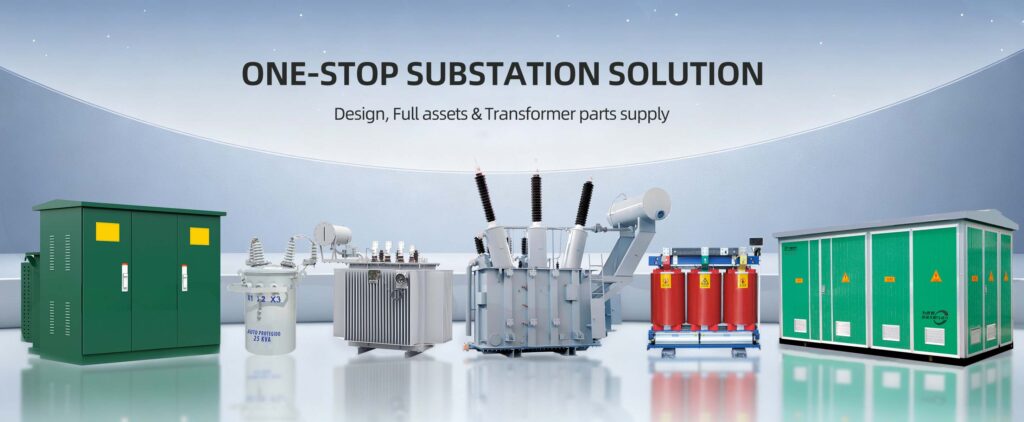
Zisheng Electric has been deeply engaged in the African market, specializing in oil-immersed transformers, substation transformers, pad-mounted transformers, pole-mounted transformers, dry-type transformers, and other power distribution equipment. We also provide system solutions covering the entire process from equipment selection to operation and maintenance.
We do not just supply equipment. We aim to help customers build a clear understanding of their power distribution systems, ensure stable operation, reduce operational risks, and improve long-term reliability.
About ZISHENG ELECTRICAL
Zisheng are a professional 19+ years manufacturer in producing Oil-Immersed Transformers, Compact Substation, Pad Mounted Transformers, Pole Mounted Transformers and Dry Type Transformers. We own the certificates of ISO/CE/IEC 60076 and TUV Rheinland.
Transformers undergo rigorous FAT and type testing, support voltage/capacity customization. Welcome to consult for Catalog and Product. you can contact us at email [email protected].