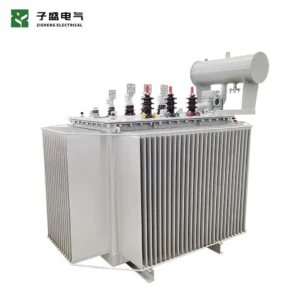
Data Center Transformer: How Can You Ensure Stable and Uninterrupted Power for Critical IT Infrastructure?
Power instability threatens data centers with downtime, equipment damage, and financial loss. Without reliable transformers, operations fail. The right solution ensures stability, efficiency, and continuous performance.
Data center transformers are critical for ensuring stable and uninterrupted power supply to IT infrastructure. High reliability is essential to minimize downtime risks, while efficient transformers reduce energy losses. Modern systems incorporate redundancy, voltage stability, and advanced cooling to support continuous operation, protect sensitive equipment, and improve overall energy efficiency in demanding data center environments.
Understanding transformer design and performance is essential for building resilient, efficient, and future-ready data center power systems.
Role of Transformers in Data Center Power Systems
Transformers play a foundational role in data center power architecture by converting voltage levels to meet the specific requirements of IT equipment and infrastructure systems. Data centers typically receive power at medium voltage levels, which must be stepped down to low voltage for safe and efficient use. This process ensures compatibility with servers, storage devices, and networking equipment.
Data center transformers are critical for ensuring stable and uninterrupted power supply to IT infrastructure. They act as a bridge between utility power and internal distribution systems, supporting seamless energy flow. In addition, transformers contribute to electrical isolation, which enhances system safety and reduces the risk of faults propagating through the network.
Modern data centers rely on well-designed transformer systems to support scalability and adaptability. As demand grows, transformers must accommodate increasing loads without compromising performance. Their integration with backup power systems, such as generators and UPS units, further strengthens overall system resilience.
Key Requirements for Data Center Transformers
Transformers used in data centers must meet stringent technical and operational requirements. High reliability is essential for transformers used in data centers to minimize downtime risks, as even a brief interruption can result in significant financial losses and operational disruptions.
Efficiency is another critical requirement. Efficient transformers help reduce energy losses and improve overall data center energy efficiency, which is especially important given the high energy consumption of modern facilities. Additionally, transformers must be designed to handle continuous operation under varying load conditions without degradation.
Safety and compliance are also vital considerations. Dry type transformers are often preferred in data centers due to their safety and low maintenance requirements. They eliminate the risk of oil leakage and fire hazards, making them suitable for indoor installations.
Furthermore, continuous monitoring systems enable real-time performance tracking and fault detection. These systems provide valuable data that helps operators maintain optimal performance and respond quickly to potential issues.
High Efficiency and Energy Loss Reduction
Energy efficiency has become a top priority in data center operations due to rising energy costs and environmental concerns. Efficient transformers help reduce energy losses and improve overall data center energy efficiency by minimizing core and copper losses during operation.
High-efficiency transformer designs utilize advanced materials, such as low-loss silicon steel and optimized winding configurations, to enhance performance. These improvements not only reduce operational costs but also contribute to sustainable and green data center operations.
Energy-efficient transformer solutions support sustainable and green data center operations by lowering carbon emissions and improving overall system performance. In large-scale facilities, even small efficiency gains can result in significant energy savings over time.
In addition, efficient transformers generate less heat, which reduces the burden on cooling systems. This creates a positive feedback loop where improved efficiency leads to lower cooling requirements and further energy savings.
Redundancy and Reliability in Power Distribution
Reliability is a cornerstone of data center design, and transformer systems play a key role in achieving it. Redundant power configurations, such as N+1 or 2N, are commonly implemented in data center transformer systems to ensure continuous operation even in the event of component failure.
These redundancy strategies involve deploying additional transformers or parallel systems that can take over if a primary unit fails. This approach significantly reduces the risk of downtime and enhances overall system resilience.
High reliability is essential for transformers used in data centers to minimize downtime risks. Transformers must be capable of operating under extreme conditions and handling sudden load changes without failure. Robust insulation systems, high-quality materials, and rigorous testing procedures are essential to achieving this level of reliability.
Moreover, integration with intelligent monitoring systems allows operators to detect anomalies early and perform preventive maintenance. This proactive approach further strengthens system reliability and ensures uninterrupted power supply.
Power Quality and Voltage Stability Considerations
Maintaining high power quality is crucial to protect sensitive electronic equipment in data centers. Poor power quality, including voltage fluctuations, harmonics, and electrical noise, can damage equipment and reduce operational efficiency.
Transformers play a vital role in stabilizing voltage levels and filtering out disturbances. Voltage stability and load balancing are key factors in data center power distribution design, ensuring that all equipment receives consistent and reliable power.
Advanced transformer designs incorporate features that enhance power quality, such as low impedance and harmonic mitigation capabilities. These features help maintain stable voltage levels even under fluctuating load conditions.
In addition, proper load distribution across transformers prevents overloading and ensures balanced operation. This not only improves system efficiency but also extends the lifespan of equipment.
Continuous monitoring systems enable real-time performance tracking and fault detection, allowing operators to maintain optimal power quality and respond quickly to any irregularities.
Cooling Methods and Thermal Management Solutions
Thermal management is a critical aspect of transformer operation in data centers. High-load conditions generate significant heat, which must be effectively managed to ensure reliable performance and longevity.
Advanced cooling systems are required to manage heat generated by high-load transformer operations. These systems include air-cooled and forced-air cooling solutions, which are commonly used in dry type transformers.
Dry type transformers are often preferred in data centers due to their safety and low maintenance requirements. Their cooling systems are designed to operate efficiently without the need for liquid insulation, reducing the risk of leaks and environmental hazards.
Effective thermal management not only enhances transformer performance but also improves overall system efficiency. By maintaining optimal operating temperatures, cooling systems help prevent overheating and reduce the likelihood of equipment failure.
In addition, integrating temperature monitoring and control systems allows for precise management of thermal conditions, ensuring stable and reliable operation even under demanding workloads.
Conclusion
Reliable, efficient transformers ensure stable power, minimize risks, and support sustainable, high-performance data center operations.
About ZISHENG ELECTRICAL
Zisheng are a professional 19+ years manufacturer in producing Oil-Immersed Transformers, Compact Substation, Pad Mounted Transformers, Pole Mounted Transformers and Dry Type Transformers. We own the certificates of ISO/CE/IEC 60076 and TUV Rheinland.
Transformers undergo rigorous FAT and type testing, support voltage/capacity customization. Welcome to consult for Catalog and Product. you can contact us at email [email protected].