Transformer Remote FAT Witnessing for African EPC Buyers: Live Evidence, Connection Loss and Release Records
Transformer remote FAT witnessing is useful only when the buyer can connect what was seen on screen to the transformer, test procedure and original result record. A clear video call can help an African EPC team participate without sending every specialist to the factory. It cannot compensate for an unidentified test object, an unreadable instrument or an unagreed acceptance criterion.
This procurement guide explains how to prepare a remote witness session, record its limits and close the resulting evidence package. It is not a claim that every transformer test is suitable for remote attendance. The manufacturer, purchaser and appointed inspection authority must agree the method for the actual equipment and inspection plan.
Define the scope of transformer remote FAT witnessing first
Separate three activities: the factory performs a test, a witness observes agreed parts of it, and an authorized reviewer accepts the resulting evidence. These roles may overlap, but they are not interchangeable. Remote participation changes the observation method; it should not silently change the required test, competence of the personnel or release authority.
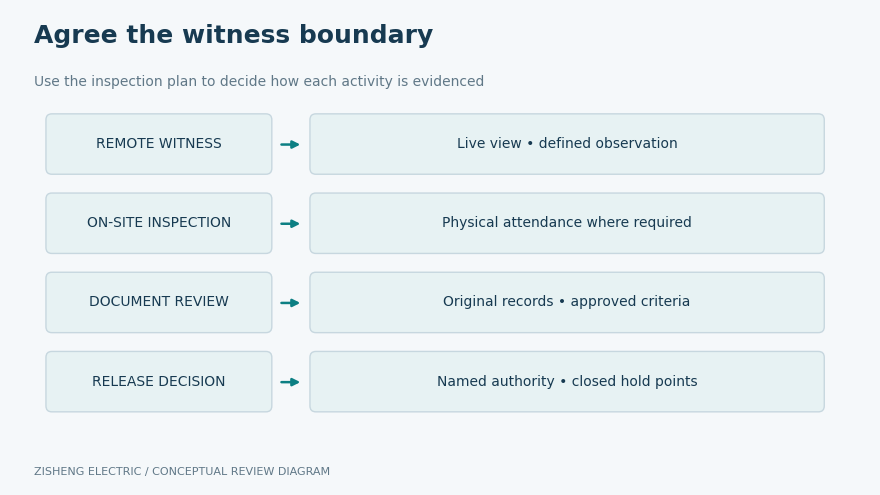
Review the inspection and test plan line by line. Mark which activities can be witnessed remotely, which require physical attendance, and which will be reviewed through documents. Identify hold points and the evidence needed to release them. A meeting invitation should never be treated as a waiver of an attendance requirement.
TÜV Rheinland’s virtual assessment guidance describes live inspection and document review while also recognizing that some services require an inspector on site. That distinction is useful for planning. Suitability must be decided for the individual scope; the availability of a video platform does not establish technical equivalence for every inspection activity.
Use remote participation where it answers a clear question
A protection specialist may need to see a specified accessory response, while a purchaser needs confirmation of identification and agreed documents. Give each participant a defined purpose. Large calls with no assigned responsibilities often produce many screenshots but leave the actual acceptance questions unanswered.
Freeze the document baseline before the session
Issue the approved datasheet, drawings, inspection plan, relevant procedures and proposed result forms early enough for review. List their document numbers and revisions in the agenda. If a drawing changes shortly before the test, identify the affected checks and obtain the required approval before using the new revision as the acceptance basis.
The agenda should identify transformer serial numbers, test locations, planned activities, expected duration and attendance windows. For several units, state whether the witness scope applies to every unit or to a defined selection. Do not let an unlabeled camera change turn one unit’s observations into apparent evidence for another unit.
Agree how questions and deviations will be recorded. One person should maintain the action register while the factory test leader manages the work. Set a clear distinction between a request for clarification, an observation, a nonconformity and a formal release decision. This prevents informal chat messages from becoming conflicting instructions.
Coordinate time zones and specialist availability
Use an explicit time zone in invitations and the test schedule. Identify which specialists must be present for particular witness points, and allow a practical route for schedule changes. Projects in different African countries cannot be managed with one assumed local time. Confirm the actual participants’ locations and working arrangements.
Prove that the camera can show the required evidence
Run a short technical rehearsal using the intended devices and connection. Check that the remote team can read the relevant labels, see the test arrangement at a useful scale and hear the test leader clearly. A camera suitable for a general factory tour may be unsuitable for an instrument display or a terminal identification check.
Agree how overview and close-up views will be provided. The overview establishes which equipment and test arrangement are involved; the close-up supports a specific reading or identification. If a result comes from software, identify the source system and how its original export will be supplied. Screen sharing is a view of data, not automatically the complete data record.
Factory personnel retain control of test safety and access. Camera positioning must respect the test area’s boundaries and the approved procedure. A remote witness should not ask someone to move closer to energized equipment simply to improve a picture. If a required view cannot be obtained safely, record the limitation and agree a suitable alternative.
Build a witness evidence matrix
| Witness question | Evidence to connect | Gap that needs a decision |
|---|---|---|
| Which transformer is under test? | Serial number, approved order scope and test record | Unclear identity or unexplained camera change |
| Which procedure applies? | Approved revision and stated test conditions | Different method used without review |
| What was actually observed? | Witness notes linked to activity and time | Activity completed while the connection was lost |
| Where did the result originate? | Instrument identity and original data export | Only an isolated screenshot is available |
| Was the criterion met? | Result, applicable criterion and reviewer disposition | Unresolved exception or ambiguous units |
| Can the unit be released? | Closed hold points and authorized release record | Meeting completion mistaken for shipment approval |
Use the matrix to decide what must be captured, not to create excessive recording. One well-identified result file can be more useful than a long video with no index. Each retained item should answer a particular acceptance question and connect to the relevant unit.
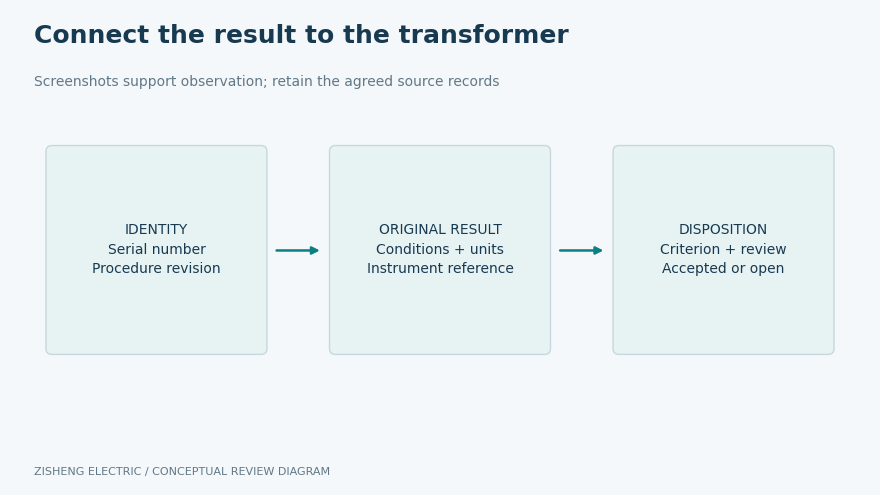
Establish identity and conditions at each witness point
At the start of an activity, confirm the unit identification, procedure reference, relevant setup and intended observation. Record the names and roles of the factory personnel and witnesses. For multi-day sessions, repeat the necessary identification rather than assuming that yesterday’s setup remains unchanged.
Where instrument or measurement-system information is part of the acceptance package, obtain the applicable identification and calibration records. The technical reviewer should judge whether the measurement arrangement supports the required claim. A remote viewer recognizing a familiar instrument brand is not a substitute for that review.
Keep test conditions attached to the result. Depending on the activity, relevant context may include connection arrangement, tap position, cooling condition, ambient information or other variables defined by the approved procedure. The required context comes from the test method, not from a generic checklist applied identically to every test.
Do not replace original records with meeting screenshots
Screenshots can document what a witness saw. They rarely preserve all metadata, ranges, units or intermediate information needed for technical review. Ask for the agreed original exports and signed reports through the project’s controlled document route. Keep any processing or corrections traceable to those source records.
Decide what happens when the connection fails
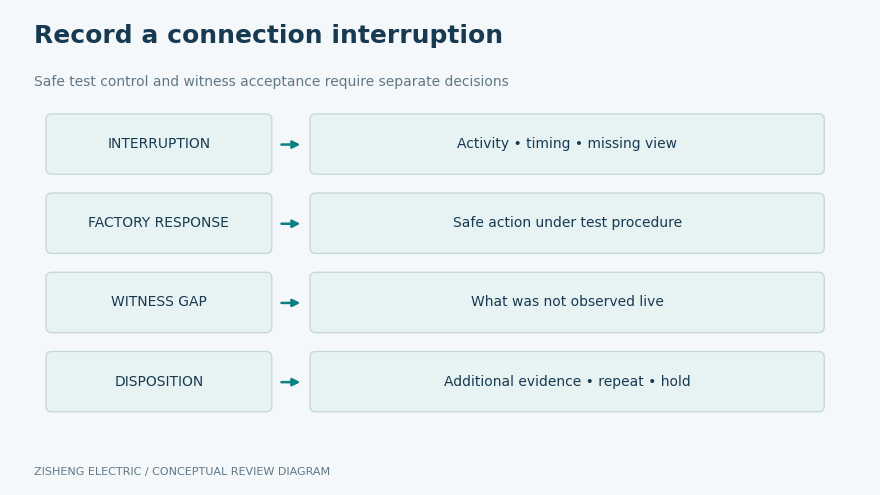
Agree a connection-loss rule before testing starts. The factory test leader decides what must happen to keep the activity safe; the inspection authority decides what the loss of observation means for witness acceptance. These are separate decisions. A test may need to continue safely even though the remote witness can no longer observe it.
Record the affected activity and the portion not observed. Do not reconstruct missing attendance by treating a later recording as though it were witnessed live. Depending on the agreed scope, the disposition may involve reviewing additional records, repeating an appropriate observation, arranging physical attendance or leaving the hold point open.
Do not promise that every test can simply be repeated after a network interruption. Repetition can require technical assessment, preparation and an approved procedure. Procurement should allow for this contingency in the schedule rather than pressuring the factory into an improvised repeat solely to complete the video call.
Keep exceptions separate from general meeting approval
At the closing discussion, review every open item against its evidence and owner. State what was completed, what was observed remotely, what was reviewed by documents, and what remains unverified. A participant saying that the call went well should not be recorded as technical acceptance of every result.
For a discrepancy, identify the affected requirement, actual finding, proposed correction and necessary verification. Preserve the original result if the test is repeated. If a concession is proposed, route it to the authorized party and record its scope. The factory’s internal decision and the purchaser’s contractual acceptance may require different records.
Use a final release checklist that references closed hold points, accepted test reports, outstanding documentation and shipment conditions. Commercial shipping pressure should be visible as a schedule issue; it should not erase an unresolved technical question. Where the project permits conditional release, its limits and responsible authority need explicit documentation.
Build a dossier that remains useful after delivery
The final package should include the approved witness scope, attendance record, procedure revisions, unit identification, original results, accepted reports, observation notes and action closures. Provide a simple index linking files to the relevant test and serial number. A collection of files named final, final-new and final-approved will make later investigation unnecessarily difficult.
Agree whether video recording is necessary and permitted, who receives it and how it will be retained. Capture only the relevant inspection scope and use the organization’s approved sharing route. A recording can supplement the dossier, but the accepted report should remain understandable without watching several hours of footage.
For multiple transformers, preserve a unit-by-unit acceptance summary. Highlight any activity performed on a representative unit and the engineering basis for applying that evidence elsewhere. A factory tour, a design-family report and a serial-specific routine test each answer different questions; label them accordingly.
Run a document-only rehearsal before the live test
Select one planned witness point and ask the team to trace the complete evidence route in advance. Identify the unit, procedure, required camera views, result file, acceptance criterion and person who will close the action. This rehearsal can expose an unavailable export format or an unreadable display before the factory reserves a test window.
For a multi-unit order, use one example serial number to confirm the naming convention. The same convention should appear in the agenda, report, photographs and action register. It need not be complicated; consistency matters more than a long filename. Confirm that the receiving team can open the proposed files using its normal tools.
Finally, check that the nominated witness has the authority and technical support needed for the assigned scope. Attendance by a purchaser alone may not settle an engineering question. Agree how specialist questions will be escalated, and allow unresolved items to remain open rather than converting an uncertain verbal response into an acceptance signature.
Connect remote witnessing with the wider procurement review
The short-circuit withstand evidence guide explains why the type and relevance of technical evidence matter. The replacement survey and bid-package guide addresses a different boundary: proving that the new unit fits the actual site. Remote FAT attendance does not close unverified site interfaces.
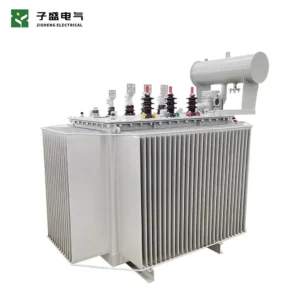
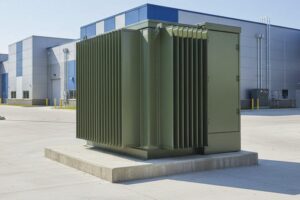
Product discussions can begin with the 10 MVA 33/11 kV power transformer or 10 kV distribution transformer. Agree the actual test scope and witness method in the offer. Neither a product listing nor an online meeting invitation confirms the availability of a particular test or inspection arrangement.
What should an EPC buyer send before requesting a remote session?
Provide the order scope, transformer identifiers if assigned, applicable specification, inspection plan, required witness points and proposed attendees. State the project country, time-zone requirements, document-delivery route and any inspection authority involved. Ask the supplier to identify observation limits and the activities needing physical attendance before confirming the schedule.
What is the practical acceptance test for the evidence package?
Ask an engineer who did not attend the call to trace one result from transformer identity through procedure, conditions, original data and final disposition. If that trail breaks, improve the record before closure. Transformer remote FAT witnessing succeeds when the remote team can make a defensible review decision from identifiable evidence. Send Zisheng Electric the proposed inspection scope to agree a workable witness and documentation plan.
عن شركة ZISHENG ELECTRICAL
زيشينغ هي شركة متخصصة ذات خبرة تمتد لأكثر من 19 عاماً في التصنيع والإنتاج المحوّلات المغمورة بالزيت, المحطات الفرعية المدمجة, المحوّلات المركبة على القواعد, المحوّلات المثبتة على الأعمدة و المحوّلات الجافة. نحن نمتلك شهادات ISO/CE/IEC 60076 وTUV Rheinland.
تخضع المحولات لاختبارات FAT واختبار المواصفات النوعية بشكل صارم، وتدعم تخصيص الجهد/السعة. نرحب باستشارتكم بشأن كتالوج و المنتج. يمكنك الاتصال بنا عبر البريد الإلكتروني [email protected].