Mission 300 Transformer Procurement: From Electrification Targets to Bid-Ready Lots
Mission 300 transformer procurement is becoming a practical planning question for African utilities, EPC contractors and distribution partners. Zisheng Electric approaches that question at the equipment-package level: which network will receive the transformer, what load will it serve, and what evidence must accompany each unit? A programme target can support investment planning. It cannot replace an approved transformer schedule or a utility connection specification.
This briefing connects a verified electrification milestone with the engineering decisions needed to prepare comparable bids. It is procurement analysis, not an announcement of an awarded contract, an open tender or supplier approval.
What the Mission 300 update means for equipment buyers
On 16 June 2026, the World Bank Group and African Development Bank Group reported that Mission 300 had connected more than 50 million people across 40 countries. The initiative aims to reach 300 million people by 2030 and includes both grid and off-grid access. The official progress announcement describes investment across the electricity value chain.
The purchasing implication is a need to distinguish actual distribution equipment requirements from wider programme activity. Household connections, feeder reinforcement, mini-grids and generation projects do not produce interchangeable transformer packages. Nor can a connection target be converted directly into a transformer quantity. Network architecture, existing spare capacity, settlement density and demand diversity determine the equipment requirement.
Procurement teams should therefore keep two separate records. One tracks the relevant project, procuring entity, funding stage and published procurement documents. The other tracks the technical maturity of each proposed equipment lot. A promising project pipeline may justify supplier engagement, but manufacturing release needs a much firmer technical basis.
Mission 300 transformer procurement starts with lot boundaries
A lot should group equipment that can be evaluated against a coherent design basis. Grouping everything under “rural electrification transformers” makes the schedule easy to read and difficult to price. Different primary systems, earthing arrangements, mounting methods or insulation requirements can create separate designs even when the rated power is identical.
Use a family schedule rather than a single generic data sheet. Give each family a reference, quantity, intended service area and controlled specification revision. Identify which features must remain common and which may vary by delivery location. That allows bidders to disclose genuine design differences instead of hiding them inside a broad compliance statement.
| Lot boundary | Evidence needed before comparable bids | Why it affects the purchase |
|---|---|---|
| Electrical system | Utility-confirmed voltages, frequency, phases, earthing and insulation requirements | Prevents a stock configuration being mistaken for a compatible network design |
| Demand and expansion | Initial diversified load, motor starting cases and credible future demand | Separates useful capacity margin from avoidable oversizing |
| Installation family | Pole or ground mounting, terminal arrangement, protection and access drawings | Changes supports, clearances, connections and installation scope |
| Environmental exposure | Site temperature, altitude, pollution, moisture and corrosion assessment | Determines which designs can share cooling and external insulation assumptions |
| Delivery geography | Route limits, unloading equipment, storage and installation sequence | Connects packing and shipment size to what the receiving team can handle |
| Operating support | Interchangeability policy, spare holdings and service responsibilities | Limits the long-term burden of too many equipment variants |
Keep the utility interface explicit
Do not assign a single voltage or frequency to an entire region. Obtain written values from the relevant utility or project authority, including the highest voltage for equipment, allowed operating range and the intended tap arrangement. A catalogue rating is an example of an available product, not evidence that the local network uses that rating.
The interface also includes neutral connections, surge protection, fusing, metering ownership and the point at which the EPC contractor hands the installation over. An electrically suitable transformer may still require terminal changes or different accessories to fit the utility arrangement. Freeze those details before treating two offers as equivalent.

Separate first connections from productive-use demand
A household connection count says little about the shape of the daily load. A feeder serving evening domestic demand behaves differently from one supplying irrigation, refrigeration, milling or small workshops. Procurement should request a load list that distinguishes existing measured demand, committed new connections and speculative expansion.
For each significant motor, record its starting method, starting sequence and supply constraints. For electronic loads, ask for the relevant converter or drive information and the engineer’s assessment of waveform distortion. A blanket capacity allowance does not resolve motor-starting voltage drop or harmonic heating. These are different design questions and may need different remedies.
Compare realistic operating stages
Evaluate at least an initial service case and a developed-load case. A staged programme may energize a transformer months before all expected customers connect. Conversely, a commercial cluster can grow faster than an original residential forecast. Record the assumptions behind both cases and decide who can authorize a rating change when surveys improve.
Loss evaluation should reflect expected operating hours and loading, together with the purchaser’s approved energy-cost method. An offer with a lower initial price may not be the preferred lifetime option. Avoid inventing a universal payback period: the result depends on actual guaranteed losses, the load profile, the evaluation horizon and the financial assumptions used by the buyer.
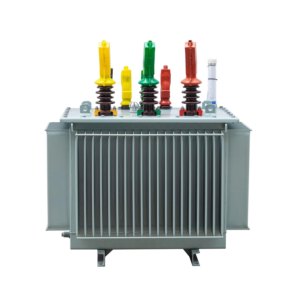
For a small overhead installation, a 25 kVA single-phase pole-mounted transformer illustrates one product family to discuss. A 200 kVA three-phase oil-immersed distribution transformer illustrates a different arrangement. Neither example should be selected until phase configuration, voltage, load duty, mounting and utility acceptance have been confirmed for the particular site.
Turn local conditions into design inputs
A regional label is not an environmental specification. Inland dust exposure, coastal salt deposition, persistent humidity and high-altitude service create different questions. Use measured site information or an approved engineering basis, state the source and identify gaps that still need confirmation.
Ambient temperature and altitude affect the thermal and insulation review. Salt and pollution affect external insulation and cleaning considerations. Humidity and periods of storage affect preservation and inspection planning. Dust can change enclosure and maintenance requirements. The procurement schedule should translate each relevant condition into a requested design response, rather than adding “suitable for Africa” to every data sheet.
Ask bidders to state the assumptions under which guaranteed performance applies. Where a departure is proposed, require an explanation of its effect on rating, dimensions, accessories, testing and maintenance. Keep those answers in a controlled technical deviation register so commercial comparison does not erase engineering differences.
Check the complete installation envelope
The envelope includes cable bending space, safe access, lifting points, mounting dimensions and the location of protective devices. Pole-mounted equipment needs coordinated support and connection details. Ground-mounted equipment needs an approved foundation, drainage arrangement and access for replacement. These checks belong in the package review while the supplier can still change the design efficiently.
Ask for evidence that matches the ordered design
A useful bid schedule distinguishes routine production records, design evidence and project-specific witnessing. List the applicable standards and editions in the contract documents; do not rely on an unqualified “international standard compliant” statement. IEC 60076-1 covers general requirements for power transformers, but the purchaser still needs to identify the applicable parts and any utility additions for the equipment in question.
For short-circuit duty, request the network fault information and the evidence basis required by the specification. The review should establish why the submitted evidence applies to the offered design. The related guide on short-circuit withstand evidence for African EPC procurement explains the identity and applicability questions in more detail.
Before production, agree the inspection and test plan, document submission dates, witness arrangements and release authority. Before dispatch, confirm that the serial-number schedule, drawings, nameplate information and test records refer to the same units. A complete report for a different design does not close an equipment-specific hold point.

Buy an achievable delivery sequence
A factory completion date is only one milestone. Work backwards from the site’s intended energization date through customs clearance, inland transport, receiving inspection, storage, installation and utility acceptance. Assign an owner to each activity and identify which dates depend on civil works or feeder construction outside the transformer supplier’s scope.
For remote delivery points, establish bridge and road limits, turning space, seasonal access constraints and the actual unloading method. Obtain transport dimensions and mass for the delivered configuration, including packaging. A standard truck delivery assumption is not sufficient when the final route or handling equipment has not been checked.
Split deliveries where this reduces storage exposure or supports a realistic construction sequence. However, preserve traceability across batches: packing lists, accessories, spare components and documents must follow their assigned equipment. Avoid sending the final connection accessories with a later batch if they are needed to energize the first one.

Make distribution support part of bid evaluation
Large equipment programmes can leave operators maintaining many near-identical variants. Standardize interfaces where the network permits it, and define which parts must be interchangeable. Record exceptions by family and serial number. A common purchase description alone does not establish that bushings, protection devices or mounting accessories can be exchanged.
Specify commissioning support, operator documentation, fault reporting and access to replacement parts. Agree what information the service team needs when a problem occurs: nameplate photographs, serial number, operating conditions, protection events and inspection records. For remote locations, clear diagnostic information can be as important as the initial response time.
Ask for a priced spare-parts schedule and distinguish commissioning consumables from operational spares. Assign storage and inspection responsibilities. The objective is a support arrangement the owner can actually operate, with contact routes and escalation responsibilities recorded before handover.
Give distributors a controlled substitution process
A distributor may need to replace an unavailable item with another stocked configuration. Require a documented review of voltage ratio, phase arrangement, impedance, insulation, terminals, mounting and protective coordination before accepting that substitution. Similar rated power does not establish interchangeability. The owner should receive the approved replacement data sheet and revised equipment register, with the reason for the change recorded. This is particularly useful where several contractors receive equipment from one regional warehouse: it prevents a convenient stock movement from quietly changing the installed design or leaving the maintenance team with inaccurate records.
Release the inquiry when its assumptions are visible
A useful inquiry package contains the single-line diagram, transformer family schedule, load assumptions, utility interface documents, site conditions, delivery plan and inspection requirements. Mark unresolved items explicitly and request separately priced options where uncertainty genuinely remains. This lets the buyer compare offers on the same basis without pretending the design is already final.
For Mission 300 transformer procurement, Zisheng Electric can review distribution-transformer configurations against the customer’s project documents. Send drawings, data sheets, load lists, technical specifications, grid parameters, environmental conditions and installation-site constraints so the proposed equipment and supply boundaries can be checked together. Our engineering team will review the requirements and respond to project inquiries within 24 hours.
Sources reviewed: World Bank Group announcement, 16 June 2026; IEC 60076-1:2011 official catalogue. Programme news does not establish tender eligibility or utility approval; those must be verified against the applicable procurement documents.
About ZISHENG ELECTRICAL
Zisheng are a professional 19+ years manufacturer in producing Oil-Immersed Transformers, Compact Substation, Pad Mounted Transformers, Pole Mounted Transformers and Dry Type Transformers. We own the certificates of ISO/CE/IEC 60076 and TUV Rheinland.
Transformers undergo rigorous FAT and type testing, support voltage/capacity customization. Welcome to consult for Catalog and Product. you can contact us at email [email protected].