Transformer Warranty Evidence for African Projects: Site Records, Fault History and Service Review
Transformer warranty evidence should connect the equipment delivered, the conditions recorded on site and the event reported to the supplier. For African EPC and industrial projects, that connection can become difficult when commissioning teams demobilize, files remain on individual phones or laboratory results arrive after a service request has already started. A clear evidence package helps the technical team review what happened and identify the information still missing.
This guide proposes a practical record structure. It does not establish warranty coverage, notification deadlines or a right to repair: those depend on the agreed contract and the supplier’s written instructions. A complete file supports review; it does not prove a manufacturing defect or guarantee acceptance of a claim.
What transformer warranty evidence should contain
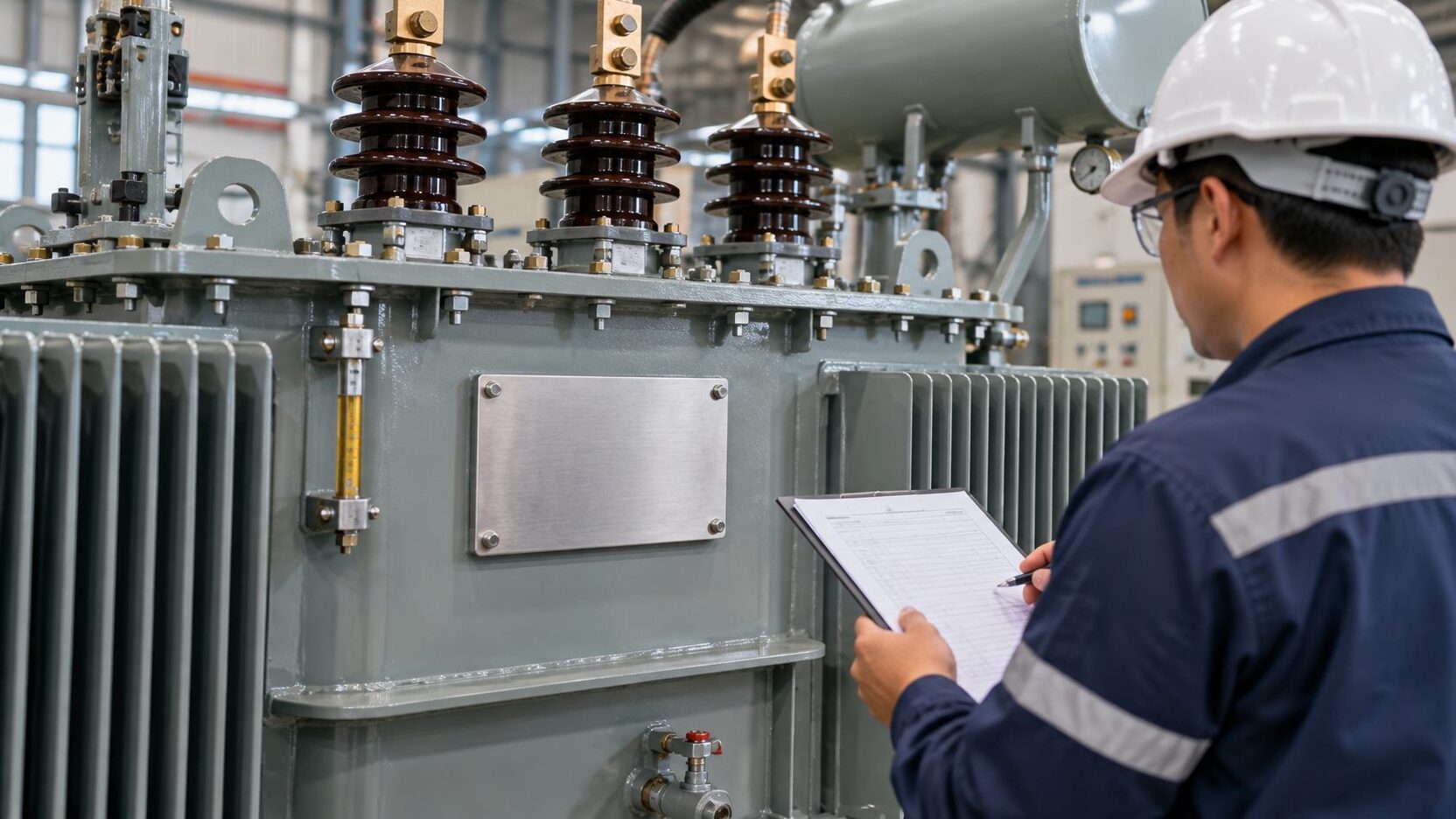
Build one indexed package around the affected asset, not a folder of loosely related photographs. Separate facts observed by site staff from diagnostic opinions and later commercial decisions. Each item should identify its author, date, asset and source file. Where a fact is uncertain, mark it as uncertain and assign a follow-up owner.
8 essential transformer warranty evidence records
| Record group | Useful contents | Review question |
|---|---|---|
| 1. Equipment identity | Serial number, asset tag, nameplate photograph, order reference | Does every file concern the same unit? |
| 2. Agreed supply baseline | Approved data sheet, drawings, accessories and approved deviations | What configuration was supplied? |
| 3. Factory and dispatch records | Applicable test reports, release documents and packing list | What was documented before shipment? |
| 4. Transport and receipt | Receipt inspection, handling records and noted damage | What changed before installation? |
| 5. Storage and installation | Preservation checks, assembly records and supplier instructions | How was the unit managed on site? |
| 6. Commissioning baseline | Approved test records, settings references and release signatures | What was accepted before service? |
| 7. Operating and event history | Load records, alarms, event exports, maintenance and dated observations | What preceded the reported issue? |
| 8. Service correspondence | Notification, case number, instructions, actions and review decisions | Who authorized each next step? |
1. Match identity before comparing results
Start with a readable nameplate image and the site asset tag. Include the purchase-order reference and the supplier’s serial number in the index. Similar units on one project can have different accessories or commissioning dates. Do not merge their records merely because their ratings match. If a component was replaced, preserve its old and new identifiers and the approved change record.
2. Keep the agreed configuration visible
Use the approved supply documents and their revisions. An early quotation or tender drawing may describe a configuration that changed before manufacture. List accepted deviations separately so the reviewer does not treat a documented change as an unexplained discrepancy. Preserve the original approval trail rather than replacing earlier files with a newly edited summary.
3. Retain factory and dispatch evidence
Index factory reports by serial number, test date and report revision. Include the dispatch release and the accessory packing list where relevant. These records establish a documented starting point; they do not automatically explain a later site event. If a report is missing, ask for the controlled copy and record the request instead of substituting a report from a sister unit.
4. Preserve receiving and handling observations
Keep dated arrival photographs, receiving exceptions and transport records together. Record who observed a finding and whether it was reported before unpacking or installation. Avoid assigning a cause from a single photograph. For oil-related investigations, connect sample handling to the guidance in our transformer oil sample logistics review.
5. Connect storage and installation records
A service reviewer may need the storage duration, preservation inspections and installation record, as applicable to the transformer and its instructions. Identify subcontractors and work packages so missing records can be recovered after demobilization. State gaps openly. Reconstructing an inspection from memory is different from supplying its signed original.
6. Establish the commissioning baseline
Keep approved commissioning reports, instrument identification, test conditions and the applicable acceptance references. Retain the protection-settings approval record separately from a casual screenshot of a relay display. Baseline results are most useful when later measurements can be compared under documented conditions by the responsible specialists.

7. Preserve the event history without rewriting it
Export available event and alarm files in their original format before routine systems overwrite them, following the site’s authorized process. Keep a readable copy for the review meeting. Record local time, time zone and known clock offsets. A spreadsheet assembled later should point back to those source files, not silently replace them.
8. Track instructions and responses
Give the request a case number and name one site coordinator. Keep the supplier’s questions, the site’s replies and the authorization for any investigation together. An acknowledgment of receipt is not the same as an accepted warranty claim. Record each commercial and technical status separately so logistics staff do not act on an assumption.
Build a reliable event timeline
Strong transformer warranty evidence explains sequence without prematurely declaring cause. A trip, an alarm and a visible leak may be related, but their relationship requires technical assessment. Use neutral descriptions such as “alarm recorded” or “oil observed at the photographed location.” Identify unavailable data rather than implying that no event occurred.
| Timeline field | What to record | Common weakness |
|---|---|---|
| Time reference | Original timestamp, zone and clock uncertainty | Combining local and UTC times without labels |
| Observation | Exact indication, location and observer | Recording an assumed root cause as fact |
| Operating context | Available loading, switching and environmental records | Using a single reading as the entire history |
| Action taken | Responsible person, instruction reference and result | Undocumented adjustments during troubleshooting |
| Evidence link | Original filename and controlled storage location | Compressed messaging screenshots as the only source |
Do not re-energize equipment or perform intrusive work merely to reproduce a fault for the evidence file. The responsible site authority must manage isolation and any testing under an approved safe system of work. HSE’s guidance on working with electrical equipment provides general safety context; the project’s applicable rules and authorized procedures govern the work.
Prepare transformer warranty evidence for remote African sites
Plan the file transfer before an incident. Keep a small initial package that can be transmitted over limited bandwidth: identity, a concise event summary, selected readable photographs and a manifest of larger files. Retain full-resolution originals in controlled storage. Send the remaining files through an agreed channel and verify receipt against the manifest.
Nominate both a site custodian and an off-site backup contact. Record the available access route, site entry requirements, communications constraints and potential laboratory or courier interfaces. These facts help plan attendance; they do not justify promises about response times. Seasonal access and transport arrangements should be confirmed for the actual location.
For leakage-related cases, align the evidence process with the site’s oil leak response plan. Where monitoring data exists, retain the configuration and data-quality context discussed in online DGA retrofit readiness. A trend export without units, timestamps or sensor context may require further clarification.

Service review, corrective work and closure
Hold a review of missing information before arranging specialist attendance or returning a component. Agree the investigation scope, evidence custody and responsibilities in writing. Keep any removed items identified and managed under the agreed instructions. Photographs and reports should remain available even when equipment is repaired or replaced.
Close the technical case with the findings, authorized actions, verification records and remaining operating restrictions, if any. Record the warranty or commercial decision separately. Update the asset history and hand the complete package to the operating team. This preserves transformer warranty evidence for future maintenance without treating every service issue as the same failure.
Frequently asked questions
Does a complete evidence package guarantee warranty acceptance?
No. It supports technical review. Coverage, exclusions and responsibilities depend on the agreed terms and the findings for the specific case.
Can phone photographs replace signed records?
They can support observations, but they usually cannot establish approvals, test conditions or the full sequence alone. Preserve original images and link them to the relevant records.
What if commissioning records are missing?
List the missing items and their custodians, request controlled copies and explain the gap to the reviewer. Do not create retrospective signatures or present estimates as original results.
Should the site dismantle a component before review?
Only authorized personnel should act under the applicable instructions and safe work controls. Agree evidence preservation and investigation scope before intrusive work.
What should be sent with the first service request?
Send the serial number, order reference, site location, factual event summary, current equipment status and available supporting records through the agreed service channel.
Preparing a project service file? Provide Zisheng with the equipment identity, approved configuration and an indexed record list so the team can identify the information needed for a case-specific technical review.
About ZISHENG ELECTRICAL
Zisheng are a professional 19+ years manufacturer in producing Oil-Immersed Transformers, Compact Substation, Pad Mounted Transformers, Pole Mounted Transformers and Dry Type Transformers. We own the certificates of ISO/CE/IEC 60076 and TUV Rheinland.
Transformers undergo rigorous FAT and type testing, support voltage/capacity customization. Welcome to consult for Catalog and Product. you can contact us at email [email protected].