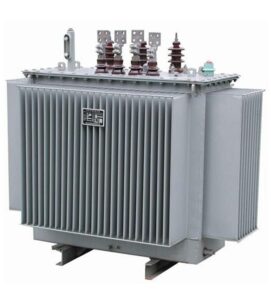
Transformer Technical Deviation Register for African EPC Bids: From Exception to Acceptance
For an enquiry to Zisheng Electric, a transformer technical deviation register makes the differences between a project specification and a supplier offer visible before an order is placed. A proposal can appear complete while leaving an important exception in a footnote, drawing note or commercial attachment. The purchasing team needs to know what changes, why it changes and who must accept the consequences.
For African EPC contractors, industrial buyers and electrical distributors, the useful question is not simply whether a bid says “compliant.” It is whether the offered equipment, delivery configuration and support scope fit the actual project. This procurement briefing explains how to turn scattered qualifications into engineering decisions, without treating every clarification as a defect or every alternative as an acceptable saving.
What belongs in a transformer technical deviation register?
Start with the approved enquiry baseline: specification revision, datasheet, single-line diagram, load information, site conditions, required drawings and scope schedule. Identify the documents that bidders were actually given. A supplier cannot confirm a requirement that is absent from the enquiry, and a later revision should not silently replace the basis on which an earlier price was prepared.
A deviation is a stated departure from a requirement. A clarification explains an ambiguity. An assumption fills a gap temporarily. An exclusion removes an item or service from the proposed scope. Keep these labels separate, because they require different responses. A request to confirm a cable entry direction should not be recorded as though the manufacturer has refused the specified terminal arrangement.
Give every open item a stable identity
Assign a reference that remains unchanged through bid revisions. Record the requirement, proposed alternative, reason, supporting document, engineering effect, commercial effect, responsible reviewer and closure evidence. Add the affected equipment tags. The same accessory change may be harmless on one unit but incompatible with another unit’s protection or maintenance arrangement.
Use concise entries that can stand alone. “As discussed” is not a decision. “Supplier to confirm” is not a technical description. A reviewer returning to the file after several weeks should be able to identify the unresolved question without reconstructing an email chain. Link the correspondence for context, but put the actual decision in the register.

Compare the engineering consequences before the price adjustment
The table below is a review structure, not a set of universal acceptance criteria. Each decision depends on the project design and the authority assigned to approve it. A lower price can be worth considering when the alternative is suitable and its interfaces are covered. It becomes misleading when the saving merely transfers unpriced work to the site team.
| Proposed difference | Engineering consequence to investigate | Evidence required for a decision | Typical review owner |
|---|---|---|---|
| Different guaranteed impedance | Fault duties, voltage regulation and compatibility with the intended system | Revised guaranteed data and the project study team’s assessment | Electrical design lead |
| Alternative cooling arrangement | Continuous duty, auxiliary supply, maintenance access and operation during an auxiliary outage | Defined duty cases, cooling description and applicable performance guarantees | Equipment engineer and operator |
| Changed terminal or cable-box layout | Cable routing, bending space, connection details and installation work | Coordinated interface drawing with cable contractor comments closed | Electrical interface coordinator |
| Accessories shipped separately | Site assembly, preservation, tools, supervision and acceptance sequence | Packing breakdown and a clear allocation of site responsibilities | Logistics and construction leads |
| Different instrument or control accessory | Signal compatibility, spare holdings, configuration and support | Accessory datasheet and interface comparison | Controls engineer and maintenance team |
| Reduced witness or documentation scope | Whether the purchaser can obtain the evidence needed for release | Revised inspection plan and agreed document deliverables | Quality lead and purchaser |
Do not close a technical item merely because the commercial team has accepted its price. Equally, engineering acceptance does not settle delivery dates, additional work or contractual wording. Record both decisions where both are needed. This keeps an approved alternative from reappearing later as a disagreement over what the supplier was paid to provide.
For an example of a more focused technical comparison, our mining transformer bid review examines harmonic guarantees and short-circuit evidence. A deviation register provides the surrounding decision trail; it does not replace the engineering study behind each conclusion.
Keep standards, purchaser preferences and missing data distinct
The official scope of IEC 60076-1:2011 covers general requirements for many single-phase and three-phase power transformers, subject to the exceptions described by IEC. The project must still identify the applicable standards and editions. A broad reference to the IEC 60076 series is not a complete statement of the equipment, tests and documentation being purchased.
For each proposed departure, identify whether it concerns a mandatory project requirement, a purchaser preference, a missing input or an alternative permitted by the enquiry. Do not invent a hierarchy when two project documents conflict. Raise the conflict to the authorised purchaser and retain the written resolution with the relevant revisions.
Do not convert an unresolved input into a guarantee
A supplier may need the final load profile, harmonic spectrum, site elevation or connection conditions before confirming a design feature. Record the input owner and the date by which the information is needed. State which drawing, calculation or guarantee remains provisional. A qualification disappears only when the missing input has been reviewed and the resulting offer is confirmed.
For utility-connected projects, obtain the actual connection requirements from the responsible utility or project authority. Avoid treating a voltage, frequency, protection arrangement or acceptance practice from a neighbouring project as a national rule. Where the governing document is not available, mark the issue open and identify the decision it prevents.
Make African site conditions specific enough to change a decision
African projects cover very different locations and operating arrangements. The register should refer to the named site and its approved data, rather than use “tropical,” “coastal” or “remote” as a substitute for a specification. Those descriptions are useful prompts for questions, but they do not establish design values.
For a coastal site, an alternative coating system may affect inspection, repair materials and maintenance obligations. Request the specified exposure information and the proposed system’s supporting data. For a dusty installation, a different enclosure or ventilation arrangement may change cleaning access and maintenance frequency. The reviewer should connect the proposed alternative to the site’s actual maintenance capability.
Temperature and elevation can influence the manufacturer’s thermal and insulation review. Ask the project team to supply the adopted values and their source. If the offer assumes different conditions, the register should show the difference explicitly. Do not accept a general statement that the unit is suitable for Africa as evidence that the specific site conditions have been assessed.
Transport conditions also belong in the technical discussion. A change in shipping arrangement can introduce site assembly work, specialist tools and additional preservation activities. Our guide to transformer shipping configuration for inland African projects explains why these responsibilities should be decided before dispatch. Put any agreed change into both the technical scope and the logistics package.

Work one clarification through to a usable decision
Consider a hypothetical bid that offers a different temperature indicator from the model named in the enquiry. Begin by establishing why the specified device was selected. It may be a preferred make, an installed-base spare requirement or a necessary interface to an existing monitoring system. These are different reasons and should not receive the same automatic response.
Ask the supplier for the proposed device’s datasheet and connection information. The controls reviewer checks the required outputs and auxiliary supply. Maintenance reviews replaceability and support. The equipment engineer confirms how the instrument fits the transformer package. If the project needs a feature that the alternative does not provide, the missing function must be resolved before the alternative can be accepted.
The final entry should identify the accepted device and revision, the conditions of acceptance, the drawings to be updated and any cost or programme effect. If the alternative is rejected, state what the supplier must restore. Avoid leaving “acceptable subject to confirmation” as a permanent status after the order has been awarded.
Separate conditional acceptance from closure
Conditional acceptance can help the team progress, but the outstanding condition needs an owner and a clear release gate. For example, an accessory selection might be accepted for further design while its signal mapping remains open. The register should make it impossible to mistake that interim decision for permission to manufacture an uncoordinated control panel.
Control revisions when several parties are buying the package
A distributor may receive the manufacturer offer while an EPC contractor controls the engineering requirements and the project owner controls final acceptance. Assign one person to maintain the register, but assign decisions to the people with the relevant authority. Administrative ownership does not give the register keeper authority to waive an engineering requirement.
When a bid is revised, request a marked comparison or a clear list of changes. Recheck previously closed items that may be affected. A new cable-box arrangement can reopen access and civil-interface questions even if the rated electrical data are unchanged. Record the reopening against the original item rather than creating an unrelated duplicate entry.
Distribute the accepted register with the purchase-order technical attachments. Identify the order of precedence through the project’s normal contractual review. Manufacturing drawings, inspection plans and packing documents should reflect the accepted decisions. An agreement that stays only in a tender spreadsheet is easily lost when a different team starts production or site work.

Use a short award gate that exposes remaining work
Before placing the order, review the open items by consequence rather than simply counting them. One unresolved interface can matter more than several editorial corrections. Identify which issues prevent a reliable price comparison, which prevent design release and which can legitimately be completed later without changing the agreed equipment basis.
A useful award record states the selected offer revision, accepted alternatives, rejected exceptions, remaining inputs and the people responsible for closing them. It also identifies the documents that must be updated. Keep the original baseline and superseded offers available so that a later reviewer can understand how the final configuration was reached.
At the factory review stage, sample the closed register entries against the approved drawings and inspection package. The purpose is to verify implementation, not to repeat the tender negotiation. Where a decision was not carried forward, reopen the affected item and assess the impact through the project’s change-control process.
Request a transformer offer with traceable exceptions
Zisheng Electric can discuss the enquiry basis for a 315kVA oil-immersed distribution transformer or a 10MVA 33/11kV power transformer. These product pages are starting points for discussion; the selected rating and configuration must follow the project requirements.
Send drawings, datasheets, the load list, technical specifications, the single-line diagram, grid parameters, environmental conditions and installation-site conditions. Include the enquiry revision and any existing transformer technical deviation register so that proposed alternatives can be reviewed against one common baseline. Our engineering team will review the requirements and respond to project inquiries within 24 hours.
About ZISHENG ELECTRICAL
Zisheng are a professional 19+ years manufacturer in producing Oil-Immersed Transformers, Compact Substation, Pad Mounted Transformers, Pole Mounted Transformers and Dry Type Transformers. We own the certificates of ISO/CE/IEC 60076 and TUV Rheinland.
Transformers undergo rigorous FAT and type testing, support voltage/capacity customization. Welcome to consult for Catalog and Product. you can contact us at email [email protected].