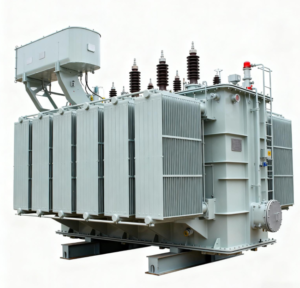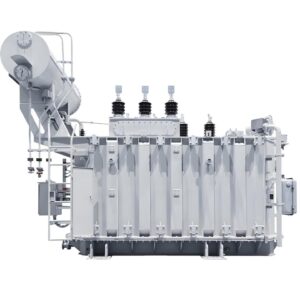
Morocco Desalination Plant Transformer Procurement: Large Pumps, Coastal Corrosion and Expansion Duty
Zisheng Electric approaches transformer selection for water infrastructure as a system decision, not a nameplate purchase. A Morocco desalination plant transformer must support large pump motors, sensitive process controls, corrosive coastal exposure, staged capacity growth and the operating philosophy of the plant. The correct specification therefore starts with the load list, one-line diagram, motor-starting study and site data—not with a preferred transformer rating.
Desalination plants combine high-duty rotating equipment with instrumentation, variable-speed drives, chemical dosing, auxiliary systems and emergency services. Their electrical demand can change sharply during start-up, flushing, membrane cleaning and the transfer between normal and standby supplies. If transformer impedance, cooling, insulation, enclosure or redundancy is selected in isolation, the consequences may include unacceptable voltage dips, nuisance trips, accelerated insulation ageing, corrosion damage or insufficient capacity for a later treatment train.
Why the Morocco Desalination Plant Transformer Is a Project-Critical Package
The transformer links the utility or plant substation to loads that directly determine water output. High-pressure pumps and seawater intake pumps may dominate the connected load, while the control system requires stable voltage and dependable auxiliary power. Procurement teams should therefore judge the package by how it performs through the full operating sequence.
For an actual project in Morocco, the purchaser must confirm the utility connection voltage, permitted voltage variation, short-circuit level, earthing method, protection requirements, metering interfaces and applicable national or utility rules. These values should not be assumed from another site. Coastal distance, airborne salt, humidity, ambient temperature, altitude, dust and water availability for maintenance should also be declared in the enquiry.
Four operating questions to answer first
- Which motors start across the line, through soft starters or through variable-speed drives?
- What is the largest credible simultaneous starting or restart sequence?
- Which process trains must remain available after one transformer or feeder is isolated?
- How much future capacity is firm, and how much is only a possible expansion?
These questions affect MVA rating, impedance, vector group, tap range, cooling class, neutral arrangement, protection and the number of transformers. A simple sum of motor nameplates does not capture starting current, load diversity, harmonic current or the loss of one source.
Translate Pumping Duty into an Electrical Load Case
The purchaser should issue a load list showing rated kW, efficiency, power factor, starting method, starting current, duty factor and operating group for each major motor. The transformer vendor can then check steady-state loading, voltage regulation and thermal duty. The EPC electrical study should separately verify motor starting, short circuit, protection coordination and harmonics.
| Design input | Why it matters | Risk if omitted | Procurement check |
|---|---|---|---|
| Largest motor kW and starting method | Determines the transient kVA and voltage dip | Pump fails to accelerate or other drives trip | Provide motor data sheet and starting curve |
| Simultaneous operating groups | Defines realistic maximum demand | Oversized or overloaded transformer | Mark duty, standby and intermittent loads |
| Source short-circuit level | Affects fault duty and starting voltage | Incorrect equipment withstand or study results | Obtain minimum and maximum utility values |
| Nonlinear load percentage | Supports harmonic and heating assessment | Extra winding losses and capacitor resonance | List VFD, UPS and rectifier quantities |
| Expansion stages | Influences rating, bays, cables and cooling margin | Stranded capacity or costly retrofit | Separate day-one, committed and optional loads |
Motor starting is a network study, not a rule of thumb
A large pump can draw several times rated current during acceleration, but the actual network effect depends on the starter, motor torque curve, transformer impedance, upstream fault strength, cable impedance and other loads already running. Specifying an arbitrarily low transformer impedance may improve starting voltage while increasing fault current. Specifying an arbitrarily high impedance may limit fault current but deepen the voltage dip. The acceptable value must be coordinated with switchgear ratings, relay settings and the motor-starting study.
Where variable-speed drives are used, provide their input topology, pulse number or active-front-end arrangement, input reactors or filters and manufacturer harmonic data. The transformer thermal design and neutral loading review should use the expected current spectrum rather than a generic “VFD duty” label.
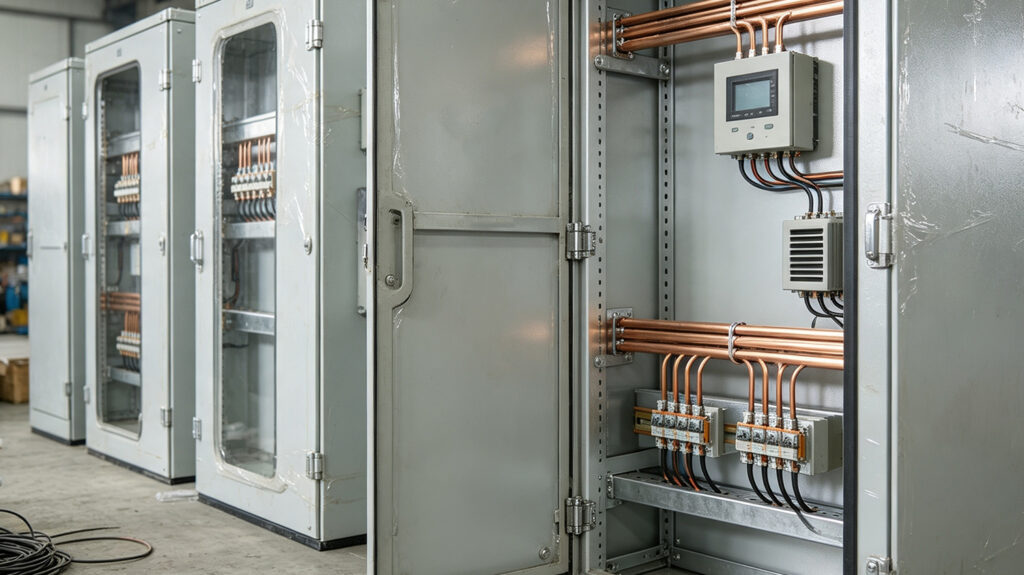
Teams working through large motor and restart cases may also find the logic in Zisheng Electric’s guidance on standby transfer and chiller restart useful, although desalination pump sequences must be studied using their own data.
Choose Rating and Redundancy Around Water Availability
One large transformer can reduce first cost and simplify the arrangement, but a single outage may remove a large portion of production. Two transformers with sectionalized medium-voltage buses can improve maintainability and operational flexibility. The correct arrangement depends on the owner’s availability target, the process train layout, spare strategy, permissible water production reduction and transfer philosophy.
An N-1 statement must be made measurable. It should identify the transformer out of service, the remaining process trains, the duration, ambient condition, permissible loading of the remaining transformer and whether automatic load shedding is available. Without these details, bidders may price fundamentally different solutions.
Hypothetical specification example
The following is an illustrative format only and is not a real project or a final design.
- Day-one maximum operating demand: 14.2 MVA at the stated power factor.
- Largest motor: 2.5 MW high-pressure pump with variable-speed drive.
- Normal arrangement: two transformers feeding sectionalized 11 kV buses.
- Contingency: one transformer unavailable; selected essential process trains continue after automatic load shedding.
- Expansion: one additional treatment train after year five; future bays and protection I/O reserved at day one.
This format gives bidders a duty to evaluate. The final MVA ratings and allowable contingency loading still require a load-flow and thermal review. A 35–46 kV power transformer may suit one network architecture, while a 66–69 kV power transformer may fit another; the utility connection study decides the voltage class.
Engineer for Coastal Corrosion and Contamination
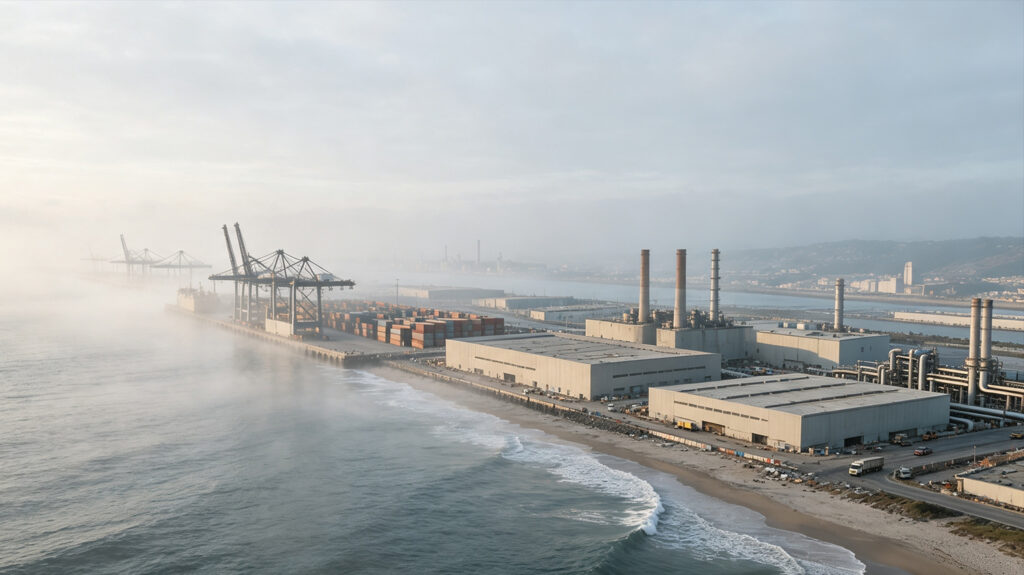
Salt-bearing air can attack radiators, fasteners, terminal boxes, marshalling kiosks and exposed copper or aluminium surfaces. The corrosivity is influenced by shoreline distance, prevailing wind, shelter, condensation and maintenance practice. Stating only “outdoor coastal service” is insufficient.
The enquiry should define the environmental classification or owner coating specification, preparation standard, coating system, minimum dry-film thickness, colour, stainless-steel grades where required and repair procedure. It should also identify whether the transformer is in an open yard, under a canopy or inside a ventilated building. The supplier should submit a coating data sheet and inspection records rather than a general promise of marine paint.
Check door seals, gland plates, space heaters, anti-condensation control, breather arrangement, radiator construction, hardware material and drainage. IP ratings protect enclosures against defined ingress conditions; they do not by themselves establish long-term corrosion resistance. Avoid using ordinary factory photographs as proof of coastal suitability. Request drawings, material schedules and inspection evidence specific to the offered design.
Temperature, Cooling and Insulation Life
Ambient temperature and solar exposure affect allowable loading and insulation ageing. Provide site maximum, daily average and annual average temperatures, plus altitude where relevant. If the transformer will operate above the reference conditions of the selected standard, the technical schedule should state the required correction or derating method.
For oil-immersed units, evaluate radiator area, fan stages, fan redundancy, control supply and the alarm/trip logic for cooling failure. For indoor auxiliary loads, a 200 kVA dry-type transformer illustrates a possible equipment category, but the actual auxiliary rating must follow the verified load list, enclosure ventilation and fire strategy.
Temperature indicators and remote signals should be included in the project I/O list. Agree alarm thresholds, trip ownership and SCADA mapping before manufacturing. This prevents a common late-stage mismatch in which the transformer has contacts that the control system cannot identify or power.
Harmonics, Reactive Power and Power Quality
Desalination process drives, UPS systems and rectifier loads can distort current. Harmonics increase RMS current and stray losses and may interact with power-factor correction equipment. The EPC contractor should provide the expected spectrum and system operating scenarios to the harmonic study. Transformer bidders should state any design allowance and the basis of their loss calculation.
Reactive compensation should be coordinated with drive characteristics, utility limits and switching steps. Installing capacitor banks simply to reach a target power factor can create overvoltage or resonance under light-load conditions. Confirm whether compensation is centralized at the medium-voltage bus, distributed at motors or provided by drive controls.
For a different type of heavy industrial network, Zisheng Electric’s article on transformer selection for cement plant motor loads shows why motor groups and site conditions must be converted into electrical cases. Its parameters should not be copied into a water project.
Protection, Earthing and Interface Data
Protection is divided among transformer-mounted devices, numerical relays, switchgear and the plant control system. The transformer schedule should identify CT locations and ratios, differential protection zones, restricted earth fault requirements, neutral CTs, mechanical protection contacts and trip-coil interfaces. The single-line diagram, protection diagram and cause-and-effect matrix must use the same device designations.
Confirm the earthing method on each winding. A neutral earthing resistor, reactor or solid connection changes the fault current and protection approach. The earthing transformer, if required, may be a separate package. Do not leave neutral duty as “vendor standard.” State continuous current, short-time current and duration where applicable.
FAT Evidence That Supports Site Commissioning
The inspection and test plan should identify routine tests, agreed additional checks, witness points, report formats and document review lead times. Test requirements must follow the purchase specification and the cited edition of the applicable standard. Where the project invokes IEC or another standard, confirm the exact edition and any utility deviations before award.
Beyond electrical reports, the FAT should verify nameplate data, terminal markings, marshalling wiring, alarm and trip contacts, fan operation, tap-changer control, accessories and packing list. A point-to-point check against the approved schematic reduces commissioning surprises. Photographs are useful records, but they are not substitutes for signed test sheets.
Procurement and FAT checklist
- Approved load list and motor-starting scenarios attached to the enquiry.
- Minimum and maximum system voltage and fault level confirmed by the responsible party.
- Ambient, altitude, salt exposure and coating requirements stated quantitatively.
- Day-one and future ratings separated, with an explicit N-1 operating case.
- Harmonic spectrum and compensation philosophy included.
- Protection CTs, trips, alarms, communications and DC supply interfaces listed.
- Guaranteed losses, sound limits and tolerances aligned with the commercial evaluation.
- FAT hold and witness points agreed before production.
- Shipping dimensions, route constraints, preservation and storage periods confirmed.
Logistics, Preservation and Expansion Planning
Transport studies should use the final shipping drawing, centre of gravity, lifting points and fluid-shipping condition. The site should confirm road, port, crane and foundation constraints. Long storage near the coast requires a preservation plan covering sealed compartments, desiccants or breathers, space heaters, periodic inspections and corrosion touch-up.
Expansion planning should reserve more than transformer MVA. Check future switchgear panels, protection channels, SCADA tags, cable routes, civil space, cooling power and bus short-circuit duty. Zisheng Electric’s mining-project transformer selection guide provides related questions for remote logistics and staged loads, while the values for a Morocco water project must be independently confirmed.
Information to Send for a Morocco Desalination Plant Transformer Review
A sound Morocco desalination plant transformer enquiry includes the single-line diagram, utility connection data, load list, motor and drive data, operating sequence, redundancy target, harmonic study inputs, site environmental schedule, general arrangement constraints, protection philosophy, coating specification, document schedule and FAT requirements. Zisheng Electric can then review the interfaces and identify missing decisions before they become manufacturing or commissioning changes.
Please send your drawings, data sheets, load list, technical specification and confirmed site conditions together with the required delivery and inspection milestones. Our engineering team will review the requirements and respond to project inquiries within 24 hours.
About ZISHENG ELECTRICAL
Zisheng are a professional 19+ years manufacturer in producing Oil-Immersed Transformers, Compact Substation, Pad Mounted Transformers, Pole Mounted Transformers and Dry Type Transformers. We own the certificates of ISO/CE/IEC 60076 and TUV Rheinland.
Transformers undergo rigorous FAT and type testing, support voltage/capacity customization. Welcome to consult for Catalog and Product. you can contact us at email [email protected].