Transformer Selection for Peru Mining Projects: Altitude, 60 Hz Systems and Site Logistics
Transformer procurement for a mine is rarely a simple comparison of kVA, voltage ratio and price. A project may combine high-altitude substations, large motors, variable-frequency drives, long cable feeders, weak network conditions and restricted transport routes. If these factors are not converted into clear transformer requirements, the equipment can be electrically compliant on paper and still perform poorly at site.
Zisheng Electric approaches transformer selection for Peru mining projects as a coordinated review of the power system, process loads, altitude, environment and logistics. Peru’s interconnected system operates at 60 Hz, as shown in official COES project documentation, but frequency alone does not define the transformer. The approved single-line diagram, utility or owner specification and site measurements must establish the actual voltage levels, insulation duties and operating limits.
Why Mining Transformer Selection Starts With the Process
A mine’s electrical demand follows production. Crushers, mills, conveyors, pumps, ventilation systems and dewatering equipment do not all start or operate in the same way. Some loads have high starting current. Some are controlled by variable-frequency drives. Some are critical because a loss of power can stop drainage, ventilation or ore handling. The transformer rating and impedance must therefore be checked against operating cases rather than a single connected-load total.
Begin with a load list that separates continuous, intermittent, standby and future loads. Identify the largest motor, its starting method, starting frequency and permissible voltage dip. Record VFD pulse configuration, harmonic data and power-factor correction equipment. If generators or a local renewable source can operate in parallel with the grid, include those modes in the study.
Operating cases that should be calculated
- Normal production at expected diversity and ambient conditions.
- Start of the largest motor with other essential loads running.
- Restart following a voltage interruption or process trip.
- Operation on a weaker grid connection or local generation.
- One transformer out of service where parallel units are used.
- Planned expansion with the confirmed future load schedule.
Key Inputs for Transformer Selection for Peru Mining Projects
| Project input | Engineering decision | Why it matters | Typical procurement risk |
|---|---|---|---|
| Installation altitude | External insulation, clearances, cooling and enclosure review | Lower air density affects dielectric and thermal performance | A standard design is applied without altitude correction |
| System voltage and 60 Hz duty | Winding design, insulation level, tap range and accessories | The transformer must match the approved network and equipment ratings | Nominal voltage is confused with highest equipment voltage |
| Motor starting | Capacity, impedance and voltage-drop assessment | Large starting current can disturb the process bus | The running load is checked but starting performance is not |
| Harmonic loads | Thermal allowance, winding design and neutral treatment | Harmonics can increase eddy and stray losses | VFD percentage is listed without a harmonic spectrum |
| Dust and weather | Cooling arrangement, sealing, corrosion system and maintenance access | Deposits can obstruct cooling and affect external insulation | Generic enclosure language replaces an environmental specification |
| Transport route | Shipping dimensions, removable parts and site assembly plan | Mountain roads and lifting limits may control the deliverable size | The electrical design is complete before logistics are checked |
High Altitude Is Both a Dielectric and Thermal Issue
Many mining areas in the Andes are well above 1,000 m. The exact elevation must come from the project survey. At higher altitude, reduced air density affects external clearances and the cooling performance of air-cooled surfaces. IEC 60137 identifies an altitude correction procedure for transformer bushings above 1,000 m, and insulation coordination should follow the approved IEC 60071 and IEC 60076 requirements or the owner’s stated alternative.
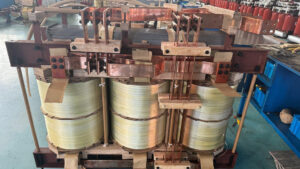
It is not enough to write “suitable for high altitude” on a datasheet. The supplier should explain which elements have been reviewed: bushing insulation, phase-to-phase and phase-to-earth clearances, surge arrester coordination, radiator capacity, fan performance, temperature-rise margin and accessory ratings. Dry-type units also need an enclosure and ventilation review because restricted airflow can offset the expected benefit of an indoor installation.
For outdoor substations, request a dimensioned general arrangement that shows nearby grounded structures and cable or bus connections. For enclosed equipment, confirm room temperature, ventilation duty, dust filtration and heat rejection. A high-altitude correction applied to one component does not prove that the complete installation is suitable.
Confirm the 60 Hz System and Actual Voltage Data
Official COES project records use a 60 Hz system basis. However, a procurement team should never select a transformer from a national frequency statement alone. Mining projects may connect through different transmission, sub-transmission or distribution levels, and the plant secondary voltage depends on the process design. The purchase specification must identify nominal voltage, maximum operating voltage, highest voltage for equipment, basic insulation requirements and the earthing arrangement for each winding.
Tap range and tap step should come from a load-flow and voltage study. A de-energized tap changer may be sufficient where the incoming voltage is stable and adjustments are infrequent. An on-load tap changer may be justified where operational voltage variation must be managed without interrupting production. The decision affects cost, maintenance, controls, protection and the spare-parts plan.
When the mine includes local generation, confirm every operating mode. A transformer may experience power flow in both directions, different fault levels or a different neutral reference. Protection settings, CT ratios and voltage regulation philosophy should be coordinated before the data sheet is approved.
Motor Starting, Impedance and Voltage Stability
Short-circuit impedance influences both fault current and voltage drop. A higher impedance can limit fault current but increases voltage drop during large motor starting. A lower impedance may improve starting voltage but can increase the duty imposed on switchgear and busbars. There is no universally correct value; it must be evaluated against the source strength, cable impedance, motor starting method and protection design.
Request calculations for the most demanding start. If a crusher or mill uses direct-on-line starting, the study should show starting current, acceleration time and voltage at the motor terminals. Soft starters and VFDs reduce or control starting current, but they introduce their own thermal and harmonic considerations. Where production restart can involve several motors, define the automatic restart sequence so the transformer is not assessed only for one isolated load.
Harmonics and Nonlinear Loads
VFDs, rectifiers, battery chargers and uninterruptible power supplies draw nonlinear current. Their harmonic content can increase winding eddy losses, structural stray losses and neutral current. A percentage of “VFD load” is not enough for design. Provide the drive topology, pulse number, input reactors or filters, expected harmonic spectrum and loading pattern.
The transformer supplier can then review conductor sizing, winding arrangement, flux density, shielding and temperature-rise margin. The system engineer should separately check resonance with capacitor banks and verify harmonic limits at the point of connection. Do not claim harmonic capability without a defined load basis and acceptance method.
Dust, Temperature, Moisture and Corrosion
Mining environments can combine abrasive dust, large daily temperature changes, intense solar exposure and seasonal moisture. The project should describe dust composition and concentration where available, maximum and minimum ambient temperature, solar radiation, rainfall, humidity and corrosion category. Maintenance access and cleaning intervals also matter.
For oil-immersed units, compare sealed and conservator arrangements against capacity, voltage class and maintenance strategy. Specify radiator spacing, fan access, gasket materials, paint system and the protection of control cabinets. For dry-type units, define enclosure ingress protection, ventilation and the dust-cleaning plan. A high IP rating is not a substitute for a thermal study; restricting airflow can raise internal temperature.
Logistics Can Control the Transformer Design
Remote mountain sites may have bridge limits, tight bends, steep gradients, narrow tunnels and limited crane capacity. Transport review should begin before the tank outline is finalized. Confirm maximum shipping mass, axle loads, overall transport dimensions, route survey assumptions, lifting points, jacking pads and the available assembly area.
Large accessories may need to be removed for shipment. The contract should state which bushings, radiators, conservator parts, fans and cable boxes will be shipped separately; how openings will be sealed; and which tasks must be completed at site. Define whether the main tank ships oil-filled, partially filled or under dry gas, subject to the approved design and transport method. Site oil treatment, vacuum filling and leak checks should be covered by a method statement and responsibility matrix.
Hypothetical Procurement Example
Hypothetical example — not a project reference: A mine plans a new crushing line at 4,200 m. The preliminary load list includes one large crusher motor, several conveyor drives and a future grinding circuit. The incoming network is 60 Hz, but the tender only states transformer capacity and nominal voltage.
Before quotation comparison, the purchaser should issue the surveyed altitude, approved voltage data, source short-circuit level, motor starting data, VFD harmonic information, ambient conditions, expansion schedule, transport limits and required outage philosophy. The transformer bids can then be compared on a common technical basis. Without these inputs, one bidder may include altitude correction and logistics provisions while another prices a standard design, making the commercial comparison misleading.

Mining Transformer Procurement Checklist
A technically comparable bid tab should record the assumed ambient temperature, installation altitude, load profile, impedance basis, tap range, cooling duty, accessory scope, test scope and transport limits. Without that common basis, a lower price may simply reflect omitted engineering requirements rather than a more competitive transformer.
- Approved single-line diagram and operating philosophy.
- 60 Hz frequency and complete primary, secondary and tertiary voltage data.
- Highest voltage for equipment and required insulation levels.
- Installation altitude and environmental design data.
- Load list, demand factors, largest motor and starting method.
- VFD and nonlinear load schedule with harmonic information.
- System fault level, required impedance and protection coordination inputs.
- Earthing method, vector group and neutral loading.
- Loss evaluation method and guaranteed loss capitalization, if applicable.
- Route survey, maximum transport dimensions and lifting capacity.
- FAT scope, document schedule, preservation and site commissioning responsibility.
- Spare parts, special tools, training and remote technical support requirements.
Related Regional and Mining Guidance
Related planning resources include the guide to transformer procurement for mining projects with weak grids, the checklist for transformer replacement at existing industrial sites, and the review of supplier evaluation for South American EPC projects. These articles address related decisions but should not replace project-specific calculations.
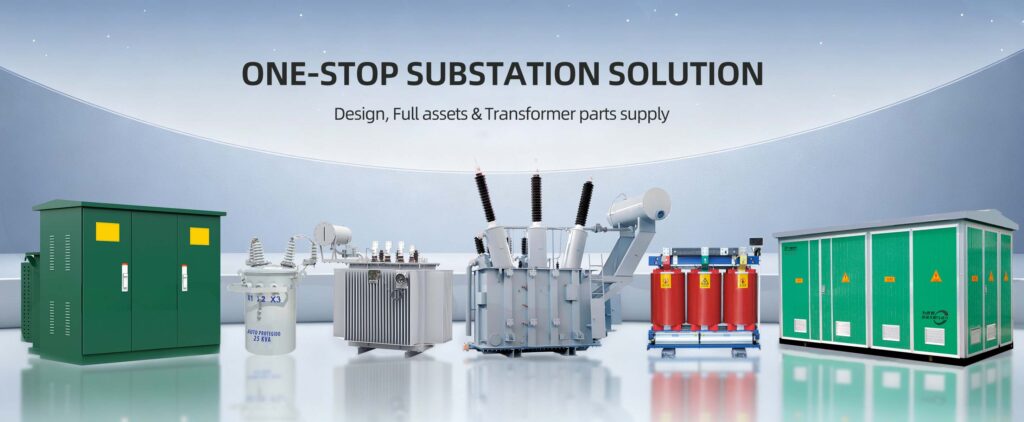
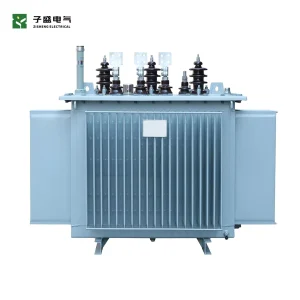
Product options relevant to different mine substations include a 10 MVA 33/11 kV oil-immersed power transformer, a 35 kV or 46 kV power transformer, and an SC(B) dry-type transformer for indoor distribution duties. These pages show available product families; final ratings must be engineered from the approved mine specification.
Final Selection Approach
Reliable transformer selection for Peru mining projects requires a documented link between the process load, 60 Hz network, altitude, environmental exposure and transport route. The purchase decision should compare verified technical scope, not only headline capacity and delivery time. The most useful tender package is one that allows every bidder to calculate the same operating cases and identify the same interfaces.
Send Zisheng Electric the single-line diagram, load list, motor data, harmonic study, site altitude, environmental schedule, route limits and technical specification. Our engineering team will review the requirements and respond to project inquiries within 24 hours.
About ZISHENG ELECTRICAL
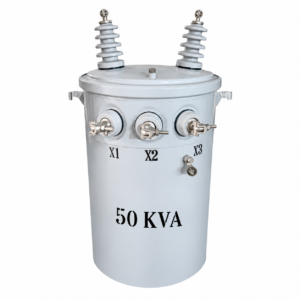
Zisheng are a professional 19+ years manufacturer in producing Oil-Immersed Transformers, Compact Substation, Pad Mounted Transformers, Pole Mounted Transformers and Dry Type Transformers. We own the certificates of ISO/CE/IEC 60076 and TUV Rheinland.
Transformers undergo rigorous FAT and type testing, support voltage/capacity customization. Welcome to consult for Catalog and Product. you can contact us at email [email protected].