Chile Transformer Replacement: Procurement Checks for Existing Industrial Sites
A replacement transformer can have the correct kVA rating and still be the wrong purchase. Existing cables may not reach its terminals. Its impedance may change the fault duty of the switchboard. A unit that fits the old plinth may block the only practical route for removing a radiator.
For replacement enquiries at Zisheng Electric, we ask for the old nameplate, the current single-line diagram and measured installation dimensions together. A catalogue selection cannot resolve contradictions between those documents. This Chile transformer replacement guide is written for industrial buyers and engineering teams who need to replace ageing equipment without turning a planned shutdown into an open-ended reconstruction project.
The decision chain is straightforward: confirm the supply, understand the load, compare the old and new electrical characteristics, prove the installation fits, and then reserve an outage against a realistic readiness checklist. Price comparison comes after that baseline is clear.
Start a Chile transformer replacement with the existing installation
Separate the reason for replacement from the proposed solution. An owner may report overheating, oil leakage, unreliable accessories, insufficient capacity or difficulty obtaining spare parts. These are different problems. Increasing kVA will not repair a blocked cooling path or a poor cable connection. Replacing the tank without understanding an external protection problem may leave the original fault unresolved.
Review maintenance records, load trends, alarm history and the condition assessment prepared by competent personnel. Our discussion of transformer failure mechanisms provides background, but the replacement decision must rest on the actual equipment and site evidence, not a generic age limit.
Build an old-versus-new schedule
Record the old transformer exactly as installed, including tap position, terminal arrangement, cooling accessories and neutral connection. Put the proposed values in a second column. Every difference needs an owner, an engineering reason and an acceptance decision. A missing field is an unresolved question, not permission to use the supplier’s default.
Mark dimensions as measured, taken from an approved drawing, or still unverified. An old general-arrangement drawing may describe the original installation rather than later cable-trench or building modifications.
Confirm the Chilean supply and approval boundary
Chile’s interconnected system uses a nominal frequency of 50 Hz; the Coordinador’s published BESS del Desierto verification report, for example, explicitly uses that nominal value. State the required transformer frequency in the enquiry and confirm the actual source, particularly where generators or isolated networks are involved. A regional stock description is not sufficient evidence of compatibility.
The voltage ratio must come from the connection documents and the plant’s required utilization voltage. Do not copy a voltage from a different Chilean project. Ask the supplying utility or network owner to confirm the point of connection, available fault information, metering boundary and any requirements affected by the replacement.
Chile’s Superintendencia de Electricidad y Combustibles publishes RIC No. 13 for substations and electrical rooms. Its stated scope covers consumption-installation transformers operating at voltages up to 23,000 V. That scope matters: do not apply this document indiscriminately to every high-voltage industrial project. The responsible local electrical professional should confirm the applicable requirements and current approval route before purchase.
For the buyer, the practical action is to put that responsibility in the procurement schedule. Identify who confirms the design basis, who submits the local documentation, and which changes require review. Supplier factory documentation does not replace local installation approval.
Specify site conditions as design inputs, not a country label
Ask for site elevation, maximum and minimum ambient temperatures, indoor room conditions, contamination exposure and the owner’s structural design criteria. Where an inland or elevated Chilean site is involved, use the actual elevation rather than a generic regional assumption. Air density affects cooling and external insulation performance; the manufacturer must evaluate both against the agreed service conditions.
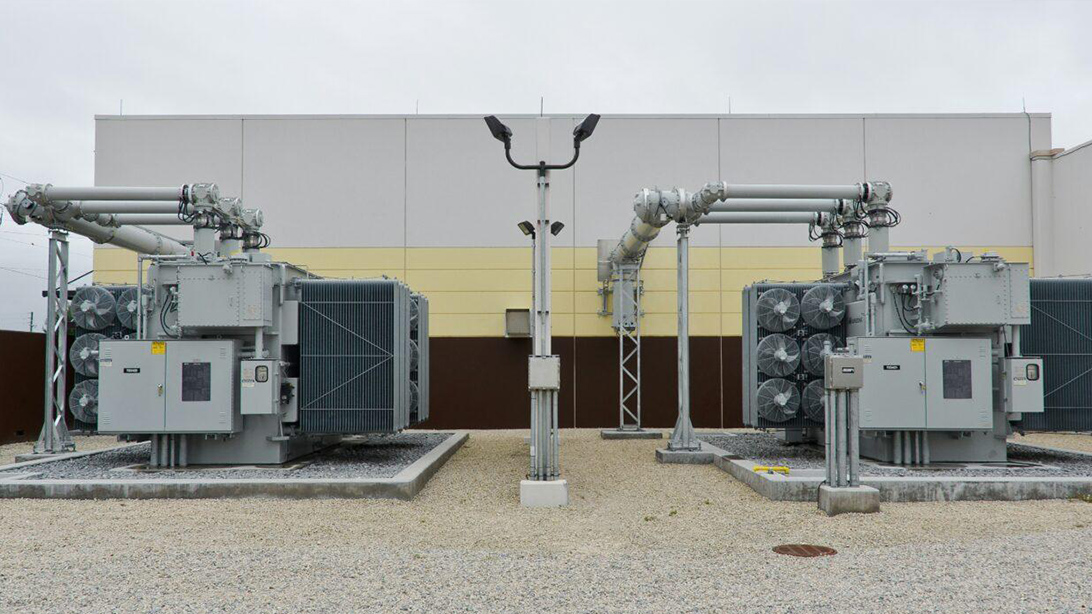
For a site exposed to coastal salt or industrial dust, specify the contamination and maintenance conditions that the equipment will actually see. Coating selection, exposed insulation and ventilation arrangements need separate decisions. An outdoor unit and an indoor unit drawing air from the same industrial yard can face different contamination and cooling problems.
Existing anchorage also needs review against the project’s seismic design basis. Do not assume an old foundation is suitable because the new transformer has similar mass. Centre of gravity, support spacing and connection loads may differ. The civil engineer and equipment supplier must exchange the relevant data.
| Replacement input | Main risk if copied incorrectly | Procurement check |
|---|---|---|
| Source frequency and voltage | Incorrect magnetic design or unusable secondary voltage | Confirm actual supply data and required taps; distinguish utility supply from isolated operation. |
| Impedance and fault level | Changed switchboard duty or unacceptable voltage drop | Recalculate system fault duties and operating conditions using the proposed transformer data. |
| Vector group and neutral | Incompatible bus tie, earthing or protection arrangement | Compare winding connections, phase displacement and neutral duty with the existing system. |
| Site elevation and cooling air | Nameplate capacity not available at the installation | Obtain a site-specific rating and explain any enclosure or ventilation assumptions. |
| Terminal positions and cable approach | Cable extensions or unsafe mechanical loading | Issue measured terminal coordinates, cable details and connection responsibilities. |
| Mass, support points and anchorage | Foundation or anchor redesign discovered during shutdown | Submit operating and transport masses, centre of gravity and approved support geometry. |
| Outage and temporary supply | Production cannot restart on the planned date | Set a readiness gate covering delivery, site works, tests, people and recovery arrangements. |
Recalculate capacity without hiding the load profile
The old nameplate is a useful reference, but it is not a demand study. Obtain representative kW, kVA, power factor and phase-current records. Include seasonal production, large motor starts, standby operation and any planned expansion. Identify which loads can restart together after an interruption.
For illustration only, an 800 kW balanced load at 0.88 power factor corresponds to about 909 kVA. That calculation describes one operating point. It does not establish the transformer rating because ambient conditions, load duration, starting duty and future loads remain unresolved. Label calculated examples clearly so that a purchasing team does not mistake them for a recommended project rating.
Check the downstream equipment before increasing kVA
A higher-capacity transformer can raise available fault current if the rest of the circuit is unchanged. Lower impedance can have the same effect. Check the switchboard, busbars, cables and protective devices as a system. The relevant question is not whether the new transformer survives a fault on its own; it is whether the installation can safely detect and clear that fault.
Keeping the same kVA does not eliminate this review. Compare impedance on the same rating basis and reference conditions. Include the upstream source and feeder impedance rather than treating the transformer as an infinite-source calculation.
Decide whether to retain the insulating medium
An oil-to-dry-type replacement is a system change, not a like-for-like substitution. It may alter room ventilation, heat rejection, sound, enclosure dimensions and maintenance access. Conversely, installing an oil-filled unit where none existed introduces liquid-containment and fire-design questions that need site-specific resolution.
Our oil-immersed and dry-type selection guide is a starting point for the equipment comparison. For a replacement contract, require the bidder to state the cooling conditions under which its offered capacity is available.
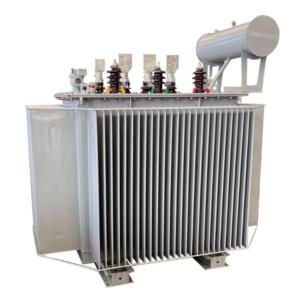
A 400 kVA oil-immersed transformer and a 200 kVA dry-type transformer illustrate different product configurations, not interchangeable ratings or ready-approved Chilean selections. Use product information to start a technical enquiry; confirm the project-specific electrical and installation data separately.
Make the replacement fit before manufacture starts
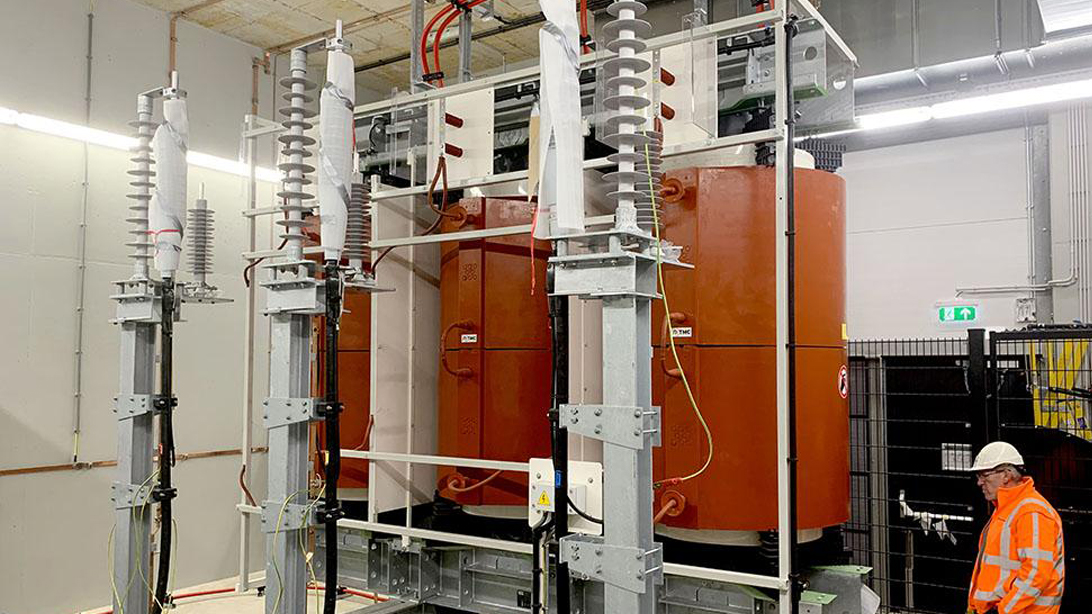
Send a measured plan and elevation showing walls, doors, cable trenches, nearby equipment, floor levels and the removal route. Include the space occupied by open compartment doors and removable accessories. A transport outline and an operating outline are not the same drawing.
Check cable termination positions in three dimensions. Existing cables may have little spare length, and their condition may make reuse inappropriate. The contractor responsible for terminations should confirm bend radius, lug or connector details, supports and the test scope. Do not transfer cable weight or bending force into a bushing by default.
Agree which components are shipped separately and who assembles them. If radiators or accessories must be removed to enter the room, ask for the manufacturer’s approved arrangement and its effect on site work. An apparently smaller package can still require more installation time.

Compare bids on the installed result
Normalize the scope before ranking prices. Record losses at the same specified conditions, the guaranteed site rating, accessories, documentation, transport configuration and exclusions. If one bidder includes terminations and another excludes them, the equipment prices are not directly comparable.
Keep energy-loss evaluation separate from unverified electricity-price assumptions. Use the owner’s agreed evaluation factors or a documented load-duration model. A low purchase price can lose its advantage if it adds extensive cable work, crane time or an extra production outage.
| Bid clarification | Evidence required | Decision before award |
|---|---|---|
| Electrical equivalence | Completed old-versus-new schedule and approved deviations | Accept each change or revise the offer; do not rely on a blanket compliance statement. |
| Installation scope | Measured layout, terminal drawings and contractor responsibility list | Allocate cable work, civil changes, assembly and commissioning explicitly. |
| Loss evaluation | Guaranteed loss values, test basis and owner evaluation method | Compare like-for-like values without inventing local tariff savings. |
| Delivery readiness | Drawing dates, manufacturing milestones and shipment configuration | Link the outage commitment to confirmed readiness rather than an optimistic factory date. |
| Support and spares | Accessory identification, documentation and response arrangements | Specify initial support separately from on-site attendance or replacement delivery. |
Reserve the outage against a readiness gate
Before the shutdown is committed, confirm that the replacement has arrived, been inspected and is stored correctly. Required civil modifications, lifting arrangements, installation materials and approved drawings must be ready. The site team needs named responsibilities for isolation, removal, installation, electrical testing and restoration.
Define the temporary-supply arrangement from the actual essential-load list. A generator selected only by total kW can fail the motor-starting or protection-coordination review. The electrical engineer must also resolve switching, earthing and prevention of unintended backfeed. This is not a task for improvised cable connections during the outage.
Agree a recovery decision point. If a critical acceptance item fails, who decides whether to repair, postpone or use an approved alternative? The old transformer may not remain a viable fallback once removal begins.
Use factory evidence to reduce site uncertainty
Specify the agreed factory test plan and the records required before dispatch. Check the serial number, nameplate data, terminal arrangement and accessory schedule against the approved documents. Review outstanding deviations before issuing shipment release.
Factory tests establish evidence about the supplied equipment. They do not demonstrate that field terminations, protection settings or site ventilation are correct. Those responsibilities belong in the installation and commissioning plan, with qualified personnel and the relevant local approvals.

Prepare a replacement enquiry that an engineer can answer
For a Chile transformer replacement, send Zisheng Electric the existing nameplate photographs, single-line diagram, load records, measured bay layout, cable details, site conditions and target outage window. State whether the request is like-for-like replacement, capacity expansion or a change of transformer type.
Zisheng Electric supplies oil-immersed and dry-type transformers and can review technical matching against the required capacity, voltage, environment and project specification. We will identify the inputs needed to confirm the offered configuration; local installation approval and the site work package must remain clearly assigned. Our engineering team will review the requirements and respond to project inquiries within 24 hours.
About ZISHENG ELECTRICAL
Zisheng are a professional 19+ years manufacturer in producing Oil-Immersed Transformers, Compact Substation, Pad Mounted Transformers, Pole Mounted Transformers and Dry Type Transformers. We own the certificates of ISO/CE/IEC 60076 and TUV Rheinland.
Transformers undergo rigorous FAT and type testing, support voltage/capacity customization. Welcome to consult for Catalog and Product. you can contact us at email [email protected].