From “West-to-East Power Transmission” to “Coordination Among Transmission, Distribution, and Microgrids”
In recent years, my country’s power system has been undergoing a profound transformation. Previously, the grid development model—centered on Ultra-High Voltage (UHV) transmission and the construction of large-scale power generation bases—effectively supported the inter-regional allocation of energy resources. However, driven by the rapid growth of new energy, shifts in load structures, and rising demand for user-side interaction, the focus of grid construction is gradually extending toward the distribution and user sides, as well as toward intelligent systems.
Grid investment is expected to remain substantial in the coming period. According to relevant plans and industry data, investment in grid construction will continue to rise during the “15th Five-Year Plan” period. The strategic focus will shift from merely expanding transmission capacity to enhancing the grid’s ability to integrate new energy, strengthening the resilience of distribution networks, and promoting the coordinated development of generation, grid, load, and storage.
At the heart of this shift is the evolution of grid operation models: moving away from the traditional unidirectional chain of “generation–transmission–distribution–consumption” toward a multi-level, coordinated system comprising “main grids, distribution networks, and microgrids.”
Main grids handle inter-regional energy allocation; distribution networks manage the efficient delivery of electrical energy; and microgrids further enhance autonomous operational capabilities at the local level. Coordination among these three layers will be a key direction for the development of the future new power system.
This article analyzes changes in grid structure across these three levels—main grids, distribution networks, and microgrids—and examines the demand for key equipment at each level.
I. Main Grid: UHV Transmission Remains a Vital Foundation for Energy Allocation
Given the uneven distribution of energy resources and load centers in my country, inter-regional transmission projects—such as the “West-to-East Power Transmission” initiative—remain a crucial component of grid development.my country’s western regions possess abundant coal, hydro, wind, and solar power resources, whereas the central and eastern regions are hubs of concentrated power demand. Consequently, high-voltage transmission networks are essential for the inter-regional allocation of energy.
In recent years, the continuous construction of UHV AC and DC transmission projects has created large-scale transmission networks spanning multiple regions. As the scale of new energy bases expands, future main grid construction will continue to focus on enhancing long-distance transmission capabilities and strengthening mutual support capabilities between regional grids. Key Equipment Requirements
The construction of UHV main grids relies heavily on large-scale power transformers.
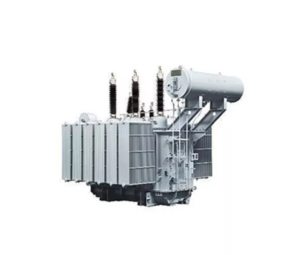
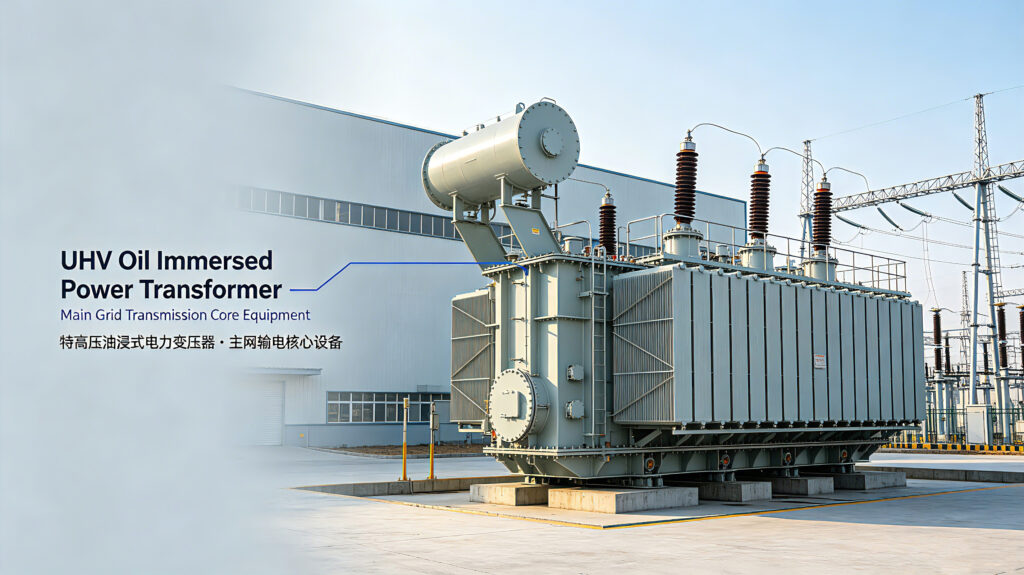
Extra-High Voltage (EHV) and Ultra-High Voltage (UHV) transformers perform critical roles in voltage conversion and power transmission, typically featuring capacities of several hundred MVA or higher. As the equipment operates under conditions of high voltage and high capacity over extended periods, stringent requirements are placed on its insulation performance, heat dissipation capabilities, mechanical strength, and operational reliability.
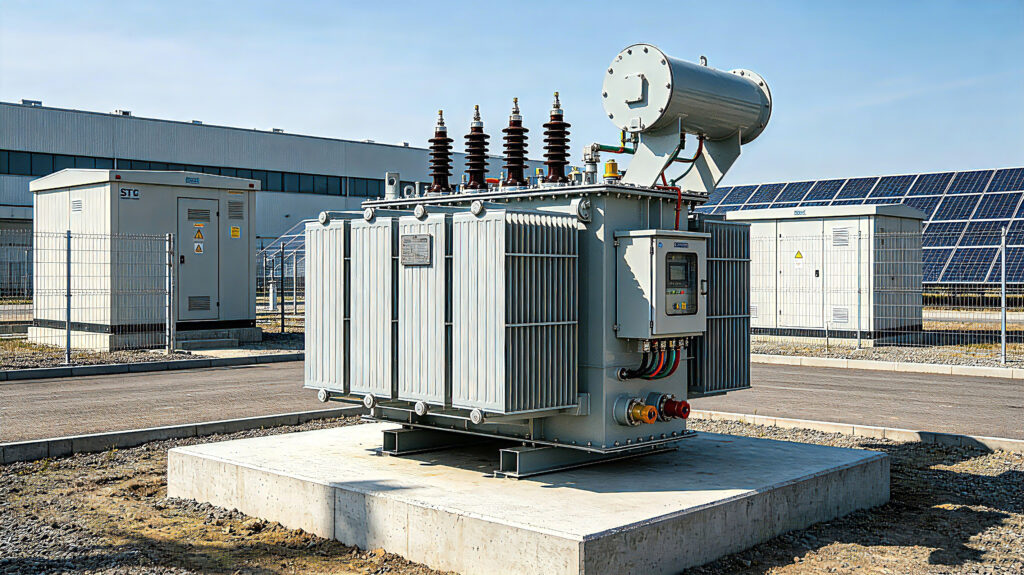
Large oil-immersed power transformers, which utilize mineral oil for insulation and cooling, are among the primary types of equipment used in high-voltage power transmission and transformation systems.
In ultra-high voltage (UHV) substations, regional grid hubs, and power evacuation projects for large-scale energy bases, highly reliable main transformer equipment serves as a crucial foundation for the safe operation of the power grid.
II. Distribution Networks: Construction Priorities in the New Energy Era Are Extending to the Grid Edge
If the main power grid addresses the issue of long-distance electricity transmission, the distribution network is responsible for the final delivery of electricity to end-users.
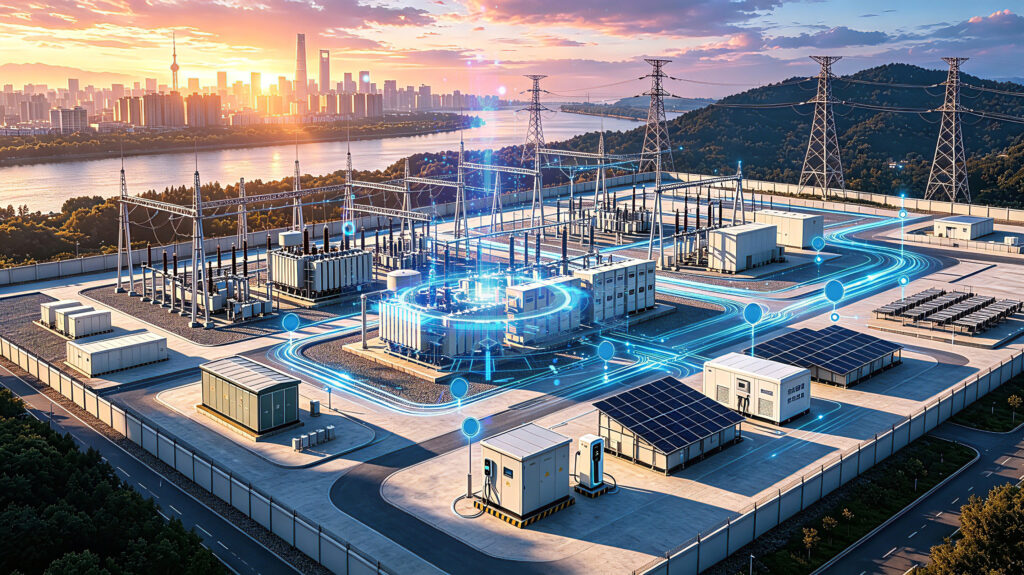
With the rapid development of new energy, the role of distribution networks is evolving. Historically, distribution networks primarily served a unidirectional power supply function; however, the integration of large numbers of distributed photovoltaic (PV) systems, energy storage units, and electric vehicles has transformed them into vital platforms for new energy integration and user-side interaction.
In recent years, investment in distribution networks has accounted for an increasing share of total grid infrastructure spending. Areas such as urban renewal, rural grid upgrades, and new energy integration have placed higher demands on distribution equipment.
Future distribution networks will require not only enhanced power supply capabilities but also:
· Higher levels of equipment intelligence;
· Greater capacity for new energy integration;
· More flexible load regulation capabilities;
· More reliable operational assurance.
Core Equipment Requirements
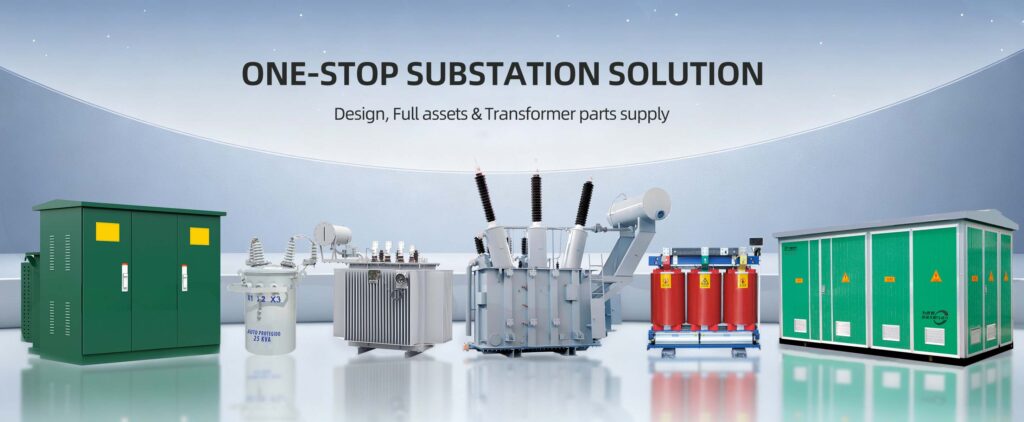
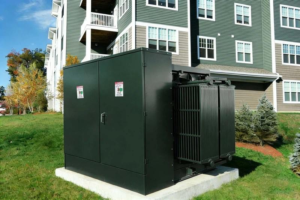
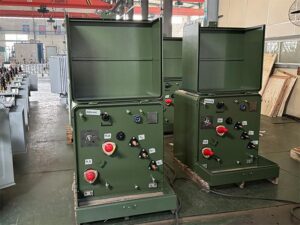
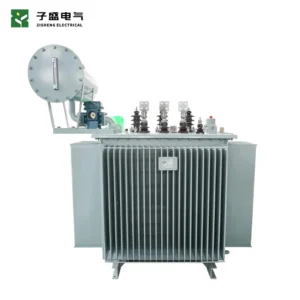
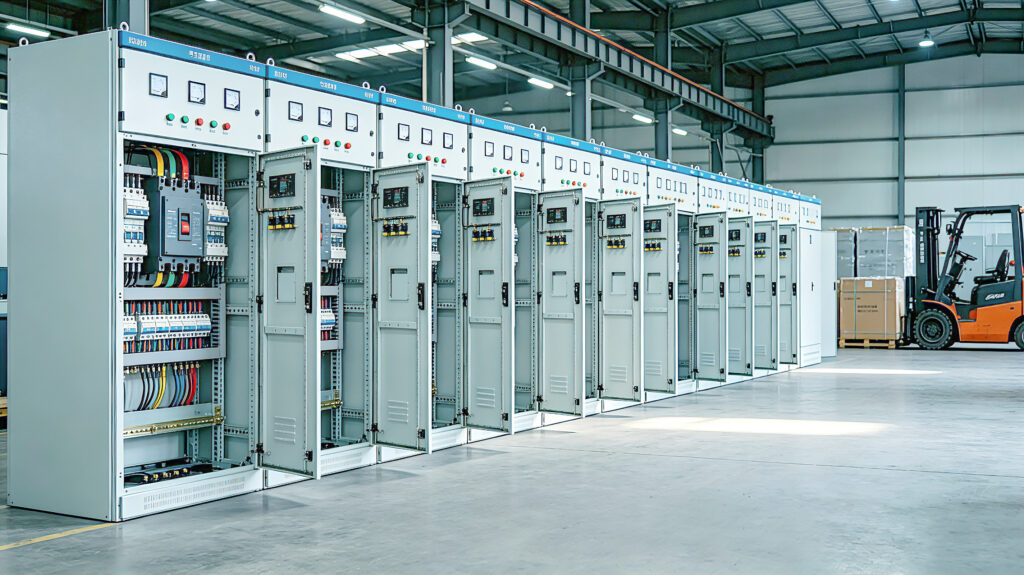
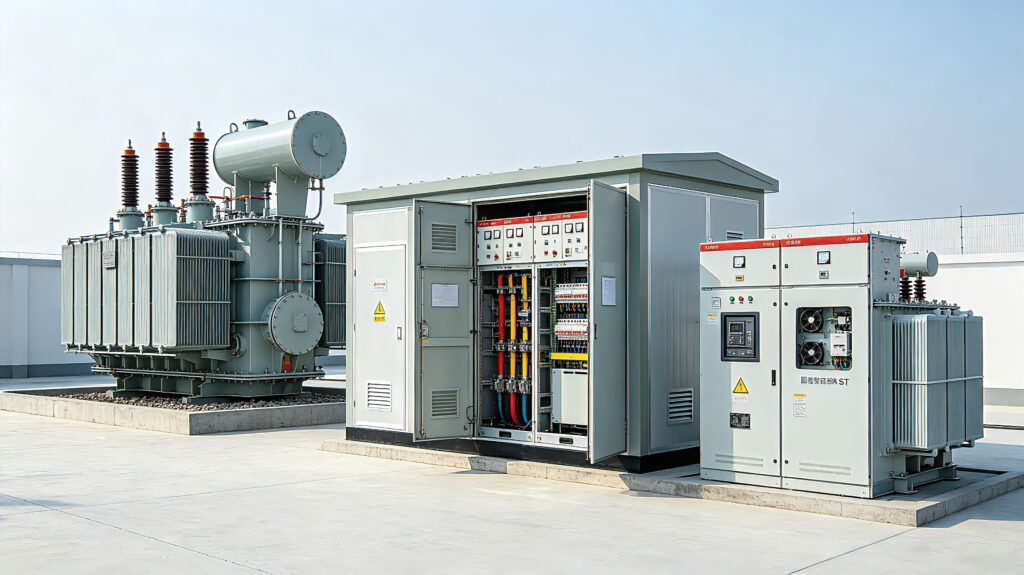
Distribution transformers and box-type substations are critical components of distribution systems.
As the pace of urban development accelerates and new energy projects multiply, traditional on-site installation methods are struggling to meet the demand for rapid construction; consequently, the adoption of modular, prefabricated box-type substations is on the rise.
Prefabricated box-type substations typically integrate transformers, high- and low-voltage switchgear, and protection devices into a single enclosure, offering advantages such as short installation times, a compact footprint, and strong environmental adaptability.
These substations enhance construction efficiency in urban residential areas, industrial parks, commercial buildings, and distributed PV projects.
For new energy applications, box-type substations must also meet requirements regarding bidirectional power flow, power quality, and intelligent monitoring to align with the future evolution of distribution networks.
III. Microgrids: New Power Units Enhancing Local Energy Autonomy
Advancements in distributed new energy, energy storage, and intelligent control technologies are transforming the operational dynamics of power systems.
While traditional grids rely primarily on large-scale power sources and centralized dispatch to balance supply and demand, future power systems must address new challenges, including the integration of vast amounts of distributed energy, increased load volatility, and flexible user-side interaction.
Against this backdrop, microgrids are emerging as a crucial component of modern power systems. Microgrids typically consist of distributed energy resources, energy storage systems, loads, and energy management systems; they can operate either connected to the main grid or autonomously in localized mode under special circumstances.
In terms of system roles:
·The main grid handles cross-regional energy transmission and ensures overall system security;
·The distribution network manages power distribution and regional supply services;
·Microgrids enhance local energy management and autonomous regulation capabilities.
These three components operate collaboratively through digital control, communication technologies, and intelligent dispatching, collectively increasing the flexibility of the power system.
Virtual Power Plants (VPPs) enable user-side resources to participate in power regulation.
As the installed capacity of new energy sources grows, relying solely on regulation from the traditional generation side is no longer sufficient to meet the demands of future power systems.
VPPs use digital platforms to aggregate and manage dispersed resources—such as new energy sources, energy storage, and adjustable loads—enabling them to provide regulation capabilities similar to those of traditional power plants.
Currently, pilot VPP applications are underway in various regions across China, exploring their potential to participate in demand response, ancillary services, and energy market trading.
In the future, as communication technologies, intelligent control algorithms, and market mechanisms mature, VPPs are expected to become a crucial platform connecting the grid with user-side resources.
Core Equipment Needs: Solid-State Transformers Emerge as a Key Direction for Future Technology.
In the development of microgrids and the Energy Internet, traditional transformers primarily handle voltage conversion and electrical isolation; however, future power systems demand capabilities such as bidirectional energy flow, power quality control, and digital management.
Solid-State Transformers (SSTs) have emerged as a new type of power electronic device in response to these evolving needs.
Unlike traditional oil-immersed transformers, SSTs utilize power electronic conversion technology to achieve voltage transformation via high-frequency conversion, offering the following advantages:
·Support for bidirectional energy flow;
·Ease of integration with DC systems;
·Capability for power quality regulation;
·Facilitation of coordinated control with energy storage and new energy equipment.
These characteristics give SSTs significant application potential in future scenarios such as microgrids, rail transit, data centers, and new energy industrial parks.
However, it should be noted that SSTs are currently in the stages of technological development and pilot application; further optimization is required regarding cost, efficiency, reliability, and large-scale manufacturing. For the foreseeable future, traditional oil-immersed transformers and new power electronic equipment are expected to form a complementary relationship, leveraging their respective strengths across different application scenarios.
IV. Key Challenges in Coordination Across Transmission, Distribution, and Microgrid Levels
The evolution of grid architecture from a traditional centralized model to a multi-level coordinated model does not imply that the technical system has fully matured. Currently, coordination across transmission, distribution, and microgrid levels faces challenges in several areas.
- System coordination capabilities need improvement
Many microgrids currently rely primarily on local control and autonomous operation; mechanisms for data exchange and coordinated control between microgrids, distribution networks, and the main grid require further refinement.
Future efforts must focus on establishing unified data standards and control interfaces to enable information sharing and coordinated optimization across different levels. - Capabilities for forecasting and dispatching new energy need strengthening
New energy sources are characterized by significant volatility and randomness.
Wind and solar power outputs are heavily influenced by weather conditions; improving forecasting accuracy and utilizing measures such as energy storage and demand response for regulation are critical to enhancing system stability. - Real-time control capabilities face higher demands
As the proportion of distributed energy resources increases, events such as voltage fluctuations, power flow variations, and grid-connection/disconnection transitions occur more frequently.
Future power grids will require faster and more precise control technologies to achieve operational regulation with second-level or even higher precision. - The value of user-side resources needs to be further unlocked
Mechanisms for the participation of resources—such as energy storage and flexible loads—in electricity markets are currently being refined.
As electricity market development progresses, user-side resources are expected to generate greater economic value through mechanisms like ancillary services and demand response, thereby improving the return on investment for equipment.
V. From “One-Way Transmission” to “Multi-Level Coordination”: Evolving Equipment Needs for Next-Generation Power Grids
The development focus of my country’s power system is shifting from the “West-to-East Power Transmission” model toward “coordination across transmission, distribution, and microgrid levels.”
For a long period, grid development centered on large-scale power generation bases, long-distance transmission, and regional grid interconnection, primarily addressing the challenge of allocating energy resources across different regions.
With the rapid growth of new energy sources and shifting energy consumption patterns on the user side, future power grids will require not only enhanced transmission capacity but also greater flexibility, interactivity, and intelligence.
In this process, equipment requirements across different grid levels are also evolving.
| Grid Level | Main Functions | Typical Equipment | Development Direction |
|---|---|---|---|
| Transmission Grid | Cross-regional energy transmission and overall system stability support | Ultra-high voltage (UHV) transformers, extra-high voltage (EHV) transmission and transformation equipment | Improve transmission capacity and operational reliability |
| Distribution Grid | Power distribution, renewable energy integration, and end-user power supply | Distribution transformers, box-type substations, switchgear | Enhance intelligence level and renewable energy integration capability |
| Microgrid | Local energy management and autonomous operation | Energy storage systems, Energy Management Systems (EMS), power electronic equipment | Improve flexible regulation capability and bidirectional energy interaction |
The development of new power systems will not simply replace traditional power grids; rather, it involves upgrading capabilities—leveraging digital technologies, new energy technologies, and advanced equipment—upon the foundation of existing grids.
VI. How Power Equipment Enterprises Can Adapt to New Grid Trends
As grid structures evolve, power equipment enterprises must enhance the adaptability of their products to suit various application scenarios.
In the realm of main grids, high-capacity, highly reliable power transformers remain crucial for long-distance power transmission. In distribution networks, standardized, modular, and intelligent equipment can boost construction efficiency. Meanwhile, microgrid and new energy applications require a greater focus on the development of energy storage, power electronic conversion, and intelligent control technologies.
Future development in power equipment will primarily focus on the following areas:
- Higher Energy Efficiency
Reducing internal equipment losses and improving energy utilization efficiency are key long-term objectives for distribution equipment. - Higher Reliability
Equipment must demonstrate superior operational stability to withstand complex operating environments and the fluctuations associated with new energy sources. - Enhanced Intelligence
Technologies such as sensing, communication, and digital management enable equipment condition monitoring, fault early warning, and operational optimization. - Better System Compatibility
Future equipment must not only perform traditional power conversion tasks but also adapt to the collaborative operational requirements of new energy, energy storage, and smart grids.
Conclusion
Conclusion
From the large-scale energy allocation of the “West-to-East Power Transmission” project to the multi-level grid architecture characterized by the “coordination of main, distribution, and micro-grids,” China’s power system is undergoing a transformation—shifting from mere scale expansion to enhanced operational capabilities.
The main grid continues to shoulder the critical task of long-distance energy transmission; the distribution network has become a vital platform for integrating new energy sources and connecting end-users; and micro-grids are driving the power system toward greater flexibility, intelligence, and interactivity.
This evolution is not only reshaping grid construction models but also steering the development trajectory of transformers, box-type substations, energy storage systems, and intelligent power equipment.
For power equipment manufacturers, the focus of future competition will no longer rest solely on the ability to manufacture individual pieces of equipment; instead, it will center on safety and reliability, energy efficiency, intelligent control, and system-level coordination capabilities.
About ZISHENG ELECTRICAL
Zisheng are a professional 19+ years manufacturer in producing Oil-Immersed Transformers, Compact Substation, Pad Mounted Transformers, Pole Mounted Transformers and Dry Type Transformers. We own the certificates of ISO/CE/IEC 60076 and TUV Rheinland.
Transformers undergo rigorous FAT and type testing, support voltage/capacity customization. Welcome to consult for Catalog and Product. you can contact us at email [email protected].