Which Is Better Oil Immersed Or Dry-type Transformer?
Selecting between dry-type and oil-immersed transformers is rarely a simple question of “which is superior.” Instead, it is a complex calculation of installation environment, load profile, and organizational maintenance culture. For electrical engineers and facility managers, the “better” option is simply the one that aligns with specific site constraints and long-term budget realities. The stakes of this decision are high; an incorrect selection can lead to inflated Total Cost of Ownership (TCO), immediate fire code violations, or premature equipment failure under peak loads.
While marketing brochures often highlight the initial purchase price, they rarely account for the hidden infrastructure costs or the operational nuances of heat dissipation. This article moves beyond basic definitions to compare these two dominant technologies based on safety compliance, operational efficiency, and the financial realities that emerge over a 30-year lifecycle. We will explore why location dictates technology and how to prevent costly specification errors before the equipment hits the site.
Key Takeaways
- Location Dictates Choice: Dry-type is the default for indoor/populated spaces (hospitals, malls) due to fire safety; Oil-filled is the standard for outdoor/utility grids due to cooling efficiency.
- The Cost Paradox: Oil-filled transformers typically have lower upfront hardware costs but require higher site preparation (containment pits) and ongoing maintenance (oil analysis).
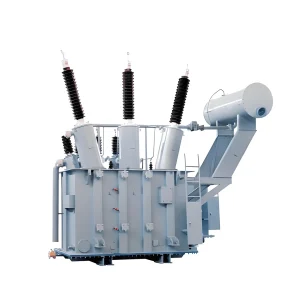
- Load Sensitivity: For applications with frequent high-load spikes or outdoor extreme temperatures, Three Phases Oil Immersed Transformers offer superior thermal inertia and longevity.
- Maintenance Reality: Dry-type is “low maintenance” (cleaning), while oil-filled requires “planned maintenance” (DGA testing/filtration) to reach its 30+ year lifespan potential.
The Decision Matrix: Matching Technology to Application
When evaluating transformer technologies, the physical location and the nature of the application are the primary filters. No amount of efficiency data can justify placing a fire hazard in a critical safety zone, just as no amount of safety features can justify using indoor-rated equipment in a corrosive offshore environment. We break down the decision into three common scenarios.
Scenario A: Indoor & Fire-Critical Zones
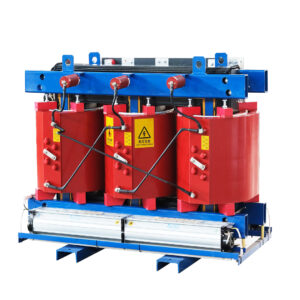
In applications where the transformer must be located inside a populated building—such as high-rise offices, hospitals, shopping malls, or underground substations—the verdict is almost universally in favor of Dry-Type transformers (specifically Cast Resin or Vacuum Pressure Impregnated models).
The reasoning is centered on risk mitigation. Dry-type units utilize self-extinguishing insulation systems that do not release flammable liquids or toxic gases during a fault. If you were to install an oil-filled unit indoors, most building codes (such as NEC or IEC standards) would require the construction of expensive fire-proof vaults, complex fire suppression systems, and oil containment bunds to prevent leaks from spreading. Dry-type transformers eliminate these civil engineering headaches entirely, allowing them to be installed near the load center, which reduces low-voltage cable runs and associated copper losses.
Scenario B: Outdoor, Utility & High-Capacity Grids
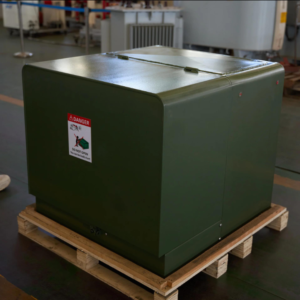
For outdoor substations, utility grids, and industrial complexes where space is available, the oil-filled transformer remains the undisputed champion. This is particularly true for high-voltage applications (above 35kV) and high-capacity requirements (up to and exceeding 100 MVA).
The superiority here stems from the physics of the insulation medium. Mineral oil (or synthetic esters) acts as both a high-dielectric insulator and a highly efficient coolant. It circulates through the windings, carrying heat away to the radiators far more effectively than air ever could. This superior heat dissipation allows oil-filled units to maintain a compact footprint for their power rating. Furthermore, the oil acts as a “self-healing” insulator; if a minor arc occurs, the oil flows back to fill the void, whereas solid cast resin insulation would suffer permanent damage.
Scenario C: Harsh Environments (Corrosive/Humid)
This scenario requires nuance. Standard ventilated dry-type transformers are vulnerable in environments with high humidity, chemical fumes, or conductive dust (such as cement plants or coastal facilities). The circulating air brings contaminants directly onto the core and windings, leading to tracking and eventual flashover.
While Cast Resin dry-type units offer decent protection against moisture, hermetically sealed oil transformers often outperform them in truly aggressive zones. By completely isolating the core and windings from the atmosphere inside a sealed tank, an oil-immersed unit is impervious to salt spray, sandstorms, or 100% humidity. For heavy industry located near the ocean, the sealed oil design prevents the rapid corrosion that plagues open-ventilated systems.
Technical Performance & Efficiency Comparison
To make an informed engineering decision, we must look at the physical mechanics of how these transformers handle stress, heat, and space. The following table provides a high-level comparison before we dive into the details.
| Feature | Oil-Immersed Transformer | Dry-Type Transformer (Cast Resin) |
|---|---|---|
| Cooling Medium | Mineral Oil / Ester Fluid | Air (Natural or Forced) |
| Overload Capacity | High (Excellent thermal inertia) | Low to Moderate (Limited by resin thermal class) |
| Footprint (Unit Only) | Compact Core/Coil | Larger (Air clearance requirements) |
| Operating Noise | Quieter (Liquid dampens vibration) | Louder (Core resonance + Fan noise) |
| Life Expectancy | 25–35+ Years (Repairable) | 20–25 Years (Difficult to repair) |
Cooling Mechanics & Overload Capacity
The fundamental difference in performance comes down to thermal conductivity. Liquid dielectrics offer approximately six times better thermal conductivity than air. In an oil-filled unit, the liquid surrounds the conductors, absorbing heat immediately and transferring it to the tank walls or radiators. This gives oil-filled units significant “thermal inertia.”
Practically, this means an oil-immersed transformer can handle short-term overloads—such as motor starting currents or peak demand spikes—without overheating the insulation. Dry-type transformers rely on air passages between the windings. Since air is a poor conductor of heat, the windings can develop hot spots more rapidly. While fans can be added to dry-type units to increase their rating (often by 25-33%), relying on forced air cooling increases noise and introduces mechanical failure points (fan motors).
Footprint & Clearance
There is a trade-off between internal compactness and external clearance. Internally, oil-filled units are smaller. Because oil has a higher dielectric strength than air, the distance between the high-voltage winding, the low-voltage winding, and the ground can be much smaller. This results in a physically smaller core and coil assembly.
However, the total site footprint for an oil unit often grows due to external requirements. You must account for the radiators, the conservator tank, and, most importantly, the mandatory fire separation distances or blast walls required by safety codes. Dry-type units are physically larger because they need wide internal air gaps to prevent arcing, but they can be installed right next to switchgear or walls, requiring less external buffer space.
Noise Levels
Noise pollution is increasingly critical in urban substations. Transformers generate noise primarily through magnetostriction (the humming of the core). In an oil-filled transformer, the oil and the heavy steel tank act as a sound damper, significantly muffling the noise. Dry-type transformers, particularly Cast Resin models, have no liquid buffer. The resin can sometimes resonate with the core frequency, and the open enclosure allows sound to escape freely. Additionally, if the unit relies on forced air cooling (fans) to maintain its load rating, the operational noise level increases significantly, often requiring additional sound attenuation baffles in the installation room.
Total Cost of Ownership (TCO): Beyond the Sticker Price
Procurement teams often focus on Capital Expenditure (CapEx), but the Total Cost of Ownership (TCO) paints a different picture. A cheaper transformer that requires expensive civil works or consumes more energy over 20 years is a liability, not a bargain.
CapEx: Hardware vs. Infrastructure
Strictly regarding the hardware, an oil-filled transformer is generally 20% to 30% cheaper to manufacture than a comparable cast resin dry-type unit. The materials (standard paper insulation, mineral oil, mild steel) are commoditized and cost-effective compared to the specialized epoxy resins and precision casting molds required for dry types.
However, the savings on the hardware often evaporate when you calculate the “hidden” infrastructure costs. Installing an oil transformer requires:
- Containment Pits: Concrete basins designed to capture 110% of the oil volume in case of a catastrophic leak.
- Firewalls: Blast barriers if the unit is close to buildings or other equipment.
- Longer Cable Runs: Because they are often forced outdoors, you may need expensive busway or cabling to bring power back to the indoor load center.
Dry-type units, conversely, can be dropped into a ventilated room with minimal site prep.
OpEx: Energy Losses & Cooling
Operational Expenditure (OpEx) is driven by efficiency losses. Both types have “No-Load Losses” (iron loss) and “Load Losses” (copper loss). While modern Amorphous Metal core designs are available for both, oil units generally maintain better efficiency at higher operating temperatures.
A frequently ignored cost for indoor dry-type installations is the HVAC burden. A 2000 kVA transformer generates a significant amount of waste heat (kilowatts of thermal energy). If installed indoors, the building’s air conditioning system must work harder to remove that heat, effectively doubling the energy cost of the losses (once to create the heat, and again to remove it). Oil units typically vent their heat naturally into the outdoor atmosphere, incurring zero HVAC cost.
Lifespan & ROI
When maintained correctly, oil-immersed transformers generally offer a longer operational horizon—often exceeding 30 to 40 years. The oil protects the cellulose insulation from oxygen and moisture, slowing down the aging process. Dry-type insulation, exposed to thermal cycling and oxidation, typically has a lifespan of 20 to 25 years. When calculating ROI, consider the “Load Factor.” If your facility runs at high utilization (>50% load consistently), the superior cooling and efficiency of a Three Phases Oil Immersed Transformer usually result in a better long-term return.
Maintenance Regimes and Operational Risks
The industry often categorizes dry-type transformers as “maintenance-free,” but “low maintenance” is a more accurate description. Conversely, oil-filled units require a proactive regimen that some facility managers find burdensome.
The “Install and Forget” Myth
For dry-type transformers, the primary maintenance task is cleanliness. Because the windings are exposed to air, they accumulate dust. If this dust becomes conductive (due to humidity) or blocks the cooling ducts, it can lead to overheating or electrical tracking. Maintenance involves shutting down the unit, vacuuming the windings, and checking connection torque. It is simple but critical.
Oil-filled maintenance is more technical. It requires visual checks for oil leaks, monitoring the silica gel breather (which changes color when saturated with moisture), and checking oil levels and temperatures. While this sounds like more work, it offers a distinct advantage: diagnostic capability.
Understanding DGA & Oil Health
The fluid in an oil transformer allows for Dissolved Gas Analysis (DGA). By taking a small sample of oil and analyzing the gases dissolved in it (such as acetylene, hydrogen, or methane), engineers can detect internal faults like arcing, partial discharge, or overheating months before the unit fails. This predictive capability is a massive advantage for critical infrastructure. Dry-type transformers rarely give such advanced warnings; they often fail suddenly when the insulation cracks or flashes over.
However, oil does age. Every 5 to 10 years, depending on conditions, the oil may need to be filtered or dehydrated to remove moisture and oxidation byproducts. This is a specialized service that adds to the OpEx budget.
Repairability
Repairability is a stark differentiator. If an oil-filled transformer suffers a winding fault, the tank can be opened, the oil drained, and the coil repaired or rewound at a specialized shop. The oil itself can be regenerated. In contrast, Cast Resin dry-type coils are encapsulated in a solid block of epoxy. If a fault occurs within the coil, or if the resin cracks due to thermal shock, the entire coil leg—and often the whole unit—must be scrapped and replaced. Repair is virtually impossible.
How to Vet an Oil-Filled Transformer Manufacturer
If your application points toward an oil-immersed solution, selecting the right partner is critical to ensuring longevity and safety. The manufacturing process for oil units involves complex vacuum drying and tank sealing processes that vary in quality between suppliers.
Compliance & Testing Standards
Never accept a unit without a comprehensive Type Test Report. Reputable manufacturers should be able to provide evidence of compliance with IEC 60076 or IEEE C57.12 standards. Specifically, ask for the tank pressure test results. A common failure mode is oil leakage during transport or early operation due to poor welding or gasket seating. Ensuring the tank was pressure-tested prevents messy surprises upon delivery.
Customization Capabilities
A competent oil-filled transformer manufacturer should offer customization beyond the catalog voltage ratios. For grids with unstable voltage, ask about On-Load Tap Changers (OLTC) which regulate voltage without disconnecting the load. For environmentally sensitive areas (like water catchment zones), inquire about filling the unit with biodegradable synthetic esters instead of mineral oil. This simple swap can often resolve environmental compliance issues without forcing a switch to dry-type technology.
Supply Chain & Lead Times
Finally, evaluate the manufacturer’s production capacity. Oil-filled units utilize specific core steel and copper grades that can face supply chain bottlenecks. Standard lead times can exceed 12 weeks. Manufacturers with robust supply chains can often expedite this, but transparency regarding delivery schedules is vital for project planning.
Conclusion
The choice between oil-immersed and dry-type transformers is not a battle of technologies, but a matching game of constraints. Dry-type transformers are the superior choice for indoor, commercial, and fire-critical applications where safety is paramount and maintenance teams are limited. They offer peace of mind at a higher hardware cost.
However, for outdoor industrial sites, utility grids, and high-load environments, the oil-immersed transformer remains the king of efficiency and longevity. Its ability to manage heat, withstand overloads, and provide diagnostic data through oil analysis makes it the most robust solution for critical power infrastructure. Before finalizing your specification, audit your site: if you have the space for containment and the ability to perform regular maintenance, oil is likely your most cost-effective long-term option.
FAQ
Q: Can oil-filled transformers be used indoors?
A: Yes, but with strict restrictions. Because mineral oil is flammable, fire codes usually require oil-filled units to be installed in a fire-rated vault with fire-suppression systems and oil containment pits. This construction cost often makes dry-type transformers a more economical choice for indoor use, despite the higher equipment price.
Q: Which transformer lasts longer, dry or oil?
A: Generally, oil-filled transformers last longer, often exceeding 30 to 40 years. The oil protects the insulation from oxidation and moisture. Dry-type transformers typically last 20 to 25 years, as their insulation is exposed to thermal cycling and environmental air, which accelerates aging.
Q: Is an oil-filled transformer more efficient than a dry type?
A: Typically, yes. Oil is a much better coolant than air, allowing the transformer to run cooler and reducing copper losses at high loads. While no-load (core) losses can be similar between the two, oil-filled units usually maintain higher efficiency profiles under heavy or continuous loading conditions.
Q: What is the price difference between cast resin and oil-immersed transformers?
A: In terms of upfront hardware costs, oil-immersed transformers are usually 20% to 30% cheaper than cast resin dry-type transformers. However, once you factor in civil works (pits, firewalls) and maintenance, the total installed cost gap narrows.
About ZISHENG ELECTRICAL
Zisheng are a professional 19+ years manufacturer in producing Oil-Immersed Transformers, Compact Substation, Pad Mounted Transformers, Pole Mounted Transformers and Dry Type Transformers. We own the certificates of ISO/CE/IEC 60076 and TUV Rheinland.
Transformers undergo rigorous FAT and type testing, support voltage/capacity customization. Welcome to consult for Catalog and Product. you can contact us at email [email protected].