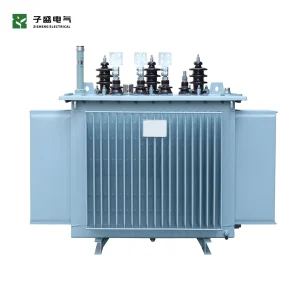
Làm mát máy biến áp trong khai thác mỏ vùng nhiệt đới: Đặc điểm môi trường xung quanh, bụi, quạt và khả năng tiếp cận để bảo trì
Các phương pháp tiếp cận của Zisheng Electric làm mát máy biến áp khai thác mỏ ở vùng nhiệt đới as a combined load, environment and maintenance decision. A cooling system that looks adequate at nameplate rating can become unreliable when ambient temperature remains high, dust blocks airflow, humidity affects auxiliary equipment, fans operate continuously and maintenance access is constrained by an active mining process.
This guide is intended for EPC contractors, mine operators and transformer procurement teams working in tropical regions of Africa and South America. It does not assume one climate profile for every country or mine. The purchaser should provide measured or officially adopted site data, the operating load profile, altitude, dust characteristics and maintenance strategy. Final ratings and cooling arrangements must be confirmed against the project specification and applicable utility requirements.
Why Tropical Mining Transformer Cooling Is a System Decision
Transformer temperature depends on losses, cooling surface, oil circulation, airflow and the surrounding environment. The electrical load is rarely constant at a mine. Crushers, mills, pumps, conveyors, ventilation and dewatering equipment enter service in stages. Motor starts can create short periods of high current, while process bottlenecks can leave one transformer heavily loaded even when the plant average appears moderate.
The installation layout is equally important. A radiator bank placed close to a wall may recirculate hot air. Dust deposits can reduce effective heat transfer. A fan arrangement that cannot be safely inspected during operation creates longer outages. Procurement therefore needs to evaluate transformer design, substation layout, process duty and maintenance resources together.
Build an Ambient and Load Design Basis
Do not specify only one maximum ambient temperature. Provide the daily and seasonal profile where available, together with solar exposure, altitude, humidity, wind, dust and enclosure conditions. A short extreme temperature and a sustained high average create different thermal duties. If the transformer is inside a building or enclosure, include ventilation calculations and the heat released by adjacent equipment.
The load schedule should distinguish continuous demand, normal peaks, motor-starting events, standby duty, future expansion and credible contingencies. State whether production can be reduced when a cooling group is unavailable. This allows the supplier to evaluate normal and emergency operating cases instead of assuming that every nameplate rating has the same duty.

| Đầu vào | Information to provide | Cooling decision affected | Risk if missing |
|---|---|---|---|
| Ambient profile | Maximum, daily average, seasonal range and duration | Thermal design margin and fan duty | Acceptable peak design but excessive sustained temperature |
| Độ cao | Site elevation confirmed by project data | Air-cooling performance and insulation coordination review | Cooling output assumed at unsuitable conditions |
| Load cases | Continuous, peak, motor start, contingency and expansion | Rating, cooling stages and redundancy | Fans or pumps operate continuously without reserve |
| Bụi bặm | Source, particle behavior, cleaning frequency and access | Radiator spacing, guards and maintenance plan | Blocked airflow and difficult cleaning |
| Humidity and rain | Condensation risk, rainfall exposure and drainage | Cabinet protection, heaters and terminal arrangement | Control faults or corrosion in auxiliary systems |
| Layout | Walls, buildings, other transformers and prevailing airflow | Radiator orientation and hot-air discharge | Heat recirculation and reduced cooling effectiveness |
Select Cooling Stages Around Operating Cases
Natural oil and natural air cooling can reduce auxiliary demand and mechanical maintenance, but the required transformer size and radiator area may increase. Forced-air stages can provide additional capacity or temperature margin, yet they introduce fans, motors, contactors, controls and auxiliary-power dependence. The correct arrangement depends on the mine’s duty and redundancy philosophy rather than a preference for the largest nameplate rating.
Define the rating available with each cooling stage and with one cooling group unavailable. State whether loss of a fan group should create an alarm, load restriction or trip. Where two transformers share production duty, the contingency study should show whether the remaining unit can carry essential loads and for how long. A nominal spare transformer does not provide useful redundancy if the process cannot transfer load or the cooling system has the same common failure.
Control Airflow, Dust and Radiator Access
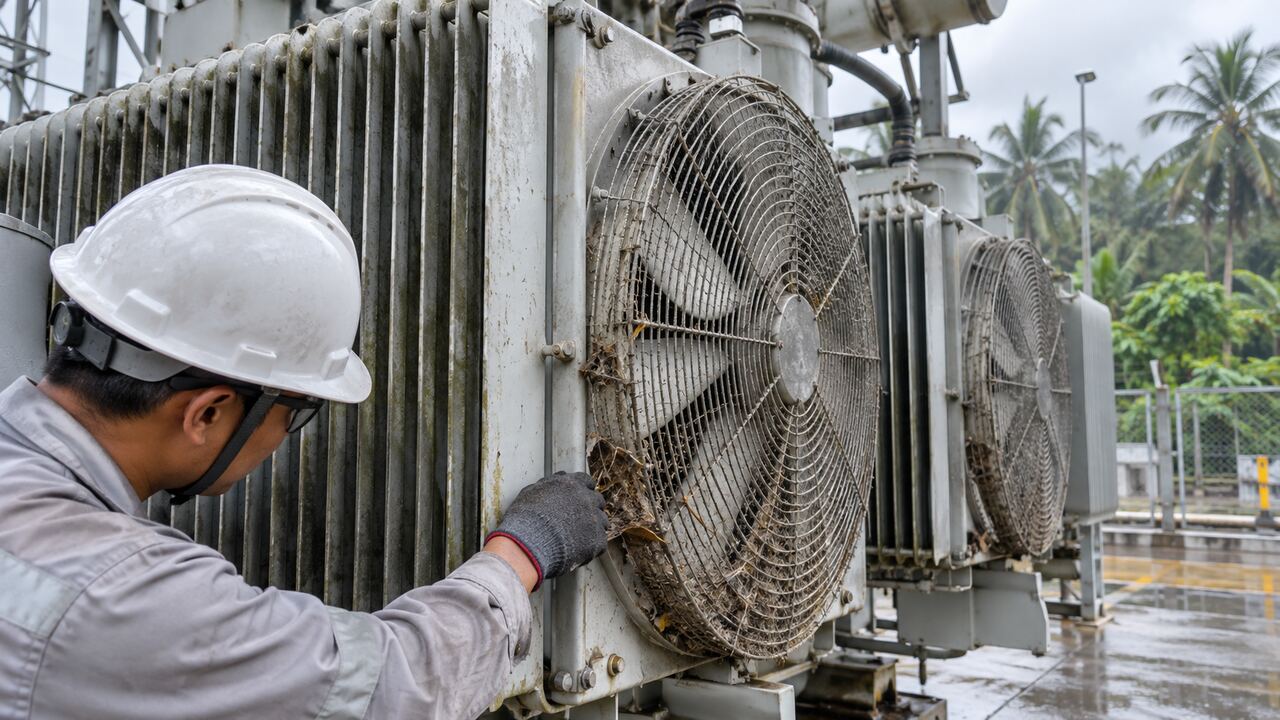
Radiator layout should allow unobstructed intake and discharge. Check separation from walls, fences, cable structures and neighboring equipment. If transformers are installed in parallel rows, review whether one unit discharges heated air toward another. Enclosures or acoustic barriers must be assessed for ventilation because a layout solution for noise or security can create a thermal problem.
Dust controls must match the actual material and site practice. Fine dry dust, sticky process residue and windblown soil do not behave in the same way. Screens can protect moving parts but may also become a maintenance item. Specify safe cleaning access, isolation requirements and the tools available on site. Avoid relying on a cleaning interval copied from another mine; the commissioning team should establish an initial interval and adjust it using inspection evidence.
Protect fan motors and controls
Confirm motor voltage, frequency, starting current, ingress protection, bearing arrangement and thermal protection. Fan rotation should be clearly marked and checked during commissioning. Control cabinets need suitable sealing, anti-condensation measures where required, space heating, gland arrangements and accessible terminals. Cable entries should not create a path for water or dust.
Coordinate Temperature Measurement and Fan Logic
Top-oil and winding-temperature indications support cooling control, alarms and operating decisions. The supplier and EPC team should agree sensor ranges, CT inputs used for winding-temperature simulation, alarm stages, fan start and stop settings, time delays and local/manual control. Settings should be based on the approved transformer design and owner philosophy, not copied from a generic schedule.
Provide separate indication for command, running status and failure where the project requires it. A fan contactor energized signal is not proof that airflow exists. Depending on project criticality, the owner may require motor protection status, current supervision or another method to identify failed cooling. Define how many failures can occur before a load restriction is necessary.
Plan Auxiliary Power Reliability
Forced cooling is only available when its auxiliary supply is available. List normal and backup supply sources, voltage variation, changeover arrangement, feeder protection and cable route. Check whether the same station service transformer supplies both the process auxiliaries and transformer cooling; a common disturbance may remove cooling at the time it is most needed.
Where backup generation exists, include fan and pump starting demand in the auxiliary load schedule. Confirm the sequence after supply restoration. Simultaneous restart of all fans, pumps and other station loads can create unnecessary voltage depression. A staged restart may be appropriate, but it must be coordinated with the permitted transformer loading during the recovery period.
Define FAT for the Cooling System
FAT should confirm fan and pump nameplates, wiring, protection, rotation, automatic/manual modes, stage sequencing, alarms and loss-of-supply behavior. Simulate temperature inputs or controller contacts using an agreed method. Record start and stop results for each group and verify that failure of one component does not prevent the remaining groups from operating as designed.
Factory testing cannot reproduce the complete mine environment. The report should distinguish verified wiring and logic from site-dependent airflow and thermal performance. Review transformer thermal information together with the project’s industrial transformer tender requirements and the operating assumptions used during industrial transformer procurement.
Commission Cooling Before Process Ramp-Up
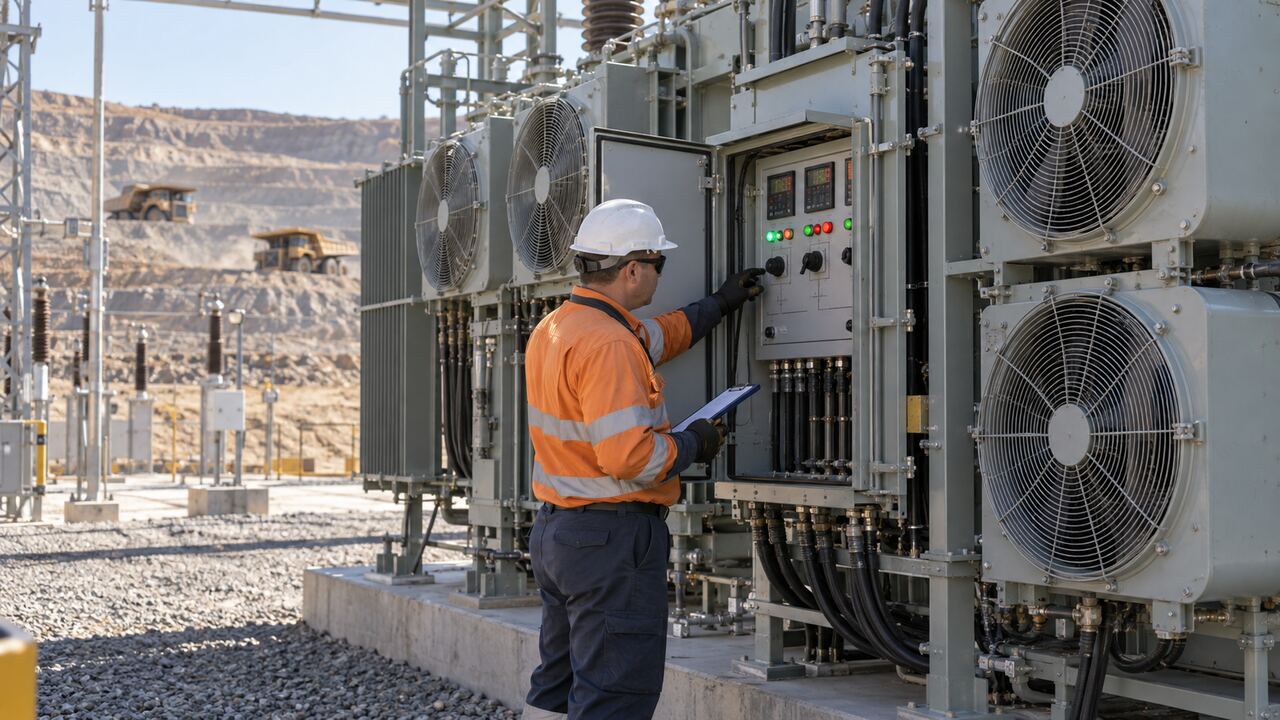
At site, inspect radiator valves, fan guards, wiring, rotation, controller modes, alarm transmission and SCADA status. Confirm that packing materials, transport restraints and temporary covers have been removed. Check airflow with the completed civil layout, fencing and nearby equipment in place. A factory-tested fan can still circulate air poorly after installation.
During the first production ramp, record ambient temperature, load current, oil and winding-temperature indications, active cooling stages and major motor events. Use time-aligned records so the team can distinguish a process transient from a cooling fault. If temperature behavior differs from the approved expectation, verify instruments, airflow, valve position and load before changing alarm or fan settings.
Check Transport and Assembly Effects on Cooling
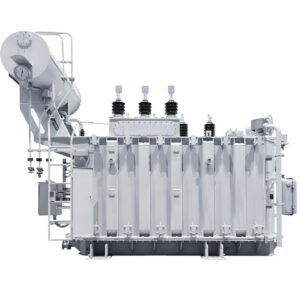
Large radiator banks may be removed for transport, shipped separately and assembled at site. The packing list, identification marks and erection drawings should make each radiator, header, valve, gasket, fan group and cable connection traceable to its final position. Mixing components or installing an incorrect gasket can create leakage, restricted oil flow or a fan-wiring mismatch. Confirm lifting points and handling instructions so thin radiator panels are not damaged during unloading.
After assembly, verify that all required valves are in the approved operating position and that temporary blanking plates, transport braces and moisture protection have been removed. Use the supplier’s approved filling, vacuum and oil-processing procedure where applicable. Record oil levels at the stated temperature and inspect every disturbed flange. Cooling-system readiness should be a formal pre-energization checklist item, not an assumption based on mechanical completion.
Define Performance Evidence Without Inventing Site Results
A supplier can provide design calculations, guaranteed data and factory test records within the agreed scope, but those documents should not be presented as evidence of performance at a particular mine unless the site conditions and operating case match the verified basis. Procurement teams should distinguish guaranteed transformer losses and temperature-rise data from estimated site temperatures, and distinguish factory functional checks from field operation.
For bid comparison, normalize the ambient basis, altitude, rating at each cooling stage, auxiliary consumption, sound assumptions, radiator arrangement and available capacity after a cooling-group failure. One offer may appear smaller because it assumes forced cooling continuously; another may provide more natural-cooling capability. The comparison should show those differences clearly, together with the maintenance consequence and the load that must be shed after a credible failure.
Where data remain unconfirmed, include a technical hold point before design release. The owner or EPC contractor can then provide the missing site measurement, utility information or process load update. This is safer than allowing a provisional assumption to become an approved manufacturing input without a recorded review.
Maintenance and Spare-Parts Checklist
- Provide safe access to radiators, fans, pumps, cabinets and indicators.
- Identify fan and pump isolation points and lockout requirements.
- List replaceable motors, bearings, contactors, relays and temperature devices.
- Confirm storage conditions for critical spares at a remote site.
- Define inspection and cleaning records for dust-loaded surfaces.
- Retain baseline temperatures for known loads and ambient conditions.
- Record cooling-group failures and resulting operating restrictions.
- Review spare compatibility after any component substitution.
Request a Tropical Mining Transformer Cooling Review
Độ tin cậy làm mát máy biến áp khai thác mỏ ở vùng nhiệt đới connects the transformer rating with ambient profiles, process loads, dust exposure, airflow, auxiliary supplies and maintainability. Zisheng Electric can review these inputs for 10MVA 33/11kV oil-immersed transformers, 66kV three-phase power transformers và 400kVA oil-immersed transformers.
Send the drawings, data sheets, load list, motor schedule, technical specification, single-line diagram, grid parameters, measured environmental conditions and installation-site layout. Clearly identify any unconfirmed utility or climate data instead of assuming it. “Our engineering team will review the requirements and respond to project inquiries within 24 hours.”
Giới thiệu về ZISHENG ELECTRICAL
Zisheng là nhà sản xuất chuyên nghiệp với 19 năm kinh nghiệm Máy biến áp ngâm dầu, Trạm biến áp gọn, Biến Áp Gắn Trên Tấm, Máy biến áp gắn cột và Biến Áp Kiểu Khô. Chúng tôi sở hữu các chứng chỉ ISO/CE/IEC 60076 và TUV Rheinland.
Máy biến áp trải qua kiểm tra FAT và kiểm tra loại nghiêm ngặt, hỗ trợ tùy chỉnh điện áp/công suất. Chào mừng bạn đến tư vấn về Danh mục và Sản phẩm. bạn có thể liên hệ với chúng tôi qua email [email protected].