Mua sắm gioăng biến áp cho các đội bảo trì tại châu Phi: Khả năng tương thích, độ khít của mặt bích và bảo quản
Transformer gasket procurement starts with identifying the joint, not ordering a sheet of black rubber. Zisheng Electric encourages maintenance teams to connect each spare seal to an equipment drawing, approved material and defined storage condition. A small component can hold an outage open when its dimensions look correct but its compound, thickness or installation requirements cannot be established.
For African industrial plants and remote project stores, the purchasing decision also includes replenishment time and the ability to preserve parts between outages. This guide addresses procurement evidence for oil-filled transformer joints. It does not prescribe a universal gasket material, tightening torque or replacement procedure. Those decisions depend on the actual transformer, accessory and approved maintenance instructions.
Where transformer gasket procurement usually loses information
A request often arrives as a photograph, an approximate outside diameter and the description “oil-resistant gasket.” That may start a conversation, but it cannot release a purchase. Several joints can share a similar outline while requiring different sealing arrangements. Tank covers, radiator connections, inspection openings and instrument interfaces should remain separately identified in the parts register.
Begin with the transformer serial number and the accessory identity. Ask whether the joint has been modified since delivery. An as-built drawing or manufacturer part reference is stronger evidence than an old purchase description copied from another unit. If the original record is missing, record that gap and obtain an engineering disposition before treating a measured sample as an approved replacement.
Distinguish the spare from the repair scope
A gasket package is not a complete leak-repair method. Access, isolation, oil handling, joint condition and recommissioning may dominate the work. Purchasing should ask which additional parts and services the authorized maintenance plan requires. This prevents a cheap seal from arriving promptly while the actual outage remains unprepared.
For a remote facility, distinguish the time to obtain the part from the time to make the transformer available for work. Route restrictions, site access arrangements and contractor mobilization belong in the planning record. Use actual logistics quotations rather than a general assumption that every African location has the same delivery conditions.
Build the enquiry around the joint drawing
The drawing should establish the sealing footprint, bolt arrangement and any groove or compression-limiting feature. A flat gasket and a moulded seal are different products even if both are called a flange gasket on an invoice. Identify the seal form before requesting dimensions or comparing bids.
Measure the features that govern fit
For a flat component, obtain the approved outside and inside profiles, bolt-hole pattern, thickness and dimensional tolerances. For a moulded component, use its specified section and groove interface. Include units and the drawing revision. A supplier should not have to decide whether an unmarked dimension represents an internal diameter, a bolt circle or an outside edge.
Removed gaskets can be compressed, stretched, swollen or damaged. Their dimensions can help investigate an unidentified joint, but they should not silently replace design information. Send photographs with a scale and explain the sample condition. Ask the responsible engineer which dimensions can be accepted and which require confirmation from the equipment manufacturer.

| Enquiry field | Chứng cứ cần yêu cầu | Decision it supports |
|---|---|---|
| Equipment and joint identity | Transformer serial number, accessory type and drawing reference | Prevents selection against a similar but different asset |
| Seal form and dimensions | Approved profile, thickness or section, tolerances and revision | Establishes mechanical fit and the intended sealing geometry |
| Compound identification | Manufacturer grade, material data and traceable batch | Makes material acceptance reviewable |
| Fluid and service conditions | Actual insulating-fluid identity and relevant temperature and pressure conditions | Supports compatibility assessment for the real application |
| Installation basis | Applicable equipment instructions and permitted assembly materials | Exposes work requirements beyond the spare itself |
| Storage and issue controls | Packaging, manufacture date and supplier storage guidance | Determines whether the part can remain usable until the outage |
Ask for a compound, not just a polymer family
Material names are useful categories, but an engineering approval needs a specific offered grade. Different formulations within one family can have different properties. The enquiry should identify the insulating fluid, the application temperature conditions and any other substances that may contact the seal during installation or cleaning.
As a manufacturer example, Trelleborg describes its BF31 nitrile sheeting for tank-to-lid gasket applications in immersed electrical transformers. That is evidence about a named product and stated application. It is not approval for every nitrile sheet, every transformer joint or every dielectric liquid. Request compatibility confirmation for the exact offered compound and the equipment manufacturer’s sealing arrangement.
Handle fluid changes as engineering changes
If a transformer has been retrofilled or its fluid identity is uncertain, make that visible before buying seals. An invoice that merely says transformer oil may be inadequate for the compatibility review. Obtain the current fluid product information and relevant maintenance history. Keep proposed cleaning agents, lubricants and sealants within the approved assembly instructions as well.
Do not accept colour as material identification. Two black gaskets may have different compositions, while products with similar datasheets may use different grades. Require the supplier to link the delivery label, batch reference and technical submission. Where the owner requires additional evidence, define the acceptance document and review responsibility before award.
Review the flange before approving a substitution
Changing thickness or hardness can affect how a joint assembles. It may alter compression, bolt loading or the relationship to a mechanical stop. Procurement should not authorize a thicker seal as an informal response to a damaged or uneven flange. Ask the equipment engineer to assess the joint and the proposed replacement together.
A quotation for a universal sheet that will be cut on site creates another responsibility boundary. State who owns the cutting template, dimensional inspection, cleanliness and final acceptance. A factory-cut component with traceable dimensions may reduce that uncertainty, but the correct choice depends on the approved repair scope and the site’s controlled fabrication capability.
Keep deviations visible
Require bidders to list any departure in compound, form, thickness, tolerances or packaging. “Equivalent” is a conclusion that needs supporting evidence. The technical deviation register for African EPC bids provides a useful way to assign the reviewer and record the disposition. A purchase-order note should not become a substitute for technical approval.
For accessory replacement, review the complete interface. A new bushing or valve may require its own approved seal rather than the spare previously held for the old assembly. Coordinate this with the spare transformer bushing kit review so that the accessory and its sealing components are accepted as a compatible package.
Make the store part of the purchasing decision
A spare is only useful if its identity and condition survive storage. Ask the gasket supplier for packaging and storage requirements appropriate to the supplied product. Agree how parts will be supported without damaging deformation and protected from contamination, light and unsuitable environmental exposure. Do not leave a flat seal hanging from a hook simply because that makes it easy to count.

Separate shelf life from installed service life
The date on a stock label is not a prediction of how long an installed joint will last. Parker’s published shelf-life guidance distinguishes storage recommendations by polymer family and references controlled conditions. Such guidance illustrates why a single expiry rule cannot be transferred indiscriminately to every transformer gasket. Use the supplied component’s requirements and the owner’s accepted stock-control procedure.
Record manufacture or cure information where supplied, receipt date, batch, storage location and inspection status. If the part’s age or storage history cannot be established, raise an acceptance query. A newly printed inventory label does not reset material age. Likewise, an unopened bag does not by itself establish that storage temperature and packaging conditions were suitable.
Adapt controls to the actual site
Where a store experiences high temperatures, dust or humidity, compare measured conditions with the supplier’s guidance. At a coastal plant, include the condition of associated metal hardware and protective packaging. At an inland remote facility, assess the transport and storage stages together. These are site questions, not uniform regional specifications.
Equipment voltage, frequency, loading, harmonics and altitude remain part of the transformer record; they should not be used as shortcuts to select a gasket. Their relevance is through the verified equipment design and operating conditions. The material review needs the actual sealing duty, while the maintenance plan needs the owner’s access and service restrictions.
Choose stock quantities by an identifiable outage scope
Count the seals needed for each planned intervention and distinguish those from contingency stock. A complete transformer kit can contain parts that are unlikely to be used together. Conversely, a small repair can require several related seals if the authorized procedure disturbs adjacent connections. Build the list with the maintenance engineer rather than copying the quantity from an earlier invoice.
For shared stores, document which transformers and joint positions each item fits. Similar equipment ratings do not prove interchangeability. One bin should not mix unverified materials or revisions. When two approved grades coexist, keep their labels and issue rules distinct so that a storekeeper is not expected to make an engineering substitution during an urgent outage.
Compare replenishment options
Ask suppliers for realistic lead times, minimum quantities and traceability documents. Compare local cutting, pre-cut supply and manufacturer kits against the same technical basis. Include shipment protection, review effort and the consequence of receiving a nonconforming part. The lowest unit price is not necessarily the lowest cost of keeping an outage ready.
Release the work package separately from the purchased part
Before issue, confirm that the accepted part matches the current repair plan and equipment identity. Keep the replacement package connected to the work order. A receipt inspection can verify packaging, markings and observable dimensions; it cannot demonstrate that a future assembled joint will be leak-tight.

The site team should define the approved isolation, oil-handling, joint-inspection, assembly and verification arrangements. No generic bolt torque or pressure-test value belongs in a purchasing guide. Those parameters must come from the applicable equipment instructions and authorized procedure. Record any damaged joint surfaces or missing information before work proceeds beyond the relevant hold point.
When oil processing is part of the intervention, coordinate the seal package with the oil processing readiness plan. Replacement seals, clean handling equipment and competent site support need to be available within the same outage window. Agree who accepts the final records and who provides follow-up technical support.
Send Zisheng Electric a traceable gasket enquiry
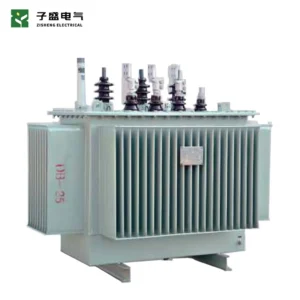
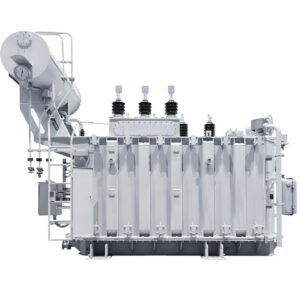
A useful transformer gasket procurement package identifies the equipment, joint, dimensions, compound, fluid, storage conditions and intended intervention. Zisheng Electric can review sealing interfaces as part of enquiries for equipment such as a máy biến áp ngâm dầu 400 kVA hoặc a 66/69 kV power transformer. These product ratings do not establish spare interchangeability; the actual drawing and supplied configuration govern.
Provide drawings, data sheets, load lists, technical specifications, single-line diagrams, grid parameters, environmental conditions and installation-site conditions. For replacement enquiries, add the serial number, joint photographs, fluid identity, maintenance history and required support scope. Our engineering team will review the requirements and respond to project inquiries within 24 hours.
Technical references: Trelleborg BF31 application information và Parker seal shelf-life guidance. Confirm the current product-specific instructions for the supplied component.
Giới thiệu về ZISHENG ELECTRICAL
Zisheng là nhà sản xuất chuyên nghiệp với 19 năm kinh nghiệm Máy biến áp ngâm dầu, Trạm biến áp gọn, Biến Áp Gắn Trên Tấm, Máy biến áp gắn cột và Biến Áp Kiểu Khô. Chúng tôi sở hữu các chứng chỉ ISO/CE/IEC 60076 và TUV Rheinland.
Máy biến áp trải qua kiểm tra FAT và kiểm tra loại nghiêm ngặt, hỗ trợ tùy chỉnh điện áp/công suất. Chào mừng bạn đến tư vấn về Danh mục và Sản phẩm. bạn có thể liên hệ với chúng tôi qua email [email protected].