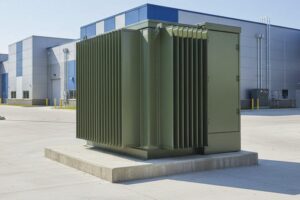
Transformer Frequency Compatibility Review for Latin American Equipment Imports
Zisheng Electric recommends completing a transformer frequency compatibility review before an imported production line is released for shipment to a Latin American factory. A purchase specification may correctly identify the required voltage and still leave the frequency problem unresolved. The transformer, the incoming network and the machine each have their own operating requirements. Matching one pair of numbers does not demonstrate that the complete installation will work.
This buyer’s briefing is for industrial owners, EPC contractors and distributors handling equipment imported from a different electrical supply environment. It uses hypothetical 50 Hz and 60 Hz examples to explain procurement decisions. It does not assign a common voltage or frequency to Latin America, approve a particular machine, or prescribe a country-wide utility requirement. Obtain the actual connection data for the destination facility.
Begin the transformer frequency compatibility review at the machine boundary
Ask what supply the complete machine accepts at its incoming terminals. Do not infer that requirement from the main motor alone. The package can contain control transformers, contactor coils, cooling fans, pumps, drives, heaters and electronic power supplies with different declared operating ranges. A motor suitable for two frequencies does not prove that the rest of the package is similarly rated.
Obtain the machine manufacturer’s electrical supply specification, connection diagram, load schedule and written confirmation for the proposed destination supply. Record the accepted voltage range, frequency range, phases, neutral requirement, earthing arrangement and operating duty. Identify options that were actually supplied, because a catalogue’s export configuration may differ from the purchased machine.
Trace normal, standby and temporary sources
Build a source list for every intended operating state. Include the normal facility bus, standby generation and any temporary commissioning supply. State which loads operate in each state. The project should not qualify a machine against the normal source and then assume that an unreviewed temporary supply is suitable because its nominal voltage looks familiar.
For each source, obtain the relevant voltage and frequency information from the facility’s approved electrical design or the responsible supply authority. Record the document date and connection point. If the information is provisional, retain a procurement hold rather than selecting a transformer from the country name on the shipping documents.
A voltage ratio does not provide frequency conversion
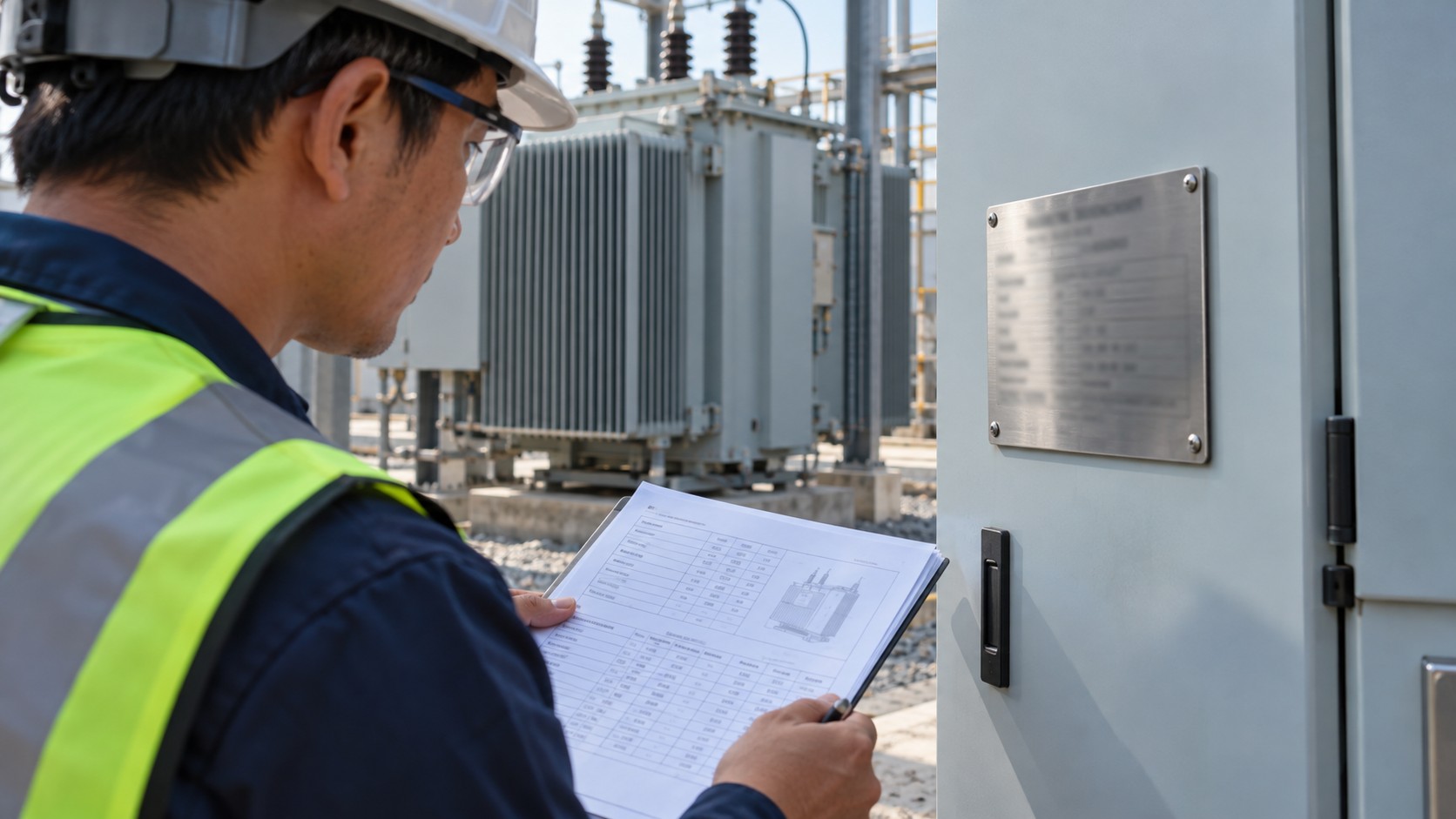
A conventional passive transformer changes voltage according to its design; it does not convert a 60 Hz supply into 50 Hz, or the reverse. Schneider Electric’s published transformer FAQ explicitly makes this distinction and identifies active conversion equipment as a separate solution. A transformer marked for operation at either frequency still has the same fundamental supply frequency at its input and output.
Consider a hypothetical imported machine that requires 400 V at 50 Hz, while its installation point provides 480 V at 60 Hz. A transformer selected to deliver approximately 400 V addresses the voltage difference. Its secondary supply remains 60 Hz. Procurement must therefore establish whether the complete machine accepts that frequency or whether a separately engineered conversion arrangement is required.
The next decision belongs jointly to the machine supplier and the electrical designer. Possible routes include a machine supplied in the correct electrical configuration, an approved modification package, or suitable frequency conversion equipment. Do not assume that adding a motor drive at the machine incomer can supply every auxiliary circuit, electronic load and protection function correctly.
Use a decision table before issuing the transformer enquiry
The table below separates common procurement situations. It deliberately gives no universal derating factor or conversion equipment rating. Those values require the offered equipment data and the actual operating case.
| Observed condition | What it means | Yêu cầu bằng chứng | Procurement action |
|---|---|---|---|
| Voltage differs; machine frequency range accepts the source | Voltage transformation may be the principal mismatch | Complete-machine approval and transformer rating for the source | Specify the voltage duty and remaining interfaces |
| Machine accepts only a different frequency | A passive transformer cannot resolve the mismatch | Approved machine configuration or conversion-system design | Hold the transformer-only solution until the architecture is agreed |
| Transformer is marked for one frequency only | Suitability at another frequency is unconfirmed | Manufacturer assessment for the proposed voltage, frequency and loading | Obtain written approval or select a correctly rated unit |
| Main motor is dual-rated but auxiliaries are unclear | The package qualification is incomplete | Auxiliary circuit schedule and machine supplier confirmation | Close the auxiliary review before shipment |
| Normal and standby sources differ in operating behavior | One acceptance case does not cover both | Approved source envelopes and operating-state assessment | Document each permitted supply mode |
| Destination site data are missing | The enquiry has no reliable supply basis | Connection-point data and local design responsibility | Resolve the input data before committing the rating |
Review the transformer at its own operating frequency
Read the offered transformer’s nameplate and data sheet independently of the machine specification. Confirm the declared frequency, rated voltages, taps, power rating and cooling basis. The phrase “export transformer” does not establish dual-frequency capability. Neither does the availability of voltage taps establish permission to operate outside the declared frequency conditions.
For a given winding, the voltage-to-frequency relationship affects core excitation. Schneider Electric discusses reduced-voltage use for certain 60 Hz low-voltage transformer products on 50 Hz supplies, with associated capacity implications. That product-specific guidance should not be copied into an approval for another transformer. Ask the actual manufacturer to assess the offered unit and state its approved limits.
Require a complete answer to an off-frequency proposal
A useful response identifies the exact transformer, permitted supply conditions, output-voltage implications, loading limit and any changed losses or performance declarations relevant to the contract. It should also address the applicable auxiliaries and protection interfaces. A brief statement that the core “should be fine” is insufficient for an EPC acceptance record.
If the proposal changes guaranteed performance, record the change before placing the order. The method in our transformer technical deviation register guide can help keep exceptions visible. Its document-control approach is reusable; local requirements from a different project or region are not automatically transferable.
Evaluate the machine’s operating outcome
The owner ultimately needs an acceptable production process. Ask the machine supplier to explain the effect of the proposed supply on its intended output, operating sequence, cooling and auxiliary services. This may require reviewing directly connected motors separately from loads supplied through drives or electronic converters. Keep that assessment tied to the actual equipment configuration and control settings.
Record the permitted operating modes and any restrictions in the purchase documents. A machine that can run only with a specific converter, cooling arrangement or reduced production duty should not be described simply as compatible. The quotation should identify the equipment and engineering work needed to deliver the agreed result.
Make responsibility for the complete package explicit
Where several suppliers contribute to the solution, appoint a party responsible for the combined electrical interface. Define who checks the machine, who specifies the transformer, who designs any converter arrangement and who approves the protection study. Without that allocation, each supplier can legitimately approve its own item while the assembled system remains unverified.
Translate destination conditions into installation choices
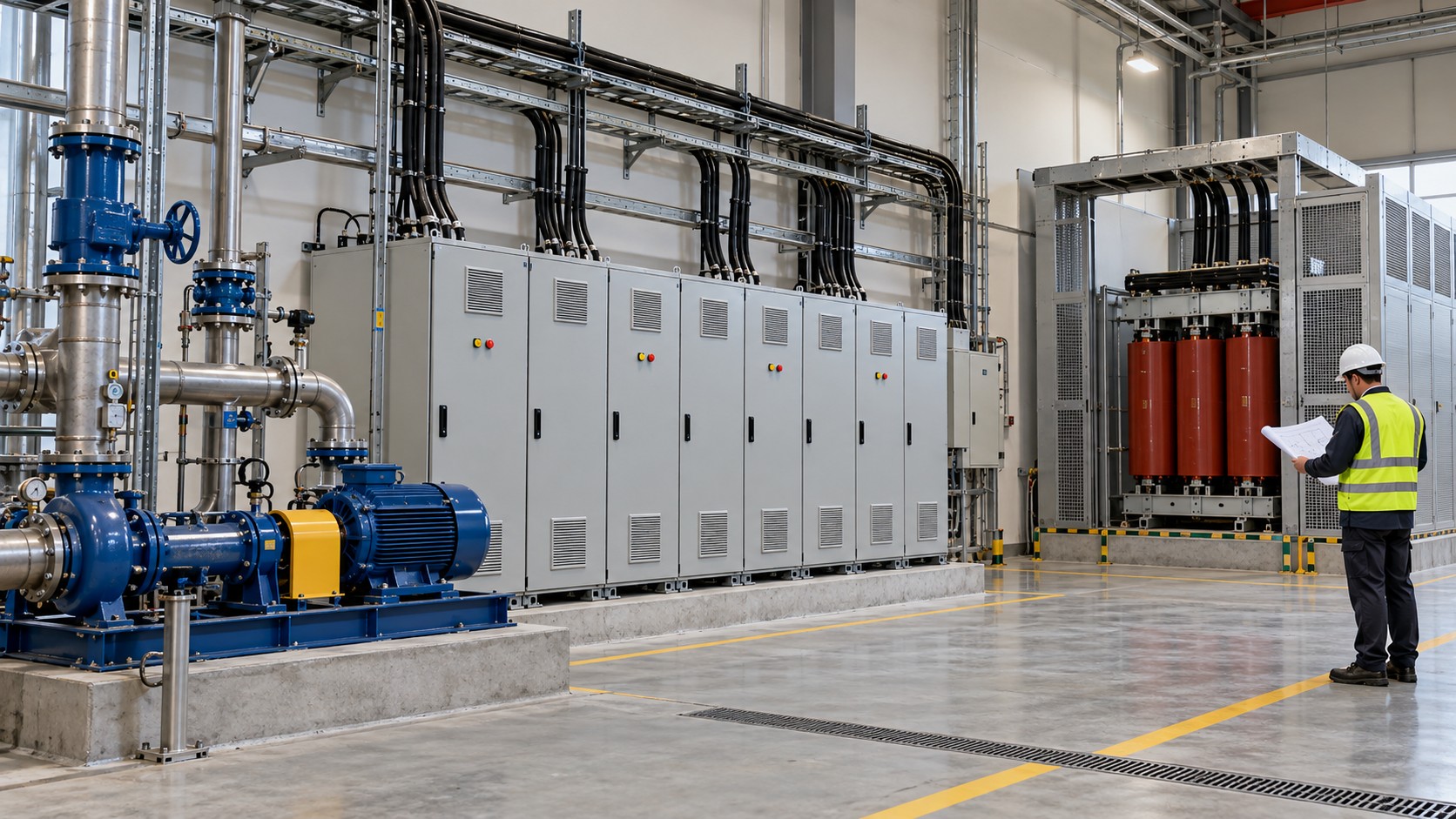
A frequency match is only one part of suitability for a Latin American destination. Obtain the actual temperature profile and installation altitude so the transformer and any conversion equipment can be assessed on the same basis. An indoor machine room, a highland plant and a coastal outdoor yard are different installations; the country label cannot replace site data.
Identify salt exposure, humidity, condensation risk and airborne dust for the equipment location. These conditions influence enclosure selection, ventilation, insulation maintenance and service access. If additional conversion equipment creates heat inside an electrical room, include that heat in the room design. Do not assume the existing ventilation remains adequate after adding cabinets.
Check the shipment route, unloading resources, doorway dimensions, floor capacity and installation sequence before ordering. A separately supplied transformer or converter may need a route that the original machine delivery plan did not cover. Establish who provides local installation support, specialist commissioning and replacement components, particularly where the equipment manufacturer’s service team is based overseas.
Specify the load and utility interfaces without shortcuts
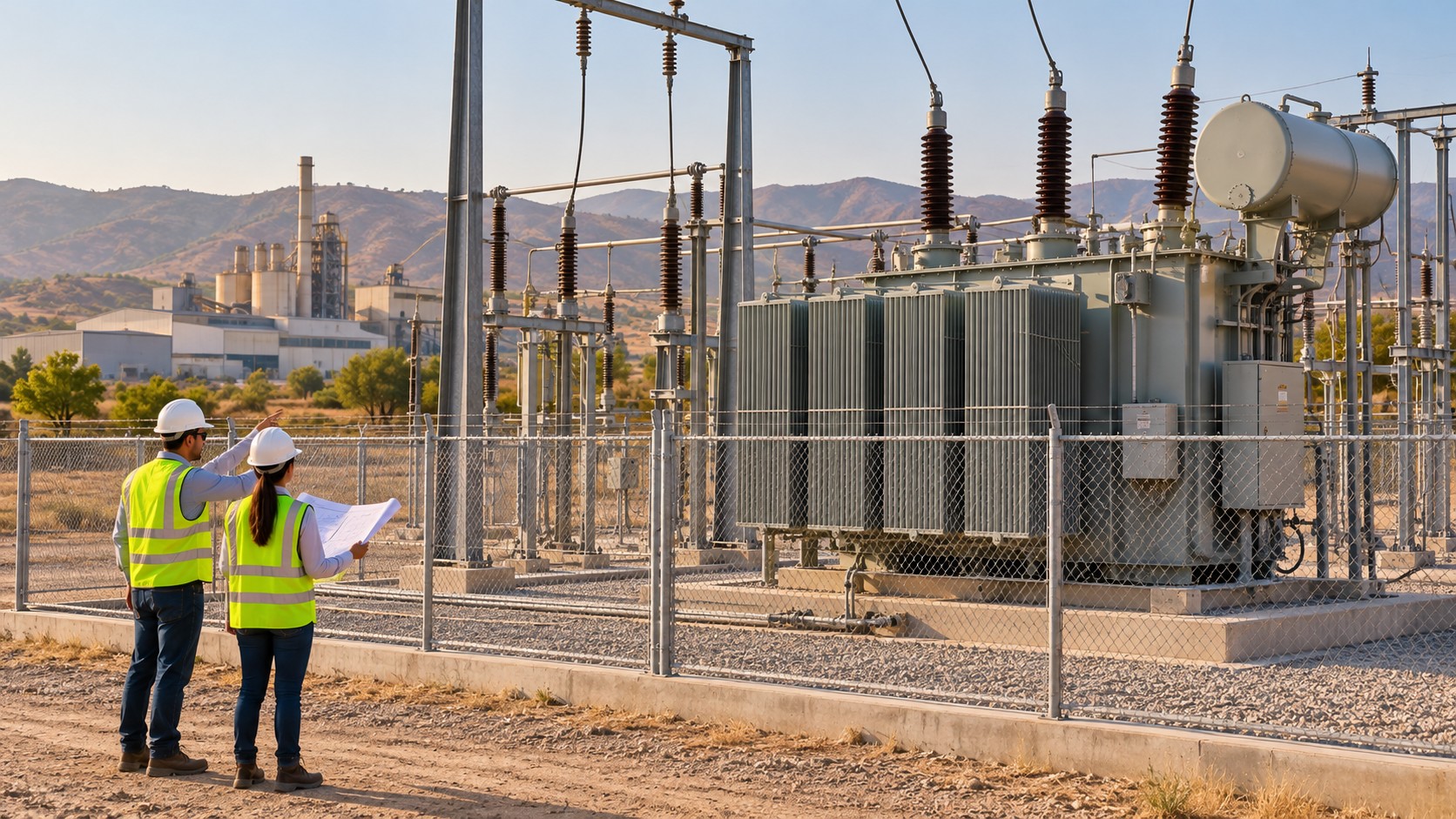
Provide the transformer supplier with operating and starting loads, duty cycles, simultaneous demand and the nonlinear load information relevant to the proposed architecture. If conversion equipment is added, obtain its input characteristics from its manufacturer. A machine’s output power alone does not define the transformer’s electrical duty or the installation’s interaction with the facility supply.
Have the responsible engineer review protection, fault duty, earthing, neutral requirements and the point of connection. Where the facility or utility requires approval of a changed load, identify that approval in the programme and obtain requirements from the applicable authority. This article does not assume a universal utility acceptance process across the region.
Plan spare coverage around the approved configuration. A warehouse unit with the right voltage ratio may still have an unsuitable frequency declaration or auxiliary arrangement. Our Hướng dẫn lập kế hoạch sử dụng chung máy biến áp dự phòng explains why documented compatibility should precede assigning a spare to a facility. Apply the same discipline to replacement control transformers, fans and converter modules.
Test the agreed operating cases before acceptance
Agree the verification plan before the factory test. State the supply conditions to be used, the equipment included and the functions demonstrated. Where the factory cannot reproduce the destination supply or the complete production duty, document that limitation and identify the remaining site checks. A machine test on its original supply is not evidence of operation under an untested destination configuration.
The site acceptance plan should reconcile installed equipment identities, settings, supply measurements and the approved operating cases. It should include the agreed response to loss and restoration of supply, along with any source-transfer behavior relevant to the process. Qualified personnel must conduct these activities under the project’s approved procedures; this is a procurement evidence plan, not an energization instruction.
Close the records around the equipment actually delivered
Retain the manufacturer’s compatibility statement, final drawings, converter information where applicable, transformer data, test records and restrictions. Check that manuals and labels match the supplied configuration. A revised quotation sitting in an email thread will be difficult for a future maintenance team to interpret if the installed equipment record still describes the original machine.
Include after-sales contacts and the evidence required when requesting support. Equipment identity, operating source, measured supply conditions, configuration revision and fault history are more useful than reporting that an imported machine “does not like the voltage.” A clear handover record makes later troubleshooting more focused.
Send a complete compatibility enquiry to Zisheng Electric
Zisheng Electric can review Các tùy chọn máy biến áp khô và oil-immersed transformer configurations against the approved installation requirements. Complete the transformer frequency compatibility review before treating a voltage ratio as the final equipment selection. Transformer supply should follow the agreed machine and network architecture.
Provide drawings, data sheets, load lists, technical specifications, single-line diagrams, grid parameters, environmental conditions and installation-site conditions. Include the imported machine supply requirements, all intended source modes, the machine manufacturer’s compatibility statement and any proposed conversion equipment. Our engineering team will review the requirements and respond to project inquiries within 24 hours.
Giới thiệu về ZISHENG ELECTRICAL
Zisheng là nhà sản xuất chuyên nghiệp với 19 năm kinh nghiệm Máy biến áp ngâm dầu, Trạm biến áp gọn, Biến Áp Gắn Trên Tấm, Máy biến áp gắn cột và Biến Áp Kiểu Khô. Chúng tôi sở hữu các chứng chỉ ISO/CE/IEC 60076 và TUV Rheinland.
Máy biến áp trải qua kiểm tra FAT và kiểm tra loại nghiêm ngặt, hỗ trợ tùy chỉnh điện áp/công suất. Chào mừng bạn đến tư vấn về Danh mục và Sản phẩm. bạn có thể liên hệ với chúng tôi qua email [email protected].