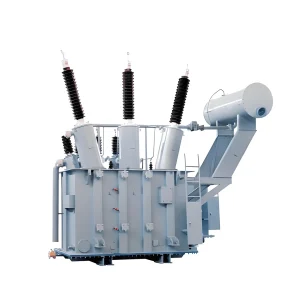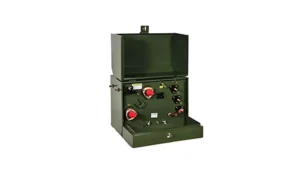
Step-up vs Step-down Transformer: Which One Should You Choose for Your Power System?
Power systems often fail due to wrong voltage selection, causing equipment damage, energy loss, and costly downtime. Understanding the right transformer type prevents these risks and ensures efficient operation.
A step-up transformer increases voltage while reducing current, whereas a step-down transformer decreases voltage and increases current. Both rely on electromagnetic induction and coil ratios to perform efficient voltage conversion in power systems. Choosing the correct type depends on application requirements, load demands, and transmission distance.
Understanding these differences is essential for selecting the right transformer and optimizing system performance. Continue reading to explore detailed insights.
What Is a Step-Up Transformer and How Does It Work?
A step-up transformer definition refers to an electrical device designed to increase voltage from the primary coil to the secondary coil. It operates based on electromagnetic induction transformer principles, which are central to how transformers work in modern electrical systems. When alternating current flows through the primary winding, it creates a magnetic field that induces a higher voltage in the secondary winding.
The key factor behind this voltage increase is the turns ratio transformer, where the secondary coil has more turns than the primary coil. This design enables the transformer to function as an increase voltage transformer, making it essential in long-distance electricity transmission. By raising voltage levels, it minimizes energy losses during transmission, a core aspect of AC voltage transformation.
From a basic transformer theory perspective, the relationship between coils, magnetic flux, and induced voltage forms the foundation of its operation. In practical applications, step-up transformers are widely used as power transmission transformer units in substations, ensuring electricity can travel efficiently over long distances without excessive losses.
What Is a Step-Down Transformer and Why Is It Important?
A step-down transformer definition describes a transformer that reduces voltage from the primary coil to the secondary coil. This type of transformer is essential for safely delivering electricity to homes, commercial buildings, and industrial equipment. It performs the opposite function of a step-up transformer, acting as a decrease voltage transformer.
Like all transformers, it relies on electrical transformer explained principles, particularly electromagnetic induction transformer behavior. In this case, the secondary coil has fewer turns than the primary coil, which results in lower voltage output. This design is critical in adapting high transmission voltages to usable levels for end users.
The importance of step-down transformers lies in their role within the transformer function in power system. Without them, high-voltage electricity from transmission lines would be unsafe for practical use. They also maintain the correct voltage and current relationship, ensuring devices operate efficiently without overheating or damage.
Step-Up vs Step-Down Transformer: Key Differences Explained
When comparing step-up and step-down transformers, the main distinction lies in transformer voltage conversion. A step-up transformer increases voltage while decreasing current, whereas a step-down transformer decreases voltage and increases current. This fundamental difference defines their applications and design.
Another critical factor is the primary vs secondary coil configuration. In step-up transformers, the secondary coil has more turns, while in step-down transformers, the primary coil has more turns. This variation directly impacts the turns ratio transformer, which determines the output voltage.
From a practical standpoint, step-up transformers are used in transmission systems to handle high voltage vs low voltage conversion for efficient energy transfer. In contrast, step-down transformers are used near consumption points to make electricity usable. Understanding these differences is essential for selecting the correct transformer type and ensuring system reliability.
How Voltage and Current Change in Step-Up vs Step-Down Transformers
The relationship between voltage and current in transformers follows a fundamental principle known as the voltage and current relationship. When voltage increases in a step-up transformer, current decreases proportionally, and vice versa for a step-down transformer. This balance ensures energy conservation within the system.
In a step-up transformer, the increase voltage transformer function results in high voltage but low current output. This is ideal for reducing transmission losses over long distances. Conversely, a step-down transformer, acting as a decrease voltage transformer, provides lower voltage but higher current suitable for powering equipment.
This process is governed by AC voltage transformation and rooted in basic transformer theory, where power remains approximately constant (ignoring losses). Understanding this interaction is crucial for engineers designing efficient electrical systems and selecting the right transformer for specific operational needs.
Real-Life Applications of Step-Up and Step-Down Transformers
Step-up and step-down transformers are essential components in modern electrical infrastructure. A power transmission transformer typically uses step-up functionality to increase voltage at power plants before electricity is transmitted over long distances. This reduces energy loss and improves efficiency.
On the other hand, step-down transformers are widely used in distribution networks. They convert high transmission voltages into safer levels for residential, commercial, and industrial use. This highlights the importance of transformer function in power system operations.
In renewable energy systems, such as solar or wind farms, both transformer types are used together. Step-up transformers raise generated voltage for grid integration, while step-down transformers ensure proper voltage delivery to end users. These applications clearly demonstrate how transformers work in real-world scenarios, supporting reliable and efficient energy distribution.
Step-Up vs Step-Down Transformer: Which One Do You Need?
Choosing between a step-up and step-down transformer depends on the specific application and system requirements. If the goal is long-distance transmission with minimal losses, a step-up transformer is required. If the objective is safe and usable voltage for equipment, a step-down transformer is necessary.
Factors such as load demand, voltage levels, and installation environment must be considered. Understanding high voltage vs low voltage requirements and the primary vs secondary coil configuration helps in making the right decision.
Additionally, ensuring compliance with standards and verifying the step-up transformer definition or step-down transformer definition in supplier specifications is critical. This prevents mismatches and guarantees reliable performance, especially in large-scale industrial or utility projects.
Conclusion
Step-up and step-down transformers serve different but complementary roles, ensuring efficient, safe, and reliable voltage control across modern power systems.
About ZISHENG ELECTRICAL
Zisheng are a professional 19+ years manufacturer in producing Oil-Immersed Transformers, Compact Substation, Pad Mounted Transformers, Pole Mounted Transformers and Dry Type Transformers. We own the certificates of ISO/CE/IEC 60076 and TUV Rheinland.
Transformers undergo rigorous FAT and type testing, support voltage/capacity customization. Welcome to consult for Catalog and Product. you can contact us at email info@bdzstransformer.com.