Single-phase transformer selection guide for rural electrification projects in Africa: reducing investment costs and improving end-point power supply reliability
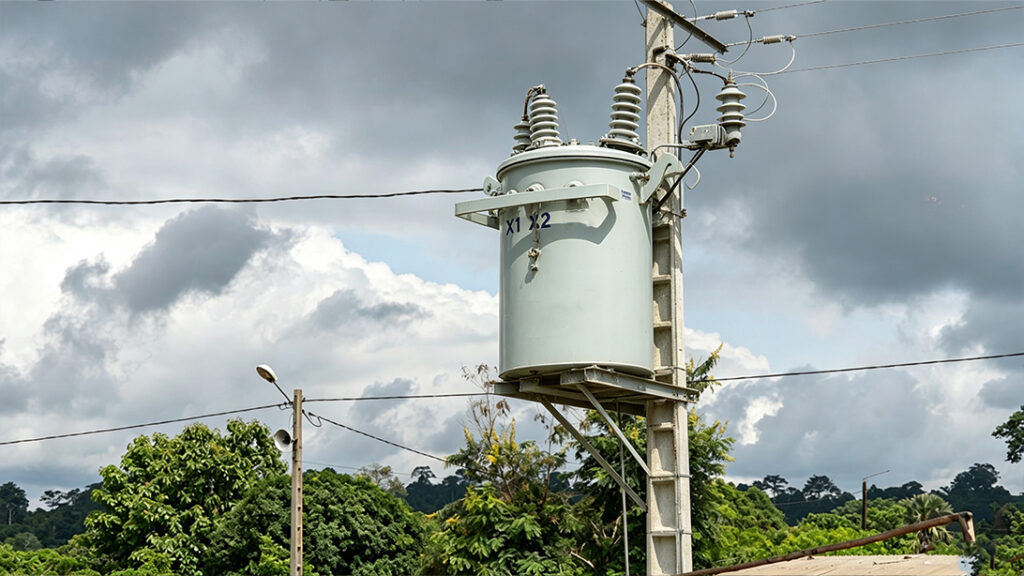
Before we get into this topic, let me ask you a question first.
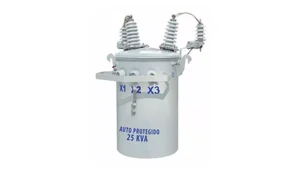
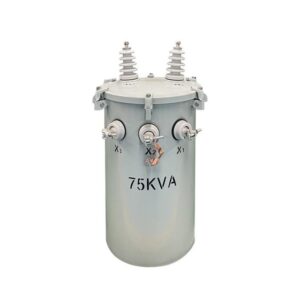
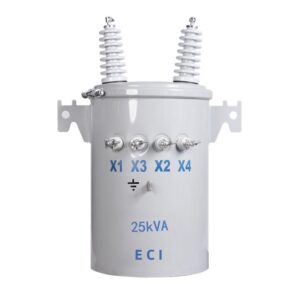
In many rural electrification projects in Africa, choosing between single-phase and three-phase distribution transformers directly affects project investment, construction schedule, and long-term operating costs.
If you were responsible for supplying electricity to a village with 100 households, with a limited budget and a medium-voltage line that needs to be extended for more than ten kilometers, would you choose three-phase or single-phase?
Most people’s first reaction would be three-phase.
That is what textbooks say. It is also what many grid standards require. And there is nothing wrong with that.
But when you actually arrive at an African rural project site, you may discover something that textbooks do not tell you:
When the budget is insufficient, the project cannot even get started.
Zisheng Electric has been deeply involved in power distribution equipment export projects in Africa for many years. Our products have been applied across multiple markets in West Africa, East Africa, and Southern Africa, covering scenarios such as rural electrification, solar microgrids, and industrial power distribution.
The problems encountered in rural projects are often the same ones repeatedly.
Today, we are organizing the experiences we have gained from project sites and discussions with industry peers over the years. This is not about telling you that one solution is always better than another. Instead, we want to break down this decision-making process and let you make your own judgment.
I. Three Core Challenges Facing Rural Electrification Projects in Africa
African rural electrification sounds simple — just bring electricity to villages.
But anyone who has actually worked on these projects knows that things are far more complicated.
1.1 There Is Never Enough Budget
A three-phase transformer combined with a three-phase distribution line requires higher investment.
The equipment itself is more expensive, and the cost of conductors and construction materials is also significantly higher.
For a village with only around one hundred households, extending a three-phase line over more than ten kilometers can easily exceed the project budget.
Many projects discover halfway through construction that funding is far short of requirements.
The choices then become:
- Reduce the project scope
- Wait for additional funding
And waiting for funding is often not a short process — even one to two years can be considered fast.
1.2 Electricity Arrives, But Voltage Cannot Be Maintained
The distribution lines are too long.
At the end of the network, the terminal voltage may drop to 180-190V, making even basic lighting unstable, let alone equipment such as:
- Water pumps
- Air conditioners
- Agricultural machinery
Users complain, supervisors demand explanations, and maintenance teams repeatedly travel to remote sites.
After spending significant time and effort, the fundamental problem still remains unresolved.
1.3 Once Solar PV Is Installed, the Grid May Not Be Ready
In recent years, solar energy has become increasingly affordable.
Many rural users install their own photovoltaic systems and feed excess electricity back into the grid.
However, traditional rural distribution networks were not designed for this situation.
The result can be:
- Voltage fluctuations
- Inverter disconnection
- Excessive stress on transformers caused by two-way power flow
The original distribution system simply was not designed to handle this new operating mode.
1.4 When Transformers Fail, Nobody Is Available to Repair Them
There is another issue that many people are reluctant to discuss openly:
Remote distribution areas.
When a transformer fails, replacing it can take months from the initial fault report to final restoration.
Villagers lose electricity.
Phone calls keep coming in.
Eventually, the project team is the one held responsible.
These problems cannot simply be solved by adding more funding.
II. Compare Single-Phase and Three-Phase Solutions This Way, and It Becomes Clear
Some people may ask:Is a single-phase transformer really reliable?
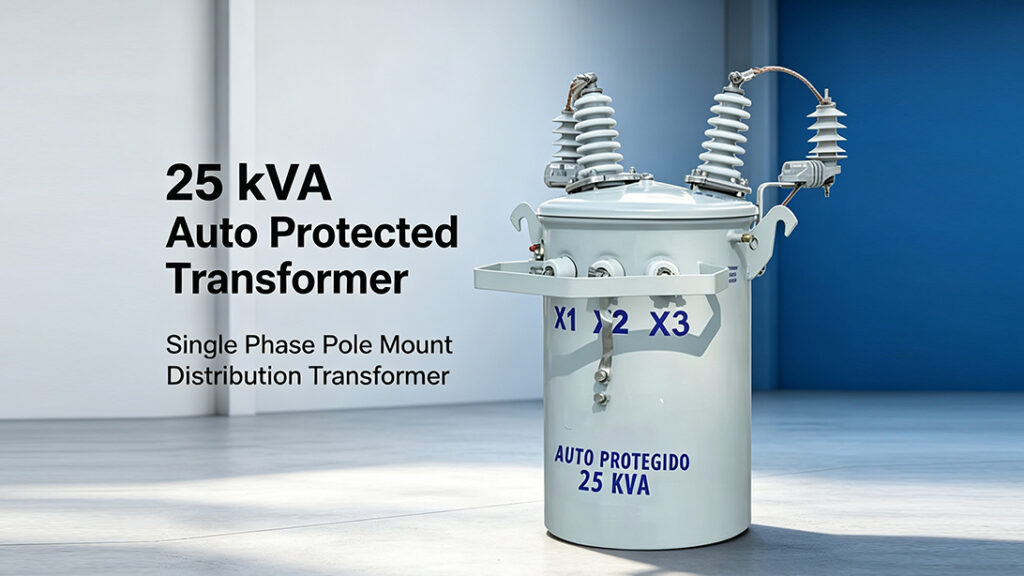
Let’s put it this way: single-phase transformers should not be used in urban commercial areas.
But for remote rural distribution areas in Africa, where the characteristics are:
- Scattered loads
- Low electricity demand
- Long distribution distances
this is exactly where single-phase transformers can be the most suitable solution.
The following table compares the two options side by side:
| Comparison Item | Three-Phase Transformer | Single-Phase Transformer |
|---|---|---|
| Initial Investment | Larger capacity equipment is usually required, with three-phase line infrastructure, resulting in higher overall investment | Suitable for small-capacity distributed loads, with lower network construction costs |
| Application Scenarios | Cities, industrial loads, large commercial consumers | Remote villages, rural distribution areas, microgrids |
| Installation Method | Usually requires higher construction conditions | Suitable for pole-mounted installation |
| Operation & Maintenance | Equipment is centralized, and a failure can affect a larger service area | Distributed configuration, with a smaller impact range when failures occur |
As you can see, three-phase solutions have their advantages, but the key is choosing the right application.
Three-phase systems for cities, single-phase systems for rural areas — each has its own place.
Different countries have different grid standards and project requirements. The following parameters represent common configurations used in many African rural electrification projects, solar microgrids, and remote distribution areas:
| Parameter | Recommended Range |
|---|---|
| Rated Capacity | 10kVA-100kVA |
| HV Voltage | 11kV / 22kV / 33kV |
| LV Voltage | 230V |
| Frequency | 50Hz / 60Hz |
| Cooling Type | ONAN |
| Installation | Pole mounted / Ground mounted |
| Standard | IEC 60076 |
| Core Type | Amorphous alloy / CRGO |
III. These Situations Are Where Single-Phase Transformers Really Work Well
Let’s talk about several real-world scenarios.
Scenario 1: Electrification of Remote Villages
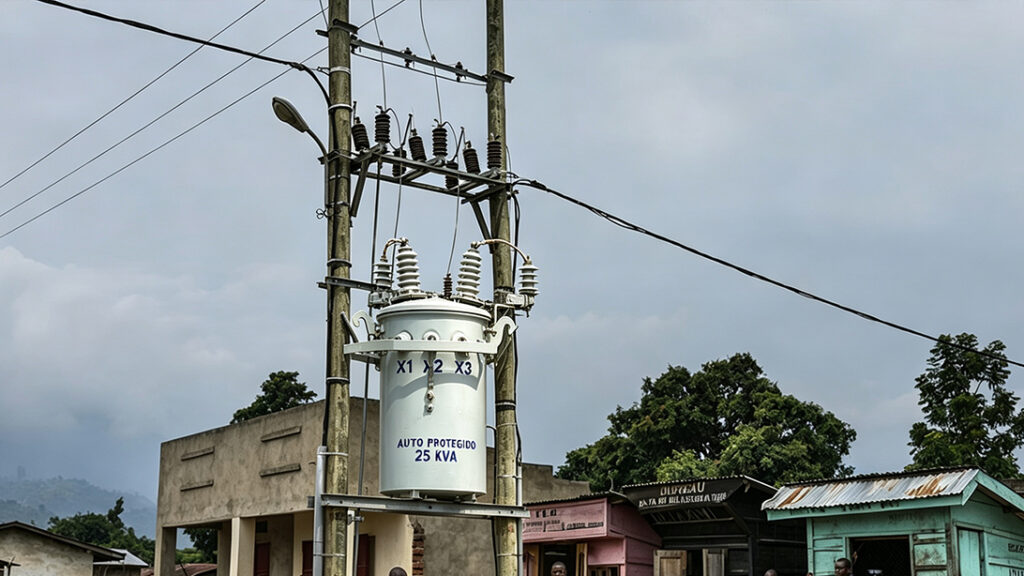
Scenario 1: Electrification of Remote Villages
For villages with only 20-30 households, where electricity is mainly used for lighting, mobile phone charging, and occasionally a small refrigerator, a 10-30kVA single-phase transformer is usually sufficient.
It can be installed on a utility pole at the edge of the village, with low-voltage lines extended outward.
The advantages are clear:
- Lower investment cost
- Faster implementation
- Easier installation
When the load grows in the future, the transformer can be upgraded. The smaller unit can then be relocated to another village and continue serving elsewhere, avoiding wasted investment.
Scenario 2: Solar Water Pump Irrigation
During the daytime, when there is sunlight, the system pumps water. Without sunlight, it stops operating.
However, photovoltaic voltage fluctuations can be significant:
- Morning voltage may only be around 300V
- Midday voltage can rise to 500V or more
Ordinary transformers may struggle with this level of fluctuation.
In addition, when the pump is not operating at night, reducing no-load losses becomes important.
For areas that rely on diesel generators, saving energy means directly reducing operating costs.
Scenario 3: Electric Motorcycle Charging Stations
In many African regions, motorcycles are the main means of transportation. In recent years, electric motorcycles have gradually become more popular.
The charging pattern is usually concentrated:
- People return home in the evening
- Charging starts around 7-8 PM
- Load increases sharply for one or two hours
- Then returns to normal
If a conventional transformer is selected strictly according to rated capacity, it may require upgrading once peak demand increases.
Upgrading means additional investment.
A single-phase transformer generally has good overload capability. Operating at 120% load for two to three hours is possible under suitable conditions, avoiding unnecessary capacity expansion.
Scenario 4: Small Processing Facilities
Facilities such as:
- Grain mills
- Rice processing machines
- Small sawmills
often use single-phase motors.
These motors have very high starting current.
A transformer with lower impedance can reduce voltage drop during motor starting, making motors less likely to malfunction or burn out.
Replacing transformers frequently costs more in maintenance than the original equipment investment.
IV. Using Transformers in Africa Is Not the Same as Using Them in Guangdong
Standard domestic products are usually designed based on an ambient temperature of around 40°C.
However, many African regions experience:
- Long-term temperatures above 45°C
- Strong direct sunlight
- Equipment enclosure surface temperatures reaching 60-70°C
This cannot be solved simply by changing the nameplate.
The following table lists several modifications designed specifically for African operating conditions. Every adjustment comes from lessons learned through actual project experience.
| Modification Item | Why It Needs Adjustment | Specific Measures | Actual Effect |
|---|---|---|---|
| Heat Resistance Design | African regions experience continuous high temperatures. Enclosure surface temperatures can exceed 70°C, causing ordinary insulation materials to age rapidly | Use Class H insulation materials with temperature resistance up to 180°C; design temperature rise 5K lower than IEC requirements; use fully sealed corrugated oil tank cooling structure | Equipment can operate continuously in 45°C environments with extended insulation life; anti-corrosion coatings are available for coastal salt mist areas |
| Amorphous Alloy Core | Rural loads are light, resulting in long no-load periods and high electricity or diesel costs | No-load losses are reduced by 30%-40% compared with conventional silicon steel cores | Actual energy savings depend on local electricity prices, diesel costs, and load curves. The cost difference can typically be recovered within about 2 years |
| Weight Reduction Design | African road conditions are poor, and many locations cannot be accessed by trucks or cranes | Weight reduced by 15%-20% compared with average market products of the same capacity | Lower transportation costs; manual pole installation becomes possible; crane rental costs can be avoided |
| Smart Monitoring Interface | Inspection costs for remote distribution areas are very high | Reserve RS485, Bluetooth, and 4G interfaces; optional communication modules available | No need to install immediately. Remote monitoring can be added later by installing modules without replacing the transformer |
For certification, we also provide full support.
IEC certification is the basic requirement. We can also support export compliance requirements such as:
- Nigeria SONCAP
- Kenya PVOC
- Other country-specific customs clearance certifications
V. The Twenty Villages in Tanzania’s Lake Region
Let me share a project we personally participated in.
The project was located in the Lake Victoria region of Tanzania, on the western side of the lake.
There were:
- 20 scattered villages
- More than 1,500 households
- No existing electricity supply
It was not that nobody had considered the project.
The local utility company had already developed a plan:
Build a 30km three-phase medium-voltage line into the area and install transformers along the route.
It was the standard approach.
But after cost calculation, the project was put on hold.
The reason was simple:
The budget was insufficient.
The project remained suspended for more than one year.
When the project restarted, the approach changed.
A consultant suggested:
“Why not try a single-phase two-wire system?”
To be honest, everyone was uncertain at first. Some people felt it might be a compromise solution.
But the reality was that there was simply not enough budget to continue with the original plan.
So the project moved forward with a new approach.
The final solution:
- Single-phase two-wire system
- Ten distribution points installed along the route
- Two sets of 50kVA amorphous alloy single-phase transformers at each point
- V-V connection configuration
- Nearby villages connected through low-voltage lines from each distribution point
And then:
The villages received electricity.
Six months later, during the follow-up inspection, we collected operating data.
The measured voltage remained stable between:
215V-228V
Under the previous three-phase solution calculation, maintaining even 200V at the far end of the network was still uncertain.
📊 Actual Project Measurement Data
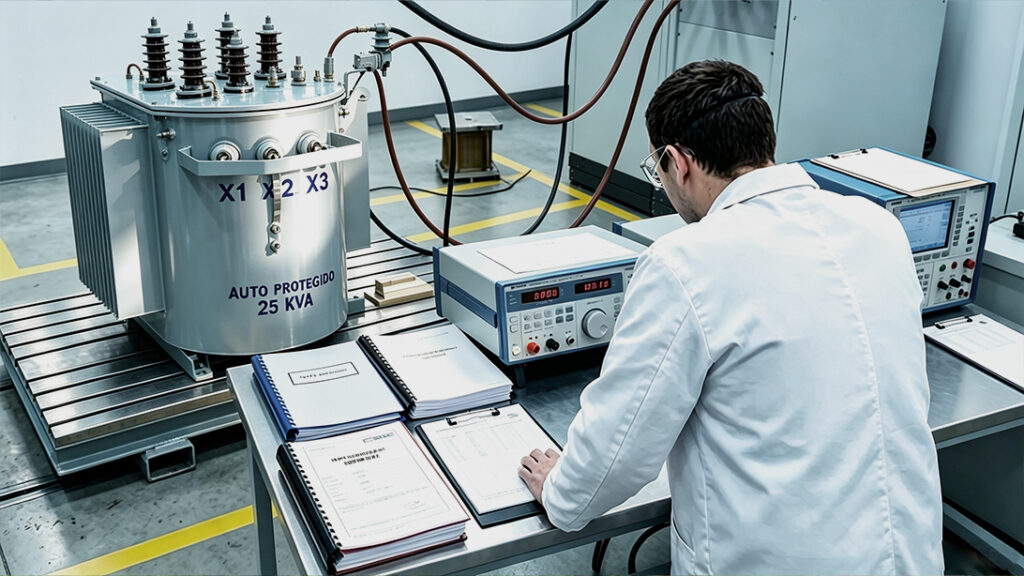
Location: Western Tanzania, west of Lake Victoria
Coverage: 20 villages, approximately 1,500 households
Solution: Single-phase two-wire system + 10 distribution points. Each point was equipped with two units of 50kVA amorphous alloy single-phase transformers (V-V connection).
Investment Savings: According to the preliminary project investment assessment, compared with the original three-phase solution, the investment cost was reduced by approximately 50%.
Construction Schedule: The project duration was shortened by 4 months compared with the original plan.
End Voltage: 215-228V (the original three-phase solution was estimated to drop below 200V at the far end).
With reasonable planning of distribution points and shorter low-voltage supply distances, line losses can be significantly reduced.
Operating Period: 6 months (based on follow-up operation data)
Of course, the project did not go smoothly from beginning to end.
The early coordination process was quite challenging. The local construction team had never installed single-phase transformers before. During the first lifting operation, they actually connected it in the wrong direction — the high-voltage side and low-voltage side were reversed.
Our engineer stayed on site for two weeks and supervised the entire process from the beginning. After that, the installation gradually became smooth.
This kind of incident does not look good in a project report, but it really happened.
After the project was put into operation, this solution also attracted attention from power planning personnel in surrounding areas. They are now considering whether a similar approach can be adopted.
Whether it can be replicated depends on each location’s specific conditions. But at least this project proved that:
This approach is not a dead end.
VI. Frequently Asked Questions
Can a single-phase transformer be connected to a three-phase grid?
Yes.
Two single-phase transformers can form a three-phase supply through a V-V connection.
Alternatively, they can also be installed separately on a single-phase distribution line.
Can it be used in off-grid solar systems?
Yes.
It can be directly connected with inverters for solar power applications.
How is after-sales service handled?
We have spare parts warehouses in:
- Kenya
- Nigeria
- South Africa
and cooperate with local service teams.
During the warranty period:
- Remote response within 72 hours
- Replacement equipment delivered to site within 7 working days
After the warranty period, we continue to provide support with lifetime technical assistance.
VII. Key Points to Consider During Selection
The required capacity and transformer material depend on each specific project.
The following table provides common application scenarios and recommended solutions for reference:
| Project Scenario | Recommended Capacity Range | Recommended Core Material | Selection Reason |
|---|---|---|---|
| Remote village with 20-30 households, lighting + mobile charging | 10-30kVA | Amorphous alloy preferred | Low load and long no-load periods. Amorphous alloy provides significant energy-saving benefits |
| Solar water pump irrigation, operating during daytime and idle at night | 20-50kVA | Amorphous alloy preferred | Full load during daytime and no-load operation at night. Low no-load losses provide better efficiency |
| Electric motorcycle charging station, concentrated evening peak charging | 30-50kVA | Silicon steel three-dimensional wound core | Under suitable design conditions, it provides better short-term overload operation capability |
| Small processing factory with frequent single-phase motor starts | 30-100kVA | Silicon steel three-dimensional wound core | High starting current requirements. Low impedance design reduces voltage drop and protects motors |
| Large village or small commercial area with relatively balanced load | 50-100kVA | Depends on load rate | High load rate: silicon steel core. Low load rate: amorphous alloy core |
There are also several general recommendations:
7.1 Do Not Select Capacity Too Tightly
Based on the calculated maximum load, add around 20%-30% capacity margin.
Running a transformer at full load continuously will significantly reduce its service life. Replacing equipment earlier is far more expensive than adding sufficient margin at the beginning.
7.2 Confirm Voltage Levels Before Ordering
African medium-voltage systems vary:
- 11kV
- 33kV
The single-phase low-voltage system is usually 230V.
Before placing an order, always confirm the:
- System voltage
- Network requirements
A wrong voltage specification can delay the entire project schedule.
7.3 Determine Installation Method in Advance
Decide early:
- Pole-mounted or ground-mounted
- Coastal or inland environment
- Whether anti-corrosion protection is required
Finalize these details before manufacturing to avoid installation problems at the project site.
7.4 Smart Monitoring Depends on Project Scale
For:
- Large projects
- Remote projects
it is recommended to include monitoring functions from the beginning.
For small projects, the system can be upgraded later if needed.
That is roughly the key information.
We have extensive experience delivering projects in Africa, and we can customize solutions according to project-specific:
- Climate conditions
- Grid conditions
- Load characteristics
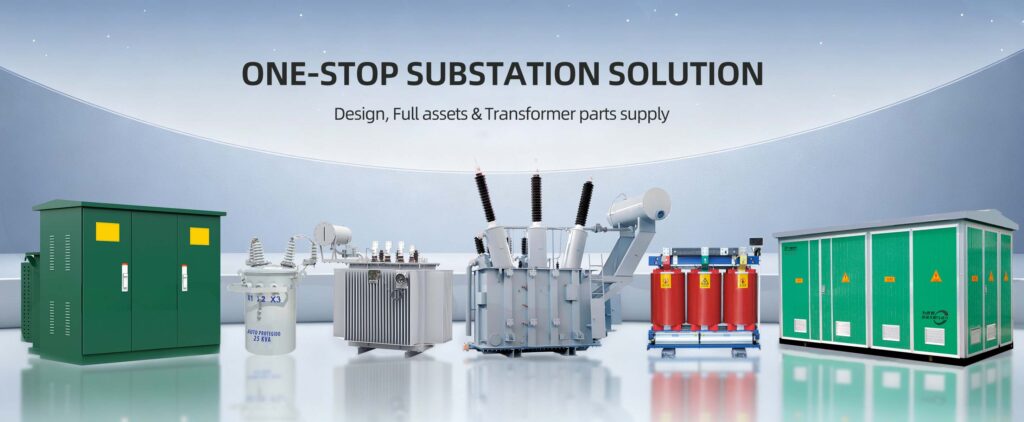
Our products include:oil-immersed transformers, substation transformers, pad-mounted transformers, pole-mounted transformers, dry-type transformers, and other power distribution equipment. We also provide system solutions covering the entire process from equipment selection to operation and maintenance.The company owns 22 utility model patents and 3 software copyrights, and has passed ISO9001 and ICE audits.
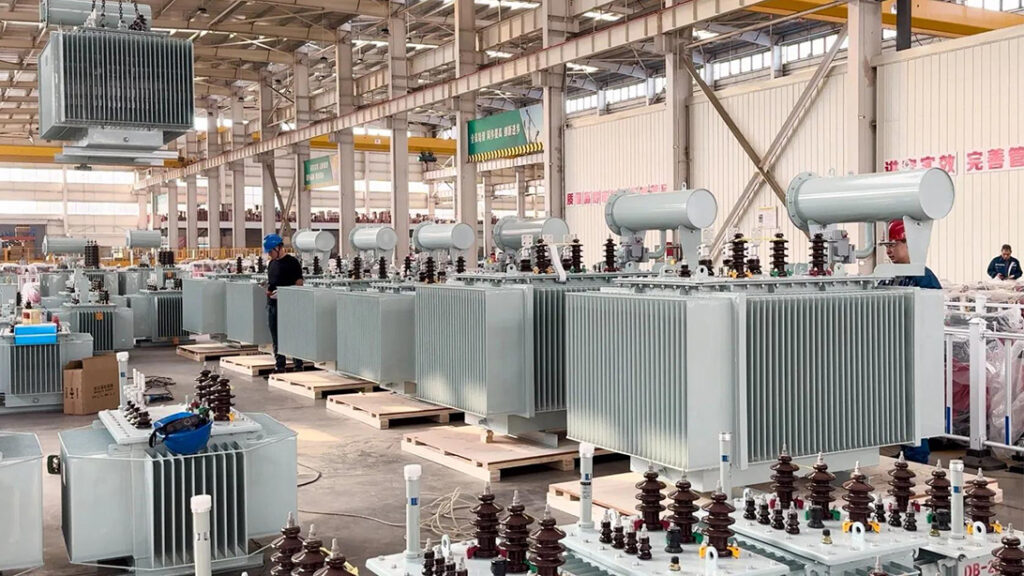
If you are currently developing African rural electrification projects, solar microgrids, or power distribution projects, we can provide:
- Transformer selection calculations
- Technical specification support
- Export certification documents
Free of charge.
For projects like these, the more carefully the details are considered in the early stage, the fewer problems will occur later.
Wish you success.
About ZISHENG ELECTRICAL
Zisheng are a professional 19+ years manufacturer in producing Oil-Immersed Transformers, Compact Substation, Pad Mounted Transformers, Pole Mounted Transformers and Dry Type Transformers. We own the certificates of ISO/CE/IEC 60076 and TUV Rheinland.
Transformers undergo rigorous FAT and type testing, support voltage/capacity customization. Welcome to consult for Catalog and Product. you can contact us at email [email protected].