Saudi Arabia Solar Transformer Selection Guide: Design for High-Temperature PV Projects

Last year, after we completed the overall delivery of package substations for a 300 MW solar project in the Al Khafji region of Saudi Arabia, the site supervisor made a comment that stayed with me:
“The temperature-rise curve of this batch of solar transformers is actually flatter at 50°C than what was stated in the tender documents.”
Behind that comment were more than forty days of high-temperature commissioning, three rounds of design optimization, and countless technical clarifications with the project owner. I have整理这些经验 here to provide a practical reference for engineers and project teams currently working on solar projects in the Middle East.
1. Special Requirements for Step-Up Transformers in Saudi Solar Projects
Large-scale solar power plants in Saudi Arabia commonly use either a central inverter + centralized step-up configuration or a string inverter + centralized step-up configuration.
In both cases, the step-up transformer is installed between the inverter AC output and the grid connection point, increasing the voltage from 690 V or 1,140 V to 33 kV or 110 kV.
The transformer rating itself is usually not the most difficult part of the selection process. The real challenge comes from several local operating conditions and project requirements that directly affect transformer design:

Ambient temperature: IEC 60076 is based on a maximum ambient temperature of 40°C under normal service conditions, while extreme summer temperatures at inland Saudi project sites can reach around 52°C, particularly in areas near Riyadh. Transformer capacity therefore needs to be rechecked against the specified 65°C or 75°C temperature-rise limits and the actual site ambient conditions.
Overload capability: The load profile of a solar power plant differs from that of a conventional industrial load. During periods of high solar irradiation around midday, the transformer may operate at sustained high load for several hours. Whether a short-duration overload capability of 1.1 or 1.2 times rated load is required should be verified against the project specification, ambient temperature and the thermal model defined in IEC 60076-7. It should not simply be copied from the overload assumptions used for a conventional distribution transformer.
Short-circuit impedance: The impedance of a 33 kV solar step-up transformer should be determined together with the short-circuit capacity at the grid connection point, the fault-current characteristics of the inverter and the interrupting capability of the switchgear. Higher impedance helps limit fault current, but it also affects voltage regulation. The final impedance value should therefore be confirmed through the project short-circuit study rather than selected as an isolated transformer parameter.
Degree of protection: The required IP rating for outdoor package substations and control cabinets should follow the project technical specification. In desert environments, the IP rating alone does not tell the whole story. Door sealing, ventilation filters, anti-condensation measures inside control boxes and the actual heat-dissipation capability of radiators after sand accumulation all need to be considered.
2. Transformer Selection Reference for Solar Plants of Different Sizes
The following configurations are anonymized references based on previous Zisheng Electric project solutions. They should not be treated as a standard design for all Saudi solar projects. The final configuration depends on the inverter block size, DC/AC ratio, collector-system voltage and grid-connection scheme.
| Solar Plant Capacity | Inverter Output Voltage | Step-Up Arrangement | Transformer Rating per Unit | HV-Side Voltage | Vector Group | Cooling Method | Typical Quantity |
|---|---|---|---|---|---|---|---|
| 50–80 MW | 690 V | Single-stage step-up | 3.15 MVA | 33 kV | Dyn11 | ONAN | 18–22 units |
| 100–200 MW | 1,140 V | Single-stage step-up | 4.5 MVA | 33 kV | Dyn11 | ONAN | 30–40 units |
| 300–500 MW | 1,140 V | Single-stage step-up | 6.3 MVA | 33 kV | Dyn11 | ONAN / ONAF | 55–75 units |
| 600 MW–1.2 GW | 1,140 V | Two-stage step-up | 6.3 MVA (first stage) / 150 MVA (second stage) | 33 kV / 110 kV | Dyn11 / YNd11 | ONAF / OFAF | 100–160 units + 2–4 main transformers |
A few points need to be clarified.
A single-stage step-up arrangement means the inverter output is stepped directly to the grid-connection voltage, typically 33 kV or 110 kV.
A two-stage step-up arrangement means the inverter output is first stepped up to a 33 kV collector system within the solar plant. The collected power is then transferred through a main power transformer and stepped up again to 110 kV or 220 kV for transmission to the grid.
Large Saudi solar projects, particularly those approaching the gigawatt scale, commonly use a two-stage step-up architecture to reduce collector-system losses and support centralized grid connection. In this arrangement, the second-stage main transformer may also require an on-load tap changer (OLTC) to manage grid-voltage variation between daytime generation peaks and lower-output periods.

3. Where the Three Common Transformer Types Fit
Three technical routes are currently used in Saudi solar projects, each with a fairly clear application boundary.
1. Oil-Immersed Transformers (ONAN/ONAF)
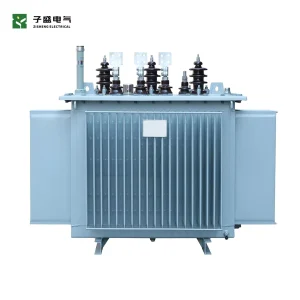
These remain the main choice for large-scale solar projects in Saudi Arabia and account for more than 80% of our supplied units. Their advantages are straightforward: strong overload capability, controllable cost and a mature maintenance system.
For desert solar projects, the points that deserve more attention are the tank sealing structure, high-temperature resistance of sealing materials, protection of accessories and the risk of oil leakage after repeated long-term thermal cycling. Control cabinets and terminal boxes should use the appropriate IP or NEMA protection level specified by the project.
On one project last year, conventional sealing rings were selected to reduce cost. After three months of operation, sand and dust entered the transformer oil, and the dielectric dissipation factor increased from 0.3% to 1.2%. The affected units had to be reworked across the site. In the end, the cost was roughly three times higher than using better sealing materials from the start.
2. Dry-Type Transformers (Cast Resin)
Dry-type transformers are suitable for indoor switching stations or step-up points close to residential areas, where fire safety is a priority and an oil containment pit is undesirable.
The limitation is thermal performance. At an ambient temperature of 50°C, the cooling capability of a dry-type transformer can drop noticeably. For the same project load, a higher transformer rating may therefore be required—for example, a 4.5 MVA load may require a 5.5 MVA dry-type unit depending on the specified temperature-rise limits and installation conditions.
Epoxy resin also faces accelerated ageing risks under sustained high temperature and strong ultraviolet exposure. Outdoor installations therefore require suitable shading or enclosure protection, which adds another layer of civil and installation cost.
3. Natural Ester-Insulated Transformers
Over the past two years, some higher-specification Saudi projects, including developments associated with NEOM, have started specifying natural ester insulating fluids.
Natural ester has a fire point above 300°C, is biodegradable and can offer advantages in insulation ageing performance compared with conventional mineral oil.
The trade-off is supply chain and cost. There are still relatively few manufacturers in China that can consistently supply natural ester solar transformers for large project requirements. Lead times are commonly six to eight weeks longer than for conventional mineral-oil units, while prices may be around 25%–30% higher.
Unless the owner has a clear sustainability, fire-safety or environmental certification requirement, we would normally treat natural ester as an alternative option rather than the default recommendation.
4. Three Interface Issues Often Missed in Saudi Solar Project Specifications
① Tap Range Should Not Simply Follow the Standard Configuration
② The Earthing Method of the 33 kV System Must Be Confirmed During the Design Stage
③ Guaranteed Loss Values Must Be Written into the Technical Agreement and Verified During FAT
5. Actual Operating Feedback from Zisheng Electric Projects in Saudi Arabia
Across four solar projects already commissioned in Saudi Arabia, with a combined capacity of approximately 1.2 GW, we have collected several operating observations from the installed solar transformers that are worth sharing.
Temperature-rise margin: Transformers designed around a 65 K temperature-rise limit recorded top-oil temperatures of approximately 92–95°C under full-load operation at an ambient temperature of 52°C, leaving reasonable margin below the 105°C alarm threshold.
Two manufacturing details had a noticeable influence on the thermal result: the winding oil-guiding structure and the spacing between panel radiators.
If the radiator spacing is too narrow, sand accumulation can restrict airflow. If it is too wide, the available heat-dissipation area becomes insufficient for the same installation footprint. After three design iterations, we settled on a radiator spacing of approximately 45 mm for this project configuration.

Accessory reliability: Components such as gas relays, pressure relief devices and oil level gauges tend to see a much higher failure rate under Saudi high-temperature conditions than in our domestic projects. We now use all-stainless-steel housings as standard for these accessories, and all sealing rings have been upgraded to FKM fluoroelastomer. The additional cost is about 2%, but the accessory replacement rate has dropped from roughly 12% in our early projects to below 1%.
Transport and site positioning: The final inland transport leg for Saudi projects—typically from Dammam Port to the project site—can be demanding because road conditions are not always ideal.
Our current practice is to transport the transformer tank under 0.02–0.03 MPa of dry nitrogen pressure. After the unit is positioned on its foundation, we allow it to stand for at least 48 hours before oil filling, giving any fine particles disturbed during transport enough time to settle.
It may look like a conservative procedure, but it has helped us avoid two additional rounds of on-site oil filtration.

6. Configuration Recommendations for the Saudi Market
If you are currently preparing a transformer tender or carrying out a technical review for a Saudi project, the following points may be useful.
Do not size the transformer right at the calculated limit: Selecting a transformer at exactly 1.0 times the calculated load leaves very little operating margin. For Saudi projects, we generally recommend considering a sizing factor of around 1.15–1.20, subject to the actual project specification and thermal study.
Many projects specify a design ambient temperature of around 45°C. In practice, however, the most demanding condition often occurs between 2:00 and 4:00 p.m., when solar irradiation is strongest, inverter output is close to its peak, and ambient temperature is also at its highest. This is a typical coincident operating condition. If the thermal margin is too small, the transformer may have to operate at a reduced load.
HV bushing creepage distance: Creepage distance for Saudi projects should not be selected simply on the basis of the country name. Coastal salt-fog areas, desert dust zones and industrially polluted locations can have very different contamination conditions.
External insulation should therefore be selected according to the actual site pollution severity and the principles of IEC 60815. For 33 kV systems, we recommend defining the bushing creepage distance, shed material and pollution-level design basis clearly during the technical agreement stage.
Communication interface protocol: SEC requires intelligent transformer signals—including oil temperature, winding temperature, gas relay status, pressure and tap position—to be transmitted to the station-control level through IEC 61850 GOOSE communication.
The IED model and protocol-stack version should therefore be confirmed early in the project. If this is left until commissioning, an additional protocol-conversion gateway may be required, adding both cost and another interface that has to be tested.
Spare strategy: For critical projects, we recommend keeping one spare transformer of the same design on site, or at minimum a spare active-part assembly consisting of the windings and core.
For Saudi projects, the period from identifying a serious transformer problem to receiving a replacement unit from China can easily exceed 45 days once manufacturing preparation, sea freight and customs clearance are included. The revenue loss during an extended outage may be far greater than the purchase cost of one spare transformer.
A solar step-up transformer is not usually the most expensive piece of equipment in a photovoltaic power plant, but it can become one of the most costly components when it fails.
An unplanned outage can affect plant availability, grid-compliance performance and project revenue. For that reason, we prefer to treat the transformer as a long-term piece of equipment that has to be adapted to the local environment rather than simply supplied according to a standard catalogue design.
From the selection of electrical-steel grade and the control of insulating-oil properties to the UV resistance of the external coating system, each design detail needs to be reviewed against Saudi operating conditions. Some unnecessary margins can be removed, while weak points exposed by the local environment need to be strengthened.
Zisheng Electric can support transformer selection, technical-deviation review, manufacturing documentation, FAT and export delivery coordination based on the project technical specification, SLD and actual site conditions.
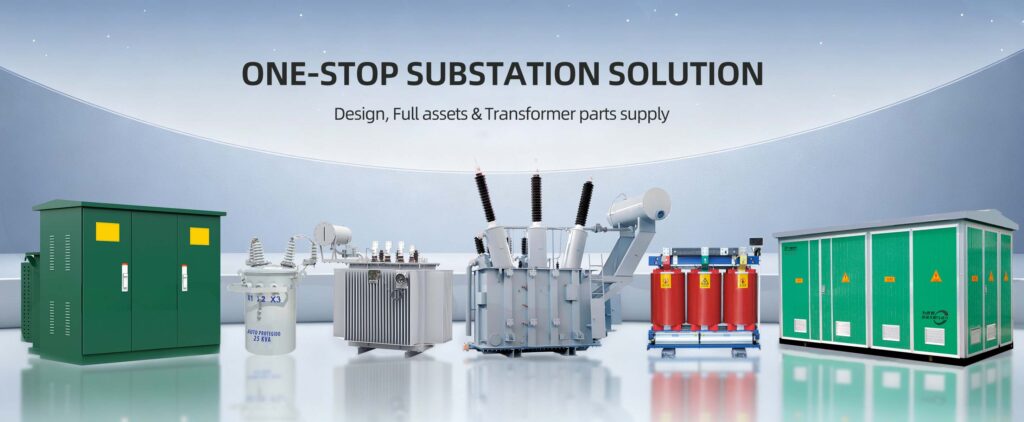
Our product range includes Oil-Immersed Transformers, Pad Mounted Transformers, Pole Mounted Transformers , Dry Type Transformers,and related power distribution equipment.
If you are working on a specific Saudi project and are unsure about a transformer selection or technical requirement, send us the project parameters and we can review them directly. Some engineering issues are resolved much faster through a focused technical discussion than through another round of document revisions.
Our engineering team responds to project inquiries within 24 hours.
About ZISHENG ELECTRICAL
Zisheng are a professional 19+ years manufacturer in producing Oil-Immersed Transformers, Compact Substation, Pad Mounted Transformers, Pole Mounted Transformers and Dry Type Transformers. We own the certificates of ISO/CE/IEC 60076 and TUV Rheinland.
Transformers undergo rigorous FAT and type testing, support voltage/capacity customization. Welcome to consult for Catalog and Product. you can contact us at email [email protected].