Saudi Arabia Transformer Selection Guide For 50°C Heat

Saudi Arabia Transformer Selection Guide for 50°C High-Temperature Environments
Saudi Arabia Transformer Selection Guide for 50°C High-Temperature Environments
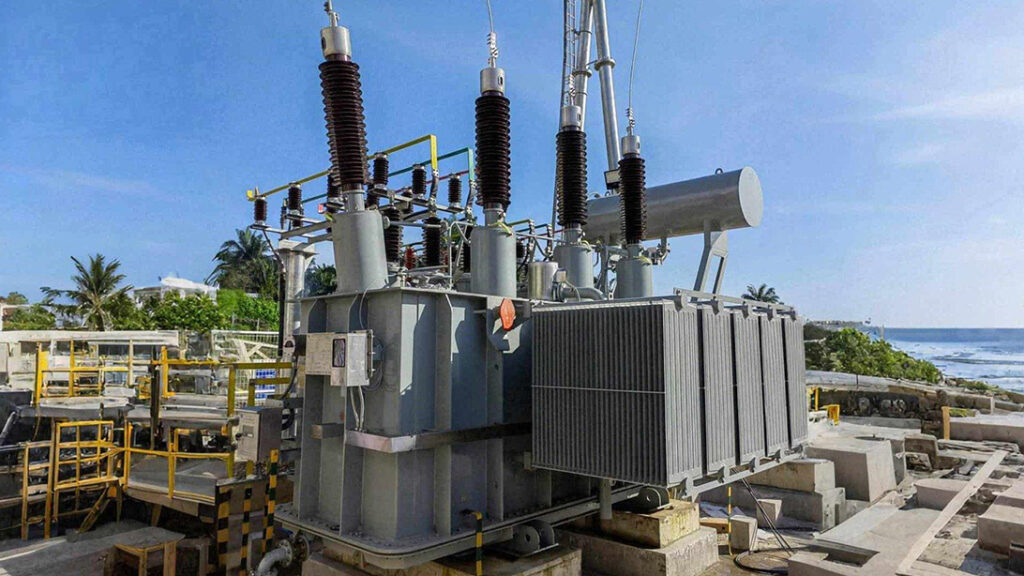
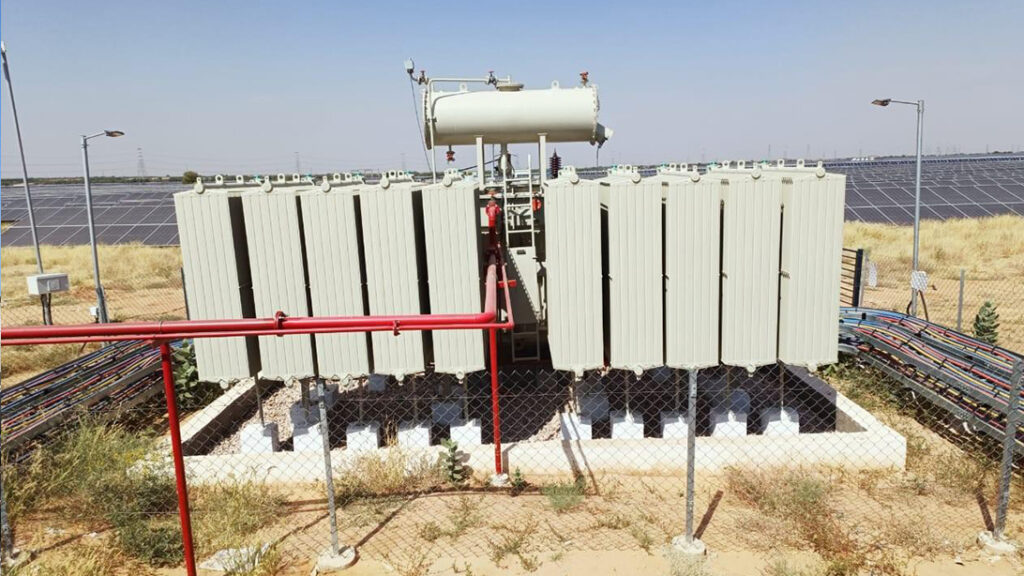
1Oil Immersed Power Transformer Operating in Saudi Arabia Desert Environment

I am a technical engineer at Zisheng Electric and have worked in the transformer industry for more than ten years, supporting a wide range of domestic and overseas projects. Over the past few years, while working on projects in the Middle East, I have noticed a recurring issue: many EPC projects have clearly written transformer specifications, and the factory test reports are fully compliant, yet after two or three years of operation, problems such as high oil temperature, reduced cooling efficiency, and accelerated insulation aging gradually begin to appear.

In many cases, the root cause can be traced back to an insufficient assessment of the actual site environment during the early project stage.

Last year, we participated in a power distribution upgrade project at an industrial park in eastern Saudi Arabia, supplying seven 2500 kVA oil-immersed transformers. Based on that project experience, I have summarized some practical considerations for transformer selection in Saudi Arabia’s high-temperature environment for industry reference.

1. Saudi Arabia’s Environment Cannot Be Fully Covered by a “40°C Standard”

Under the IEC 60076 series, transformer service conditions are generally based on a maximum ambient temperature of 40°C. However, daytime temperatures in Saudi Arabia often exceed 50°C during summer. When transformers are installed outdoors without shading, direct afternoon solar radiation can raise the transformer tank surface temperature well above the surrounding air temperature.

The difference between standard conditions and actual site conditions is not simply a matter of several degrees.

According to the theory of thermal aging of transformer insulation, an increase in winding hot-spot temperature can significantly accelerate insulation aging. As temperature rises, insulation life can decrease exponentially. If a transformer designed around an average ambient temperature of approximately 20°C is placed directly into a 50°C desert environment without proper design adjustments, its expected service life of several decades may be substantially reduced.

2. Several Key Factors Must Be Considered During Transformer Selection

1. The Ambient Temperature Design Basis Must Be Adjusted

The temperature-rise limits specified in IEC standards are based on defined service conditions, including a maximum ambient temperature of 40°C. If this basis is applied directly to a Saudi project without adjustment, the available thermal margin may be insufficient.

In actual projects, many Saudi owners specify that transformers must be designed for an ambient temperature of 55°C.

2. The Insulation System Should Be Upgraded

A conventional Class A insulation system may provide limited thermal margin under demanding Saudi operating conditions. For the project mentioned above, we adopted a Class F insulation system. Today, some Saudi projects specify Class H insulation or higher-temperature aramid insulation materials.

These materials provide greater thermal resistance and additional safety margin under high ambient temperatures.

Saudi projects are typically designed in accordance with the IEC 60076 series, together with applicable SASO requirements and project-specific technical specifications. For oil-immersed transformers, the allowable top-oil temperature rise may be specified at 55 K, depending on the project requirements.

Meeting the specified thermal performance during testing is therefore an important part of project acceptance and compliance.

3. The Cooling System Needs Additional Margin

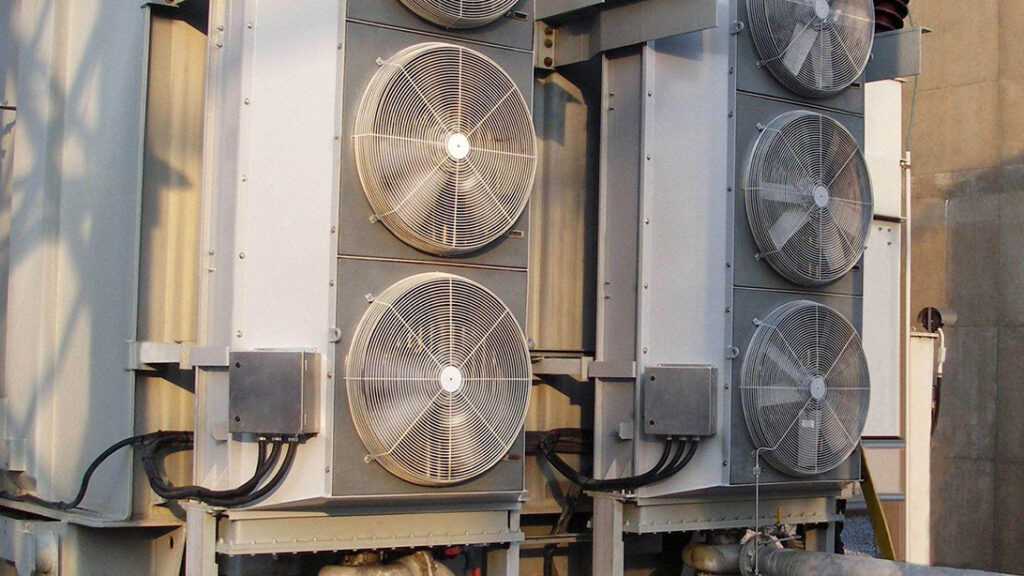
2 Transformer heat dissipation system design under high temperature environment、

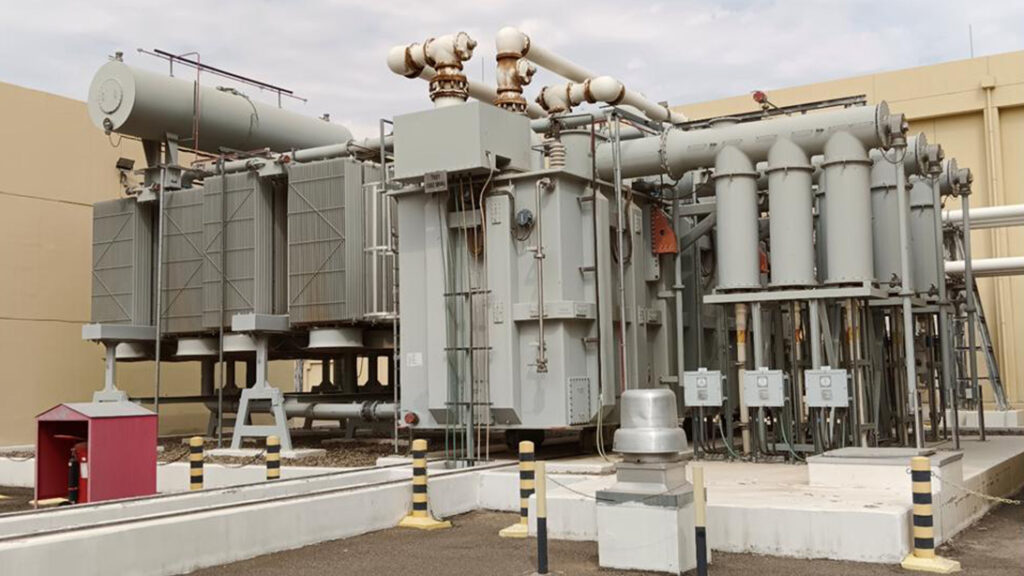
As the ambient temperature rises, the temperature difference between the radiator and the surrounding air becomes smaller, which naturally reduces heat dissipation efficiency. Under Saudi operating conditions, the cooling area used in a conventional transformer design is often insufficient.

Our approach is to increase the radiator surface area by more than 30% compared with a conventional design. For medium- and large-capacity transformers, ONAF (Oil Natural Air Forced) cooling is a common option. Compared with ONAN (Oil Natural Air Natural) cooling, it can increase the available loading capability by approximately 30% to 50%, depending on the transformer design and operating conditions.

For higher-capacity units with greater cooling requirements, OFAF (Oil Forced Air Forced) cooling may be required.

4. Corrosion Protection and Sealing Must Not Be Overlooked

3 Transformer corrosion protection design in coastal salt spray environment

Saudi Arabia is not only hot. Coastal areas along the Red Sea and the Arabian Gulf are exposed to severe salt-spray corrosion, while inland regions frequently experience sandstorms. Under these conditions, ordinary paint coatings may blister or peel within only a few months.

For outdoor transformer enclosures, we typically recommend hot-dip galvanizing combined with a C5-M corrosion protection coating system. Sealing components should use Viton fluoroelastomer, helping prevent fine sand and dust from entering the transformer and contaminating the insulating oil.

5. Grid Frequency Is Easy to Overlook

The grid frequency in Saudi Arabia is 60 Hz, not 50 Hz. Frequency directly affects transformer core losses, including hysteresis loss and eddy-current loss.

A transformer originally designed for 50 Hz may not fail immediately when connected to a 60 Hz system, but its magnetic design and loss performance may no longer match the intended operating conditions. For transformers designed specifically for Saudi Arabia, the magnetic flux density should therefore be recalculated during the design stage, with high-permeability grain-oriented electrical steel selected to ensure low-loss operation at 60 Hz.

3. Reference Comparison of Key Selection Parameters

The table below summarizes the differences between a conventional IEC-based design and a transformer design adapted for Saudi Arabia’s high-temperature environment, based on our experience from multiple projects.

Selection Parameter IEC Standard Design (40°C Basis) Saudi High-Temperature Design (50–55°C Basis)
Ambient Temperature Basis 40°C 50°C–55°C
Temperature Rise Limit (Oil / Winding) 65 K (60) / 65 K 55 K / 55 K, or stricter
Insulation Class Class A (105°C) Class F (155°C) or Class H (180°C)
Radiator Surface Area Standard configuration Increased by more than 30%
Cooling Method ONAN for small and medium capacities ONAF or OFAF for medium and large capacities
Corrosion Protection Standard industrial coating Hot-dip galvanizing + C5-M coating system
Sealing Material Nitrile rubber Viton fluoroelastomer
Frequency Design General 50 Hz or 60 Hz design Magnetic circuit specifically optimized for 60 Hz
Reference Standards IEC 60076 IEC 60076 Series / SASO IEC 60076 Series / Project or SEC Specification

Transformer requirements for the Saudi market cannot be met simply by supplying a standard model designed for conventional operating conditions. Ambient temperature, grid frequency, salt-spray corrosion, and sand ingress can all affect the transformer’s actual performance and long-term reliability on site.

For the project in eastern Saudi Arabia mentioned earlier, all seven transformers were recalculated for temperature rise and cooling performance based on a 55°C ambient temperature. The insulation system was upgraded to Class F, radiator surface area was increased by nearly 40%, and the enclosure was treated with a C5-M corrosion protection system.

The transformers have remained in normal operation since commissioning, with both oil temperature and winding temperature maintained within controlled limits.

4 Transformer Application Cases in Saudi Industrial and New Energy Projects

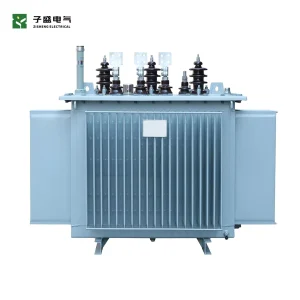
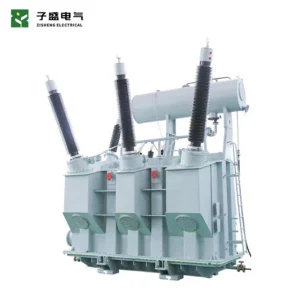
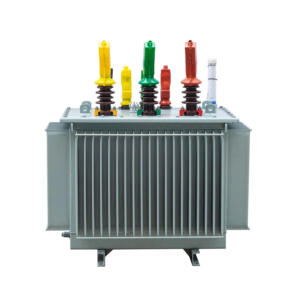
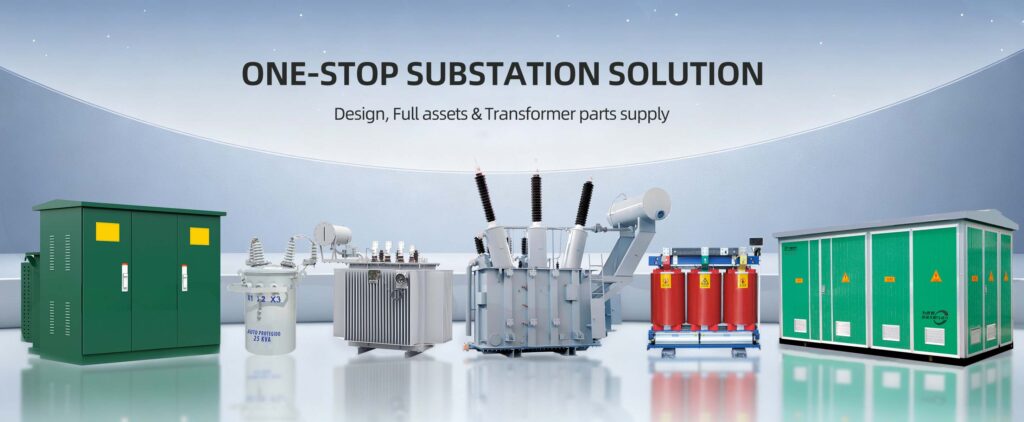
Zisheng Electric has long been involved in projects across the Middle East, Africa, and South America, providing EPC contractors, project owners, and engineering consultants with support in transformer selection, technical documentation, and manufacturing coordination. Our product range includes Oil-Immersed Transformers, Pad Mounted Transformers, Pole Mounted Transformers and Dry Type Transformers.We support IEC-compliant design, Factory Acceptance Testing (FAT), and third-party inspection and supervision.

For projects in Saudi Arabia, the technical specification is only the starting point. The real challenge is to identify the gap between standard requirements and actual site conditions, then address that gap properly in the transformer design.

About ZISHENG ELECTRICAL

Zisheng are a professional 19+ years manufacturer in producing Oil-Immersed Transformers, Compact Substation, Pad Mounted Transformers, Pole Mounted Transformers and Dry Type Transformers. We own the certificates of ISO/CE/IEC 60076 and TUV Rheinland.
Transformers undergo rigorous FAT and type testing, support voltage/capacity customization. Welcome to consult for Catalog and Product. you can contact us at email [email protected].
+86-191-3128-5373 +86-191-3128-5373 [email protected]