Трансформатор для водоочистной станции в Северной Африке: запуск насосов, гармоники частотно-регулируемого привода и резервное питание
Zisheng Electric approaches a water treatment plant transformer as part of the process system rather than as a stand-alone electrical purchase. A municipal or industrial treatment facility combines large pumps, variable-frequency drives, intermittent backwash loads, chemical dosing systems, laboratory equipment, ventilation, lighting and emergency services. The transformer must support those loads through normal operation, plant expansion, generator transfer and maintenance conditions without allowing voltage performance or thermal limits to become hidden constraints.
This engineering guide is intended for EPC contractors, plant owners, consulting engineers and procurement teams preparing transformer requirements for water and wastewater projects in North Africa and other dry, coastal or high-temperature regions. It does not prescribe a national utility voltage or one universal arrangement. The incoming network parameters, earthing method, protection philosophy and approval requirements must be confirmed with the project utility before equipment is released.
Why a Water Treatment Plant Transformer Needs a Process-Based Load Study
Nameplate kilowatts alone do not define the electrical duty. Intake pumps may start in sequence, filtration trains may alternate, sludge equipment may operate only during a short daily window, and standby units may remain idle until a process upset occurs. If the transformer is sized by adding every motor rating, the result may be unnecessarily large. If diversity is assumed too aggressively, the plant may suffer low voltage, nuisance trips or restricted future capacity.
The load schedule should therefore separate continuous, intermittent, standby and future loads. For each major motor, record rated power, efficiency, power factor, starting method, expected starting current, acceleration time and operating sequence. For variable-frequency drives, include input topology, harmonic data and the operating speed range. The engineer can then compare maximum demand, motor-starting duty and contingency demand as three different cases.
| Ввод данных для проектирования | Engineering question | Влияние трансформатора | Риск в случае пропуска |
|---|---|---|---|
| Normal process demand | Which pumps and treatment trains run together? | Continuous kVA and thermal loading | Chronic overload or excessive oversizing |
| Largest motor start | What voltage dip is acceptable at the motor and bus? | Impedance, tap setting and available short-circuit strength | Failed acceleration or contactor dropout |
| VFD population | What current spectrum and loading profile reach the transformer? | Additional loss, neutral current and thermal margin | Unexpected heating and reduced capacity |
| Standby generator mode | Can the generator energize the transformer and selected loads? | Inrush, switching sequence and protection coordination | Generator instability or failed transfer |
| Future treatment stage | Which civil and process expansion is already planned? | Rating, spare ways and cooling provision | Premature replacement |
| Условия площадки | Are heat, dust, humidity or salt exposure credible? | Cooling, enclosure, coating and maintenance access | Corrosion, blocked cooling or insulation contamination |
Water Treatment Plant Transformer Rating and Operating Margin
The selected rating should be supported by a documented load case, not a generic percentage margin. Continuous plant demand establishes the base duty. The engineer then adds realistic auxiliary loads and the required spare capacity for confirmed expansion. Short-duration motor acceleration must be checked separately because its effect is primarily voltage performance and mechanical acceleration, not only average transformer temperature.
Where process continuity is critical, two transformers with a sectionalized low-voltage bus may offer better maintainability than one larger transformer. The decision depends on whether one unit must carry the essential load after the other is isolated. A true N+1 arrangement requires a defined contingency load list, acceptable emergency loading, bus-tie interlocks and a maintenance operating procedure. Simply installing two equal units does not create redundancy.
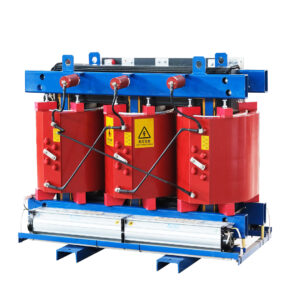
For projects considering oil-immersed equipment, Zisheng Electric can review the duty against a verified 630 kVA oil-immersed distribution transformer configuration or a larger project-specific design. Indoor installations may instead require a трансформатором с сухой изоляцией arrangement, subject to ventilation, fire strategy, acoustic limits and room access.
Motor Starting, Voltage Dip and Pump Acceleration
Direct-on-line and reduced-voltage starts
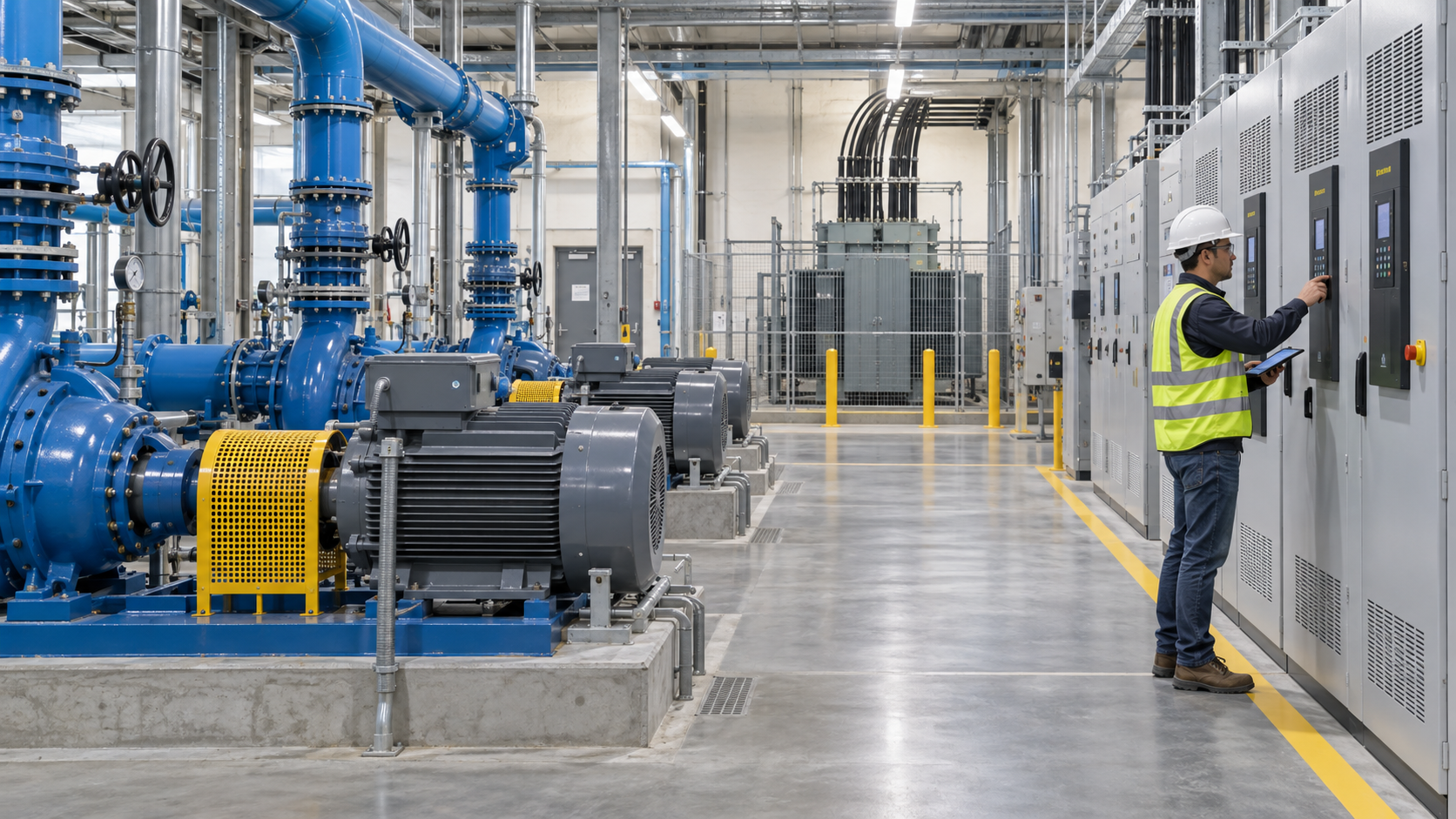
Large pumps can impose a temporary current several times higher than their running current. The actual value depends on motor design and starting method. A direct-on-line start is simple but may create an unacceptable bus-voltage dip. Soft starters reduce electrical and mechanical stress, although the motor still needs sufficient torque to accelerate the pump. A VFD offers controlled acceleration and process control, but it introduces converter losses and harmonics.
The starting study should model the source network, transformer impedance, cable impedance, motor data and the minimum pre-start bus voltage. It should also consider whether another large pump is already running. An apparently acceptable start on a strong utility supply may fail during generator operation or after a future network reconfiguration.
Transformer impedance is a system decision
Lower impedance generally supports better motor-starting voltage, but it also increases prospective fault current. Higher impedance can reduce switchgear fault duty while worsening voltage dip. The correct value must therefore be coordinated with motor acceleration, protection settings, cable ratings and low-voltage switchgear capability. Our guidance on Регулирование напряжения трансформатора для промышленных предприятий Африки explains why tap range and impedance should be reviewed together rather than treated as separate procurement fields.
VFD Harmonics and Transformer Thermal Performance
Modern treatment plants frequently use VFDs on intake, transfer, aeration and high-lift pumps. These drives improve process control and can reduce energy use, but their input current is not perfectly sinusoidal. Harmonic currents increase winding and structural losses and can affect neutral current, cable heating and power-quality performance. The transformer supplier needs more than the total drive kilowatts.
The procurement package should identify the drive type, pulse number or active-front-end arrangement, expected current spectrum, line reactors or filters, diversity and the percentage of transformer loading represented by electronic converters. The system designer should also identify other nonlinear loads such as UPS systems and switched-mode control power supplies. A realistic harmonic study may show that the transformer needs additional thermal margin, a revised winding arrangement or coordinated filtering rather than a simple rating increase.
Measurements during commissioning should be planned before equipment is ordered. Specify the measurement points, loading condition and records required for voltage distortion, current distortion, phase balance and transformer temperature. This creates a usable baseline for maintenance instead of leaving the plant team to investigate power quality only after alarms appear.

Standby Generator and Emergency Operating Modes
Water infrastructure often requires continuity during utility interruptions, but the emergency system rarely carries the full process load. The owner should define the essential sequence: control and communications, chemical dosing, minimum pumping, ventilation, drainage, lighting and any environmental protection equipment. This sequence determines the generator rating, transfer logic and transformer operating mode.
If a generator energizes the transformer from the low-voltage side or through a dedicated emergency bus, inrush and residual flux must be considered. The switching philosophy should prevent unintended parallel operation unless the protection and synchronization scheme is designed for it. Automatic transfer, bus-tie logic, neutral earthing and protection settings need one coordinated cause-and-effect matrix.
The transformer specification should state whether it will remain energized during transfer, be re-energized by the generator, or be bypassed by a separate emergency transformer. Each option changes inrush exposure, cable routing and operational complexity. Factory documentation cannot replace a project switching study, but it should provide the data required by that study.
Dry Climate, Coastal Exposure and Cooling Design
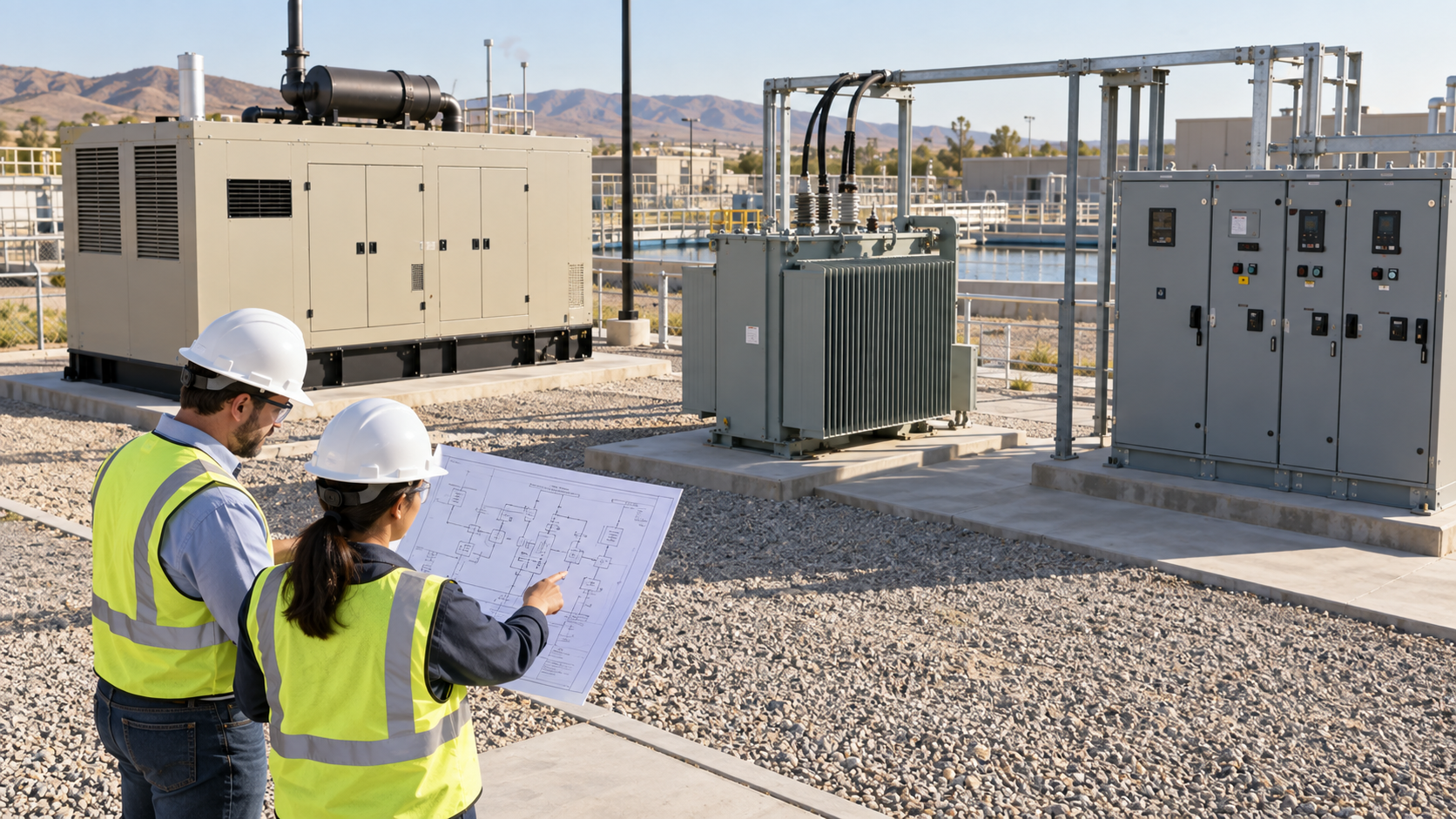
North African projects cannot be reduced to one environmental profile. Inland sites may combine high daytime temperature, dust and large daily temperature variation. Coastal sites may add humidity and salt-laden air. The project data sheet should state the design ambient profile, installation altitude, solar exposure, dust conditions, corrosion category required by the owner and available maintenance intervals. For IEC-aligned procurement, the project specification should also identify the applicable edition of IEC 60076-1 and, for liquid-immersed units, the temperature-rise and cooling requirements referenced from IEC 60076-2 rather than relying on a general statement of compliance.
For an outdoor oil-immersed transformer, check radiator orientation, natural airflow, fan control if used, terminal box sealing, coating system, cable-entry direction and access for cleaning. For an indoor dry-type unit, confirm room heat rejection, air paths, louver placement, filter maintenance and the effect of a failed ventilation fan. The article on a трансформатор для прибрежных районов Западной Африки provides a useful framework for linking corrosion and humidity conditions to inspection and maintenance requirements without assuming that every coastal project is identical.
Protection, Earthing and Process Continuity
Protection coordination should start with the utility interface and continue through the transformer, main switchboard, motor feeders and VFDs. The transformer protection must clear internal faults while allowing motor starts and controlled temporary loading. Earth-fault protection depends on the network earthing method and should not be copied from another project with a different neutral arrangement.
Critical process signals should be mapped into the plant control system with clear alarm priorities. Oil temperature, winding temperature where provided, pressure or gas protection, fan status and trip signals must have defined terminal references and cause-and-effect responses. Spare contacts alone are not an interface design.
Factory Acceptance and Data Required Before Release
A useful factory acceptance plan connects each test or inspection to an approved requirement. Review nameplate data, ratio and vector group, winding resistance, insulation results, loss and impedance data where specified, functional operation of temperature devices, terminal markings, marshalling wiring and dimensional interfaces. The approved general-arrangement drawing should be used for a physical dimensional check before shipment.
For pump-heavy facilities, the FAT dossier should include confirmed impedance, tap positions, accessory ratings, alarm and trip contacts, cooling controls and the data required for the motor-starting and protection studies. Photographs should identify the actual serial number and interfaces. Any deviation must be recorded, assessed and closed before release.
Transport, Installation and Commissioning Readiness
Transport planning is especially important when the treatment site is remote or access roads pass through dense urban areas. Confirm shipping mass, center of gravity, lifting points, dimensions with removable accessories, storage conditions and preservation responsibilities. The installation contractor should receive the approved foundation loads, cable-box details and earthing connections early enough to complete civil and cable works.
Commissioning should verify the installation against the approved drawings before energization. Typical checks include earthing continuity, cable phasing, protection settings, mechanical condition, oil level where applicable, ventilation, control power, alarm circuits and the agreed switching sequence. Baseline temperature and power-quality measurements should be recorded under representative process loading.
Preparing a Water Treatment Plant Transformer Enquiry
A strong enquiry allows the manufacturer to evaluate the real duty instead of quoting a generic transformer. Provide the single-line diagram, utility parameters, transformer data sheet, load list, motor schedule, VFD information, starting study assumptions, short-circuit level, protection philosophy, earthing method, generator sequence, environmental conditions, site layout and transport limits. Drawings should identify cable-entry direction, terminal orientation, civil interfaces and maintenance clearances.
Zisheng Electric can review oil-immersed distribution transformers, power transformers and dry-type transformers for water and wastewater infrastructure. For higher-voltage intake or regional facilities, a project may require a configuration based on a силовым трансформатором 35–46 кВ; local utility approval and project studies remain essential.
To discuss a water treatment plant transformer, send your drawings, data sheets, load list, technical specifications, single-line diagram, grid parameters, environmental conditions and installation-site constraints. Our engineering team will review the requirements and respond to project inquiries within 24 hours.
О компании ZISHENG ELECTRICAL
Жишэнг является профессиональным производителем с более чем 19-летним опытом масляных трансформаторов, Компактная подстанция, Трансформаторы в пневматических установках, полевые трансформаторы и Сухие трансформаторы. У нас есть сертификаты ISO/CE/IEC 60076 и TUV Rheinland.
Трансформаторы проходят строгие испытания FAT и аттестацию типа, поддерживают настройку напряжения/емкости. Добро пожаловать на консультацию по Каталог и Продукт. вы можете связаться с нами по электронной почте [email protected].