Transformer Tap Changer Selection for Mining: African Project Control and Maintenance Options
Voltage conditions at a mine can change substantially between light-load commissioning, motor starting and full production. For that reason, transformer tap changer selection for mining should be based on the network study and operating plan, not a preference for more tap positions. Zisheng Electric treats the tap changer as part of the voltage-control system, with interfaces to the utility source, generators, process loads, protection and maintenance resources.
This guide is written for African mining and mineral-processing projects, but it does not assume one country-wide voltage or utility rule. The purchaser must confirm the connection voltage, frequency, permitted variation and utility interface for the actual site. Local altitude, dust, heat, transport and service access then determine how the selected transformer can be operated and maintained.
Start with the voltage problem to be solved
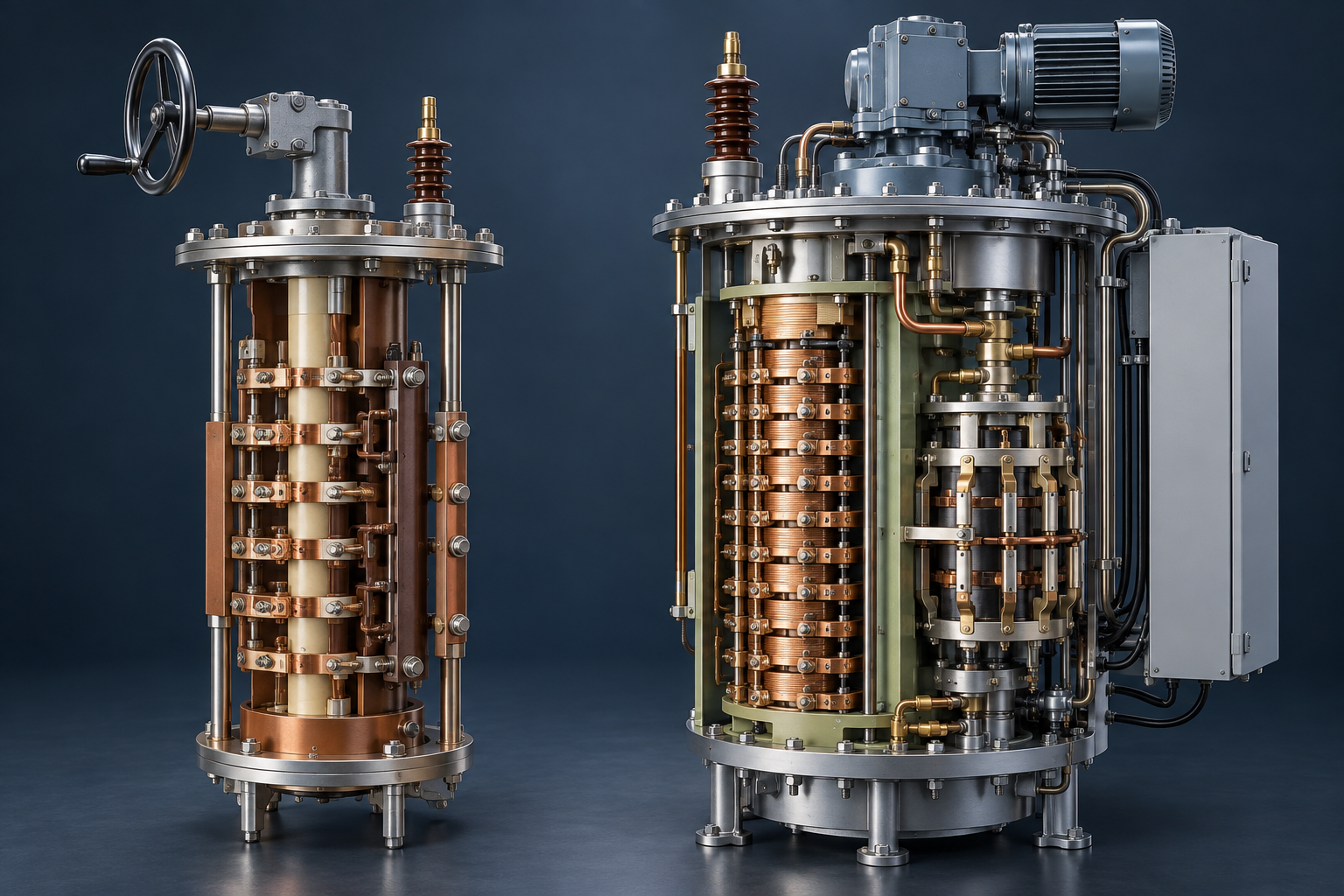
De-energized tap links or an off-circuit tap switch allow ratio adjustment while the transformer is isolated. An on-load tap changer changes ratio while carrying load. The functional difference is important: OLTC equipment can support active voltage regulation, but it adds mechanisms, control equipment, maintenance tasks and operating limits.
First identify whether voltage variation is slow and predictable, whether it follows production load, or whether it comes from generator operation or a weak feeder. If the site can schedule an outage and adjustments are rare, off-circuit selection may be adequate. If process voltage must be regulated through changing load without interruption, an OLTC may be considered after the system study confirms the need.
| Входные данные проекта | Почему это важно | Decision evidence |
|---|---|---|
| Source voltage range and frequency | Defines required ratio correction | Utility data and measured or study profile |
| Process voltage tolerance | Links transformer control to equipment performance | Motor, drive and plant design requirements |
| Load steps and motor starts | Separates dynamic dip from steady regulation | Time-based load list and motor-starting study |
| Generator operating modes | May change source stiffness and control ownership | Island, parallel and transfer scenarios |
| Tap range, step size and rated tap | Sets achievable voltage window | System study across credible conditions |
| Ambient, altitude and dust | Affects insulation, cooling and mechanism enclosure | Confirmed site data, not a regional assumption |
| Maintenance capability and spares | Determines sustainable lifecycle support | Service plan, critical spares and access constraints |
Transformer tap changer selection for mining load profiles
Mining loads are rarely static. Crushers, mills, pumps, hoists, conveyors and ventilation systems can enter service in stages. A voltage problem during acceleration may not be corrected by changing transformer ratio; raising the steady-state secondary voltage can create overvoltage after the motor reaches speed.
Provide the motor starting method, starting current, acceleration time, simultaneous-start assumptions and upstream short-circuit strength. The electrical study should separate transient voltage dip from the slower voltage trend that a tap changer can address. This prevents the OLTC from responding to events outside its intended control timescale.
Define the tap range around real source conditions
A wider range is not automatically better. It can affect winding design, voltage stress, impedance variation and equipment size. The requested range and step size should come from minimum and maximum source-voltage cases, plant voltage limits and reasonable operating margin.
State whether the quoted transformer rating applies throughout the entire tap range and identify any current limitations. Confirm which winding is tapped, the rated tap, the direction of voltage change and terminal designations. Bidders must use the same convention so schedules can be compared without reversing “raise” and “lower.”
If two transformers may operate in parallel, coordinate their ratio, impedance and tap-control philosophy. Independent controllers can drive units to different taps and create circulating current. The project should define master-follower, circulating-current or supervisory control only after confirming compatibility with the offered equipment.
Off-circuit taps: simple equipment, disciplined operation
Off-circuit adjustment still requires a controlled procedure. The transformer must be isolated, secured against energization and handled according to approved instructions by qualified personnel. The tap position should be verified mechanically and electrically before return to service.
For a remote mine, the operational cost is often the outage rather than the switch itself. Review how frequently seasonal or production-related changes are expected. If repeated isolation would disrupt essential loads, compare system alternatives such as voltage regulation elsewhere in the network before selecting an OLTC by default.
OLTC interfaces and maintenance planning
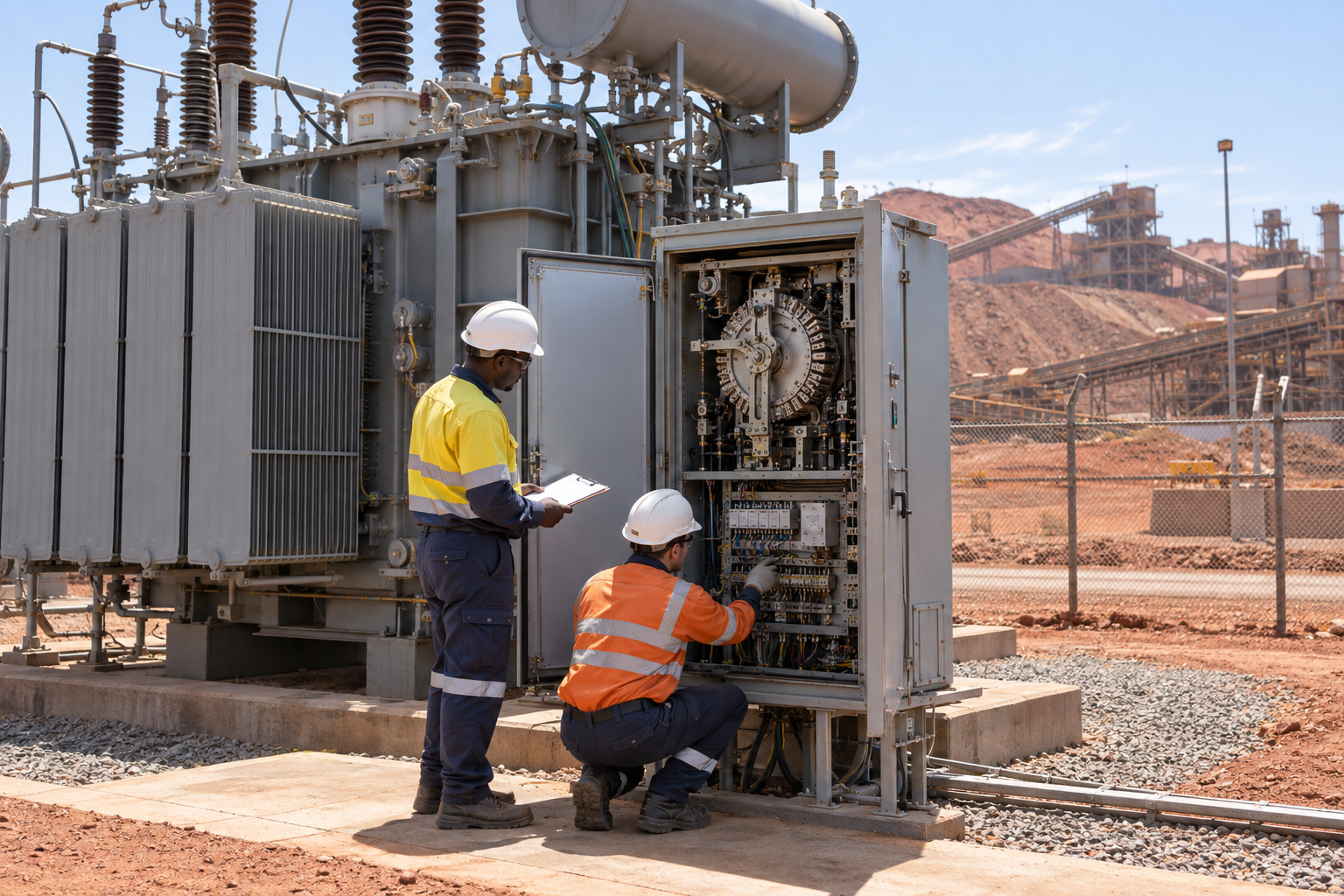
An OLTC specification should identify control voltage, local and remote commands, automatic/manual modes, tap-position indication, operation counter, alarms, limits and SCADA points. The control philosophy must assign ownership between the transformer controller, plant control system, generator controls and any utility voltage-regulation scheme.
Maintenance requirements depend on the offered design and duty. Request the manufacturer’s inspection intervals, condition indicators, oil requirements where applicable, special tools and recommended spares. Remote logistics can turn a minor missing component into a long outage, so the spares review should be completed before shipment.
Dust and moisture protection cannot be assumed from a country label. Specify the actual installation environment and required enclosure performance. Review cabinet heaters, ventilation, cable entries and condensation control. At high altitude, require the supplier to consider the confirmed elevation in the complete transformer design.
Generator and renewable-source coordination
Mines may combine utility feeders, captive generation and renewable sources. Each mode can have a different voltage-control hierarchy. The transformer controller must not fight an automatic voltage regulator or inverter control function. Define which device regulates voltage in each breaker configuration and what happens during transfer.
For islanded operation, confirm frequency range, source impedance and permissible tap movement. Do not assume the settings used on a strong utility supply remain appropriate with a generator. The cause-and-effect matrix should include loss of communications, controller failure and blocked tap conditions.
Protection and monitoring considerations
Tap position can affect current and voltage quantities used in studies. Verify protection sensitivity across the tap range, especially where source strength changes between grid and generator modes. Mechanical alarms and trips must be mapped into the transformer and plant protection philosophy.
The operator needs useful signals, not every available contact. Prioritize tap position, mode, raise/lower commands, limit reached, drive failure and manufacturer-required alarms. Define timestamps and SCADA descriptions early enough for FAT and commissioning test scripts to use the same point list.
FAT and commissioning evidence
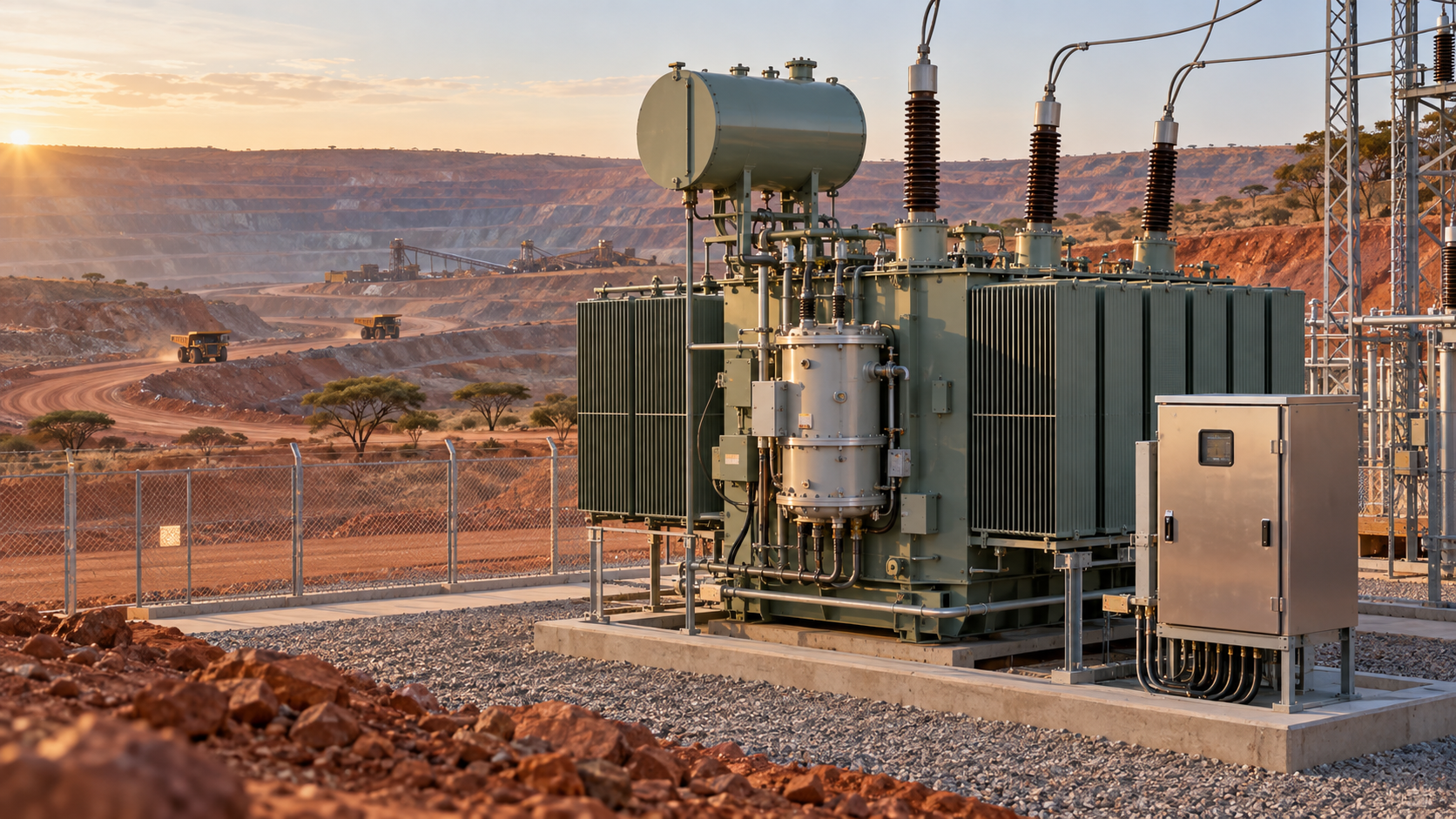
The FAT plan should verify applicable transformer ratio values, tap sequence, mechanism operation, indication, limits, alarms and control interfaces in accordance with the approved design and procedures. It should not be described as proof that the transformer will correct an unverified site voltage problem.
At site, commissioning should confirm phase sequence, voltage feedback, command direction, interlocks, remote indication and the approved automatic-control behavior. Establish initial settings from the power-system study, then record any controlled adjustment. Handover should include tap schedules, diagrams, operating instructions, test records and spare parts.
Questions to resolve during bid evaluation
Will an OLTC correct motor-starting voltage dip?
Usually the project should not assume it will. Motor starting is a fast event, whereas tap-changing control responds on a different timescale and must avoid excessive operations. The system study should address source strength, motor acceleration and starting method. The OLTC can then be evaluated for the slower steady-voltage problem it is intended to manage.
How should tap positions be stated in the datasheet?
Show the rated tap, complete voltage table, step size, number of positions, tapped winding and direction of voltage change. Confirm whether the transformer rating and guarantees apply across the range. Avoid relying only on “plus” and “minus” notation, which can be interpreted differently when referred to primary voltage or secondary output.
What if site voltage data are not yet available?
Issue a preliminary range based on the network study and mark it as an open interface. Require the supplier to state design assumptions and reserve a review point before design freeze. Do not enlarge the tap range without technical review simply to cover uncertainty; doing so can move cost and complexity into the transformer without solving the original voltage-control problem.
Which spares should be purchased?
The answer depends on the offered mechanism, duty and service strategy. Ask the supplier for recommended commissioning, operational and long-term spares with part numbers and storage conditions. Compare lead times with the mine’s outage risk and logistics. The procurement team should not create a generic list detached from the selected design.
Compare complete operating solutions
Compare a planned-outage adjustment scheme, automatic on-load regulation and a coordinated plant voltage-management arrangement. Each offer should identify equipment, sensing points, control ownership, service requirements and acceptance evidence. A mechanism price without the required sensing and control package is not comparable with a complete solution.
For a remote African site, ask the local operations team to establish actual access constraints and the availability of competent service personnel. Record the route, service responsibilities, expected component replacement process and spare-parts storage conditions. These are project-specific questions, not assumptions about every mine in the region. The most sophisticated control system is not necessarily the most maintainable choice.
Commissioning and later expansion should use separate operating cases. Preserve one approved tap table and a controlled settings register. Review the voltage-control assumptions before changing settings when production grows. Document which functions were demonstrated at the factory and which depend on the installed network and must be verified at site. Assign responsibility for updating the study after measured site values become available.
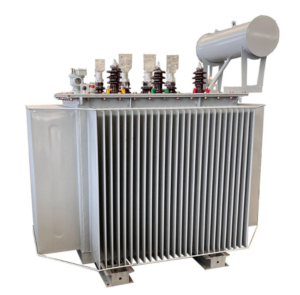
Use our voltage-regulation guide и mining project planning article for related context. Equipment references include the масляный силовой трансформатор and, for suitable smaller distribution duties, the трехфазный трансформатор на опоре. These references do not imply that either product includes an OLTC; confirm tap-changing capability in the actual offer.
Site data quality checklist
Before technical approval, confirm that the utility interface letter and the project single-line use the same nominal voltage; the voltage profile covers light and peak production; generator modes are included; major motor data are frozen or bounded; ambient temperature and altitude come from the site design basis; dust and moisture exposure are described; the SCADA point list matches the control narrative; and maintenance access is shown on the layout. Each unresolved item should have an owner and due date.
Submit the confirmed utility or generator voltage profile, frequency, transformer rating, secondary voltage limits, load list, large-motor data, harmonic information, ambient temperatures, altitude, dust and moisture conditions, installation layout, communications protocol and maintenance constraints. Mark uncertain values and assign a date for confirmation.
Zisheng Electric can evaluate oil-immersed transformer and power-transformer configurations against this information. Product selection and tap-changing capability remain subject to the offered design and the actual network study; no regional article can replace project-specific utility approval.
A defensible transformer tap changer selection for mining connects the ratio range, control philosophy and maintenance plan to real operating cases. Send drawings, datasheets, load lists, technical specifications, the single-line diagram, grid parameters, environmental conditions and installation-site conditions. Our engineering team will review the requirements and respond to project inquiries within 24 hours.
О компании ZISHENG ELECTRICAL
Жишэнг является профессиональным производителем с более чем 19-летним опытом масляных трансформаторов, Компактная подстанция, Трансформаторы в пневматических установках, полевые трансформаторы и Сухие трансформаторы. У нас есть сертификаты ISO/CE/IEC 60076 и TUV Rheinland.
Трансформаторы проходят строгие испытания FAT и аттестацию типа, поддерживают настройку напряжения/емкости. Добро пожаловать на консультацию по Каталог и Продукт. вы можете связаться с нами по электронной почте [email protected].