Онлайн-оценка готовности африканских горнодобывающих трансформаторов к модернизации с использованием технологии DGA: клапаны, интерфейсы питания и передачи данных
Online dissolved gas analysis is often proposed as a condition-monitoring upgrade after a transformer has already entered service. At a remote mine, that timing can expose avoidable interface problems: no suitable oil connections, insufficient auxiliary power, poor cabinet access, or a communications path that nobody owns. Zisheng Electric therefore treats online DGA retrofit readiness as an engineering decision to be made before procurement or during the next planned outage—not as a sensor purchase made in isolation.
This guide is written for mining owners, EPC contractors and maintenance teams that operate oil-immersed transformers far from specialist laboratories. It explains how to define the monitoring objective, inspect the transformer interfaces, qualify the installation conditions and write a bid package that suppliers can answer consistently. It also separates what an online monitor can reveal from what still requires a representative oil sample, laboratory confirmation and engineering judgment.
1. Why Online DGA Retrofit Readiness Matters at Remote Mines
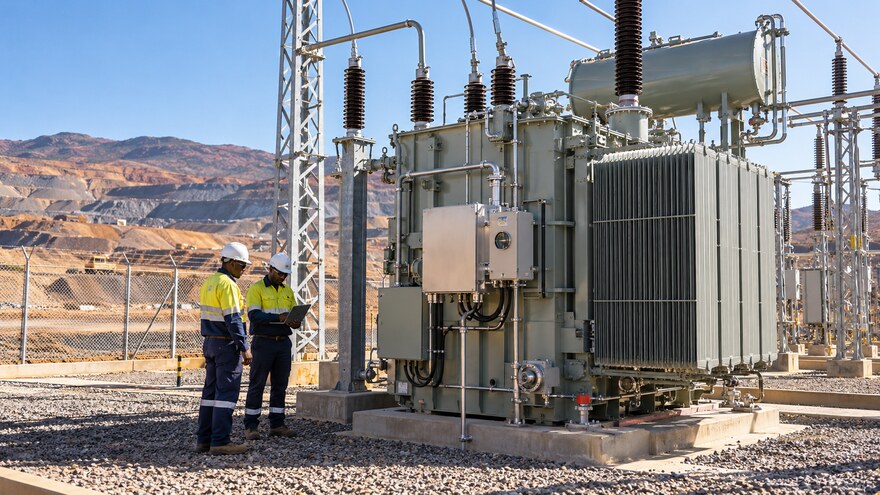
Distance changes the economics of transformer condition monitoring. A laboratory result may take days to reach the asset engineer. Access roads can be seasonal, flights infrequent, and qualified oil-sampling personnel limited. At the same time, a process plant may have only one large transformer feeding crushers, mills, pumps or conveyors. A forced outage can affect production well beyond the electrical repair itself.
Continuous or frequent automated measurements can shorten the time between a developing condition and an engineering review. That benefit is real only when the measurement chain is credible. Poor oil circulation, air ingress, contaminated tubing, an unstable power supply or a lost network connection can create gaps or misleading trends. The monitoring plan must therefore include the transformer, the oil circuit, the cabinet, the data route and the response process.
IEC 60567:2023 provides guidance for sampling free gases and analysing free and dissolved gases in mineral oils and other insulating liquids. IEC 60599:2022 explains how dissolved and free gas concentrations may be interpreted for mineral-oil-filled electrical equipment in service, while emphasizing that the indications are guidance and actions require engineering judgment. These roles should remain distinct in the project specification: the monitor produces measurements and trends; competent personnel decide what those trends mean for the asset.
2. Start With the Decision the Monitor Must Support
A request for “online DGA” is incomplete. The owner should first state which decision the system must support. A single-gas device may be useful for basic change detection, while a multi-gas monitor may support more detailed trending. The correct choice depends on transformer criticality, existing laboratory practice, access constraints, historical behaviour and the owner’s maintenance organization.
Define the monitoring objective
Useful objectives include detecting a material change between scheduled laboratory samples, observing a known condition more closely, reducing the time needed to verify an alarm, or creating a trend for a transformer with limited redundancy. The objective should be written in operational language. “Provide nine-gas monitoring” specifies a device feature; “notify the central maintenance team when a confirmed gas trend exceeds the agreed response threshold” specifies a project outcome.
Set the confirmation workflow
An online alarm should not automatically become a diagnosis or a trip instruction. Define who reviews the data, when a manual sample is required, which laboratory method is used, how operating events are checked, and who authorizes a change in loading or outage plan. The existing transformer oil sampling access arrangement should remain usable even after the online monitor is installed.
3. Transformer and Oil-Circuit Survey
The retrofit survey should begin at the transformer, not at the monitor catalogue. Record the nameplate, oil preservation system, oil volume, cooling arrangement, valve schedule, pipe sizes, normal oil-flow paths and all existing sampling points. Confirm whether the transformer is conservator type, sealed, or fitted with pumps that alter circulation under different cooling stages. A connection that sees stagnant oil may not represent the active tank volume.

Select supply and return points as a pair
A recirculating monitor normally needs a defined oil supply and return. The two points must support representative flow without short-circuiting the sampled oil directly back to the same local pocket. Their elevation, separation and relationship to pumps or coolers matter. The monitor manufacturer should review the proposed connections and state the permitted pressure, vacuum, temperature and flow range.
Do not assume an existing drain valve can be shared safely. The project team must review isolation philosophy, connection size, valve material, seals, sampling access and the possibility of air entry. If hot work or drilling on an oil-filled tank would be required, the retrofit may need a planned outage and a transformer-specific method statement. The owner should approve that method before site work begins.
Control tubing, flushing and leakage risk
Tubing should be mechanically supported, protected from vehicle or maintenance damage, and routed without unnecessary high points or low pockets. Flexible hoses may simplify installation but require material compatibility, temperature and service-life review. Specify how the circuit will be flushed, how displaced oil will be contained, and how leak tightness will be demonstrated. The final valve positions and flow direction should appear on the as-built drawing.
| Retrofit item | Bid input to provide | Доказательства принятия | Почему это важно |
|---|---|---|---|
| Monitoring objective | Criticality, alarm purpose, review interval | Approved cause-and-response matrix | Prevents an expensive device from producing data nobody acts on |
| Oil connections | Valve schedule, photos, pipe sizes, flow path | Approved connection drawing and leak check | Supports representative oil and avoids air ingress |
| Auxiliary supply | Voltage, frequency, earthing, available feeder | Measured voltage and protective-device record | Reduces nuisance outages and data gaps |
| Communications | Protocol, network boundary, cyber rules | End-to-end data and time-stamp test | Makes alarms visible to the responsible team |
| Среда | Temperature, dust, rain, altitude, sun exposure | Enclosure and installation inspection | Protects accuracy and maintainability |
| Data quality | Baseline samples, calibration plan, time source | Commissioning comparison and trend review | Separates real change from installation effects |
4. Auxiliary Power and Protection
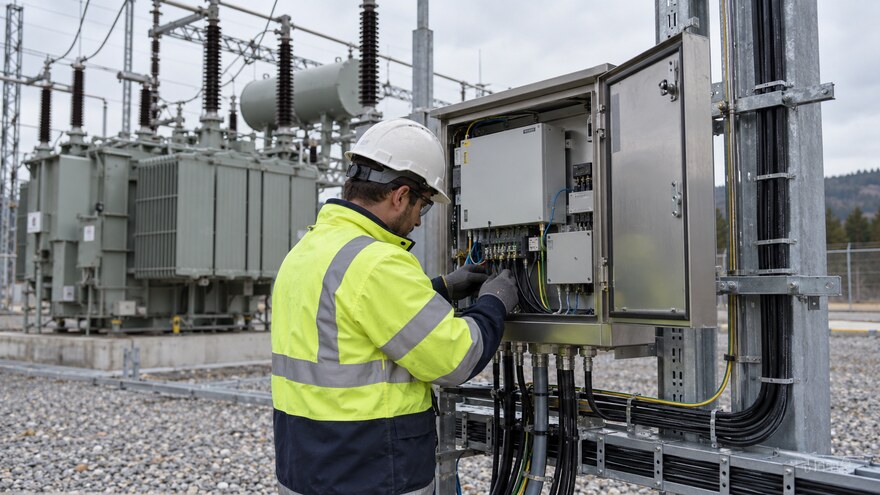
The monitor is only continuous while its power is dependable. Record the available AC or DC supply, normal voltage variation, frequency, earthing method and expected interruption duration. A remote substation may experience generator transfers, long low-voltage cable runs or maintenance shutdowns. The supplier should state steady-state consumption, starting demand, ride-through behaviour and restart sequence.
Provide a dedicated, identified feeder with isolation that does not remove unrelated transformer controls. Coordinate the protective device with the cable size and monitor input protection. Surge exposure, electromagnetic compatibility and segregation from high-current or trip circuits should be reviewed with the site electrical design. For projects with weak auxiliary systems, the transformer auxiliary power supply design should be checked before the monitoring cabinet is ordered.
5. Communications, Time and Data Ownership
A local display does not solve a remote-site decision problem. Define where the data must appear: the substation gateway, plant SCADA, historian, maintenance platform or a secure vendor portal. List the required protocol, network medium, addressing responsibility, firewall boundary and permitted remote access. The mine’s information-technology and operational-technology teams should approve the architecture.
Time synchronization deserves its own test. A gas trend that cannot be aligned with load, temperature, cooling-stage changes or protection events loses diagnostic value. Specify the accepted time source and the behaviour after communications loss. The monitor should retain enough local data to bridge the expected outage and transfer it without duplicate or reordered records when the link returns.
Ownership also covers export formats, retention period, user permissions and software licenses. Avoid a design in which the owner can see a dashboard but cannot obtain raw or adequately resolved trend data. If the monitor depends on proprietary consumables or discontinued communications hardware, the risk should be addressed through the component obsolescence review.
6. Environmental and Maintainability Checks
Mining sites can combine dust, vibration, high solar load, heavy rain and wide day-night temperature changes. Use the project environmental schedule rather than a generic regional assumption. Confirm enclosure protection, corrosion protection, ventilation or heating, cable-gland arrangement, sunshade requirements and permissible installation altitude. The supplier should identify any derating or maintenance interval affected by these conditions.
Provide a safe standing area and door swing, clearance for filters or cylinders, and a route for test equipment. Valves, filters and consumables should be reachable without climbing on the transformer or entering an unsafe electrical approach zone. If the monitor requires carrier gas, membranes, pumps or replaceable filters, state quantities, shelf life, storage conditions and training needs in the bid.
7. Commissioning and Baseline Strategy
Commissioning should connect the mechanical installation to the data workflow. Inspect supports and tubing, verify valve positions, prove leak tightness, check auxiliary voltage and polarity, confirm communication and time stamps, and record the monitor configuration. Photograph the final routing and include device serial numbers, software versions and calibration information in the handover dossier.
A baseline laboratory sample is valuable because it provides a controlled reference close to the commissioning date. The project specification should state how online readings and laboratory results will be compared without assuming they must be numerically identical under all conditions. Sampling time, oil temperature, loading, monitor stabilization and method differences must be considered. Unexpected differences require investigation before alarm limits are tightened.
Use trends, not isolated numbers
The first operating weeks should be treated as a stabilization and learning period governed by the approved response plan. Review rates of change, repeated patterns and the relationship to load and cooling. IEC 60599 makes clear that gas indications support diagnosis but do not replace engineering judgment. A remote alarm should trigger a defined review, not an automatic declaration of transformer failure.
8. Bid Package for Online DGA Retrofit Readiness
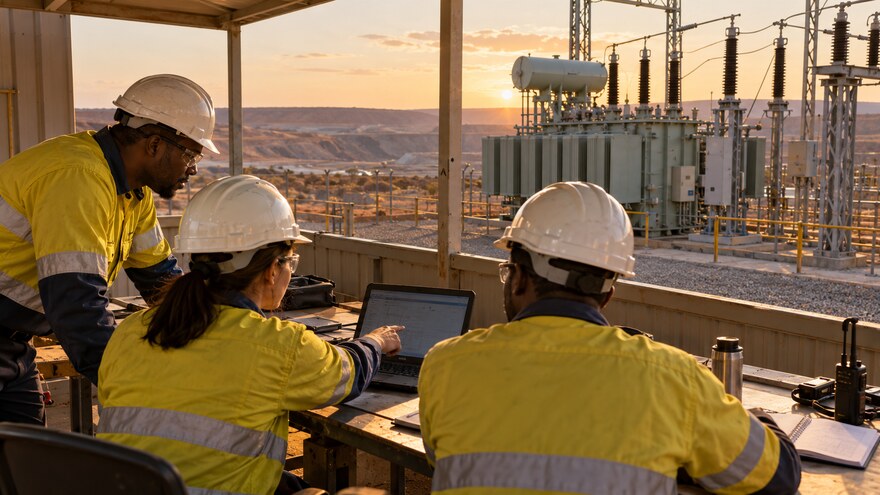
A comparable bid needs more than a transformer rating and a request for online monitoring. Provide the single-line diagram, transformer drawings, valve schedule, oil preservation details, auxiliary supply information, site environmental schedule, network architecture and the owner’s alarm-response philosophy. Ask each bidder to mark assumptions and exclusions.
The supplier submission should include the proposed gas set and measurement ranges, oil-circuit drawing, cabinet arrangement, power demand, communications list, environmental limits, consumables, maintenance tasks, commissioning method, training, warranty and spare-parts recommendation. Request a responsibility matrix covering mechanical connections, cable supply, network configuration, laboratory baseline, site supervision and final data integration.
Zisheng Electric can review retrofit provisions for new or existing oil-immersed units, including 220–230 kV power transformers, Силовые трансформаторы на 132–138 кВ и Силовые трансформаторы 35–46 кВ. The monitor selection remains project-specific; the transformer and site interfaces should be frozen before manufacture or outage mobilization.
9. Engineering Review Before Procurement
Эффективное online DGA retrofit readiness depends on representative oil, safe mechanical interfaces, reliable auxiliary power, maintainable installation and a response process that converts data into decisions. Treating those items as one work package reduces late field modifications and helps remote maintenance teams trust the trend they receive.
Send Zisheng Electric the transformer drawings, datasheet, load history, valve schedule, single-line diagram, auxiliary power data, communication architecture, environmental conditions and site photographs. Include the monitoring objective, existing laboratory practice and expected outage window. Our engineering team will review the requirements and respond to project inquiries within 24 hours.
О компании ZISHENG ELECTRICAL
Жишэнг является профессиональным производителем с более чем 19-летним опытом масляных трансформаторов, Компактная подстанция, Трансформаторы в пневматических установках, полевые трансформаторы и Сухие трансформаторы. У нас есть сертификаты ISO/CE/IEC 60076 и TUV Rheinland.
Трансформаторы проходят строгие испытания FAT и аттестацию типа, поддерживают настройку напряжения/емкости. Добро пожаловать на консультацию по Каталог и Продукт. вы можете связаться с нами по электронной почте [email protected].