
Kenya Hospital Transformer Procurement: Essential Loads, Generator Transfer and Harmonic Control

Zisheng Electric prepares transformer proposals for projects where continuity, coordination, and maintainability matter as much as nameplate power. In a hospital, procurement must connect the transformer data sheet to the load list, essential-power architecture, generator transfer sequence, protection study, and actual site conditions. This guide explains how to prepare a practical Kenya hospital transformer procurement package without relying on generic ratings or unverified assumptions.
Why Kenya Hospital Transformer Procurement Starts With the Load Architecture
A hospital is not one uniform load. Clinical equipment, operating theatres, imaging systems, laboratories, wards, ventilation, lifts, water pumps, data systems, kitchens, and administration have different operating patterns and different consequences if power is interrupted. Before selecting a transformer, the EPC team should separate connected load from maximum coincident demand and identify normal, essential, life-safety, and uninterruptible circuits under the project’s governing requirements.
Do not assume every installed kilowatt operates simultaneously. Equally, do not apply one broad diversity factor without documenting why it is reasonable. The load schedule should show rated input, quantity, duty, demand factor, power factor, starting method, harmonic characteristics, and whether the load must restart after an interruption. The resulting model influences transformer capacity, generator interface, LV bus rating, cable sizing, voltage drop, and ventilation.

Define Essential Loads Before Selecting Capacity
Mark every load by continuity class and permitted transfer time. Some equipment may be supported by an online UPS, some by generator-backed essential switchboards, and some may remain on normal power only. This classification affects transformer loading and the low-voltage distribution configuration.
A common mistake is to size the transformer from total connected load while leaving the emergency operating scenario undefined. Another is to size only for normal demand but ignore post-transfer motor reacceleration. Either approach can produce an apparently adequate transformer with unacceptable voltage performance in a critical operating state.
| Engineering input | Почему это важно | Проверка закупок | Risk if omitted |
|---|---|---|---|
| Connected and diversified kVA | Sets continuous thermal duty and spare margin | Issue a traceable load schedule with assumptions | Oversizing, poor efficiency, or insufficient capacity |
| Essential-load classification | Defines circuits retained during interruption | Cross-reference SLDs and panel schedules | Critical circuits may fail to transfer |
| Motor starting and reacceleration | Determines short-duration voltage dip | Provide motor sizes, starters, and restart sequence | Contactor dropout or failed restart |
| UPS and VFD harmonics | Affects heating, neutral current, and distortion | Request harmonic spectra or study inputs | Unexpected temperature rise |
| System fault level | Influences impedance and switchgear duty | Coordinate with short-circuit study | Duty exceeded or poor selectivity |
| Ambient and altitude | Affects cooling and insulation | State design maxima in the data sheet | Derating or excessive temperature |
Coordinate Utility, Generator, ATS, and UPS Interfaces
Confirm incoming utility characteristics from the official connection offer, approved drawings, and project specification. Do not infer primary voltage, earthing arrangement, fault level, metering, or protection interface from another facility. For a Kenya project, obtain project-specific utility documentation and identify authority reviews or witness requirements before manufacture is released.
Model generator and automatic transfer switch operation as a sequence. Record which bus sections remain energized, the approved transfer method, how many motors may restart together, and UPS input current during battery recharge. Transformer impedance and regulation directly influence the result.
If transformers may operate in parallel, confirm vector group, ratio, tap position, impedance tolerance, phase sequence, and protection logic. Parallel operation must be designed and tested as a coordinated system, not left as a site option.
Evaluate Harmonics From UPS, VFD, and Medical Loads
Hospitals can contain substantial nonlinear loads. UPS rectifiers, variable-speed drives, switched-mode power supplies, LED drivers, and imaging equipment may increase harmonic current. The correct response is not a generic capacity allowance. Request equipment data, estimate the spectrum for credible operating cases, and assess transformer losses, neutral loading, bus heating, capacitor compatibility, and voltage distortion.
If harmonic duty is material, specify the assessment method and required provisions. These may include adjusted loading, electrostatic shielding, an appropriate winding arrangement, harmonic mitigation, or a transformer designed for the defined nonlinear load. The decision must follow the study rather than a marketing label.
Select Construction by Installation Conditions
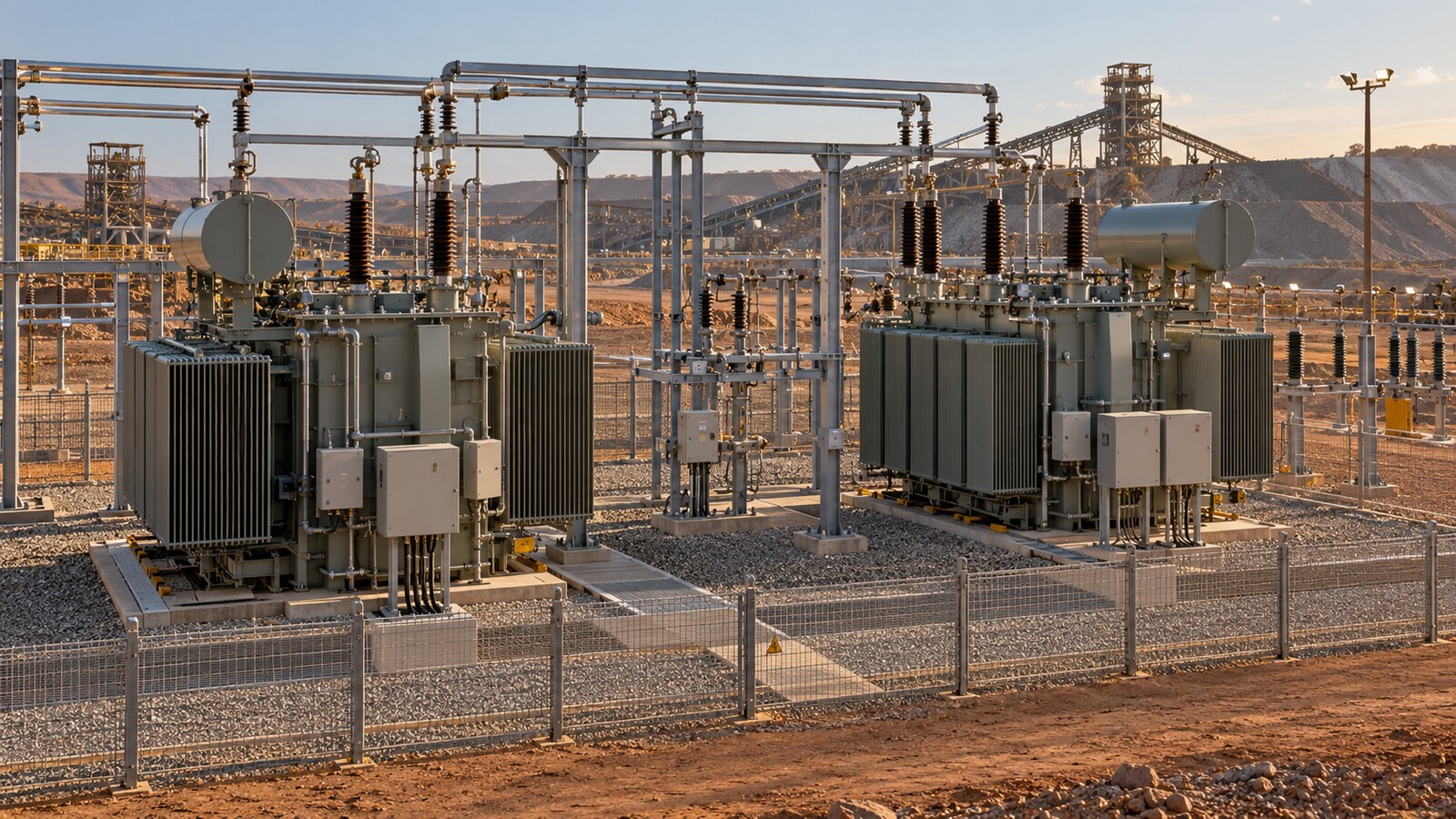
Transformer construction should follow location, fire strategy, environmental exposure, acoustic limits, maintainability, and lifecycle requirements. Indoor rooms may favor dry-type equipment where the approved fire and ventilation design supports it. Outdoor substations may favor oil-immersed units where containment, drainage, access, and fire separation are engineered.
State enclosure rating, cooling method, temperature rise, insulation system, corrosion protection, terminal arrangement, cable or bus-duct interface, monitoring devices, and permitted sound level. Drawings must show the real room, door, corridor, lifting path, and service clearance. Electrically compliant equipment can still be unusable if it cannot be moved into position or maintained safely.
Use Impedance as a System Design Variable
Percentage impedance influences secondary fault current and voltage regulation. Lower impedance can improve regulation but increase prospective short-circuit current. Higher impedance can reduce fault duty but increase voltage drop during motor starting and step loading. Coordinate the specified impedance with short-circuit calculations, protection discrimination, motor-starting analysis, and switchboard ratings.
Ask the supplier to state guaranteed impedance at the specified rating and reference temperature, together with the applicable tolerance under the governing standard. Define how any deviation will be evaluated. This prevents discovering after manufacture that switchgear duty or protection settings no longer align with the transformer.
Plan Redundancy and Maintenance
A nominal N+1 statement is not sufficient unless the switching arrangement, remaining transformer capacity, generator capacity, bus coupler, protection logic, and maintenance access support it. Review the largest credible single outage: one transformer, incoming feeder, LV bus section, generator, or control-power source. Confirm the retained system can supply the declared essential load under the project’s contingency criteria.
Check isolation points, earthing provisions, inspection access, removable panels, oil sampling access where applicable, fan replacement, sensor wiring, lifting points, and spare-parts strategy. The room should permit safe personnel movement and future replacement of the largest maintainable component.
Convert Site Conditions Into Data-Sheet Requirements
Record specified temperature, elevation, humidity, dust, pollution, lightning exposure, flooding risk, and available ventilation rather than applying a country label. Altitude can affect external clearances and cooling; high ambient can reduce thermal margin; dust and humidity can influence enclosure and insulation decisions. Provide these values early enough to influence design.
Define transport limits, offloading method, final access route, foundation dimensions, cable-entry direction, and earthing terminal locations. Freeze these interfaces through approved general arrangement drawings before change becomes expensive.
Specify FAT Evidence That Supports Site Acceptance
The inspection and test plan should distinguish routine tests, specified type-test evidence, special tests, document reviews, and witness or hold points. Requirements must align with the contract and applicable standard edition. IEC 60076 is commonly referenced for IEC-based power transformer projects, but the exact parts, project deviations, and authority requirements must be listed.
The FAT package should identify serial numbers, calibrated instruments, approved drawings, test connections, criteria, results, and nonconformance closure. Ratio, polarity or vector group, winding resistance, insulation tests, no-load loss and current, load loss and impedance, and functional checks should be included as applicable to the design and contract.

Hypothetical Specification-Filling Example
This is an illustrative format only, not a real project or supplied-equipment record.
- Приложение: Hospital normal and essential distribution; essential-load schedule issued separately.
- Quantity and redundancy: Defined from contingency analysis and SLD.
- Rated power: [insert kVA/MVA] at stated cooling and ambient.
- Voltages: [insert utility-approved values], tapping range, and tap changer type.
- Frequency and phases: [insert approved project values].
- Vector group and earthing: [insert from protection and grounding design].
- Импеданс: [insert coordinated value and tolerance].
- Установка: indoor/outdoor, elevation, ambient, enclosure, corrosion class, and acoustic limit.
- Loads: demand, largest motor, UPS kVA and harmonics, VFD load, and restart sequence.
- Interfaces: cable/bus duct, CTs, monitoring, contacts, SCADA, and auxiliary supply.
- Testing: contract-defined tests and witness points.
- Documents: GA, schematics, terminal plan, losses, reports, manuals, packing, and spares.
Procurement Review Checklist
- Reconcile the transformer schedule, SLD, load list, and room layout.
- Confirm utility parameters from current project documents.
- Check normal, essential, generator, and maintenance cases.
- Review motor starting, UPS recharge, and harmonics.
- Coordinate impedance with fault duty and selectivity.
- Confirm ambient, elevation, ventilation, fire strategy, and access.
- Freeze cable boxes, bus-duct flanges, CT data, controls, and SCADA interfaces.
- Approve the ITP, FAT procedure, drawings, and document register.
- Define packing, preservation, transport, storage, installation, and commissioning duties.
Documents to Send for Engineering Review
For a focused Kenya hospital transformer procurement review, provide the SLD, transformer data sheet, load schedule, generator and ATS sequence, UPS and VFD data, short-circuit and protection studies, room layout, interfaces, utility requirements, environmental criteria, and proposed ITP. Zisheng Electric can identify unresolved interfaces before they affect manufacturing or site work.
Related guidance includes transformer procurement for African infrastructure, continuous-process transformer selection, и utility and site-condition coordination.
Kenya hospital transformer procurement is most reliable when the specification describes operating scenarios and interfaces rather than only kVA. Our engineering team will review the requirements and respond to project inquiries within 24 hours.
О компании ZISHENG ELECTRICAL
Жишэнг является профессиональным производителем с более чем 19-летним опытом масляных трансформаторов, Компактная подстанция, Трансформаторы в пневматических установках, полевые трансформаторы и Сухие трансформаторы. У нас есть сертификаты ISO/CE/IEC 60076 и TUV Rheinland.
Трансформаторы проходят строгие испытания FAT и аттестацию типа, поддерживают настройку напряжения/емкости. Добро пожаловать на консультацию по Каталог и Продукт. вы можете связаться с нами по электронной почте [email protected].