Guide to Low-, Medium-, and High-Voltage Switchgear: Types, Applications, and Selection Methods
1. Basic Concepts of Switchgear and Voltage Classification
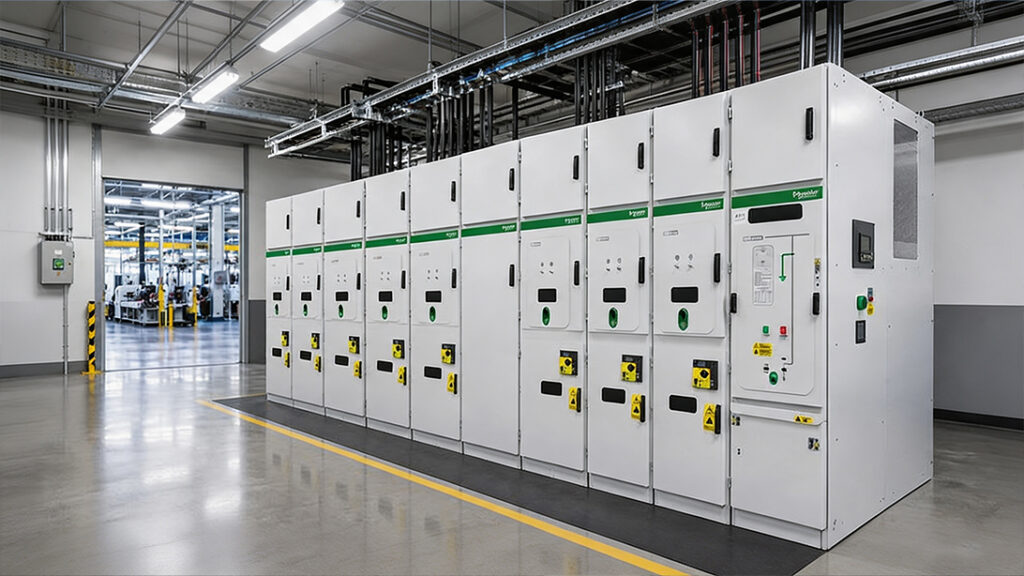
Switchgear is a group of electrical equipment used in power systems for control, protection, and isolation of electrical devices. Through components such as circuit breakers, disconnect switches, relays, and fuses, switchgear performs functions including circuit switching control, fault detection and isolation, and separation of equipment from energized parts during maintenance.
The core functions of switchgear can be summarized into three key aspects:
- Control: Connecting or disconnecting electrical circuits according to operational requirements.
- Protection: Detecting and interrupting fault currents such as short circuits and overloads to protect electrical equipment and ensure system safety.
- Isolation: Providing a visible disconnection point during inspection, maintenance, and repair operations, ensuring personnel safety.
According to voltage levels, switchgear is generally classified into three major categories:
- Low Voltage Switchgear (LV)
- Medium Voltage Switchgear (MV)
- High Voltage Switchgear (HV)
Different voltage classes of switchgear have significant differences in terms of structural design, insulation technology, application scenarios, and equipment selection requirements.
The selection of appropriate switchgear voltage levels depends on factors including system voltage, short-circuit capacity, load characteristics, operating environment, protection requirements, and applicable international standards.
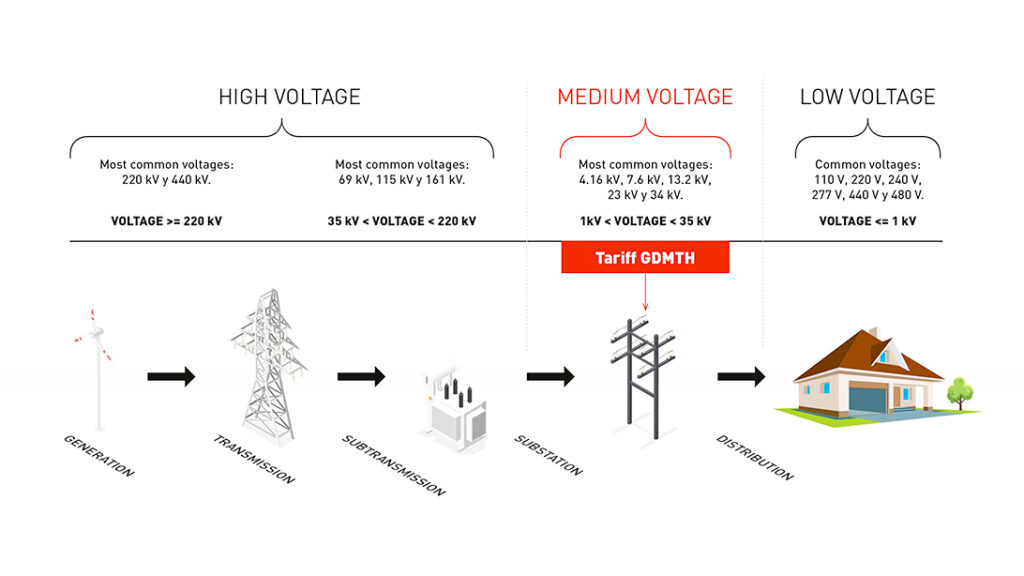
Internationally recognized voltage classification standards for switchgear are generally defined as follows:
- Low Voltage (LV): Voltage levels not exceeding 1kV, mainly used for terminal power distribution in residential buildings, commercial facilities, and industrial installations.
- Medium Voltage (MV): Voltage levels from 1kV to 36kV (in some regions extending to 52kV or 72kV), mainly applied in urban distribution networks, industrial parks, and renewable energy projects for electrical power distribution.
- High Voltage (HV): Voltage levels above 36kV (with some standards using 69kV or 72.5kV as the classification boundary), mainly used for long-distance power transmission and large-scale power grid interconnection.
The major design, testing, and operational requirements for medium-voltage and high-voltage switchgear are defined by the IEC 62271 series standards issued by the International Electrotechnical Commission (IEC) and the ANSI/IEEE C37 series standards commonly used in North America.
Among these standards:
- IEC 62271-200 applies to AC metal-enclosed switchgear and controlgear with rated voltages above 1kV and up to 52kV.
- IEC 62271-1 defines the general requirements and rated voltage classification for high-voltage switchgear and controlgear.
Understanding the basic framework of these standards is essential for equipment selection, technical specification preparation, and international procurement.
Zisheng Electric specializes in the research, development, and manufacturing of power equipment. Its product portfolio includes oil-immersed transformers, dry-type transformers, amorphous alloy transformers, and switchgear. Products can be designed and manufactured according to international standards including IEC 62271, IEC 60076, and GOST, serving markets across the Middle East, South America, Africa, and Russia.
With years of manufacturing experience, Zisheng Electric has developed strong technical capabilities in addressing special operating conditions, including moisture resistance, corrosion protection, and high-temperature operation, providing reliable solutions for various international power projects.
2. Low Voltage Switchgear
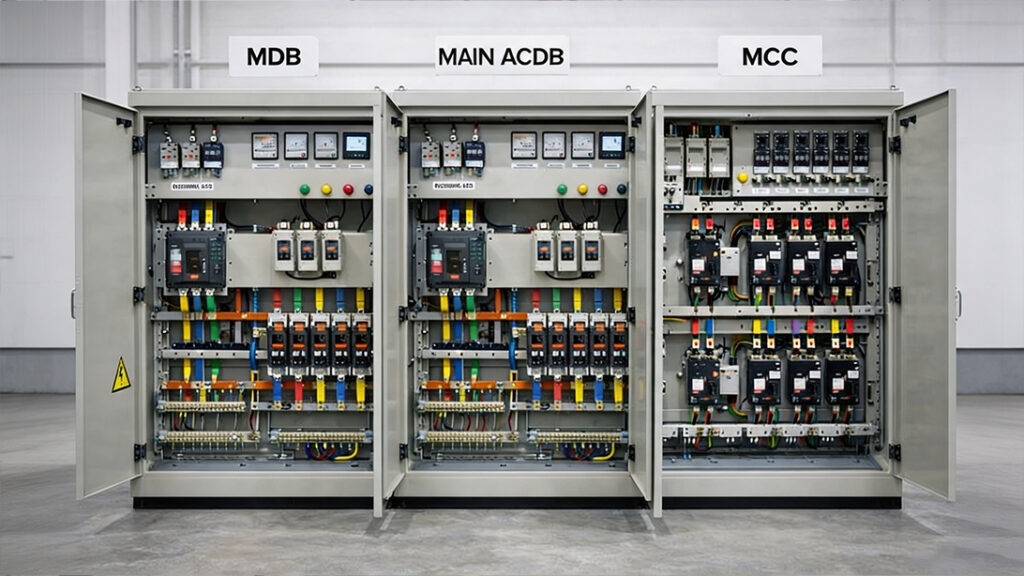
2.1 Definition and Voltage Range
Low Voltage Switchgear (LV Switchgear) is used in power systems with voltage levels not exceeding 1kV AC or 1.5kV DC.
As the final stage of the power distribution system, low-voltage switchgear is responsible for distributing electrical energy from the distribution transformer to end-user equipment while providing protection against overload, short circuit, and earth fault conditions.
Low voltage switchgear is widely applied in:
- Residential communities
- Commercial buildings
- Industrial plants
- Infrastructure projects
2.2 Main Types and Components
According to functional configuration, low voltage switchgear mainly consists of the following components:
Circuit Breakers
Circuit breakers are protective switching devices used to interrupt fault currents and protect electrical circuits. Main types include:
- Miniature Circuit Breaker (MCB): Used for terminal protection in residential and commercial applications.
- Molded Case Circuit Breaker (MCCB): Suitable for industrial distribution circuits and applications requiring higher current ratings.
- Air Circuit Breaker (ACB): Used in main distribution systems with high current capacity and high short-circuit withstand requirements.
Fuses
A fuse is an overcurrent protection device. When the current exceeds the rated value, the fuse element melts and disconnects the circuit to prevent equipment damage.
Contactors
A contactor is an electromagnetic switching device used for frequent switching control of electrical loads such as:
- Motors
- Lighting systems
- Industrial equipment
Relays
A relay is a protection and control device that operates according to input signals such as current, voltage, or other electrical parameters to control circuit switching.
Disconnect Switches (Isolators)
A disconnect switch is manually operated and used to isolate equipment from the power supply during maintenance and inspection, providing a clear visible isolation point.
Low Voltage Switchboards (Distribution Panels)
A low voltage switchboard integrates the above components inside a cabinet structure, enabling centralized power distribution, protection, and system management.
2.3 Typical Application Scenarios
The applications of low voltage switchgear mainly cover three major fields:
Industrial Applications
Low voltage switchgear provides power distribution and protection for:
- Heavy machinery
- Production lines
- Factory lighting systems
Industrial power distribution systems typically adopt a hierarchical distribution structure:
- The main low voltage switchboard receives power from the transformer.
- Sectional switchboards divide power supply areas according to different production zones.
- Feeder switchboards supply power to specific equipment.
- Motor Control Centers (MCCs) centrally manage multiple motors.
Commercial Buildings
Low voltage switchgear is used for power distribution and equipment protection in:
- Office buildings
- Shopping malls
- Hotels
- Other commercial facilities
Residential and Infrastructure Applications
Low voltage switchgear provides power distribution, isolation, and protection functions for:
- Residential communities
- Schools
- Hospitals
- Public infrastructure facilities
3. Medium Voltage Switchgear
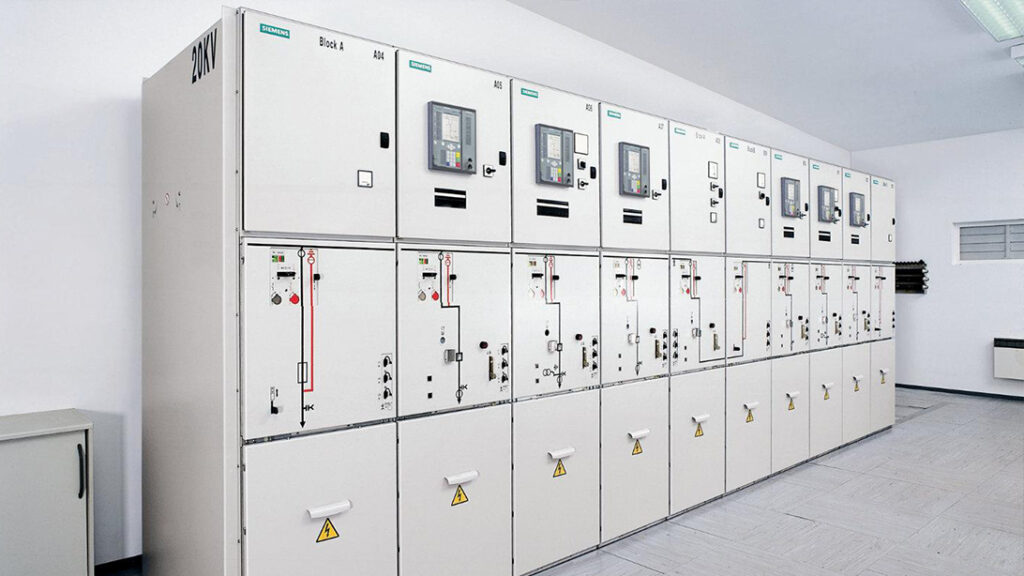
3. Medium Voltage Switchgear
3.1 Definition and Voltage Range
Medium Voltage Switchgear (MV Switchgear) is used in power systems with voltage levels ranging from 1kV to 36kV (in some regions extending up to 52kV).
As a key component of the power distribution network, medium voltage switchgear serves as the connection between high-voltage transmission systems and low-voltage distribution systems, performing functions including power distribution, control, and protection.
Medium voltage switchgear is widely applied in:
- Utility substations
- Large industrial facilities
- Commercial complexes
- Renewable energy projects
3.2 Classification by Insulation Medium
According to the type of insulation medium, medium voltage switchgear can be divided into three major categories:
Air Insulated Switchgear (AIS)
Air Insulated Switchgear (AIS) uses air as the insulation medium. It features:
- Simple structure
- Lower cost
- Convenient maintenance
However, due to the limited insulation strength of air, AIS equipment generally has a larger footprint and is more suitable for applications where installation space is sufficient.
Gas Insulated Switchgear (GIS)
Gas Insulated Switchgear (GIS) uses sulfur hexafluoride (SF₆) gas as both the insulation medium and arc-extinguishing medium. Its main advantages include:
- High insulation strength
- Compact structure
- Small installation footprint
GIS is suitable for applications with limited space, such as:
- Urban substations
- Underground distribution rooms
- High-reliability power systems
GIS equipment typically adopts a metal-enclosed structure, providing excellent protection performance and reducing the impact of external environmental conditions.
Solid Insulated Switchgear (SIS)
Solid Insulated Switchgear (SIS) uses solid insulation materials to encapsulate conductive components. It combines:
- Compact design
- Environmental friendliness
- High operational reliability
It has become one of the rapidly developing technology solutions in the medium voltage switchgear sector.
In recent years, SF₆-free medium voltage switchgear has attracted increasing attention.
SF₆ (sulfur hexafluoride) is a powerful greenhouse gas, with a global warming potential (GWP) significantly higher than carbon dioxide (CO₂).
SF₆-free switchgear adopts technologies such as:
- Pure air insulation
- Solid insulation
- Vacuum interruption technology
while maintaining high electrical performance and reducing environmental impact and carbon emissions.
3.3 Classification by Structural Design
Medium voltage switchgear can also be classified according to structural configuration:
Metal-Enclosed Switchgear
All energized components are enclosed within a grounded metal enclosure.
Main features:
- High safety performance
- Strong environmental protection capability
- Widely used in industrial power distribution systems
Metal-Clad Switchgear
Based on metal-enclosed construction, metal-clad switchgear further separates:
- Circuit breaker compartment
- Busbar compartment
- Cable compartment
into independent compartments using metal partitions.
Advantages include:
- Higher operational safety
- Improved maintenance convenience
- Enhanced fault isolation capability
3.4 Typical Application Scenarios
Medium voltage switchgear is widely used in the following applications:
Power Distribution
Used in distribution networks for:
- Receiving electrical power
- Power distribution
- Fault isolation and protection
Industrial Facilities
Used to manage medium voltage power supply systems in:
- Factories
- Production workshops
- Large industrial plants
Commercial Buildings
Provides medium voltage distribution and protection for:
- Large commercial complexes
- Public facilities
Renewable Energy Projects
Used for protecting electrical systems in:
- Solar power plants
- Wind energy projects
- Other renewable energy installations
Substations and Power Plants
Used for managing:
- Electrical loads
- Fault currents
- Power system operation and protection
4. High Voltage Switchgear

4.1 Definition and Voltage Range
High Voltage Switchgear (HV Switchgear) is used in power systems with voltage levels above 36kV (with some standards using 69kV or 72.5kV as the classification boundary).
As a core component of the power grid infrastructure, high voltage switchgear undertakes the tasks of control, protection, and isolation in long-distance power transmission and cross-regional grid interconnection systems.
High voltage switchgear plays an essential role in global power infrastructure development. According to industry reports, the global high voltage switchgear market size reached approximately USD 32.5 billion in 2023.
4.2 Main Types
According to insulation technology, high voltage switchgear can mainly be classified into the following types:
Air Insulated Switchgear (AIS)
Air Insulated Switchgear (AIS) uses air as the insulation medium.
Advantages:
- Simple structure
- Lower initial investment cost
- Widely used in traditional outdoor substations
However, due to the limited insulation strength of air, AIS equipment generally requires:
- Large installation space
- Higher land occupation
Gas Insulated Switchgear (GIS)
Gas Insulated Switchgear (GIS) uses SF₆ gas as the insulation medium.
Advantages:
- Compact structure
- High reliability
- Low maintenance requirements
GIS has significant advantages in:
- Urban areas with limited land resources
- Underground substations
- Harsh environmental conditions
At present, GIS occupies the largest market share in the high voltage switchgear sector.
Oil Insulated Switchgear (OIS)
Oil Insulated Switchgear (OIS) uses mineral oil as both insulation and cooling medium.
Advantages:
- High insulation strength
- Good heat dissipation performance
However, it also presents potential risks including:
- Oil leakage environmental hazards
- Fire safety concerns
Vacuum Insulated Switchgear
Vacuum insulated switchgear uses vacuum technology as the arc-extinguishing medium and is suitable for specific voltage levels and operating conditions.
4.3 Comparison Between AIS and GIS
Air insulation and gas insulation represent the two major technical routes for high voltage switchgear. They differ significantly across multiple aspects:
| Comparison Item | Air Insulated Switchgear (AIS) | Gas Insulated Switchgear (GIS) |
|---|---|---|
| Installation Area | Large | Small (approximately 1/5 to 1/10 of AIS) |
| Initial Investment | Lower | Higher |
| Insulation Strength | Lower | Higher |
| Reliability | Good | Higher |
| Maintenance Requirements | Higher | Lower |
| Applicable Environment | Outdoor locations with sufficient space | Urban centers, underground facilities, harsh environments |
| Environmental Impact | No greenhouse gas emissions | SF₆ has high global warming potential |
AIS is widely adopted due to its simple structure and lower initial cost advantages.
GIS has become the preferred solution in applications requiring compact installation, high reliability, and strong environmental adaptability.
4.4 Typical Application Scenarios
High voltage switchgear is mainly applied in:
Power Transmission
Used in high-voltage transmission systems for:
- Long-distance electricity transmission
- Grid interconnection
- Power system switching and protection
Power Generation
Used in power plants for:
- Connecting generators with step-up substations
- Managing electrical output and protection systems
Large Industrial Facilities
Used to protect self-owned power networks in industries including:
- Oil and gas
- Mining
- Heavy manufacturing
Infrastructure Projects
Applied in critical infrastructure power systems such as:
- Rail transit
- Large-scale hydropower projects
- Other major public facilities
5. Switchgear Selection Methods
5.1 Determine Equipment Category According to Voltage Level
The first step in switchgear selection is determining the equipment voltage class according to the system voltage:
- System voltage ≤1kV: Select Low Voltage Switchgear (LV).
- System voltage between 1kV and 36kV: Select Medium Voltage Switchgear (MV).
- System voltage >36kV: Select High Voltage Switchgear (HV).
Attention should be paid to differences among regional standards.
- Under IEC standards, the medium voltage range is generally defined as 1kV to 52kV.
- Under North American ANSI standards, boundaries may be defined at 38kV or 69kV.
For export projects, the applicable standard version must be confirmed according to the target market requirements.
5.2 Select Insulation Method According to Installation Environment
The installation environment is a key factor in selecting insulation technology:
Outdoor Locations with Sufficient Space
AIS is an economical and practical solution.
Space-Limited Locations
Examples:
- Urban substations
- Underground distribution rooms
GIS provides significant advantages due to its compact structure.
High Humidity, Salt Spray, and Dusty Environments
The metal-enclosed structure of GIS provides stronger environmental protection performance.
Projects with Environmental Protection Requirements
Possible solutions include:
- SF₆-free medium voltage switchgear
- AIS solutions
5.3 Determine Technical Parameters According to Operating Requirements
The following key technical parameters must be confirmed during selection:
Rated Voltage
The maximum operating voltage of the equipment must be equal to or higher than the system rated voltage.
Rated Current
The continuous current carrying capacity under specified conditions must be:
- Higher than the maximum system operating current
- Provided with appropriate operating margin
Rated Short-Circuit Breaking Current
The maximum short-circuit current that the equipment can safely interrupt must be higher than the maximum possible system short-circuit current.
Rated Short-Time Withstand Current
The equipment’s ability to withstand:
- Thermal effects
- Electrodynamic forces
during short-circuit conditions.
Protection Rating (IP Code)
Indicates the equipment’s protection capability against:
- Solid foreign objects
- Water ingress
For outdoor switchgear installations, the protection rating is generally not lower than IP54.
5.4 Select Structural Form According to Application Scenario
Utility Substations
Priority should be given to:
- High reliability
- Low maintenance requirements
GIS is especially suitable for urban substations.
Industrial Power Distribution
Common choices include:
- Medium voltage metal-enclosed switchgear
- Metal-clad switchgear
Low voltage systems should adopt hierarchical configurations including:
- Main switchboards
- Feeder panels
- Motor Control Centers (MCC)
Renewable Energy Projects
Equipment selection should consider adaptability to:
- Frequent switching operations
- Load fluctuations
- Outdoor environmental conditions
EPC Turnkey Projects
It is also necessary to coordinate interfaces and protection coordination between:
- Switchgear
- Transformers
- Cables
- Other upstream and downstream equipment
5.5 Confirm Certification and Compliance Requirements
For export projects targeting different regions, switchgear must comply with corresponding standards and certifications:
| Market Region | Applicable Standards | Key Certification Requirements |
|---|---|---|
| IEC Standard Markets | IEC 62271 Series | Type test reports |
| North American Market | ANSI/IEEE C37 Series | UL certification |
| Russia/EAEU Markets | GOST Standards | EAC certification |
5.6 Recommended Switchgear Selection Process
A comprehensive selection process can be carried out according to the following steps:
Step 1: Define Requirements
Identify:
- Project scale
- Electrical load requirements
- Power supply reliability requirements
- Budget range
Step 2: Determine Voltage Level and Equipment Type
Select:
- Low voltage switchgear
- Medium voltage switchgear
- High voltage switchgear
according to system voltage.
Step 3: Select Insulation Method
Determine:
- AIS
- GIS
- Other insulation solutions
based on:
- Installation space
- Environmental conditions
- Environmental protection requirements
Step 4: Confirm Technical Parameters
Verify key indicators including:
- Rated voltage
- Rated current
- Short-circuit breaking capacity
Step 5: Determine Configuration Scheme
Define:
- Main electrical connection scheme
- Cabinet structure
- Protection system
- Intelligent monitoring requirements
Step 6: Confirm Standard Compliance
Verify whether the product meets:
- Target market standards
- Certification requirements
Step 7: Evaluate Life-Cycle Cost
Consider:
- Initial investment
- Operation and maintenance costs
- Energy consumption
- Service life
Step 8: Select Qualified Supplier
Evaluate manufacturers based on:
- Technical qualifications
- Project experience
- Quality management system
- After-sales service capability

6. Conclusion
Low voltage, medium voltage, and high voltage switchgear together cover the complete electrical power chain from terminal power distribution to ultra-high-voltage transmission systems.
Different voltage classes of switchgear have significant differences in terms of:
- Structural design
- Insulation technology
- Application scenarios
- Equipment selection requirements
Low voltage switchgear focuses on the flexibility and cost-effectiveness of terminal power distribution.
Medium voltage switchgear performs the core control and protection functions within distribution networks.
High voltage switchgear serves as a key guarantee for long-distance power transmission and grid interconnection.
The core principle of switchgear selection is proper matching:
- Voltage level must match the system requirements.
- Insulation method must match the installation environment.
- Technical parameters must match the operating conditions.
- Standards and certifications must match the target market requirements.
Only when all these factors are properly coordinated can the selected equipment fully meet the actual requirements of the project.
Zisheng Electric relies on years of experience in power equipment manufacturing. Its product portfolio includes:
- Oil-immersed transformers
- Dry-type transformers
- Amorphous alloy transformers
- Switchgear
Products can be customized and manufactured according to international standards including:
- IEC 62271
- IEC 60076
- GOST
For target markets including the Middle East, South America, Africa, and Russia, Zisheng Electric has accumulated extensive technical experience in addressing special operating environments such as:
- High temperature
- High humidity
- Salt spray corrosion
- Dust and sand conditions
The company has developed corresponding capabilities in:
- Moisture-resistant design
- Corrosion protection technology
- High-temperature operating solutions
providing overseas customers with power distribution equipment and technical solutions adapted to local environmental conditions.
Zisheng Electric — Years of Experience in Power Equipment Research and Manufacturing.
With products covering oil-immersed transformers, dry-type transformers, amorphous alloy transformers, and switchgear, Zisheng Electric provides customized production according to IEC 62271, IEC 60076, GOST, and other international standards, serving customers across the Middle East, South America, Africa, and Russia.
For specific project switchgear selection support or power distribution solutions, customers are welcome to submit project parameters through Zisheng Electric’s official channels to obtain professional technical recommendations.
About ZISHENG ELECTRICAL
Zisheng are a professional 19+ years manufacturer in producing Oil-Immersed Transformers, Compact Substation, Pad Mounted Transformers, Pole Mounted Transformers and Dry Type Transformers. We own the certificates of ISO/CE/IEC 60076 and TUV Rheinland.
Transformers undergo rigorous FAT and type testing, support voltage/capacity customization. Welcome to consult for Catalog and Product. you can contact us at email [email protected].