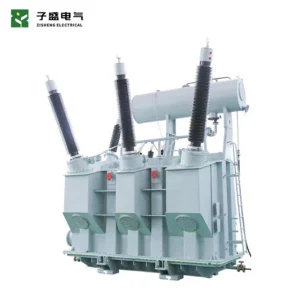
Ghana Cold Storage Transformer Selection: Defrost Loads and Refrigeration Restart
A cold store does not buy transformer capacity for its own sake. It buys a power supply that lets refrigeration protect stock through loading, defrost and recovery after an interruption. For Zisheng Electric enquiries, a Ghana cold storage transformer should therefore be reviewed against the operating sequence, not selected by adding compressor nameplates and rounding upward.
Keeping already-cold goods stable and pulling down the temperature of a new delivery are different duties. Defrost heaters, fans, pumps, lighting and battery chargers may share the supply. A quotation considering compressors alone can fit the headline refrigeration load but miss the demand of the working facility.
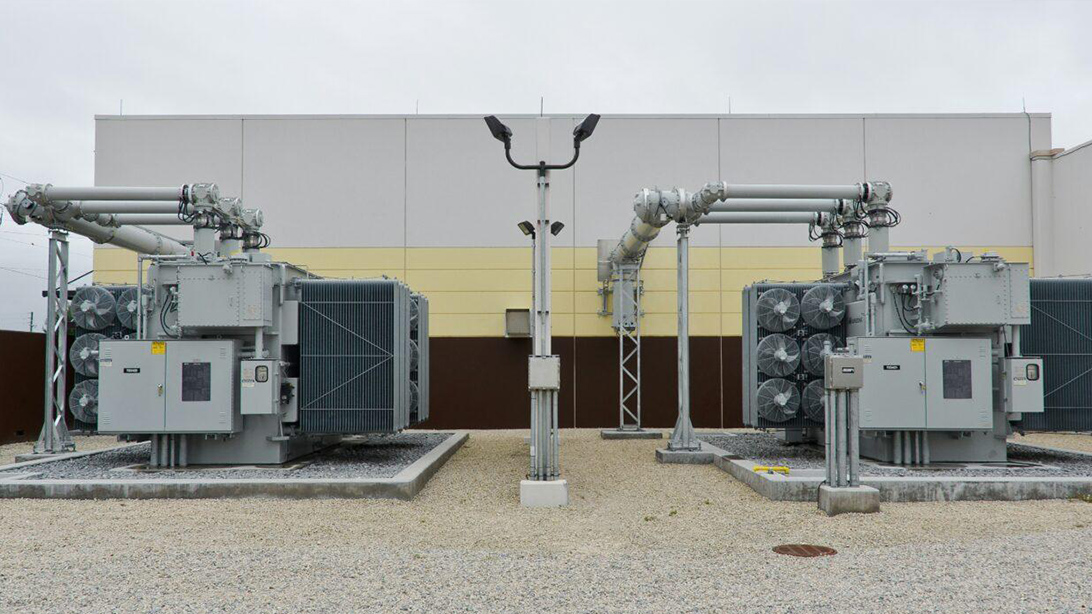
Define the Ghana cold storage transformer supply boundary
Ghana’s Energy Commission identifies a nominal system frequency of 50 Hz in its National Electricity Grid Code. This matters when refrigeration equipment or a transformer offer is based on another market: confirm the frequency of the transformer, motors, drives and auxiliaries together. Do not assume equipment offered for 60 Hz can operate at unchanged voltage and duty on a 50 Hz supply. Official reference: Ghana National Electricity Grid Code.
The connection voltage is a separate project input. Obtain the serving distributor’s written connection conditions, available capacity and metering boundary. A cold store receiving low-voltage service may not own a transformer. A medium-voltage connection changes the procurement scope: transformer ownership, switchgear, protection and maintenance responsibilities must be allocated explicitly.
The Energy Commission’s published register includes the National Electricity Distribution Code 2024. The electrical designer should establish the applicable requirements with the serving utility. This article does not assign universal voltage limits or connection ratings to every Ghanaian facility. Official codes register.
For a coastal site, ask whether the actual installation is exposed to salt contamination, moisture or wind-driven rain. For an inland facility, document its own ambient conditions, drainage and dust exposure. These are site questions, not claims that every Ghana location needs the same enclosure or coating. Connect the answers to the cooling and external-insulation requirements in the specification.
Build the load schedule around operating modes
Ask the refrigeration contractor for absorbed electrical power at the specified operating conditions. Cooling capacity in thermal kilowatts is not transformer input power. A compressor catalogue rating is not a complete description of demand across its operating envelope. Keep thermal duty, electrical input and motor rating in separate columns so they cannot be confused during bid comparison.
At Zisheng Electric, the useful engineering question for this enquiry is: which loads can actually operate together? Identify holding operation, product pull-down, defrost, cleaning, loading activity and recovery after supply loss. Put a duration against each condition. An occasional peak and extended recovery duty require different attention even when their maximum demand is similar.
Defrost is a scheduled electrical load
Where electric defrost is used, collect heater ratings and the control sequence for each evaporator group. Check whether groups overlap and whether associated refrigeration loads stop, continue or restart afterward. Do not assume perfect diversity because the design includes a timer. A manual override or controller reset may permit a different combination.
Hot-gas defrost has a different electrical consequence. Do not represent it with an invented heater allowance. Obtain the refrigeration designer’s sequence and identify the compressors, pumps and controls operating during that condition. The transformer schedule needs actual electrical loads, not a generic percentage assigned to the word defrost.
| Operating mode | Main risk | Procurement check |
|---|---|---|
| Normal holding | Compressor cycling hides auxiliary demand | Separate always-on and cycling loads; record supported demand values. |
| Product pull-down | Several stages run together for an extended period | State product intake assumptions and expected recovery duration. |
| Electric defrost | Heater groups overlap with rooms still cooling | Provide heater ratings, grouping and override combinations. |
| Power restoration | Several compressors request simultaneous restart | Agree sequencing, permissives and source recovery checks. |
| Backup operation | The transformer is outside the generator supply path | Draw the transfer boundary and identify supported loads. |
| Future extension | Physical space is mistaken for electrical capacity | List committed future loads separately from general allowances. |
Translate the schedule into usable capacity
For a balanced, approximately sinusoidal three-phase load, apparent power in kVA can be estimated from electrical input kW divided by power factor. Use the combined load condition rather than averaging unrelated nameplate power factors. Where drives or other nonlinear loads are material, request input-current and harmonic information; the simple calculation is only a starting point.
For illustration, 360 kW at a combined power factor of 0.90 corresponds to 400 kVA. This is arithmetic, not a proposed rating for a Ghana project. It excludes growth, environmental capability, transient performance and harmonic heating. Selecting a 400 kVA unit solely from that number skips the checks determining whether the rating is usable.
Compare continuous loading with the manufacturer’s stated service conditions. A nameplate rating does not establish performance inside a poorly ventilated room or enclosure. Request the offered cooling mode, permissible ambient conditions and installation requirements. Avoid adding a standard margin and treating that margin as proof that every thermal issue has been covered.
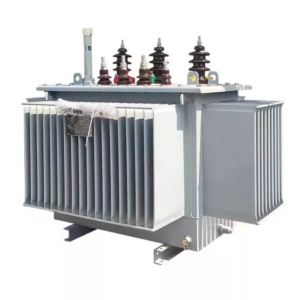
A 400 kVA oil-immersed transformer is one product size that may enter a comparison, not a default recommendation. The approved load schedule should determine the shortlist. Oversizing also has consequences: capital cost, space and losses must be considered alongside expansion and reliability.

Check refrigeration restart, not just full-load current
A facility may run normally once its compressors are established yet struggle to restart after an interruption. Review the worst credible combination: rooms calling for cooling, fans already running and another compressor attempting to accelerate. Available source strength, transformer impedance and feeder impedance affect the voltage at the load.
Motor starters and refrigeration controls need adequate voltage to function. If voltage falls too far, a compressor may fail to accelerate or a contactor may drop out, creating another restart attempt. Increasing transformer capacity alone is not always the best remedy. Starting method, cable arrangement and sequencing should be assessed together by the designer.
Schneider Electric’s engineering guidance connects large-motor starting, starting current and network voltage disturbance. Use a project-specific assessment rather than borrowing an acceptable voltage-dip percentage from an unrelated installation. Engineering reference: motor-starting network stress.
Do not invent a universal restart delay
Compressor manufacturers may impose anti-short-cycle requirements and other operating permissives. Coordinate those with the electrical recovery sequence. A timer chosen to ease transformer loading must not defeat refrigeration safety logic. Request a documented sequence and a clear response when the next compressor cannot start successfully.
The stock-protection plan needs input from the refrigeration specialist and operator. Electrical equipment selection cannot establish how long goods remain within their required temperature range. Room insulation, door opening and product condition matter. Keep that thermal assessment separate from the electrical calculation, then reconcile the required recovery duty.
Draw the backup path before specifying redundancy
A generator connected to the low-voltage essential board may bypass the main transformer during an outage. It must support essential refrigeration loads and their starting sequence, but it does not necessarily energize the transformer. If generation connects through another arrangement, the duties can change. The single-line diagram settles this question.
Define essential loads by operational consequence. Temperature monitoring, controls and communications may need continuity while compressors wait for staged restart. Identify which functions need an uninterruptible supply and which can accept a transfer interruption. A transformer does not provide backup energy; it converts voltage but does not store or generate energy.
Two transformers do not automatically create independent paths. A common incoming feeder, transfer board or control supply can remain a shared failure point. Ask what failure the proposed redundancy must tolerate, which loads must remain supplied and whether the surviving path has the required usable capacity.
Choose the installation with maintenance in mind
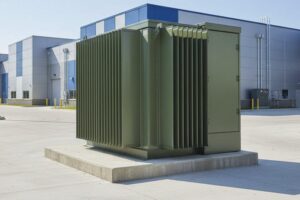
Outdoor oil-immersed and indoor dry-type equipment require different provisions. Oil containment, fire assessment, ventilation, access and local approval belong in the layout review. Do not install electrical equipment in a washdown or condensation-prone space simply because it is close to the refrigeration load.
Consider dry-type transformer options where the indoor arrangement supports them. Compare the complete installation, not transformer price alone. Our oil-immersed versus dry-type selection guide covers the broader equipment comparison; the cold-store operating sequence remains a separate input.
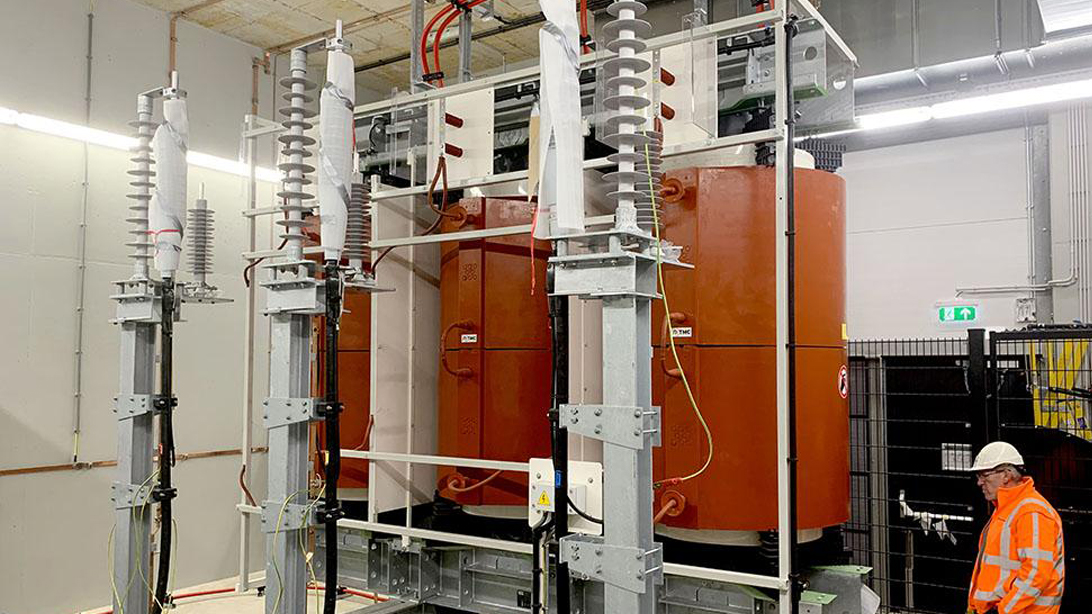
Keep the transformer accessible without moving stock or blocking loading operations. Confirm that isolation, replacement access and safe working areas remain practical when the facility is busy. A convenient construction location can become difficult to service once refrigeration pipework and warehouse equipment are installed.
Compare offers against one acceptance schedule
Give every bidder the same input package and require explicit deviations. A lower price may reflect an excluded enclosure, different cooling duty, missing accessories or an assumption that the utility owns part of the installation. Resolve these differences before treating offers as technically comparable.
| Bid item | Required statement | Acceptance evidence |
|---|---|---|
| Electrical rating | Capacity, frequency, voltages, taps and connection | Approved datasheet reconciled with supply and load documents. |
| Thermal capability | Cooling mode and service conditions | Manufacturer confirmation of duty and installation requirements. |
| Voltage performance | Impedance and motor-starting input data | Project study using offered transformer values. |
| Signals | Temperature indication, alarms and control interfaces | Accessory list and signal checks against the controls schedule. |
| Factory verification | Agreed tests and witness scope | Traceable reports for the supplied unit. |
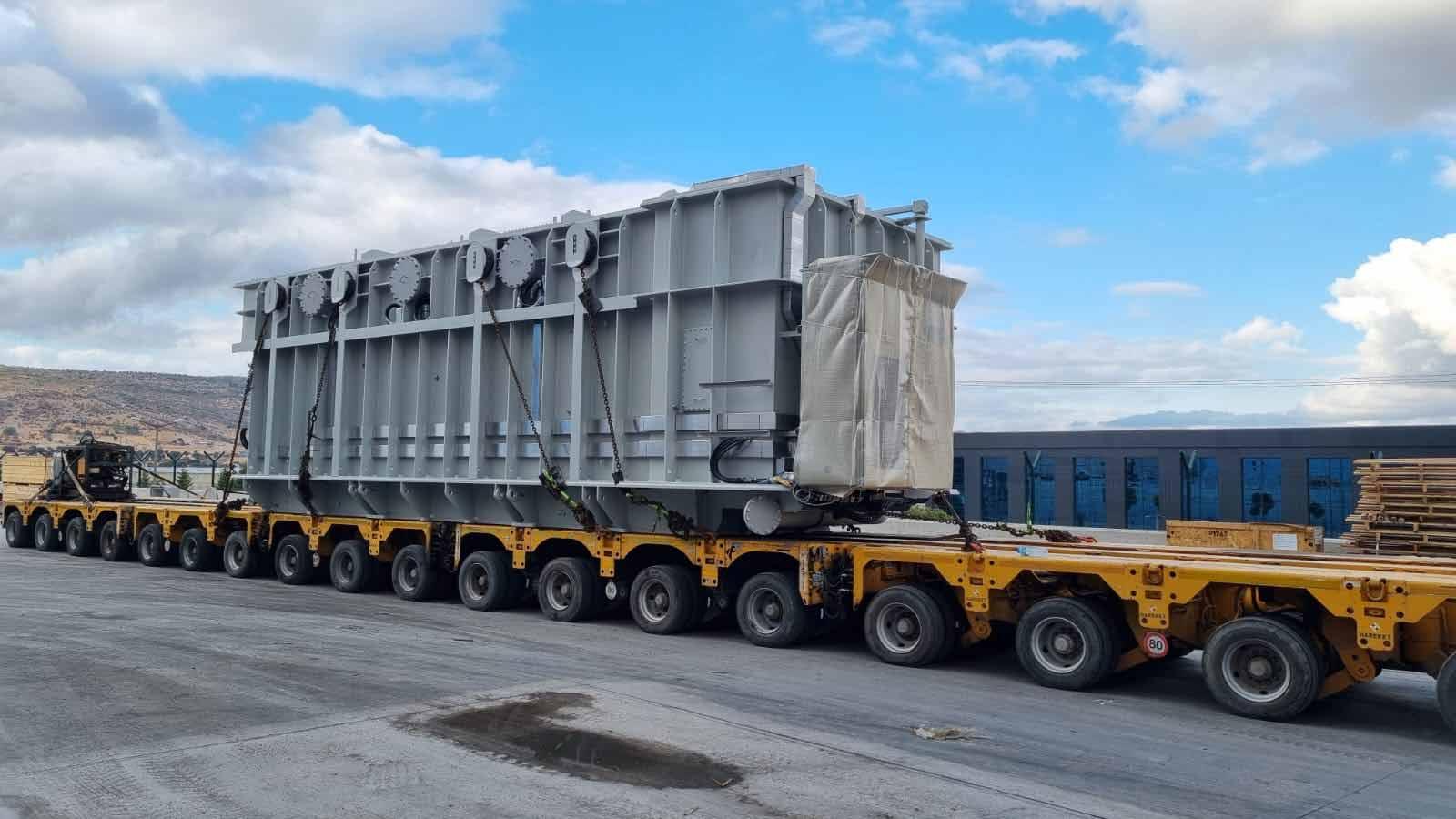
| Delivery | Dimensions, masses, handling and excluded work | Approved receiving plan and installer responsibilities. |
Factory tests verify specified transformer characteristics; they do not reproduce every cold-store sequence. Plan separate site checks of transfer logic, staged restart and alarm reporting with the relevant specialists. Use approved procedures and qualified personnel. Do not bypass protective functions to make a demonstration appear successful.
Our published Ghana food-processing transformer project page is related application reading. It is not proof that a different cold-store load profile, connection or backup arrangement has already been approved.
During commissioning, record the actual starting order and the operating loads present at each step. Compare measured demand with the approved schedule and investigate material differences before increasing production throughput. Keep the refrigeration and electrical records together: a successful empty-room demonstration does not establish performance during a full product intake. If operating staff later alter defrost grouping or restart priorities, review the electrical consequences rather than assuming the original capacity check still applies.
Send the operating sequence with the enquiry
For a Ghana cold storage transformer enquiry, send Zisheng Electric the utility connection conditions, single-line diagram, refrigeration electrical load schedule, defrost sequence, compressor starting data, backup arrangement and site conditions. Identify future expansion separately and name the party responsible for approving the complete electrical design.
Zisheng Electric can provide technical matching for oil-immersed transformers, dry-type transformers and related distribution equipment according to project capacity, voltage and installation requirements. Our engineering team will review the requirements and respond to project inquiries within 24 hours.
About ZISHENG ELECTRICAL
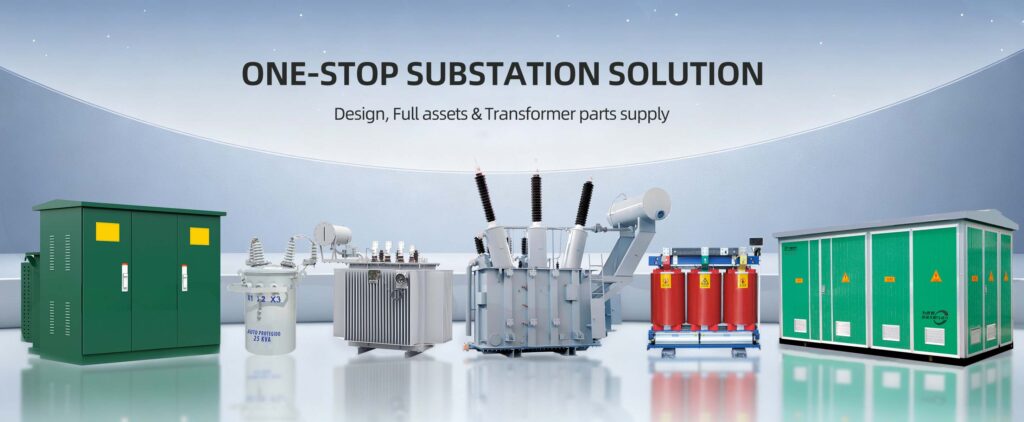
Zisheng are a professional 19+ years manufacturer in producing Oil-Immersed Transformers, Compact Substation, Pad Mounted Transformers, Pole Mounted Transformers and Dry Type Transformers. We own the certificates of ISO/CE/IEC 60076 and TUV Rheinland.
Transformers undergo rigorous FAT and type testing, support voltage/capacity customization. Welcome to consult for Catalog and Product. you can contact us at email [email protected].