Transformer Metering Interface for African Projects: CT/VT Duties, Ownership and Data
Zisheng Electric s'apprête à transformer metering interface as a boundary between electrical design, equipment supply and the way a project records energy. The power transformer may arrive exactly as ordered while the metering package remains incomplete: a current-transformer core has a different duty, the cabinet owner is unclear, or the data system applies the wrong multiplier. These gaps deserve attention before purchase orders separate the package into several suppliers’ scopes.
For African industrial estates, private distribution networks and EPC projects, there is no single regional metering arrangement that can be assumed. The utility connection agreement, owner requirements and applicable local rules must be confirmed for each project. This guide helps procurement teams organise that confirmation and compare offers on a consistent basis. It does not prescribe a country’s tariff, billing rule or mandatory accuracy class.
Define what the transformer metering interface must measure
Begin with the purpose of each measurement point. A utility settlement meter, a tenant allocation meter and an engineering monitor can serve different users and require different approvals. Put the purpose next to the point on the single-line diagram. A drawing labelled only “meter” leaves too much room for conflicting assumptions.
State the physical boundary represented by the readings. Identify whether the instrument transformers sit upstream or downstream of the power transformer, which feeders are included and whether auxiliary consumption is inside the boundary. This determines what an energy comparison can reasonably explain. Two readings taken across different boundaries should not be expected to agree without considering the equipment and loads between them.
For a multi-tenant site, identify the party that owns each instrument, receives the data and resolves a disputed reading. For an EPC supply package, distinguish the equipment delivery boundary from the future operational boundary. A contractor may install a cabinet that remains subject to another organisation’s approval and controlled access.
Record every permitted power-flow case
Ask whether the project includes captive generation, rooftop solar, storage or a future export arrangement. The metering brief should identify the permitted operating cases and the information needed for each. Do not assume that a meter described as bidirectional automatically resolves the connection permission, register mapping or commercial treatment of exported energy.
Include a simple operating-case list in the enquiry: normal import, standby supply, approved export if applicable, and the planned network expansion. Mark future cases as options when they have not been approved. This helps bidders price the required functionality without implying that every operating mode is already authorised.

Separate metering duty from protection duty
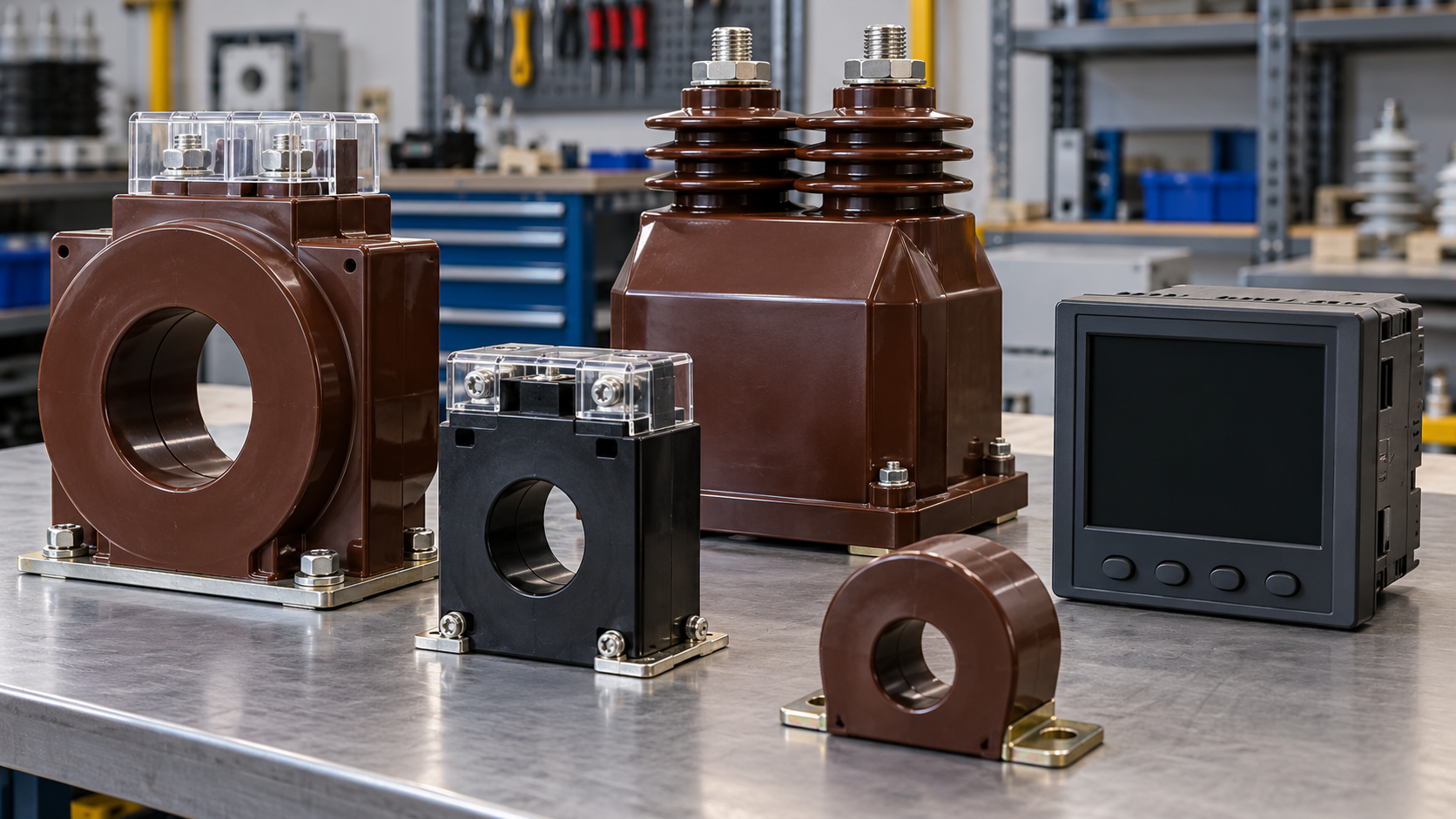
Prepare an instrument-transformer schedule that identifies the purpose of each core or winding. Request the proposed ratios, accuracy requirements, rated burdens, relevant operating range and test evidence for the intended use. Do not copy a protective CT description into a metering schedule simply because the primary conductor passes through the same assembly.
IEC 61869-2:2012 covers inductive current transformers used with measuring instruments and protective devices within its scope. IEC 61869-3:2011 addresses inductive voltage transformers. The applicable parts and editions should be agreed for the equipment offered; citing the series does not establish that a proposed device meets the particular purchaser’s metering requirement.
The purchaser should ask the responsible metering authority to confirm the required class and other acceptance details where its approval applies. Avoid writing a universal class into a regional article or purchase template. The correct schedule follows the approved measurement purpose, the connection requirements and the selected equipment arrangement.
Review the connected secondary circuit
The instrument transformer and meter do not operate as unrelated catalogue items. Ask the design team to account for the connected devices, secondary leads, test facilities and the relevant circuit burden in the selection. Request a documented assessment of the proposed circuit rather than assuming that the instrument transformer’s nameplate alone proves the full chain suitable.
Coordinate the work with the project’s transformer protection CT specification. Shared physical equipment can contain separate functional duties, and those duties should remain identifiable through drawings, terminal schedules, factory checks and site handover.
Compare supplier boundaries before comparing prices
A transformer supplier, switchgear manufacturer, metering contractor and controls integrator may each offer part of the required chain. Use a scope matrix to expose what lies between their quotations. The missing item is often a modest interface rather than the most expensive component, yet it can prevent acceptance of the complete installation.
| Interface | Question for the enquiry | Owner to identify | Evidence before acceptance |
|---|---|---|---|
| Measurement boundary | What equipment and loads are included in each reading? | Owner’s electrical designer | Approved single-line diagram with named points |
| CT and VT duties | Which core or winding serves each meter and protection function? | Instrument-transformer supplier and designer | Accepted schedule and relevant test records |
| Cabinet and access | Who supplies, owns and controls access to the enclosure? | Utility or owner, as applicable | Approved layout and responsibility schedule |
| Secondary connections | Who designs and verifies the complete circuit? | Design and installation contractors | Drawings, circuit assessment and completion records |
| Data interpretation | Where are ratios, units and direction conventions applied? | Metering and data-system integrators | Configuration record and witnessed comparison |
| Final approval | Who accepts equipment, readings and operational access? | Named approving parties | Signed acceptance with open items identified |
Price each offer against the same rows. If a bidder excludes the meter, ask whether that also excludes its enclosure, wiring, test facilities, communications hardware and commissioning support. Record the assumption in the comparison sheet. A low package price should not be treated as a saving until the omitted work has an owner and a realistic allowance.
Where the owner supplies an instrument, confirm its interface data before the receiving supplier freezes the design. A “free issue” item can still create engineering and integration work. Include that work in the programme and quotation rather than discovering it when the item reaches the factory.
Turn African project conditions into enclosure and access decisions
Describe the actual site rather than selecting an enclosure from a regional stereotype. Confirm temperature, solar exposure, humidity, dust, rainfall, drainage and any coastal salt exposure relevant to the location. Ask the equipment supplier how those conditions affect the proposed cabinet, instruments, cooling or preservation requirements.
The metering location also affects operation. Identify whether personnel can reach the cabinet without entering a separately controlled transformer area, whether vehicles obstruct access and whether routine reading or communications work requires an outage. The installation designer should resolve access and separation requirements for the actual layout.
For remote sites, clarify the intended communication path and support arrangements. Do not assume continuous mobile coverage or an available local specialist. Request a site-specific connectivity assessment and define how readings are retained and retrieved when the normal data path is unavailable. Keep network equipment, subscriptions and maintenance responsibilities in the supply matrix.
Coordinate auxiliary supply requirements with the Spécifications relatives à l'alimentation auxiliaire du transformateur. Confirm which instruments and communications devices depend on auxiliary power and what evidence is needed after a supply interruption. The article’s scope matrix should lead to an approved design, not substitute for it.
Specify the data chain in plain engineering terms
List the readings required by the owner and the system that will receive them. Identify units, register meanings, import and export conventions, time reference and the interval required for the intended analysis. Different teams may use the same word for different quantities; the agreed data schedule should remove that ambiguity.
Document where scaling is applied. The meter, gateway and supervisory system should not each apply the same instrument-transformer ratio independently unless the design explicitly requires that arrangement. During commissioning, compare the displayed value with the corresponding value at the receiving system under an agreed test condition and record the configurations used.
Define who can change configuration and how changes are recorded. A replacement meter or firmware change should trigger a controlled review of the interface information that might be affected. Preserve the accepted configuration with the equipment identity, so that a later unexplained difference can be investigated without guessing which settings were in service.
Plan for interrupted communication
Ask what happens to the required records when the link is unavailable. Specify the expected retention, retrieval and reconciliation behaviour for the actual devices offered. A successful live display during factory testing does not demonstrate that the required history will remain available after an extended interruption.
Keep cybersecurity and access controls within the owner’s approved policy. The procurement requirement should identify accountable parties and required interfaces, not distribute shared credentials through a general equipment manual. Confirm how the operator will receive legitimate access and how temporary commissioning access will be closed.

Accept the complete chain, not just a box of certificates
Separate component evidence from integration evidence. Instrument-transformer test records establish specific facts about those components; they do not prove every field connection, configuration or data mapping. The acceptance plan should identify the checks that belong at the factory and those that depend on the completed installation.
Use an agreed list of representative cases to demonstrate the required readings and data transfer. Record the equipment identities, test method, responsible personnel and results. Any checks involving electrical circuits must follow approved procedures under qualified supervision. A general procurement guide should not provide improvised secondary-circuit switching instructions.
Define the action for a mismatch before the final witness session. The responsible team should establish whether the issue concerns a component, connection, setting, data mapping or interpretation of the boundary. Record the correction and repeat the affected verification. Changing a multiplier to make two displays agree without resolving the cause is not a sound acceptance method.
Close out with drawings, schedules, component records, configurations, access arrangements and a support contact list. Keep commercial approval separate from technical completion where different parties are involved. The owner needs to know both whether the chain works as specified and whether the required authority has accepted its intended use.
Make future extensions visible in the first order
If additional feeders or tenants are planned, identify the confirmed interface provisions separately from equipment that may be purchased later. Reserve requirements should be supported by the design, not by a vague promise that the cabinet has spare space. Ask which physical, electrical and data interfaces will be available and what further approval will be required before they are used.
Keep the initial configuration as the accepted baseline. When a future extension is connected, the responsible team should revisit the measurement boundary, instrument duties and data mapping affected by the change. The operator also needs an updated list of the readings that can be compared. Without that record, a new load or altered boundary can appear to be a transformer performance problem when the two reports simply describe different parts of the network.
Request a coordinated transformer and metering package
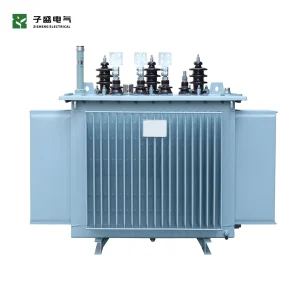
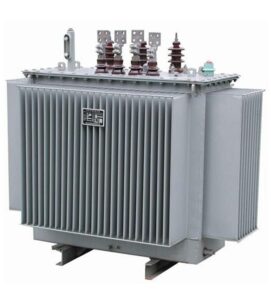
Zisheng Electric can review the transformer interfaces within a prefabricated substation package or a separate oil-immersed distribution transformer arrangement. The linked 315kVA product is an example, not a rating recommendation; capacity and all interface duties depend on the project data.
Pour un transformer metering interface enquiry, provide Zisheng Electric with drawings, datasheets, load lists, technical specifications, single-line diagrams, grid parameters, environmental conditions and installation-site conditions. Include measurement purposes, ownership boundaries, the utility’s confirmed requirements and the intended data system. Our engineering team will review the requirements and respond to project inquiries within 24 hours.
À propos de ZISHENG ELECTRICAL
Zisheng sont un fabricant professionnel avec plus de 19 ans d'expérience dans la production Transformateurs immersés dans l'huile, Sous-station compacte, Transformateurs montés sur socle, Transformateurs montés sur poteau et Transformateurs à sec. Nous possédons les certificats de ISO/CE/IEC 60076 et TUV Rheinland.
Les transformateurs subissent des tests de FAT rigoureux et des essais de type, prenant en charge la personnalisation de la tension/capacité. Bienvenue pour consulter pour Catalogue et Produit. vous pouvez nous contacter par email [email protected].