Transformateurs pour les entrepôts frigorifiques et les usines agroalimentaires africaines : charges frigorifiques, redondance et refroidissement
A reliable cold chain begins with a realistic electrical load model. Zisheng Electric works with EPC contractors, food processors, cold-room operators and industrial buyers to translate refrigeration duties into a practical transformer specification. A transformer for African cold storage cannot be selected from connected kilowatts alone. Compressor starting, simultaneous defrost cycles, fluctuating production demand, standby generation, high ambient temperature, voltage variation and limited maintenance resources all affect the design.
The engineering objective is not simply to keep the transformer below its nameplate rating. The supply must support product temperature, hygiene systems and production continuity during normal operation, motor starting and credible equipment outages. This guide explains the decisions that should be completed before an enquiry or purchase order is released.
Why Cold-Storage Loads Need a Dedicated Transformer Review
Refrigeration plants combine steady base loads with abrupt steps. Compressors, condenser fans, evaporator fans, pumps and conveyors may start at different times, while electric defrost heaters create additional blocks of demand. A transformer that appears adequate on an average-load calculation can still produce an unacceptable voltage dip when a large compressor starts. Conversely, applying a generous blanket margin without reviewing the operating sequence can increase capital cost, no-load losses and short-circuit duty without solving the actual problem.
Temperature control also changes the consequence of an outage. A brief interruption may stop production, disrupt automatic controls and begin a time-limited recovery process for stored products. The electrical design should therefore separate essential refrigeration loads from production loads, define restart priorities and decide whether one transformer, parallel units or an N+1 arrangement is appropriate.
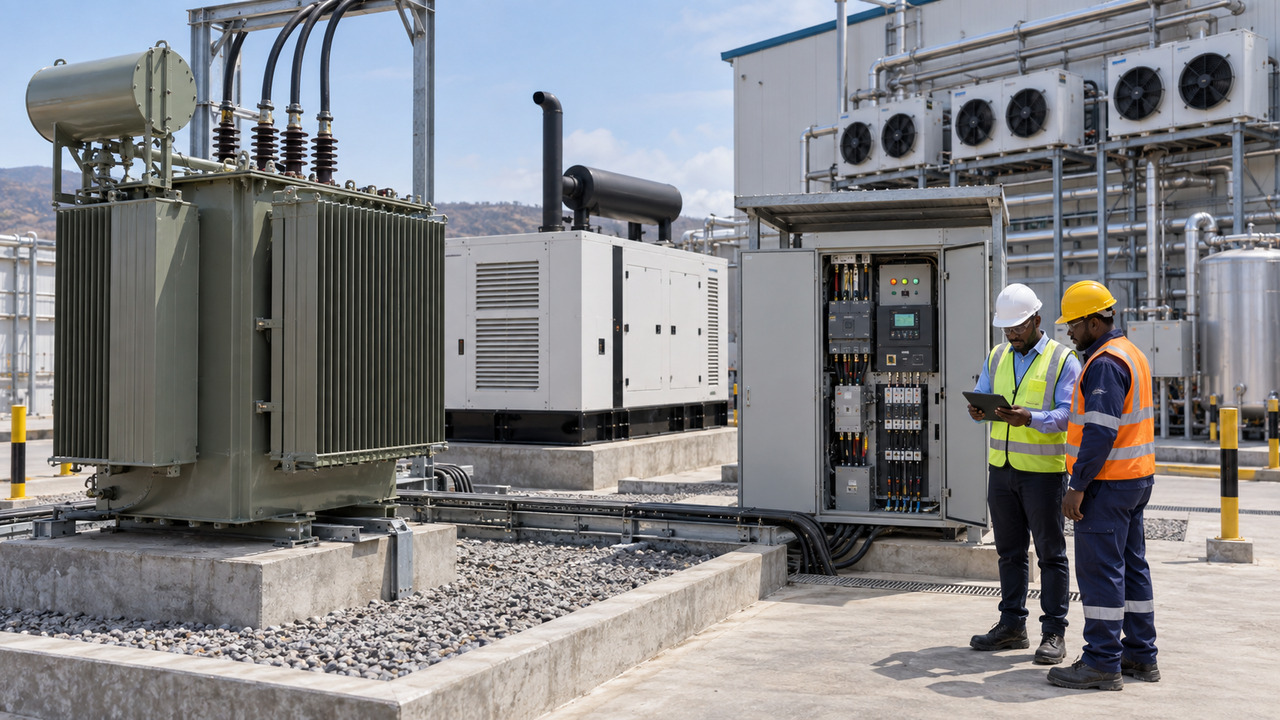
Build the Load Schedule Before Selecting the Rating
The load list should identify every consumer by operating mode, power factor, efficiency, starting method and duty cycle. Separate continuous refrigeration loads from intermittent production machines, cleaning systems, office services and future expansion. If measured demand data are available from an existing plant, use them to challenge assumptions, but do not treat a short measurement period as a complete design basis.
For a new project, prepare at least four operating cases: normal production, maximum refrigeration duty, restart after an outage and contingency operation with one major item unavailable. The transformer loading for each case should include realistic diversity. The study should also state which motors are permitted to start simultaneously and which are blocked by the control system.
Motor Starting and Voltage Dip
Large compressors may use direct-on-line starters, star-delta arrangements, soft starters or variable-frequency drives. Each option changes starting current, acceleration time, harmonics and control behavior. The supplier needs motor rated power, locked-rotor current or starting-current multiple, starting time, allowable voltage dip and the source impedance upstream of the transformer. Without these inputs, a transformer impedance value cannot be evaluated properly.
Starting studies should consider the voltage at both the transformer secondary terminals and the motor terminals. Long cable runs, busduct and switchgear add impedance. A transformer with lower impedance may improve motor-starting voltage but increase fault current. A higher impedance may reduce fault duty yet deepen the starting dip. The final choice is a coordination decision, not a single-equipment preference.
Transformer for African Cold Storage: Key Specification Decisions
| Contributions à la conception | Décision technique | Risk if left unclear |
|---|---|---|
| Maximum demand and diversity | Rated kVA, loading margin and expansion allowance | Chronic overloading or unnecessary oversizing |
| Largest motor and starting method | Impedance, voltage-dip limit and start sequence | Compressor trips or contactor dropout |
| VFD and nonlinear load share | Loss evaluation, neutral sizing and temperature-rise margin | Unexpected heating and nuisance protection operation |
| Ambient temperature and installation | Cooling arrangement, enclosure and ventilation interface | Reduced loading capability and accelerated insulation ageing |
| Fonctionnement du générateur de secours | Voltage ratio, tap range, energization method and protection settings | Generator voltage collapse or transformer inrush problems |
| Continuity requirement | Single unit, split bus, parallel units or N+1 concept | Product loss after a single equipment failure |
| Capacité de maintenance | Monitoring, spares and service access | Extended outage for a minor component failure |
Harmonics, Neutral Current and Nonlinear Loads
Modern refrigeration plants often use drives for compressors, pumps and fans. Drives improve control and efficiency, but their input current is not purely sinusoidal. The harmonic spectrum depends on converter topology, loading, line reactors, filters and the wider electrical system. The transformer manufacturer should receive the expected drive quantities, ratings and harmonic-current data instead of a generic statement that the plant contains VFDs.
Harmonic current increases winding and stray losses. It can also affect capacitor banks, generator controls and protection measurements. If many single-phase electronic loads are present, the neutral and phase balance should be reviewed. The design team should not apply an unexplained derating factor and assume the issue is closed. A useful specification identifies the study basis, expected distortion at the point of connection and the party responsible for any filter or reactor.
Ambient Conditions, Cooling and Installation Layout
Africa is not one uniform climate. The project data sheet should state actual maximum and minimum ambient temperatures, daily profile, altitude, humidity, dust exposure, rainfall, coastal influence and indoor or outdoor installation. If the location is not finalized, the purchaser should define a conservative envelope and update it before design release.
For an outdoor oil-immersed transformer, check radiator clearance, air recirculation, solar exposure, drainage, fencing and access for oil treatment. For an indoor unit, room ventilation becomes a shared interface between the transformer supplier and the building designer. The heat rejection used for ventilation calculations should reflect expected losses and loading, not only an assumed room temperature.
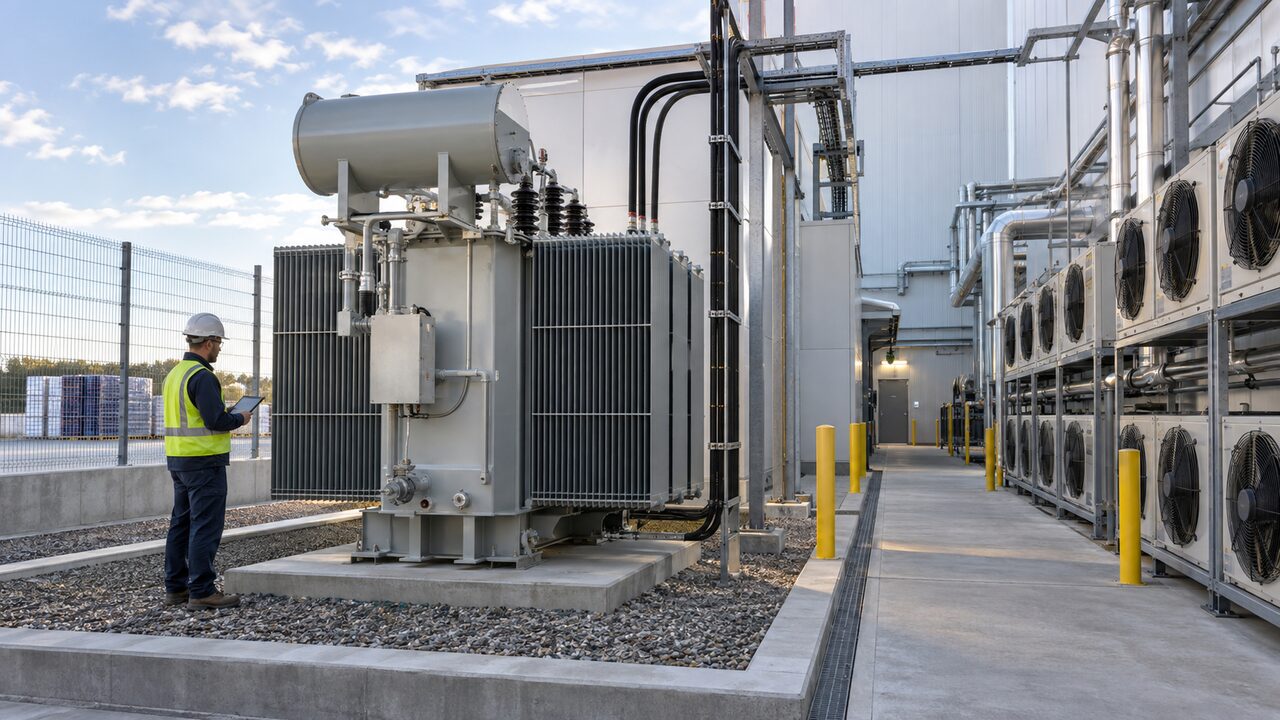
Food-processing sites also require disciplined separation between electrical equipment and wash-down or hygienic zones. Moisture migration, chemical cleaning agents and condensation can affect enclosures, cable entries and control cabinets. The site layout should define environmental zones and specify appropriate protection for every interface rather than assigning one enclosure rating to the entire project.
Standby Generation and Black-Start Sequence
Many cold-storage projects include standby generation because grid interruptions can threaten stored products. The generator-transformer interface needs a separate operating study. Confirm whether the generator energizes the transformer from the low-voltage side, supplies a selected bus or operates through an automatic transfer system. Transformer inrush may be significant relative to generator capacity, especially when residual flux and closing angle are unfavorable.
The restart sequence should restore controls, ventilation, pumps and selected compressors in controlled stages. Starting all refrigeration motors immediately after transfer can overload the generator even when steady-state demand is acceptable. The protection philosophy must distinguish grid-connected and generator-supplied conditions because available fault current and voltage behavior can differ substantially.
Continuity, Redundancy and Bus Arrangement
A single large transformer is simple, but it creates a concentrated outage risk. Two smaller transformers with a sectionalized bus may allow essential loads to continue after one unit is isolated. Parallel operation can provide flexibility, although it requires compatible ratios, vector groups, impedance characteristics and tap positions. The economic comparison should include switchgear, protection, civil area, cable routes, no-load losses and maintenance access.
Define contingency loading rather than assuming each transformer must carry every connected load indefinitely. The owner may accept controlled shedding of production machinery while keeping cold rooms and critical services energized. A written load-shedding matrix makes this decision auditable and prevents different assumptions among the transformer supplier, switchgear supplier and control-system integrator.
Protection, Monitoring and Control Interfaces
The transformer protection schedule should identify source and load-side breakers, current-transformer data, temperature alarms and trips, oil-level signals, pressure devices and cooling controls. Map each signal to the plant control system and state the required contact logic. For remote sites, useful monitoring may include winding or oil temperature, load current, cooling status and event records, but instrumentation should remain maintainable by the site team.
Protection settings must coordinate with motor starting and downstream devices. An instantaneous element set without reference to starting current can interrupt a healthy compressor start. Conversely, excessive delay can expose equipment to avoidable fault energy. The coordination study should be completed using final transformer impedance and actual cable data.
Procurement Documents and Factory Acceptance
A complete enquiry should include the single-line diagram, load schedule, motor data, system voltages, frequency, earthing method, fault level, environmental conditions, installation layout, cable or busduct interfaces and required accessories. State whether the unit will operate with a generator, whether parallel operation is planned and which party supplies marshalling cabinets, neutral equipment and surge protection.
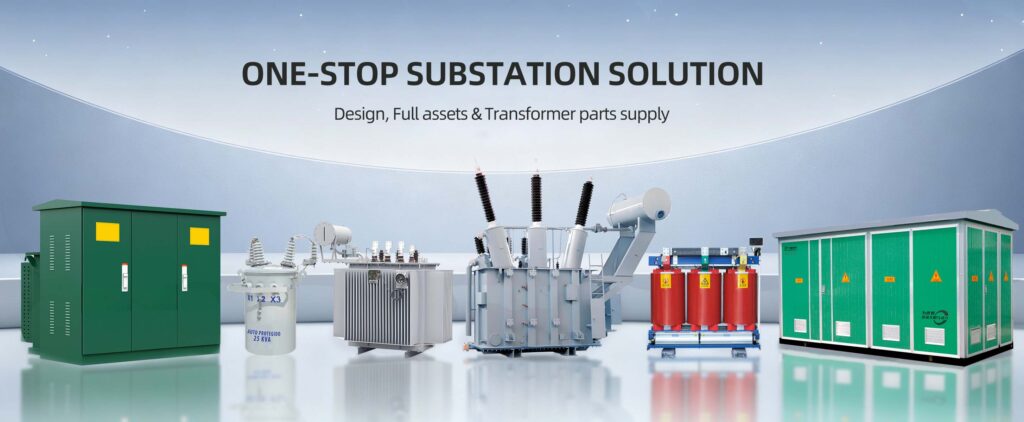
The factory acceptance plan should connect tests to project risks. Routine electrical tests confirm key transformer characteristics, while functional checks should prove alarms, trips, temperature devices, cooling stages and terminal identification. Review drawings and nameplate data before the witness date so the FAT does not become the first detailed design review. Zisheng Electric can coordinate an transformateur immergé dans l'huile, a compact transformateur de sous-station or a customized transformer solution against the approved project interfaces.
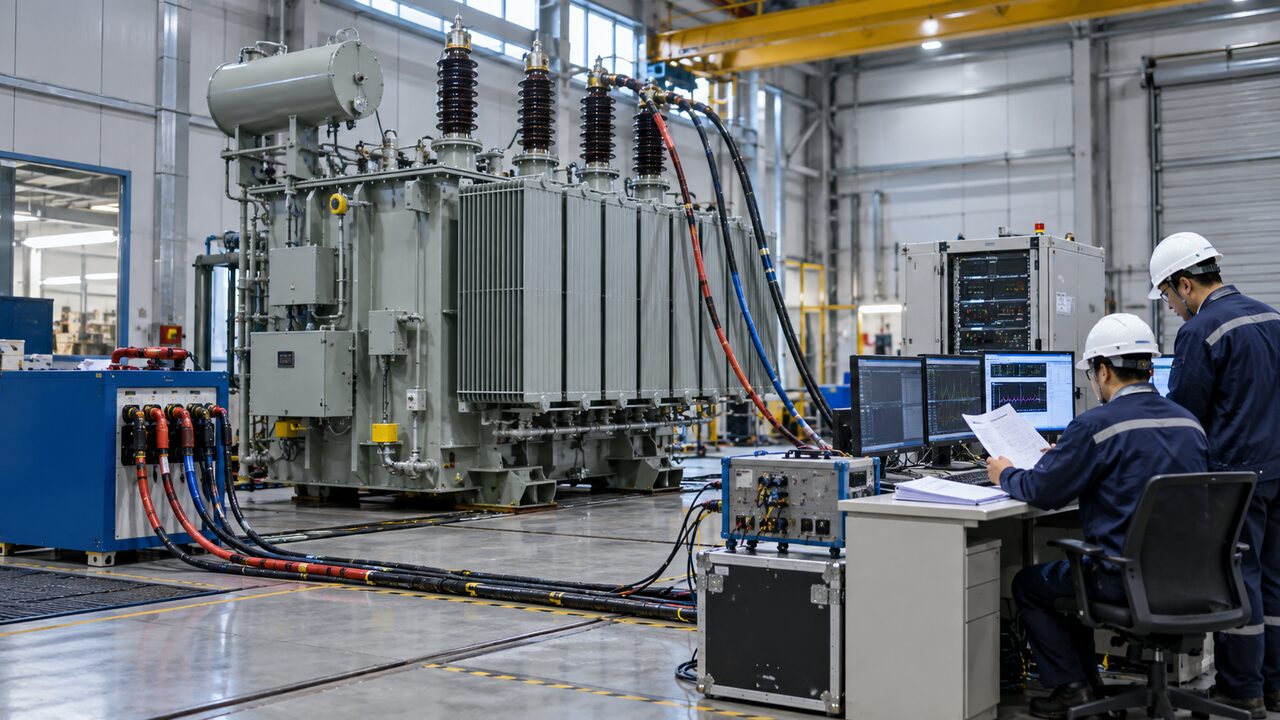
Site Readiness, Commissioning and Spare Parts
Before delivery, confirm foundation dimensions, lifting route, crane access, cable trenches, earthing points, ventilation and oil-containment works. Receipt inspection should record shipping condition and accessory quantities. Commissioning should then verify insulation condition, ratio and vector group, winding resistance where required, protection circuits, control wiring, earthing and phase sequence before energization.
Spare parts should reflect outage consequences and local lead times. Practical items can include cooling-fan motors, temperature indicators, relay contacts, gaskets and selected control components. The final list should match the supplied design. Generic spares that do not fit the installed transformer provide little resilience.
Plan the First Energization and Controlled Load Build-Up
The first energization should be separated from the first full production run. Prove transformer protection, cooling controls, meters and communications before refrigeration machinery is started. Then add loads in the approved sequence while recording secondary voltage, current balance, transformer temperature, motor acceleration and any alarms. This controlled build-up provides a baseline for later troubleshooting and confirms that the study assumptions match the installed system.
Commissioning teams should also test abnormal operating cases that can be simulated safely. These may include loss of a cooling stage, transfer to standby supply, delayed compressor restart and load shedding after a transformer or bus section is unavailable. The objective is not to create every possible fault. It is to demonstrate that the agreed operating philosophy is implemented in protection and control logic, not only described in a report.
Document Operating Limits for the Site Team
After acceptance, convert design studies into simple operating information. State normal loading limits, contingency loading duration, tap position, required cooling availability, restricted start combinations and the response to temperature alarms. Attach these limits to the operating procedure and training package. A technically correct transformer can still be misapplied if the site team receives only a nameplate and a generic manual.
Baseline records should include energized voltage, phase currents, temperature indications, alarm status and selected power-quality measurements. Trending these values helps the owner identify changes caused by expansion, blocked ventilation, unbalanced loading or deteriorating connections before they become outages.
Related Engineering Guidance
Projects with sensitive electronic loads can compare this approach with Zisheng Electric’s guidance on a transformer for African data centers. Coastal projects should also review the article on corrosion, humidity and cooling specification. Where compressor starting is the main constraint, the discussion of Régulation de la tension des transformateurs pour les installations industrielles africaines provides a useful interface checklist.
Prepare the Transformer Enquiry Around Operating Risk
The correct transformer for African cold storage is the result of a coordinated load, starting, harmonic, environmental and continuity review. Send Zisheng Electric the drawings, transformer data sheet, load schedule, motor list, technical specification, single-line diagram, grid parameters, environmental conditions and installation-site constraints. Identify the required outage philosophy, generator interface, future expansion and spare-parts expectations. Our engineering team will review the requirements and respond to project inquiries within 24 hours.
À propos de ZISHENG ELECTRICAL
Zisheng sont un fabricant professionnel avec plus de 19 ans d'expérience dans la production Transformateurs immersés dans l'huile, Sous-station compacte, Transformateurs montés sur socle, Transformateurs montés sur poteau et Transformateurs à sec. Nous possédons les certificats de ISO/CE/IEC 60076 et TUV Rheinland.
Les transformateurs subissent des tests de FAT rigoureux et des essais de type, prenant en charge la personnalisation de la tension/capacité. Bienvenue pour consulter pour Catalogue et Produit. vous pouvez nous contacter par email [email protected].