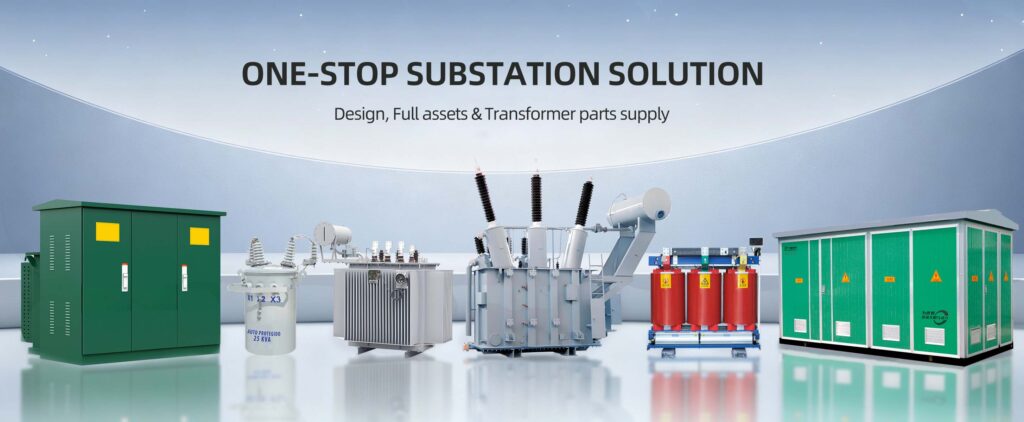
Acquisition de transformateurs pour les cimenteries andines : altitude, moteurs de four et charges harmoniques
Transformer procurement for a cement plant in the Andes is not a simple comparison of kVA, voltage ratio and price. The electrical system must carry crushers, raw mills, kiln drives, large fans, conveyors and auxiliary loads through repeated starts and changing production conditions. At elevated sites, reduced air density also changes the thermal and dielectric assumptions used for equipment installed outdoors or in naturally ventilated rooms. Zisheng Electric approaches an Andean cement plant transformer enquiry by reviewing the complete path from utility source to feeder, transformer, switchgear and the actual motor or drive load.
Why Cement Plant Loads Need a System-Level Review
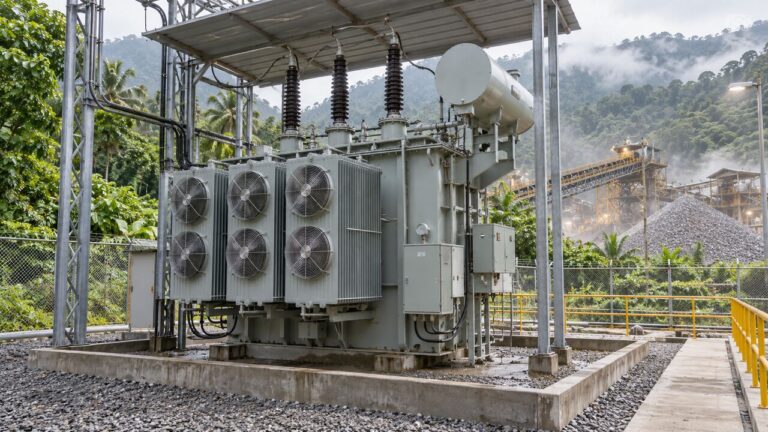
A cement line combines steady process loads with severe transient duties. A main fan may run continuously, while a crusher or conveyor can restart after a process trip. Variable-frequency drives reduce some starting current, but they introduce harmonic current and switching characteristics that must be reflected in the transformer loss evaluation. If the transformer is selected only from the connected-load total, the result can be either an oversized unit with unnecessary capital cost or a unit that overheats during normal production.
For procurement teams, the most useful inputs are the load schedule, motor list, starting method, diversity assumptions and the single-line diagram. At Zisheng Electric, we normally compare the stated maximum demand with the operating sequence. A transformer that looks adequate on a spreadsheet may still experience an unacceptable voltage dip when a large motor starts while the kiln and induced-draft fans are already running.
Motor Starting and Voltage Dip
The transformer impedance, upstream source strength and feeder impedance all contribute to the voltage available at the motor terminals during starting. A lower transformer impedance generally helps voltage regulation but increases prospective fault current. A higher impedance may limit fault duty, yet it can deepen the starting voltage dip and create nuisance trips in contactors, drives or control power supplies. This is a system trade-off, not a value to copy from a previous project.
Drive Loads and Harmonic Heating
Large variable-frequency drives can change the current waveform seen by the transformer. Harmonic current raises winding and stray losses, and the effect depends on drive topology, loading and any input reactors or filters. The transformer specification should identify the drive population and expected harmonic spectrum where available. A generic statement such as “suitable for VFD loads” is not enough for a design review.
Altitude Must Be Converted into Design Inputs
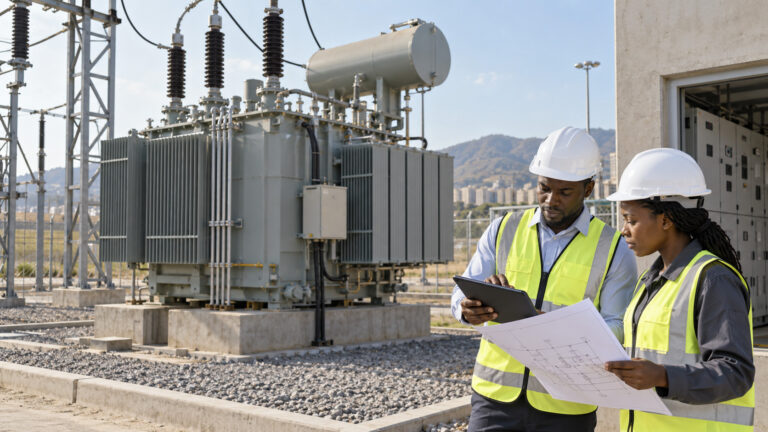
“High altitude” is not a complete technical requirement. The purchaser should state the installation elevation, minimum and maximum ambient temperatures, daily temperature range, solar exposure and whether the transformer is indoors or outdoors. Reduced air density weakens natural convection and can affect external insulation performance. The manufacturer can then determine whether additional cooling surface, revised temperature-rise limits, larger clearances or a different bushing arrangement is necessary.
The same site may contain equipment at different elevations. A plant substation near the quarry can sit higher than the main process area. Procurement documents should therefore identify the altitude at each transformer location rather than apply one approximate figure to the whole project.
| Données d'entrée du projet | Pourquoi est-ce important | Vérification des approvisionnements |
|---|---|---|
| Exact installation altitude | Affects cooling performance and external insulation assumptions | State elevation for each transformer and ask the supplier to document design treatment |
| Largest motor and starting method | Determines transient current and voltage dip | Provide motor kW, efficiency, power factor, locked-rotor data and starting sequence |
| VFD and rectifier load share | Harmonics can increase winding and structural losses | Submit drive type, pulse number, reactors or filters, and expected harmonic data |
| Utility short-circuit level | Influences fault current, protection and mechanical withstand duty | Confirm minimum and maximum source fault levels at the point of connection |
| Dust and maintenance conditions | Cement dust can obstruct cooling surfaces and contaminate terminations | Define cleaning access, enclosure details and maintenance interval |
| Future production stage | Later grinding or kiln expansion can change continuous demand | Separate firm loads, standby loads and realistic future margin |
Dust, Cooling and Maintainability
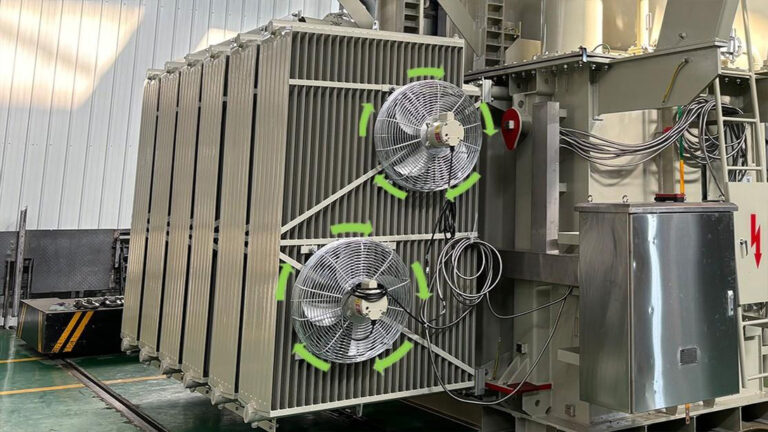
Cement dust is abrasive and persistent. It accumulates on radiators, cable boxes and ventilation paths. More cooling surface is helpful only when the site team can inspect and clean it. Closely spaced radiators installed against a wall may meet the drawing requirement but become difficult to maintain. The layout should preserve access to valves, fans, marshalling boxes, neutral connections and removable radiators.
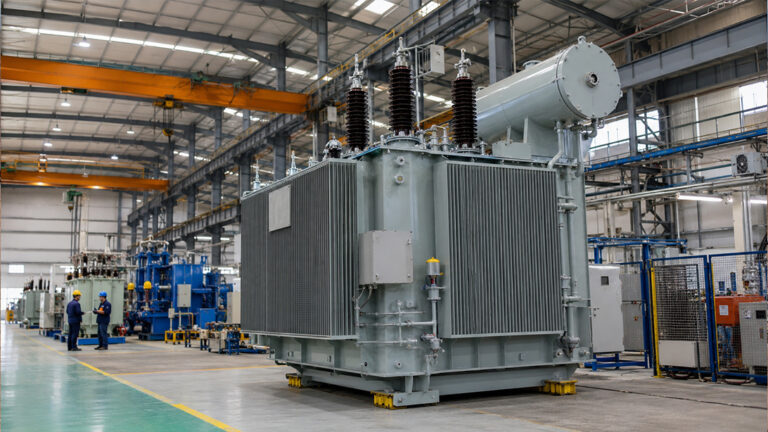
For indoor dry-type units, room ventilation needs an actual heat-rejection calculation. For outdoor oil-immersed units, the review should cover radiator orientation, fan redundancy where forced cooling is used, cable entry sealing and corrosion protection appropriate to the microclimate. The manufacturer’s transformateur immergé dans l'huile design must be coordinated with the civil layout rather than selected after the transformer room is fixed.
Protection and Switchgear Coordination
The transformer rating cannot be frozen independently of switchgear. The selected impedance changes the available short-circuit current on the low-voltage bus, which affects breaker interrupting ratings and protection settings. Motor acceleration time may also overlap with transformer overcurrent elements if the protection study uses generic curves. Procurement teams should request guaranteed impedance, loss data and thermal limits early enough for the EPC contractor to complete the coordination study.
When the plant includes a generator or captive power source, operating modes must be listed clearly. Island operation often has a weaker source and different fault current than utility operation. The transformer tap range and tap position philosophy should be checked against both modes. For a multi-transformer plant, parallel operation additionally requires compatible ratios, vector groups, impedance and tap positions.
What to Freeze Before Purchase Order
Electrical Data
Confirm rated power for each cooling stage, primary and secondary voltages, frequency, vector group, neutral grounding method, tap changer type and range, impedance, insulation requirements, loss evaluation method and accessory supply voltage. A transformateur de sous-station quotation should clearly separate guaranteed values from indicative values.
Mechanical and Interface Data
Freeze overall transport limits, wheel gauge or skid arrangement, lifting and jacking points, terminal orientation, cable box dimensions, CT locations, marshalling cabinet position, oil containment interface and fire-separation constraints. Late changes to bus duct or cable entry direction can force avoidable redesign after manufacturing has started.
Documentation and Inspection
Agree the drawing schedule, datasheet approval sequence, inspection and test plan, routine test records, witness points and final document index. The FAT should verify the ordered configuration and records, not become the first occasion when the EPC team checks the specification. Buyers can also review our guidance on industrial transformer cooling et Options de transformateurs à sec when comparing indoor and outdoor arrangements.
Commercial Comparison Without Hiding Engineering Risk
A technically low-priced offer can become expensive if it omits altitude treatment, drive-load allowance, terminal enclosures, monitoring devices or required documentation. Bid evaluation should use a deviation schedule. Ask each supplier to state exclusions, guaranteed losses, cooling rating, impedance tolerance basis, accessory brands, drawing lead time and test scope in the same format.
Spare strategy also deserves an early decision. The project may need spare fans, temperature sensors, gaskets, relays or a replacement bushing set, but the correct list depends on installed accessories and local support arrangements. Avoid copying a generic spare list from another transformer.
Information to Send for Technical Matching
Pour un Andean cement plant transformer enquiry, send the single-line diagram, transformer datasheet, load schedule, motor list, drive information, utility fault level, site altitude, ambient profile, layout constraints and project specification. Zisheng Electric can match oil-immersed or dry-type transformer configurations to the actual capacity, voltage level, environmental conditions and EPC interfaces. Our engineering team will review the requirements and respond to project inquiries within 24 hours.
À propos de ZISHENG ELECTRICAL
Zisheng sont un fabricant professionnel avec plus de 19 ans d'expérience dans la production Transformateurs immersés dans l'huile, Sous-station compacte, Transformateurs montés sur socle, Transformateurs montés sur poteau et Transformateurs à sec. Nous possédons les certificats de ISO/CE/IEC 60076 et TUV Rheinland.
Les transformateurs subissent des tests de FAT rigoureux et des essais de type, prenant en charge la personnalisation de la tension/capacité. Bienvenue pour consulter pour Catalogue et Produit. vous pouvez nous contacter par email [email protected].