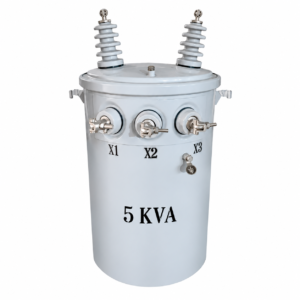
SEC Transformer Prequalification: What Saudi EPC Buyers Must Verify Before RFQ Release
For a Saudi EPC bid, identifying a technically suitable transformer is only one part of supplier selection. The buyer may also need to confirm whether the proposed manufacturer, exact material category and applicable Saudi Electricity Company specification are acceptable for the intended utility scope. Zisheng Electric has prepared this practical guide to SEC transformer prequalification because the check is often reduced to a logo, an old vendor letter or a screenshot that does not establish current project eligibility.
The latest public SEC distribution-network manufacturer list located during this review is titled “List of Prequalified Manufacturers/Suppliers for Distribution Networks Materials till June 2025.” As of October 2026, buyers should not assume that this public document is the current approval record for a new tender. Use it as a reference point, then obtain project-specific confirmation from SEC, the owner or the tender portal. This article does not claim that Zisheng Electric is on an SEC approval list.
What SEC Transformer Prequalification Actually Needs to Prove
A manufacturer name on a list is not a universal approval for every transformer. The public list is structured around material or equipment categories, specification numbers, revision information, manufacturer details, agents or representatives, and remarks. Some remarks narrow the voltage, product or factory covered. That structure is important: procurement eligibility belongs to a defined combination, not simply to the corporate brand.
The official SEC distribution material specifications page provides access to specification documents, while the public supplier document identifies prequalified sources for distribution-network materials at its stated date. Tender teams should work with both records and with the project’s current instructions to bidders.
This distinction changes the RFQ. Instead of asking “Are you SEC approved?”, ask the bidder to identify the exact manufacturer legal name, factory location, material category, specification number and revision, voltage or item limitations, and evidence of current status. The response can then be checked against the procurement package.
SEC Transformer Prequalification Decision Table
| Verification item | Pièces à demander | Typical risk if skipped | Responsible reviewer |
|---|---|---|---|
| Manufacturer identity | Legal name and exact factory location matching the approval record | Approval belongs to a different affiliate or plant | Procurement and vendor quality |
| Material category | List entry and item description for the offered transformer | A general transformer listing is applied to the wrong product family | Lead electrical engineer |
| Specification baseline | SEC/SDMS number and revision required by the tender | Bid is technically based on an outdated requirement | Document control and engineering |
| Voltage or item limitation | Remarks, approved item codes and scope boundaries | A listed supplier is used outside the approved range | Owner/utility interface manager |
| Status date | Current confirmation from the authorized project channel | An expired or superseded public list is treated as current | Contracts and procurement |
| Project applicability | Tender clause or written owner/SEC acceptance | Utility distribution approval is assumed to cover a private industrial project, or vice versa | Project manager |
The table separates technical compliance from vendor eligibility. A transformer may meet the electrical specification but fail an approved-source rule. Conversely, a prequalified source may still need to demonstrate that its offered design, losses, accessories, documents and tests meet the current project requirement.
Start with the Project Boundary, Not the Vendor List
Before reviewing names, determine who owns the asset and which network interface applies. A Saudi industrial plant may connect to SEC but procure equipment for a privately owned internal network. A distribution substation handed over to the utility may follow a different material and approval path. An oil and gas owner can add its own standards and vendor requirements. The EPC team should not transfer an approval rule from one boundary to another without written confirmation.
The single-line diagram, scope split and connection agreement are practical starting points. Mark the point of common coupling, ownership boundary, metering point and equipment transfer obligations. Then map every transformer to the governing package. This prevents a blanket “SEC-compliant” label from obscuring different requirements for utility-owned, customer-owned and temporary equipment.
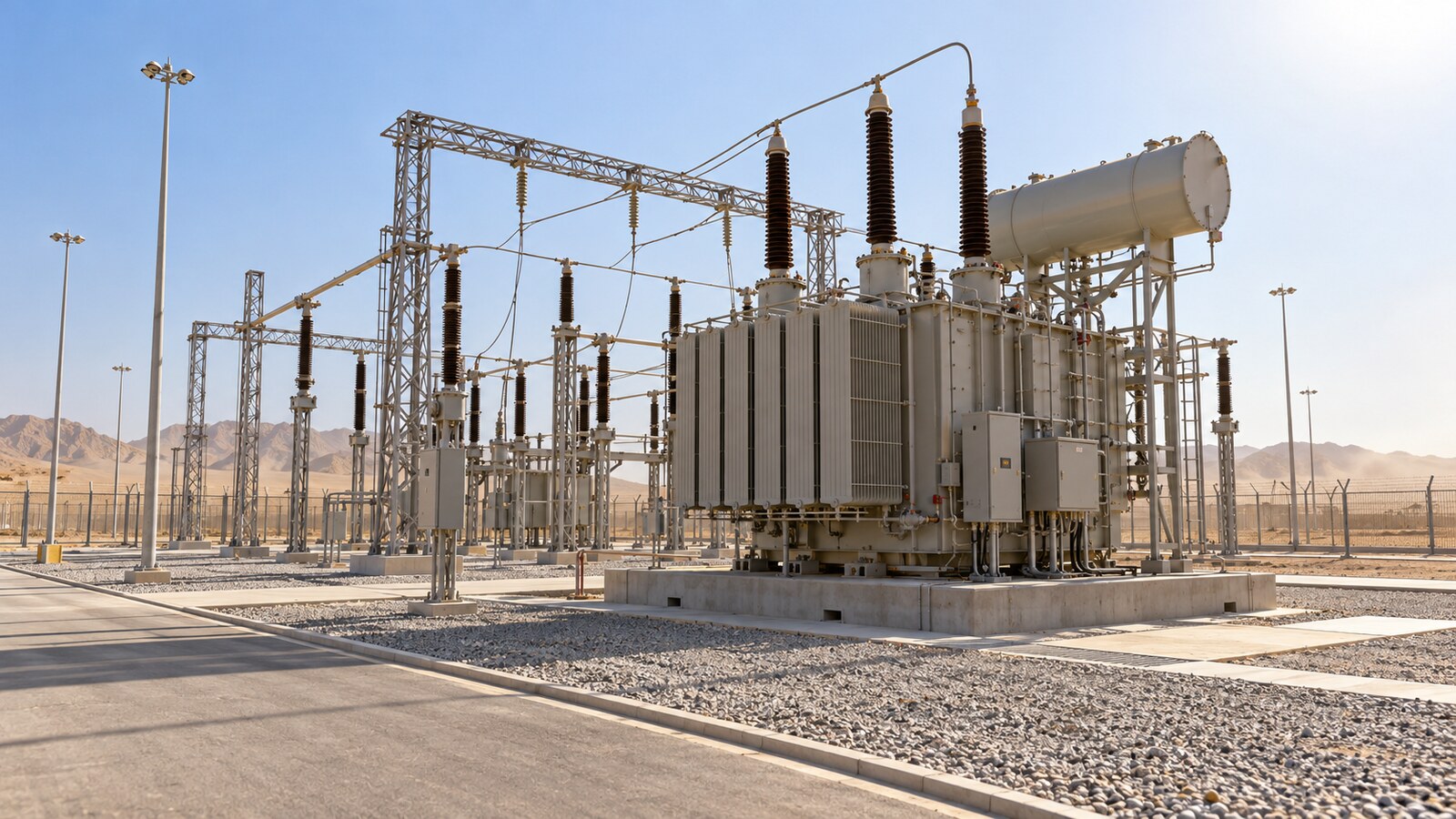
Regional design factors remain important after the approval question is closed. The Saudi Arabia transformer selection guide for high-temperature sites explains why actual ambient conditions and cooling assumptions must be reviewed, while the Guide de sélection des transformateurs solaires en Arabie saoudite addresses renewable-energy load patterns and project interfaces.
Read the Public List at the Item Level
Match the exact legal entity
International groups may operate several factories and subsidiaries. Prequalification evidence for one legal entity or production site should not be used automatically for another. Ask for the name in English and, when relevant, the registered Arabic name, factory address and manufacturing location. Compare these fields with the public record and current tender documents.

Check the specification number and latest required revision
The SEC public materials page groups documents by equipment type. The buyer must identify the specification that actually covers the offered transformer. A distribution transformer, station auxiliary transformer and power transformer can belong to different technical packages. The tender may also issue amendments or project-specific data sheets that take precedence over a general web document.
Record the baseline in the bid tabulation: document number, revision, issue date and source. If the manufacturer has priced an earlier revision, ask for a quantified deviation and schedule impact. Never hide a revision difference inside a general “complies” statement.
Read every limitation and remark
Remarks can limit approval to certain voltages, item codes, designs or conditions. A factory visit may be required. An agent or local representative may be named. These details are not administrative decoration; they can determine whether the offer is acceptable. Capture each limitation in the technical query register and obtain written closure before award.
Build an RFQ Package That Produces Verifiable Bids
A strong RFQ does not ask every bidder to interpret the utility boundary from scratch. Include the approved single-line diagram, system voltages, frequency, earthing arrangement, rated capacity, impedance requirements, loss evaluation, tap range, cooling method, environmental conditions and installation arrangement. Add the exact SEC or project documents that the bidder must address.
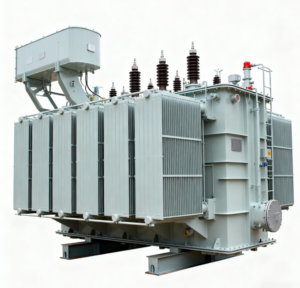
For medium-voltage Saudi distribution duty, a unit such as a 10 MVA 33/11 kV oil-immersed transformer may be technically relevant, but its suitability cannot be decided from voltage ratio and capacity alone. The owner must confirm approval scope, insulation levels, losses, accessories, protection interfaces, civil constraints and test requirements.
Smaller industrial loads may consider a Transformateur à huile de 300 kVA, while higher-voltage substation packages may evaluate a Transformateur de puissance de 35 kV ou 46 kV. These links describe product families, not automatic SEC approval. The procurement team must always compare the offered configuration with the current tender and authorized approval record.
Separate Four Different Compliance Statements
Bid documents often mix four statements that should remain separate:
- Designed to an IEC standard: the technical design references stated IEC requirements.
- Meets a project or SEC specification: the offer has been checked clause by clause against the named document and revision.
- Passed specified tests: the manufactured unit has objective test evidence under the approved programme.
- Manufacturer is currently eligible: the exact source and product scope are accepted for the particular procurement.
None of these statements automatically proves the others. A clear compliance matrix should have a separate column for each. That approach also prevents marketing certificates from replacing project evidence. Zisheng Electric’s overview of transformer solutions for Saudi industrial projects discusses the wider design and delivery context, but every live tender still needs its own document review.
Use a Two-Stage Vendor Gate Before Award
Stage 1: eligibility gate
Procurement confirms the manufacturer, factory, category, approval boundary and status through the channel named by the owner or tender. If confirmation is missing, the offer remains conditional. A lower price should not be treated as compliant while a fundamental eligibility question is open.
Stage 2: technical and delivery gate
Engineering then reviews the complete transformer offer: guaranteed particulars, drawings, losses, impedance, vector group, insulation levels, accessories, coatings, cooling, monitoring, FAT, spares, packing and site support. Vendor quality reviews manufacturing controls and subcontractors. Logistics reviews transport dimensions, route restrictions and unloading responsibility.
This sequence saves time. It avoids spending weeks optimizing a technically attractive bid that cannot pass the approved-source requirement. It also prevents the reverse mistake—awarding solely because a name appears on a list without checking the actual design.

Manage Clarifications Without Losing Traceability
Each clarification should identify the source question, responsible party, due date and impact on price or schedule. Store evidence in the vendor document register, not only in email. If the owner confirms an exception or project-specific acceptance, link that approval to the purchase order and manufacturing release note.
Use precise language. “Vendor approved” is too vague. A better record is: “Manufacturer legal entity and factory confirmed for material category X under document Y, subject to project owner’s written acceptance dated Z.” If the approval is still pending, state that plainly. Do not convert a pending query into a green cell because the bid deadline is close.
The same discipline should continue through manufacturing. The transformer factory testing process provides a useful framework for linking approved design data to FAT and shipment records. Supplier eligibility opens the door; controlled execution keeps the delivered unit compliant.
Commercial Terms That Should Follow the Approval Decision
The purchase order should address what happens if the proposed source or scope is rejected after award. Define responsibility for redesign, replacement, additional testing and schedule recovery. If an approval is conditional on a factory audit, specify who arranges it, which costs are included, what evidence closes the action, and whether manufacturing can start beforehand.
Payment milestones should follow objective deliverables. For example, a design-release payment can require accepted data sheets and drawings; a pre-shipment milestone can require completed FAT reports and document dossiers. Avoid a milestone described only as “approval obtained” unless the approving authority and document are named.
Also check local representation, spare parts and technical support obligations. A named agent in a public list does not automatically define the commercial party for a particular project. Confirm warranty communication, site attendance, spare storage and response responsibilities in the contract.
Questions for the Bid Clarification Meeting
- What is the exact manufacturer legal name and production location?
- Which SEC material category, item code and specification revision does the offer address?
- What voltage, design or factory limitations apply to the claimed prequalification?
- What evidence shows current status for this tender, and who issued it?
- Does the approval cover the complete transformer or only a related product family?
- Which deviations remain open against the project data sheet?
- Are owner approval, factory audit or additional type-test records required before manufacture?
- Who carries cost and schedule risk if the proposed source is not accepted?
These questions are useful even when the owner maintains an internal approved-vendor system. They reveal whether the bidder understands the actual approval boundary or is relying on a generic certificate package.
Conclusion: Verify the Exact Scope Before RFQ Release
SEC transformer prequalification is a product-and-source verification task, not a yes/no marketing claim. Saudi EPC buyers should identify the asset boundary, confirm the current authorized record, match the exact manufacturer and factory, check category and revision limitations, and keep eligibility separate from technical compliance and FAT evidence. The public June 2025 list is useful context, but a 2026 procurement decision needs current confirmation through the responsible project channel.
Zisheng Electric can prepare a transparent technical proposal and deviation schedule for oil-immersed distribution and power transformer enquiries. Send the project drawings, data sheets, load list, technical specification, single-line diagram, grid parameters and environmental conditions. We will use those inputs to assess equipment selection, interfaces, documentation and test requirements—and will identify approval items that still require confirmation rather than presenting assumptions as facts.
À propos de ZISHENG ELECTRICAL
Zisheng sont un fabricant professionnel avec plus de 19 ans d'expérience dans la production Transformateurs immersés dans l'huile, Sous-station compacte, Transformateurs montés sur socle, Transformateurs montés sur poteau et Transformateurs à sec. Nous possédons les certificats de ISO/CE/IEC 60076 et TUV Rheinland.
Les transformateurs subissent des tests de FAT rigoureux et des essais de type, prenant en charge la personnalisation de la tension/capacité. Bienvenue pour consulter pour Catalogue et Produit. vous pouvez nous contacter par email [email protected].