
Configuration d'expédition des transformateurs pour les projets en Afrique continentale : livraison en un seul lot ou en plusieurs lots ?
Transformer shipping configuration belongs in the purchase specification, not in a last-minute conversation with the freight forwarder. Zisheng Electric can discuss the equipment arrangement with an EPC contractor before the project commits to an assembled shipment, a reduced transport envelope or a main tank accompanied by separately packed accessories. For an inland African project, that choice connects the factory scope to port handling, inland delivery and the competence available at the installation site.
A smaller transport envelope is not automatically a cheaper project. Removing equipment can simplify one movement while adding packing, preservation, assembly, oil handling, inspection and supervision elsewhere. The useful comparison is between complete delivery strategies that end at the same accepted condition. This project-planning guide describes that comparison; it is not a report of a completed customer installation.
Define the delivered condition before comparing quotations
Start with the point at which the supplier’s quoted responsibility ends. Delivery of a sealed main tank onto a prepared foundation is different from delivery of a fully assembled transformer ready for agreed site tests. A quotation may include accessory crates but exclude their unloading. Another may include assembly supervision while excluding the contractor’s crew, crane, consumables and temporary power. Those offers cannot be compared from equipment price and freight alone.
Separate three configurations on the drawings
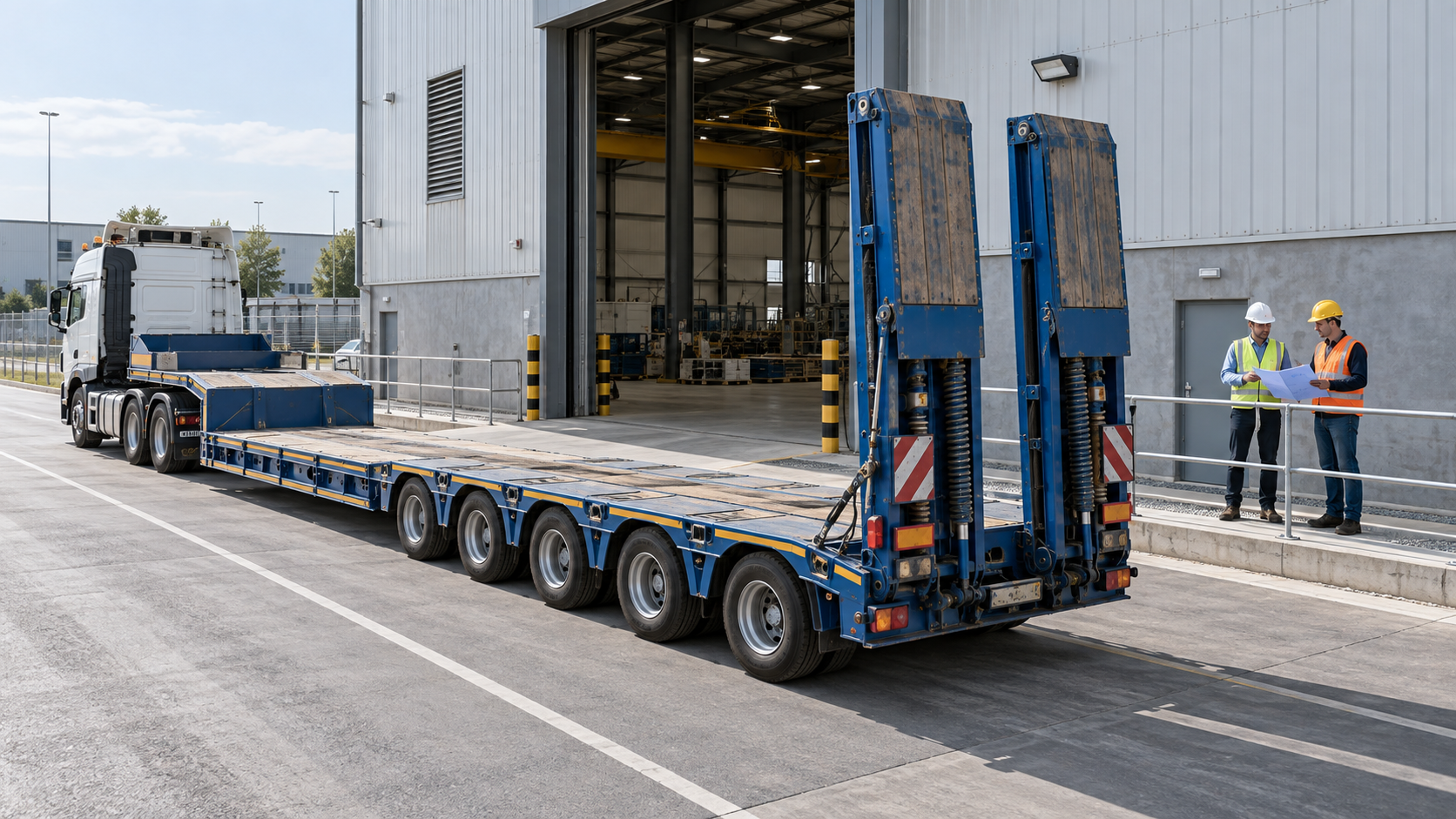
Request an operating arrangement, a transport arrangement and an installation-stage arrangement. The operating drawing shows the final equipment envelope. The transport drawing identifies each shipping unit with its approved dimensions, mass, centre of gravity, support points and handling provisions. The installation-stage drawing shows the temporary space needed for unpacking, lifting and assembly. Using the final operating mass for a transport assessment, or the shipping dimensions for a maintenance clearance review, can produce an apparently tidy but unusable plan.
Describe the oil and preservation condition separately from the mechanical split. A transformer can have certain external parts removed without the same internal preservation arrangement as another design. The manufacturer’s approved instructions must govern the shipping condition, pressure monitoring where applicable, allowable storage interval and actions after an abnormal indication. Do not let a carrier select that condition simply to achieve a preferred payload.
Transformer shipping configuration: compare the complete options
The following matrix is a bid-evaluation aid, not a set of universal transport limits. A manufacturer and a competent logistics contractor should confirm which options are technically available for the offered unit. The project should then price each option against the same receiving-site assumptions and acceptance boundary.
| Point à délibérer | More assembled delivery | Split delivery | Evidence needed before selection |
|---|---|---|---|
| Largest shipping unit | May retain more external equipment and require a larger clearance envelope. | Can reduce selected dimensions; removing accessories may not solve main-tank mass constraints. | Approved shipping drawings and separate mass schedules for every unit. |
| Handling exposure | Fewer loose packages, but attached components require protection against handling contact. | More packages and interfaces must remain identified and protected. | Handling plan, packing specification and package-to-assembly register. |
| Site resources | Usually less external assembly, subject to the actual design. | More skilled labour, lifting, tools and controlled work space may be required. | Named resource owners and an approved assembly method. |
| Preservation | Shipping and storage requirements still apply. | Each removed component and opened interface needs a defined preservation method. | Manufacturer’s instructions, inspection intervals and contingency procedure. |
| Acceptance effort | Receipt inspection and site verification remain necessary. | Additional assembly records and interface checks may be needed. | Agreed inspection plan and release responsibilities. |
| Schedule exposure | A difficult transport envelope can constrain movement. | A missing accessory or unavailable specialist can delay completion. | Logic-linked delivery and installation programme, not just an arrival date. |
Do not remove parts that fail to solve the constraint
Suppose a surveyed access restriction is controlled by the main tank width. Removing a conservator that sits above the tank might reduce height without changing the limiting width. The additional site work would then buy no access improvement. Ask the logistics team to identify the controlling dimension or loading constraint first, and ask the manufacturer to show precisely how the proposed split changes it. Record the rejected options as well as the selected one so a later freight substitution does not reopen a settled design decision.

Turn the inland destination into specific procurement inputs
“Delivery to Africa” is not a technical condition. An inland industrial site may receive cargo through one port, cross a border and use a final access road maintained by a different organization. Another project may have reliable paved access but very limited assembly services. Neither situation should be assumed from the country name. Obtain current route information, receiving arrangements and local handling capability for the actual destination.
Ask who confirms each local requirement
Assign a local logistics specialist to confirm applicable movement approvals, vehicle restrictions, crossing arrangements and any route-specific permissions with the responsible authorities. This article intentionally gives no national axle limits, permit lead times or bridge capacities. Those are shipment-specific inputs requiring current confirmation. Keep a dated assumptions register: an unconfirmed route item should remain visibly open rather than becoming an understated allowance in a freight quotation.
The same discipline applies to environmental exposure. If the selected route includes coastal storage, dust-prone handling areas or a wet-season delivery window, obtain the expected exposure and storage duration. Then specify packaging, inspection access and preservation accordingly. The relevant decision is how the equipment will be protected during the agreed journey, not whether a country is generally described as hot or humid. The broader responsibilities discussed in our South Africa power transformer procurement guide offer a useful procurement framework, while local requirements still need project-specific confirmation.
Make every removed accessory traceable to its installation task
A packing list should do more than count boxes. Map each shipping package to the final assembly drawing, the receiving inspection and the installation task. The register should identify the component, quantity, preservation method, storage orientation where specified, required handling equipment and the person responsible for releasing it to the installation crew. Keep matched assemblies and their associated hardware traceable throughout unpacking.
Radiators, bushings and control equipment need different treatment
A radiator bank needs an approved support and protection arrangement; a bushing may require a very different handling and storage method. Electrical cabinets need their own protection against contamination and damage. Treating all three as interchangeable “accessories” hides the work necessary at destination. Confirm which items remain factory assembled, which connections will be disturbed, and which inspections or functional checks are required after reassembly.
For cargo carried in transport units, the IMO/ILO/UNECE Code of Practice for Packing of Cargo Transport Units provides non-mandatory guidance across intermodal packing and handling activities. It is not a transformer-specific lifting calculation or a substitute for local transport approvals. The packing contractor should identify its applicable procedures, while competent parties develop and approve the actual securing and handling arrangements.
Cost the work transferred from the factory to the site
Build a total installed comparison with separate lines for equipment preparation, packing, freight, unloading, storage, assembly, oil-related work, supervision and acceptance. Include temporary facilities and the consequences of waiting for specialist resources. If one option requires a second crane mobilization or a return visit by the supplier’s supervisor, show that explicitly. A contingency allowance is useful, but it should not conceal known missing scope.
Use two planning scenarios, not a claimed universal saving
In the first scenario, the surveyed route accepts the more assembled unit and the site has only a small installation team. Preserving factory assembly may reduce the interfaces that must be rebuilt at destination. In the second, a verified clearance restriction requires removal of selected components and the site has an approved assembly contractor. Split delivery may be practical, provided the added work is priced and programmed. These are decision scenarios, not evidence that either option will cost less on every inland project.
Ask the bidder to explain excluded work in plain terms. “Supervision included” should state attendance duration, travel assumptions, prerequisites and whether the supervisor directs the contractor’s personnel or performs specialist work. Identify who supplies replacement seals and approved consumables, who handles waste, and who closes defects. The commercial boundary should match the technical method rather than relying on a single broad delivery description.
Release shipment only when the receiving plan is credible
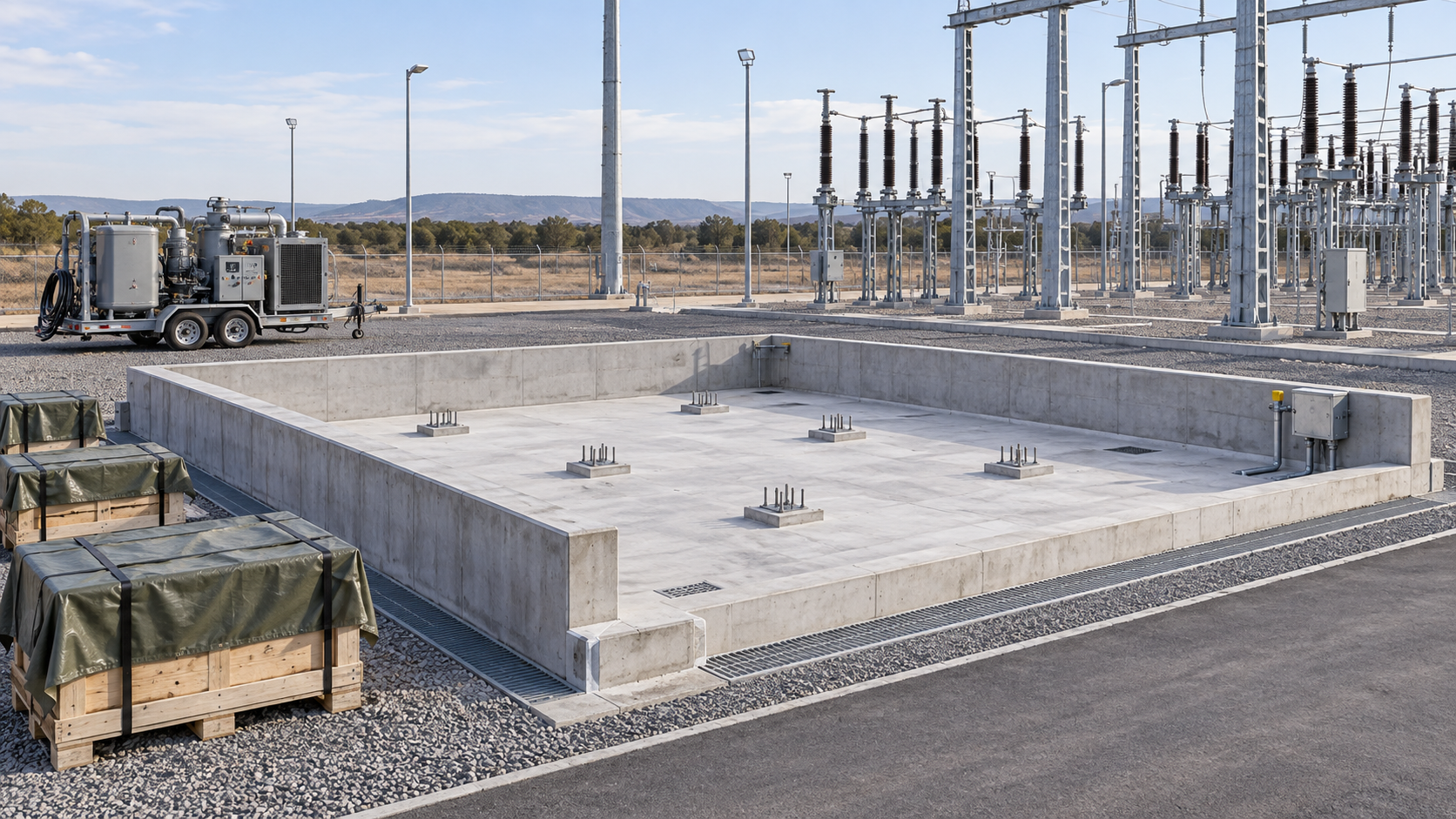
A foundation drawing alone does not demonstrate site readiness. Confirm the unloading position, access for the selected transport arrangement, storage space, assembly area, lifting contractor, approved method and necessary temporary services. Review these items before dispatch so the transformer is not forced into unplanned intermediate storage. Where oil processing or other specialist work is required, its equipment and operating conditions must follow the manufacturer’s approved procedure.
Protect the sequence between receipt and acceptance
Arrange receipt inspection before packaging is discarded or damage is covered by assembly. Record package condition and component identification, and refer anomalies to the responsible parties before proceeding. Subsequent assembly checks should be traceable to the approved method and inspection plan. Completion of mechanical assembly is not permission to energize; the project’s required electrical verification, protection checks and final authorization remain separate responsibilities.
A missing accessory can strand an otherwise serviceable main tank. For industrial owners coordinating replacement units or pooled spares, connect the package register to the readiness approach in our Guide de planification des transformateurs de secours partagés. The important link is compatibility and dispatch completeness, not an assumption that a spare can be installed without engineering review.
Put a controlled shipping schedule into the purchase order
The purchase order should name the selected configuration, list required transport drawings and identify the milestone at which those documents must be approved. Include the accessory split, preservation requirements, package register, assembly responsibility matrix and shipment release checklist. Require notification before any change that affects dimensions, mass, package count or site work. A late substitution can invalidate earlier logistics assumptions even when the electrical rating remains unchanged.
At handover, retain the final shipping drawings, packing records, receipt inspection, assembly records and outstanding-item closure together. That record explains what actually arrived and how the operating arrangement was reconstructed. It also gives maintenance teams a more useful starting point for a future relocation than a collection of freight invoices and undated photographs.
Before accepting a revised freight offer, check that its handling assumptions still match this document set. A different vehicle, transfer point or storage arrangement can alter the practical responsibilities without changing the equipment purchase order. Refer such changes to the designated engineering and logistics reviewers before movement is authorized.
Discuss the shipping split with Zisheng Electric
For Zisheng Electric equipment such as a 10MVA 33/11kV oil-immersed power transformer or a 220kV/230kV power transformer, the appropriate transformer shipping configuration must be agreed for the offered design and destination. Product voltage classes do not determine a universal shipping split.
Send your drawings, datasheets, load list, technical specifications, single-line diagram, grid parameters, environmental conditions and installation-site conditions. Add the route assessment, unloading arrangements and available assembly resources so the engineering discussion covers both equipment and delivery scope. Our engineering team will review the requirements and respond to project inquiries within 24 hours.
À propos de ZISHENG ELECTRICAL
Zisheng sont un fabricant professionnel avec plus de 19 ans d'expérience dans la production Transformateurs immersés dans l'huile, Sous-station compacte, Transformateurs montés sur socle, Transformateurs montés sur poteau et Transformateurs à sec. Nous possédons les certificats de ISO/CE/IEC 60076 et TUV Rheinland.
Les transformateurs subissent des tests de FAT rigoureux et des essais de type, prenant en charge la personnalisation de la tension/capacité. Bienvenue pour consulter pour Catalogue et Produit. vous pouvez nous contacter par email [email protected].