Transformer Overfluxing Assessment for African Captive Power Plants
Zisheng Electric recommends starting a transformer overfluxing assessment with the operating sequence of the plant, before comparing transformer quotations. At an industrial facility with captive generation, the important question is not simply whether the transformer has enough MVA. It is whether the voltage applied to its winding remains appropriate for the frequency, the selected tapping and the duration of each operating condition.
For an African mining, processing or manufacturing project, that review belongs in the procurement package whenever a transformer can remain connected to a changing source. A utility connection, an islanded generator and a restoration sequence do not necessarily expose the equipment to the same conditions. This guide sets out a practical way to turn those conditions into reviewable bid inputs. It does not assign a single grid frequency, climate or protection setting to an entire region.
Start with the event that the purchase specification usually misses
Consider a hypothetical processing plant that normally imports power but can operate selected loads from an on-site generator. The tender states the transformer rating, voltage ratio and impedance. It also includes a large motor list. Yet it says very little about what happens when generation slows while the voltage regulator is still maintaining voltage.
The transformer might be lightly loaded at that moment. That does not settle the excitation question. Overexcitation concerns the relationship between applied voltage, frequency and winding turns; it is different from asking whether load current exceeds a thermal rating. SEL’s transformer protection guidance identifies both overvoltage and underfrequency as conditions that can require volts-per-hertz protection. Read the manufacturer’s protection paper.
Define the connected transformer, not just the generator
Mark the actual source path on the single-line diagram. Does the generator feed a low-voltage essential-services board downstream of the main transformer? Does it energize a medium-voltage bus through a step-up transformer? Can a bus coupler change the path? These arrangements lead to different equipment being exposed during the same plant event.
The EPC engineer should identify which transformer windings remain energized in each switching state. A generator somewhere on the site is not, by itself, evidence that every transformer needs the same assessment. This first drawing review keeps the enquiry focused and prevents bidders from pricing an undefined duty.
Use a transformer overfluxing assessment to compare operating cases
A useful screening quantity is the applied voltage-to-frequency ratio expressed against a declared base: relative V/Hz = (applied voltage / reference voltage) ÷ (operating frequency / reference frequency). The voltage quantities must refer to the same winding and consistent measurement basis. This is a screening calculation, not an allowable operating limit.
The following arithmetic uses an illustrative 50 Hz reference only. It is not a statement about any country’s supply, and the values are not recommended settings. The transformer manufacturer must confirm the applicable tapping, capability curve, duration limits and operating conditions.
| Illustrative condition | Voltage on declared base | Frecuencia | Relative V/Hz | Decisión de ingeniería |
|---|---|---|---|---|
| Reference condition | 1.00 pu | 50 Hz | 1.000 pu | Confirm the reference winding and tapping before comparing other cases. |
| Frequency falls while voltage is maintained | 1.00 pu | 47.5 Hz | 1.053 pu | Request event duration and manufacturer capability; do not approve from voltage alone. |
| Higher voltage and lower frequency coincide | 1.05 pu | 47.5 Hz | 1.105 pu | Review the combined event and protection response as one case. |
| Voltage reduces with frequency | 0.95 pu | 47.5 Hz | 1.000 pu | Excitation screening is unchanged, but load performance still needs a separate review. |
| Rated frequency with elevated voltage | 1.05 pu | 50 Hz | 1.050 pu | Assess sustained and temporary voltage conditions separately. |
The second and third rows explain why separate maximum-voltage and minimum-frequency declarations can be misleading. Ask whether those extremes can coincide. If they cannot, document the controls or study evidence supporting that conclusion. If they can, preserve their common time history rather than combining unrelated measurements from different events.
Duration changes the purchasing question
A single maximum value does not describe an excursion adequately. Request the start time, peak, duration, recovery and repeated-event assumptions. A bidder should be able to see whether the enquiry concerns a sustained operating point, a short disturbance, or several disturbances before the equipment has returned to its initial condition.
Where records are unavailable, create an assumptions register. Assign each assumption to the party able to confirm it: the generator supplier, plant control designer, utility interface engineer or owner. Identify the date by which confirmation is required. A clearly bounded provisional case is more useful than an apparently precise value without an owner.
Translate African project conditions into specific enquiry inputs
The regional value of this review comes from the actual project arrangement. For a remote industrial development, for example, the commercial question may be how quickly a generator control problem can be diagnosed and whether technical staff can retrieve useful event data. For an expanding factory, it may be whether a newly added generator changes the source seen by an existing transformer.
Neither example establishes a continental rule. Record the site’s actual supply arrangement, access constraints and maintenance resources. Where utility requirements apply, obtain the current project-specific connection documents directly from the responsible utility. Do not substitute a neighbouring country’s nominal values or another customer’s approved specification.
Keep environmental duty separate but connected
Include verified ambient temperature, altitude, installation enclosure, ventilation and contamination information in the transformer enquiry. These inputs belong in the equipment’s thermal and insulation design review. They should not be used to invent a universal correction to the voltage-to-frequency calculation.
A coastal site should identify its actual exposure and maintenance plan; an inland dusty site should describe inspection access and cooling-system cleaning arrangements. Ask the bidder which declared operating limits depend on cooling availability or initial loading. This links environmental information to a real supplier response instead of adding a generic “suitable for Africa” sentence.
Request evidence that makes competing offers comparable
Send every bidder the same operating-case schedule. Give each case a short identifier, source configuration, energized winding, voltage and frequency basis, duration and status. Include the normal case as well as transitions. Otherwise, one offer may address continuous service only while another includes a temporary duty that the price comparison never acknowledges.
The response schedule should ask for a declared capability basis, exclusions and required control or protection conditions. Keep “complies” as a summary, not the entire answer. An engineering reviewer needs to know what equipment configuration the statement covers and what information would invalidate it.
Clarify the tapping and measurement basis
Record the tapping position used for every comparison. Ask the transformer designer how the permitted range is represented when the number of effective turns changes. Also confirm where voltage is measured and how that measurement relates to the winding being protected. A per-unit figure without its base can look convincing while answering the wrong question.
For projects that also need a broader ratio and source-performance review, use the separate guidance on Regulación de la tensión de los transformadores para plantas industriales africanas. Its load-flow and motor-starting questions complement this excitation review; they should remain identifiable as separate study outputs.
Give distributors a usable clarification route
A distributor may receive only a nameplate photograph and a requested replacement rating. In that situation, ask for the single-line diagram and operating description before promising equivalence. Matching capacity and voltage ratio does not establish that a replacement suits the same source transitions.
Use a short clarification form that the end user can complete with its electrical contractor. Include space for existing relay details, generator operating modes, normal tapping and any recorded abnormal events. This is often a more productive sales step than adding an unsupported margin to the transformer’s MVA rating.
Coordinate the capability curve with protection and controls
The protection engineer should compare the relevant equipment capability with the proposed response on consistent voltage and time bases. In generator step-up applications, both generator and transformer limits may matter; SEL’s guidance specifically calls for coordinating with both. Do not copy an example curve from a relay brochure and treat it as the purchased transformer’s guaranteed capability.
El SEL generator protection overview also illustrates that generator protection can include volts-per-hertz functions. The presence of that function in a product family does not establish that it is enabled, measured from the correct input, or coordinated for a particular plant.
Assign responsibility for each response
Make the control interfaces explicit. Which party supplies the voltage and frequency signals? Who selects and approves the protection characteristic? Which breaker or source-control action follows an operation? Who verifies that the correct transformer is disconnected in every permitted bus configuration?
These are interface decisions, not reasons to specify universal pickup values in an article. The owner’s operating philosophy and approved coordination study must establish the actual settings. Include the relevant setting revision and drawing references in the equipment handover package so later modifications can be checked against a known basis.
For installations capable of islanded operation, the broader island-grid transformer specification review can help organize the source and installation information. The overfluxing enquiry should then isolate the voltage-frequency-time cases requiring a specific response.
Separate factory evidence from site operating evidence
A factory test report and a site control test answer different questions. The procurement team should agree which manufacturer documents substantiate the declared excitation capability and which approved tests verify the protection and control implementation. Avoid requesting an uncontrolled overexcitation demonstration on installed equipment.
At the factory stage, reconcile the supplied transformer’s identity, approved design data, tapping information and applicable test records. At the site stage, use the approved commissioning procedure to verify measurement scaling, configured functions, indications and intended outputs. The responsible engineers should define test isolation and restoration arrangements before any functional testing.
Close the review with traceable evidence
For each operating case, retain a decision: accepted within the declared basis, accepted with a defined operating restriction, or unresolved pending specified information. Record the approving party and the document revision. A general statement that the transformer passed FAT should not silently close a missing generator transient study.
After initial operation, preserve available voltage and frequency event records with timestamps and switching-state information. If a source controller, relay configuration or operating sequence changes, return to the affected cases. This gives the owner a manageable update process instead of asking future maintenance teams to reconstruct procurement assumptions.
During bid clarification, separate the cost of the transformer design from the cost of external controls, studies and commissioning support. Record which services are included in each offer and who supplies missing source data. This helps the procurement team compare complete scopes without confusing a lower equipment price with a completed engineering review. Carry accepted clarifications into the purchase specification so that the final contract preserves the operating assumptions agreed during evaluation.
Prepare a project-specific review with Zisheng Electric
Para un transformer overfluxing assessment, send Zisheng Electric the drawings, transformer and generator data sheets, load list, technical specification, single-line diagram, grid parameters and verified environmental conditions. Add the proposed operating sequence, relevant event records, tapping requirements and protection-interface information where available.
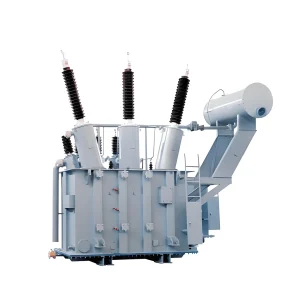
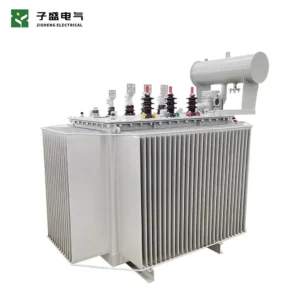
Relevant equipment options include Zisheng Electric’s transformadores sumergidos en aceite y substation transformer solutions. Selection should follow the agreed source and duty review. The useful result is a transformer enquiry with explicit operating cases, comparable supplier commitments and a protection responsibility that every project party understands.
Acerca de ZISHENG ELECTRICAL
Zisheng somos un fabricante profesional con más de 19 años de experiencia en la producción de Transformadores Sumergidos en Aceite, Subestación Compacta, Transformadores Montados en Base, Transformadores Montados en Poste y Transformadores de Tipo Seco. Poseemos los certificados de ISO/CE/IEC 60076 y TUV Rheinland.
Los transformadores pasan por rigurosas pruebas FAT y de tipo, y apoyan la personalización de voltaje/capacidad. Bienvenido a consultar por Catálogo y Producto. puede contactarnos por correo electrónico [email protected].