Transformer for African Data Centers: UPS Harmonics, Redundancy and Cooling
For a data center, transformer selection is not a simple conversion from IT megawatts to transformer MVA. Zisheng Electric approaches a transformer for African data centers as part of a complete critical-power path: utility intake, standby generation, UPS systems, cooling loads, phased expansion, protection and maintainability must be reviewed together. The correct decision depends on project data, not a generic regional assumption.
African projects cover widely different grids, climates, site elevations and service conditions. The EPC team should therefore freeze the local utility voltage, frequency, fault level, earthing method, ambient profile and redundancy philosophy before the transformer is released for manufacture. Where values are preliminary, the specification should identify them as hold points rather than hide uncertainty inside a broad tolerance.
Define the Data Center Operating States Before Rating the Transformer
The nameplate IT load is only one operating state. The transformer may also carry UPS input losses, battery charging, chillers, pumps, fans, lighting, security, fire systems and other auxiliaries. Some loads run continuously; others appear during restart, maintenance or a utility disturbance. A load list should separate steady demand, intermittent demand, starting duty and future reserve.
Ask the data center designer to provide normal, maintenance, emergency and expansion single-line diagrams. A transformer that appears lightly loaded in normal operation may become the limiting component after a bus tie closes or one power path is unavailable. Conversely, excessive oversizing can reduce economic loading and distort protection settings. Rating should follow credible duty cases with stated diversity.
| Decision input | Por qué es importante | Required EPC evidence |
|---|---|---|
| IT and mechanical load blocks | Separates continuous demand from restart and standby duty | Time-based load list and expansion stages |
| UPS input characteristic | Defines harmonic current, power factor and battery-recharge demand | Supplier spectrum and operating modes |
| Redundancy philosophy | Changes the highest load after a component outage | Normal and contingency single-lines |
| Generator sequence | Affects energization, inrush and voltage recovery | Black-start and transfer sequence |
| Ambient and altitude | Influences insulation and cooling margin | Project design basis and site data |
| Utility fault levels | Controls impedance and switchgear duty | Maximum and minimum values at the connection point |
Calculate contingency loading explicitly
For an N+1 or dual-corded architecture, list which transformer, generator, UPS module or bus section may be unavailable. Calculate transformer current for each accepted state and show how long the state can persist. If temporary overload is required, it must be evaluated against the agreed thermal model, pre-load, ambient temperature and cooling availability. “Emergency capable” is not a measurable guarantee.
Coordinate UPS Harmonics with Transformer Thermal Design
Modern UPS front ends may produce lower distortion than older converter designs, but the transformer supplier still needs project-specific data. Provide the current spectrum at representative load points, total RMS current, fundamental power factor, neutral-current expectations and any simultaneous nonlinear loads. A summary THD value alone cannot describe where harmonic current occurs.
Additional harmonic losses can appear in windings and structural parts. The engineering review should identify the calculation basis, temperature margin and any shielding or conductor changes. The transformer guarantee must also use a clear load case. Applying a generic derating factor without the UPS data can lead either to unnecessary cost or insufficient thermal margin.
Select Oil-Immersed or Dry-Type Construction by Location
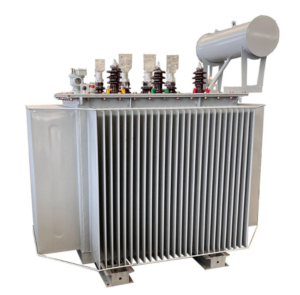
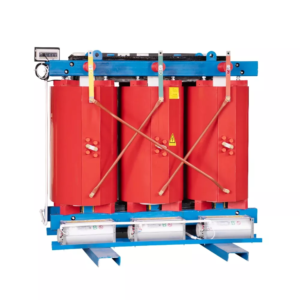
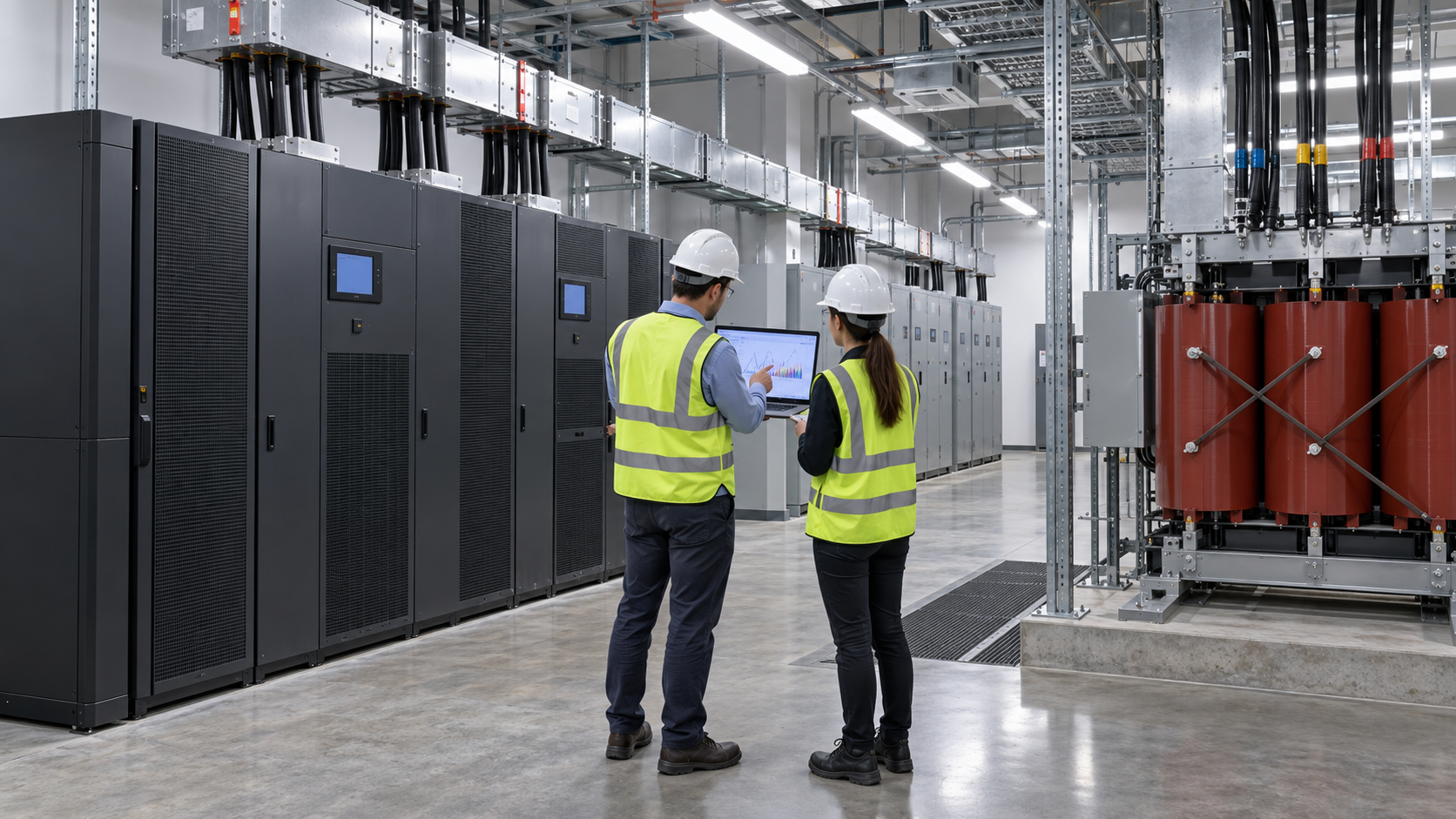
Outdoor utility yards often favor oil-immersed transformers because they can provide robust cooling and convenient high-capacity arrangements. Indoor electrical rooms may use dry-type transformers where fire strategy, proximity to loads and building integration support that choice. Neither construction is automatically correct for every data center.
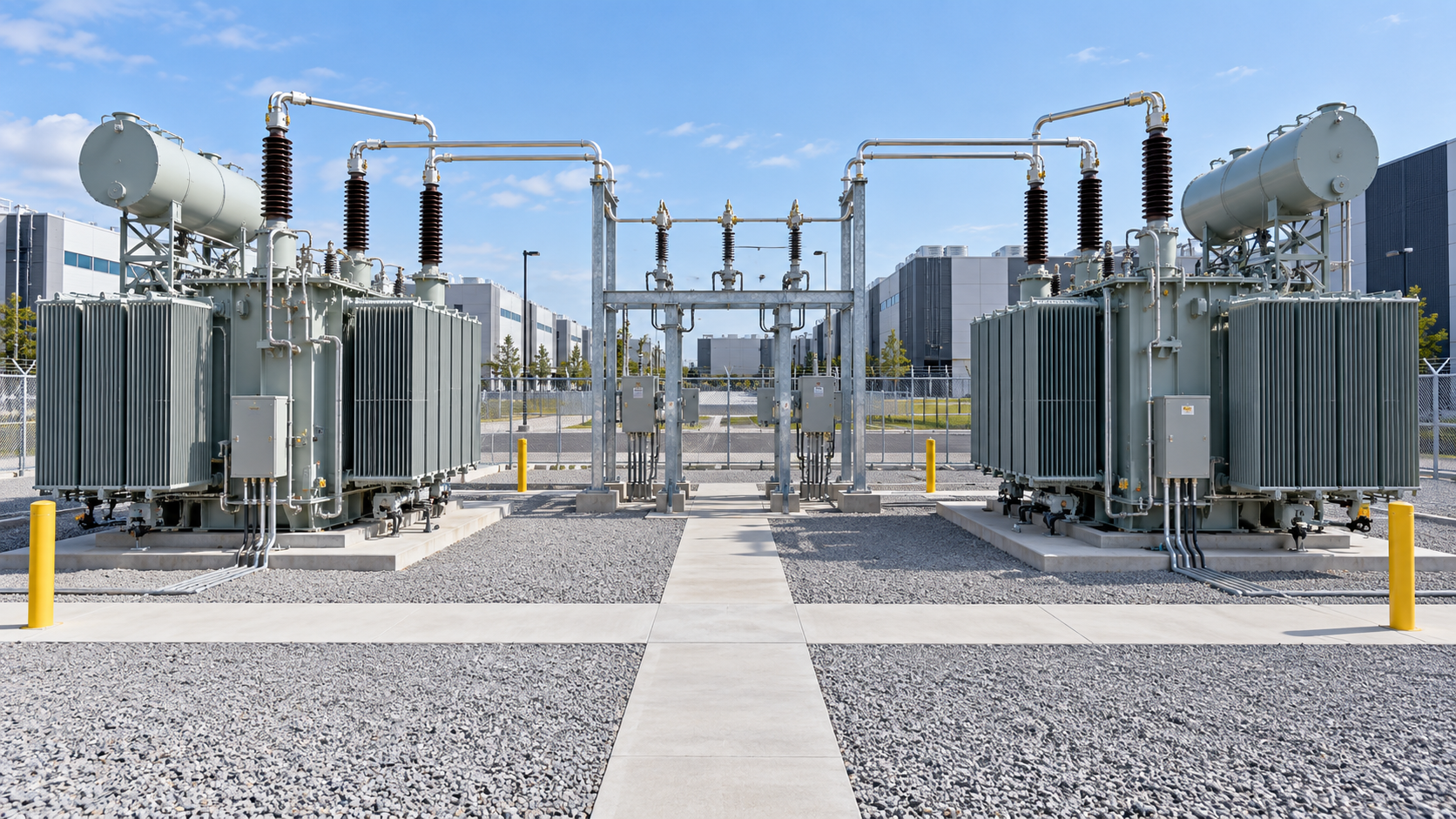
Review fire separation, liquid containment, ventilation, noise, cable routes, maintenance access, replacement path and local authority requirements. For an indoor dry-type unit, the room ventilation calculation must use the transformer loss at the relevant load and ambient condition. For an outdoor oil-immersed unit, confirm drainage, bunding, fire protection interfaces, radiator access and corrosion protection.
Zisheng Electric can compare transformador sumergido en aceite, transformador de tipo seco y transformador de subestación configurations against the actual project layout.
Use Redundancy to Define Bus-Tie and Parallel Requirements
Redundancy does not automatically mean transformers operate in parallel. Some schemes use normally open ties and transfer load after isolation; others require closed-transition transfer or continuous parallel operation. Each mode creates different requirements for phase displacement, voltage ratio, impedance tolerance, circulating current and protection.
The enquiry should state whether a bus tie can close with both sources energized, the maximum transfer duration and the synchronizing logic. If transformers from different phases of the project may operate together, compare their guaranteed ratio, impedance, vector group, tap position and control philosophy before procurement. A future transformer should not be assumed compatible simply because its nameplate MVA matches.
Preserve physical maintainability
Electrical redundancy can be defeated by shared physical constraints. Check whether one transformer can be removed without disturbing the adjacent power path, whether radiators can be cleaned, and whether cable terminations, temperature devices and marshalling cabinets remain accessible. Define lifting points, transport route and spare-unit strategy while the civil layout can still change.
Review Impedance, Fault Duty and Voltage Recovery as One Study
Transformer impedance influences maximum fault current, voltage drop, motor starting, UPS input performance and generator response. A higher impedance can limit fault duty but may weaken voltage recovery. A lower impedance can improve voltage stiffness while increasing breaker and busbar duty. The value must come from the system study rather than a copied specification.
Use the same MVA base, reference temperature and tolerance when comparing bids. Request maximum and minimum utility fault levels and evaluate every permitted network state. Generator-fed operation may produce a much lower fault level, affecting relay sensitivity and clearing time. The protection team should confirm CT ratios, differential zones, earth-fault paths, breaker trips and interlocks.
Design Cooling for Site Conditions and Failed-Equipment Cases
Ambient temperature, altitude, dust, humidity and salt exposure vary substantially between African project locations. State the project design basis and do not substitute a continental average. Cooling calculations should consider the maximum air temperature at the transformer inlet, not only a distant weather-station value.
For oil-immersed units, confirm radiator arrangement, fan staging, fan-group failure response, alarms and cleaning access. For indoor equipment, coordinate room heat rejection, air paths and filter maintenance. If the transformer is enclosed, model the enclosure inlet temperature and recirculation risk. A reliable transformer for African data centers needs a cooling plan that maintenance teams can actually execute.
Plan Generator Energization and Transfer Sequences
Transformer inrush can interact with generator voltage regulation and protection. The project should state how many transformers may be energized together, residual-flux assumptions, pre-insertion or controlled switching provisions if any, and load pickup sequence. The generator supplier needs transformer data; the transformer supplier needs the generator operating envelope.
Document open-transition, closed-transition and return-to-utility sequences separately. Include interlocks, permissives, failed-transfer response and restoration after a partial outage. These controls should be tested progressively rather than discovered during an emergency exercise.
Specify FAT Evidence That Supports Site Release
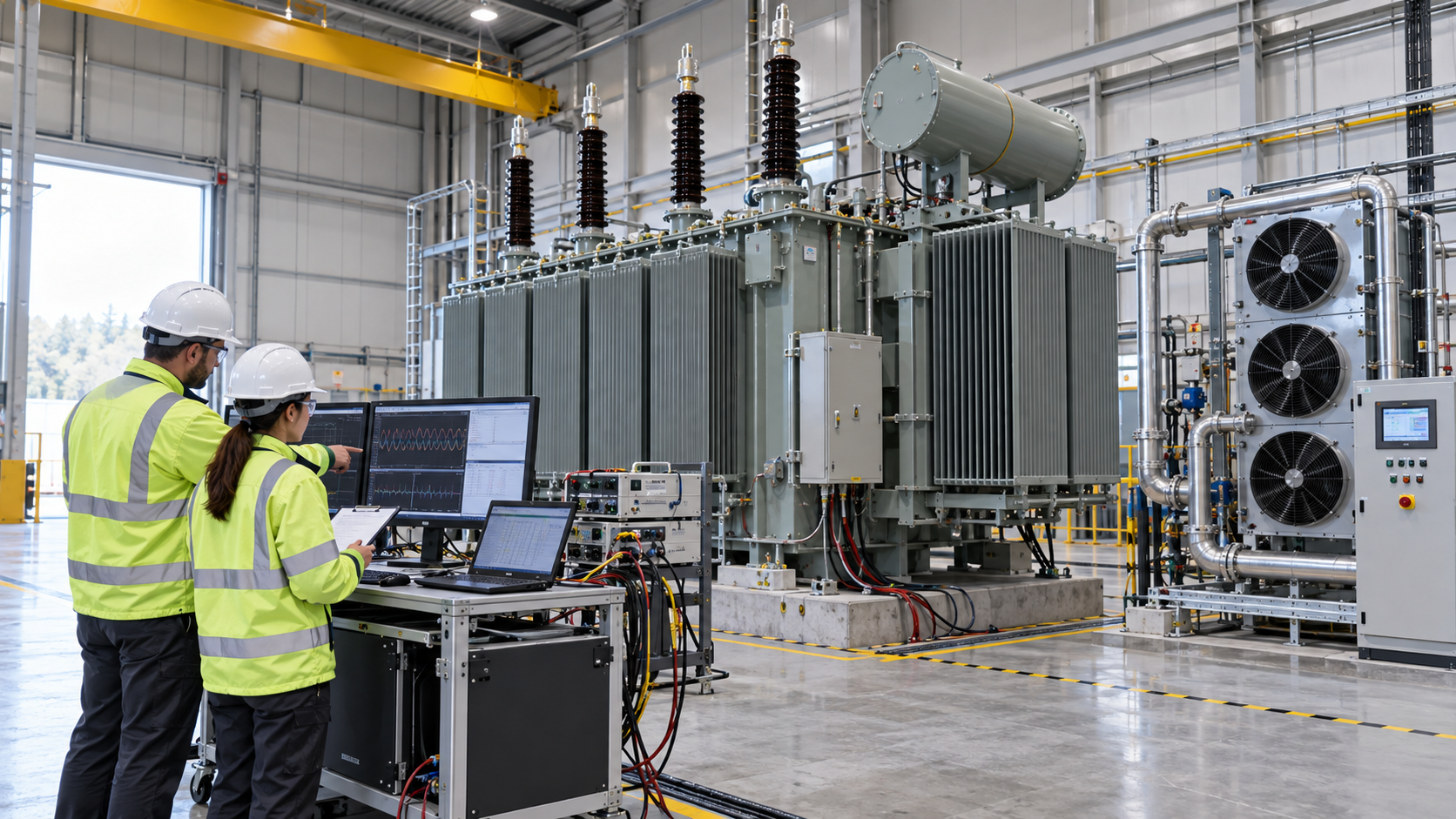
Factory acceptance testing should verify the approved transformer design through the contracted routine and special tests, accessory checks, cooling controls, alarm and trip contacts, tap equipment, wiring and document review. The inspection and test plan should show acceptance criteria, witness points and the evidence needed before shipment.
FAT cannot reproduce the full data center, UPS controls or generator sequence. Separate transformer factory evidence from integrated site testing. Record measured values, test connections, instruments, deviations and open items in a release register. Shipping preparation, impact monitoring and storage requirements should be tied to the same record set.
Control Delivery, Storage and Expansion Interfaces
Many data center campuses are built in phases while roads, buildings and switchyards remain active. Confirm transport mass, shipping dimensions, center of gravity, lifting points and permitted access route before manufacture. Check bridge, gate, turning and crane constraints using the approved general arrangement. If bushings, radiators or conservators ship separately, define assembly scope, preservation and site test requirements.
Storage conditions should protect insulation, oil, terminals, control cabinets and loose accessories. Record arrival inspection, impact indicators, pressure or oil condition and preservation status. A delayed civil handover must not leave the transformer without periodic checks. Assign responsibility for storage power, space heaters, breathers and inspection records.
Expansion planning requires reserved space, cable routes and protection capacity. Future units should be evaluated against the bus rating, fault level and parallel-operation assumptions current at the expansion date. Do not lock a future procurement to an old nameplate description without reviewing changes in UPS technology, load density or utility data.
Preguntas frecuentes
Should a data center transformer be sized from IT load alone?
No. Include UPS losses, battery charging, cooling, auxiliaries, redundancy states, future stages and the required power-factor range. Use an approved load schedule rather than a single marketing MW figure.
Is a dry-type transformer always required indoors?
Construction choice depends on the fire strategy, local approval, ventilation, capacity, location and maintenance plan. Oil-immersed and dry-type units can both be appropriate when the complete installation is engineered accordingly.
Why is UPS harmonic data needed if THD is low?
Losses depend on the distribution of current across frequencies and operating points. The actual spectrum and RMS current give the transformer designer a stronger basis than one summary percentage.
What information is needed for generator operation?
Provide generator ratings, subtransient data where required by the study, voltage-regulator limits, energization sequence, transformer inrush assumptions, load steps and transfer logic.
Can identical-MVA transformers operate in parallel?
Not necessarily. Ratio, vector group, impedance, tap position, phase sequence and control philosophy must be compatible. The system study should confirm the intended mode.
Related guidance includes the data center transformer resource page, el Guía para la selección de transformadores para centros de datos en los Emiratos Árabes Unidos y la African industrial transformer voltage-regulation guide.
Información que hay que enviar a Zisheng Electric
For a reviewable proposal, send the drawings, data sheets, load list, technical specification, single-line diagram, utility and generator parameters, UPS harmonic data, redundancy cases, environmental conditions, fire strategy, transport limits and installation-site conditions. Mark preliminary values and the dates when final information will be released.
Zisheng Electric can review the transformer for African data centers together with the electrical interfaces, cooling arrangement and procurement evidence. “Our engineering team will review the requirements and respond to project inquiries within 24 hours.”
Acerca de ZISHENG ELECTRICAL
Zisheng somos un fabricante profesional con más de 19 años de experiencia en la producción de Transformadores Sumergidos en Aceite, Subestación Compacta, Transformadores Montados en Base, Transformadores Montados en Poste y Transformadores de Tipo Seco. Poseemos los certificados de ISO/CE/IEC 60076 y TUV Rheinland.
Los transformadores pasan por rigurosas pruebas FAT y de tipo, y apoyan la personalización de voltaje/capacidad. Bienvenido a consultar por Catálogo y Producto. puede contactarnos por correo electrónico [email protected].