
Tanzania Port Transformer Procurement: Crane Loads, Harmonics and Coastal Installation
Estrategias de Zisheng Electric Tanzania port transformer procurement as a system-integration task. A port transformer does not serve one steady load: ship-to-shore cranes, rubber-tyred gantry cranes, reefer racks, pumps, workshops, lighting, administration buildings and possible shore-power systems create different starting, harmonic and continuity requirements. A transformer selected only from connected kW can be oversized in one area yet still perform poorly during crane acceleration or simultaneous reefer operation.
This guide is for EPC contractors, port engineering teams, industrial purchasers and electrical distributors preparing a transformer inquiry for a Tanzanian port or coastal logistics facility. It does not claim a specific project. All example values are hypothetical; the actual design must follow the utility connection agreement, owner specification, load study, site data and applicable Tanzanian requirements.
Start with the Tanzanian Connection Basis
Tanzania’s Energy and Water Utilities Regulatory Authority lists the Electricity (Grid and Distribution Codes) Rules and other electricity regulatory tools. EWURA also reports that the transmission network uses several high-voltage levels. Those national references do not determine the voltage at a specific port feeder. The EPC team must obtain the actual point-of-connection voltage, frequency requirements, fault level, permitted power-quality limits, protection interface and metering arrangement from the utility and project documents.
This distinction matters because transformer primary voltage, highest voltage for equipment, insulation level, tapping range and protection coordination all depend on the confirmed connection. Quoting a “standard Tanzania transformer” without the utility data creates a risk of incompatible terminals, inadequate insulation coordination or an unusable tap range.
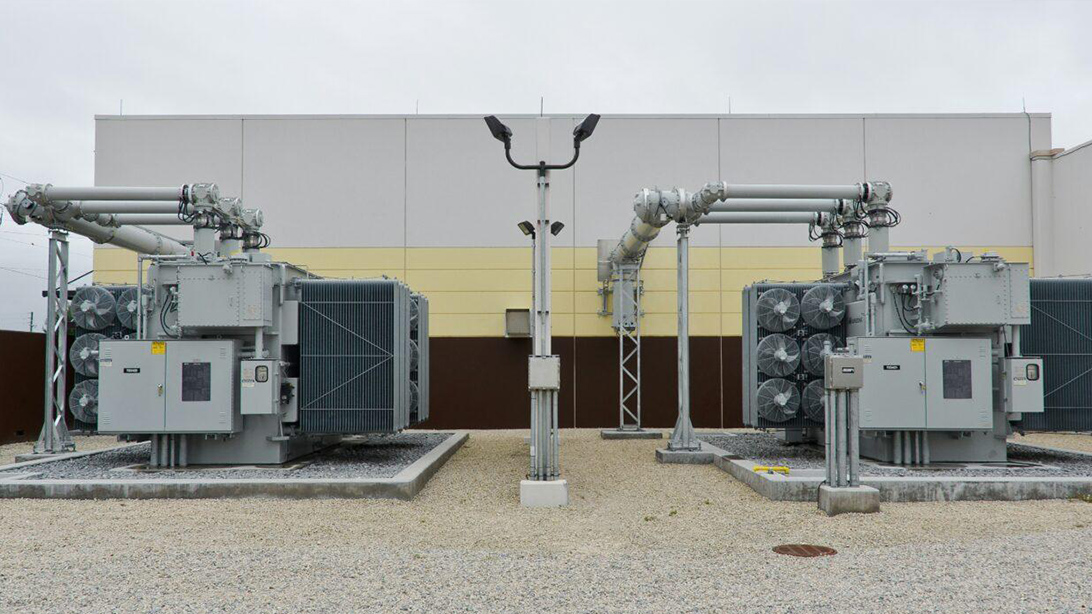
Tanzania Port Transformer Procurement Begins with Load Segmentation
Separate the load list by operating behavior rather than grouping everything under port auxiliaries. Crane drives have rapid power changes and may regenerate. Reefer containers create diversified but persistent demand. Large pumps and compressors may impose starting current. Lighting and control loads require voltage stability. Safety, navigation and security systems may need a protected supply path.
| Load group | Engineering concern | Transformer impact | Data to request |
|---|---|---|---|
| Container cranes | Acceleration, regeneration and variable-speed drives | Peak kVA, harmonics, voltage dip and thermal duty | Drive type, duty cycle, maximum simultaneous moves and harmonic spectrum |
| Reefer racks | Diversity, compressor restart and expansion | Continuous loading and restart margin | Socket count, diversity factor, compressor data and future phases |
| Bombas y compresores | Motor starting method and inertia | Voltage drop, impedance and tap selection | Motor kW, efficiency, power factor, starting current and acceleration time |
| Shore power | Ship interface, conversion equipment and variable demand | Harmonic duty, earthing and insulation coordination | Connection standard, converter topology, load range and neutral arrangement |
| Workshops and buildings | Mixed nonlinear and sensitive loads | Voltage regulation and neutral current | Load schedule, UPS systems, welders and power-quality limits |
| Emergency systems | Availability during grid or generator transfer | Redundancy, inrush and protection selectivity | Essential-load list, transfer sequence and generator capability |
Calculate Demand from Operating Scenarios
A port rarely operates every item at nameplate load at the same moment, but a simple diversity factor can hide the critical case. Build scenarios around vessel arrival, peak container handling, reefer occupancy, maintenance work, pump operation and emergency transfer. The study should show both steady demand and short-duration events.
For each scenario, calculate transformer kVA from real and reactive power, then test the result against ambient conditions, harmonic heating, redundancy philosophy and allowable voltage dip. If the scheme uses two transformers, define whether each carries half the load, whether one must carry essential loads after an outage, and whether parallel operation is permitted.
Hypothetical specification input example
Example only; not a real Tanzanian project.
- Connection: to be confirmed by utility-approved single-line diagram;
- Secondary system: project-defined switchboard voltage and earthing arrangement;
- Loads: two variable-speed crane groups, reefer racks, fire-water pumps and workshops;
- Operating cases: normal peak, crane acceleration, generator transfer and N-1 essential load;
- Environment: outdoor coastal installation; measured maximum ambient and pollution data required;
- Standard: IEC 60076 series unless the owner or utility specifies otherwise;
- Documents: load flow, motor-starting study, harmonic assessment and protection coordination.
Check Motor Starting and Crane Voltage Dip
Transformer impedance influences available fault current and voltage drop. Higher impedance can reduce fault current but may worsen the voltage dip when a large motor or crane group starts. Lower impedance can support voltage but increase switchgear duty. The transformer cannot be optimized independently from the upstream network and downstream switchboard.
Provide the manufacturer with the upstream short-circuit level, feeder impedance, transformer impedance target, cable lengths, motor data and starting method. Direct-on-line starting, soft starters and variable-frequency drives produce different current profiles. For cranes, use the drive supplier’s actual acceleration and regenerative data rather than a generic motor multiplier.
What to check in the study
- Minimum bus voltage during the worst credible start;
- Simultaneous operation assumptions for cranes and pumps;
- Tap position used in the calculation;
- Generator voltage-regulator response during islanded operation;
- Contactor, drive and control-system ride-through limits;
- Switchgear fault rating at minimum transformer impedance tolerance.
Assess Harmonics before Choosing the Thermal Margin
Variable-speed crane drives, shore-power converters, UPS systems, welders and LED lighting can distort current. Harmonics add winding and stray losses and may load the neutral. A conventional transformer may still be appropriate, but only after the harmonic spectrum and loading are reviewed.
Ask for total and individual harmonic current at relevant operating points, converter pulse number or topology, expected unbalance and neutral current. The supplier can then assess winding conductor, thermal margin, shielding and connection arrangement. Do not use a K-factor label as a substitute for an IEC-based project assessment unless the specification expressly calls for that convention.
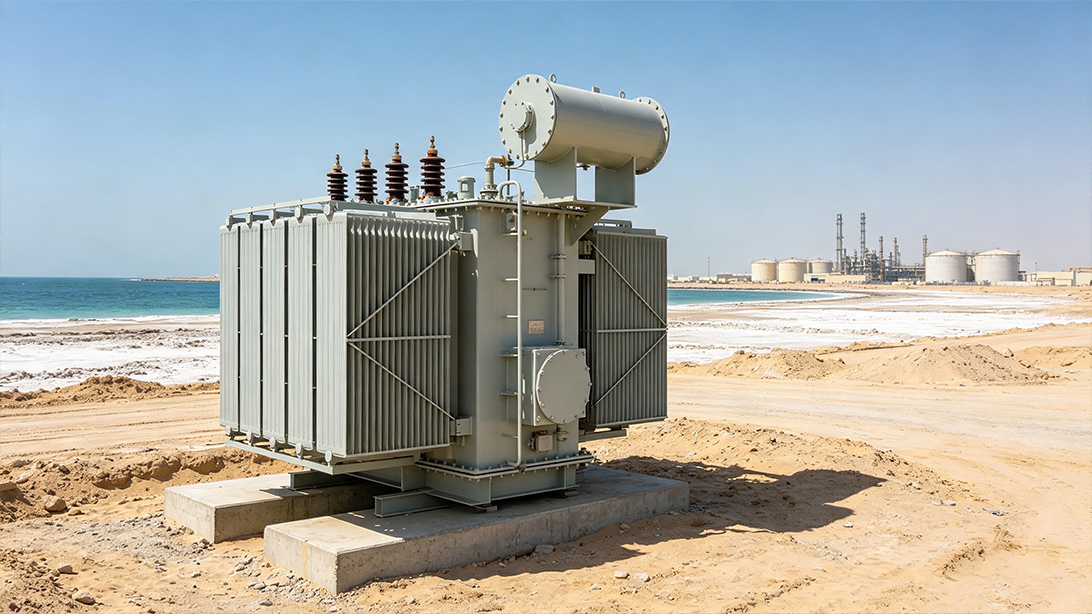
Design for Coastal Exposure with Site Evidence
A Tanzanian port site can expose equipment to salt-laden air, humidity, rain, dust and strong solar heating. The design response must be based on the actual distance from the shoreline, prevailing wind, enclosure location, maintenance practice and owner corrosion category. A generic “tropicalized” statement is too vague for bid comparison.
Review external coating system, surface preparation, dry-film thickness, fastener material, radiator and pipe protection, marshalling-box enclosure, cable entries, breathers, gaskets and terminal creepage. If bushings are exposed, the required creepage distance should follow the project pollution assessment and insulation-coordination study. Indoor transformers still require room ventilation and protection against saline air drawn through louvers.
| Coastal item | Bid question | Evidence before shipment |
|---|---|---|
| Paint system | What preparation, primer, intermediate and topcoat are proposed? | Approved procedure, batch records and thickness report |
| Outdoor boxes | What enclosure protection and anti-condensation measures apply? | Drawing, heater test and door-seal inspection |
| Aisladores | What pollution level and creepage basis were used? | Approved datasheet and dimensional check |
| Fasteners and fittings | Which materials or protective finishes are used? | Bill of materials and receiving inspection |
| Packing | How are salt, moisture and storage duration controlled? | Packing drawing, desiccant plan and inspection photographs |
Coordinate Grid, Generator and Emergency Transfer
Many port facilities combine utility supply with standby generation. The transformer inquiry must state whether generators energize the transformer from the LV side, whether transformers may be paralleled, how neutral earthing changes between sources and what sequence prevents out-of-phase closing.
Transformer inrush can exceed a generator’s short-duration capability or cause protection operation. Confirm black-start sequence, permissible transformer energization order, residual flux assumptions, generator voltage dip and relay settings. Where an automatic transfer scheme is used, the cause-and-effect matrix should match transformer alarms, trips and cooling availability.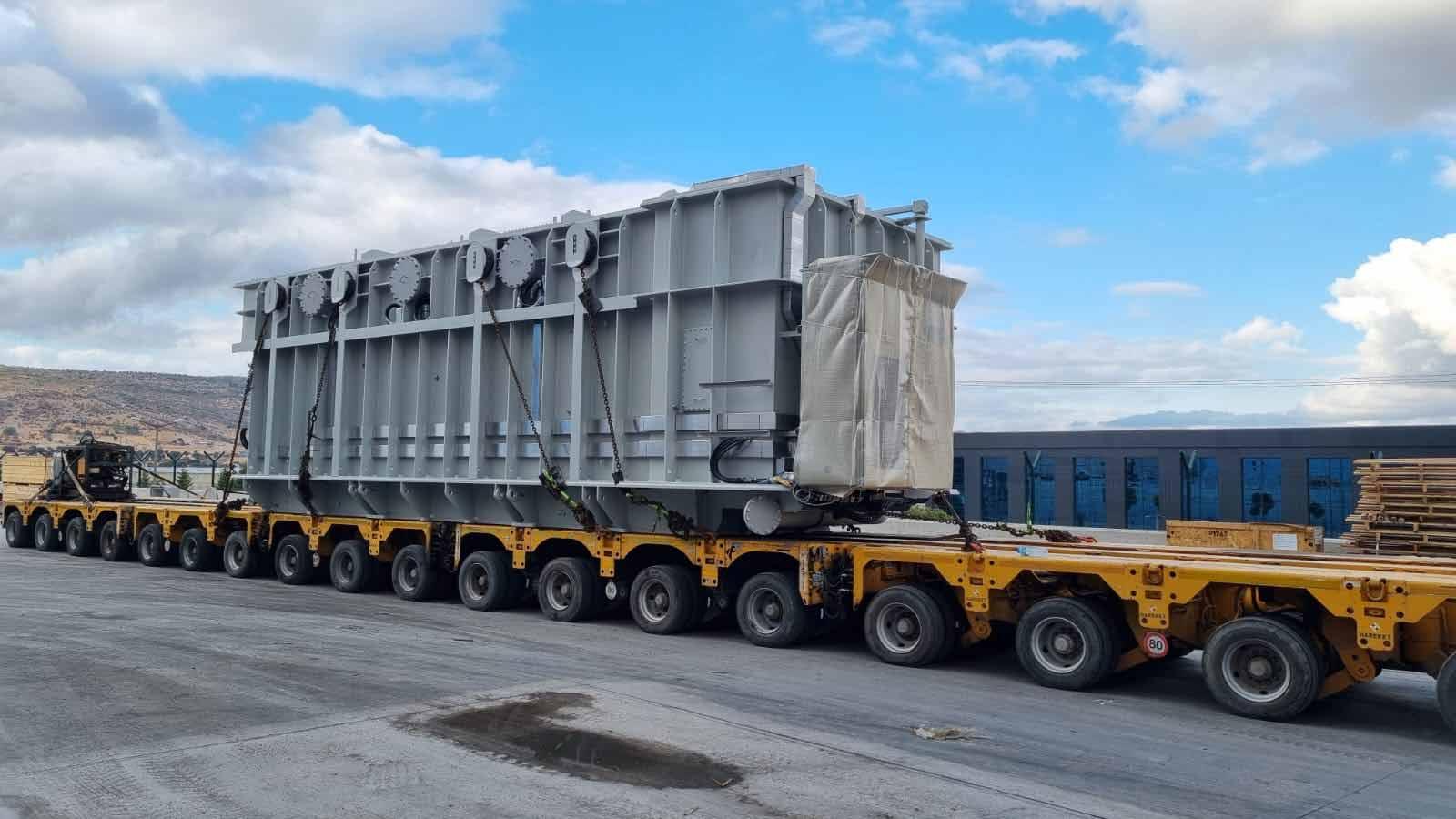
Plan Inland and Terminal Logistics before Freezing Dimensions
Port location does not eliminate transport risk. The transformer may move through a congested terminal, across internal roads and into an operating substation with restricted crane access. Confirm shipping mass, heaviest lift, center of gravity, lifting and jacking points, transport envelope, turning radius and unloading method before approving the general arrangement.
If radiators, conservator, bushings or coolers ship separately, define the shipping split and site assembly responsibility. The packing list should identify every loose item by equipment tag and crate. Storage instructions should cover oil-filled or nitrogen-filled condition, breathers, heaters, inspection intervals and maximum permitted storage period.
FAT and Document Package
IEC 60076-1 provides the general transformer framework; the contractual FAT scope must state routine, type and special tests. Purchasers should review guaranteed losses, impedance, ratio, vector group, dielectric tests, winding resistance, functional checks, oil records and accessory operation as applicable. Test acceptance values must come from the approved datasheet and standard, not from a generic checklist.
The final dossier should include approved drawings, test reports, nameplate data, accessory manuals, calibration evidence where required, packing list, preservation instructions, spare-parts list and site assembly guidance. Open punch items need named owners and closure dates before dispatch release.
Tanzania Port Transformer Procurement Checklist
- Obtain the utility-approved point of connection and short-circuit data.
- Segment cranes, reefers, pumps, converters, buildings and essential loads.
- Model normal, peak, motor-starting, transfer and N-1 scenarios.
- Provide harmonic spectra and neutral-current expectations.
- Confirm coastal pollution, ambient, corrosion and ventilation data.
- Coordinate transformer impedance with voltage dip and switchgear duty.
- Define generator energization and transfer philosophy.
- Freeze terminal, cable and earthing interfaces.
- Approve transport dimensions, shipping split and site lifting method.
- Agree FAT scope, witness notice, documents and release authority.
Send the Project Data for Engineering Review
For a useful quotation, send Zisheng Electric the single-line diagram, load list, utility connection data, motor and drive schedules, harmonic study, generator data, site environmental conditions, layout, cable interface, protection philosophy, applicable standards and delivery constraints. You may also review our weak-grid and motor-load procurement guide, high-altitude mining transformer guide y Ghana market resource page. Relevant product options include transformadores sumergidos en aceite, transformadores de tipo seco y transformadores de subestación.
A disciplined Tanzania port transformer procurement process converts uncertain operating conditions into comparable technical bids. It reduces the risk of voltage complaints, thermal overload, coastal deterioration and late site-interface changes. Our engineering team will review the requirements and respond to project inquiries within 24 hours.
Acerca de ZISHENG ELECTRICAL
Zisheng somos un fabricante profesional con más de 19 años de experiencia en la producción de Transformadores Sumergidos en Aceite, Subestación Compacta, Transformadores Montados en Base, Transformadores Montados en Poste y Transformadores de Tipo Seco. Poseemos los certificados de ISO/CE/IEC 60076 y TUV Rheinland.
Los transformadores pasan por rigurosas pruebas FAT y de tipo, y apoyan la personalización de voltaje/capacidad. Bienvenido a consultar por Catálogo y Producto. puede contactarnos por correo electrónico [email protected].