Transformer Flood Resilience for Latin American Coastal Substations: Elevation, Cable Entries and Recovery
تقدم شركة «زيشينغ إلكتريك» transformer flood resilience as an interface decision rather than a purchase option on a transformer quotation. A pad-mounted unit may be weatherproof in ordinary service, yet an elevated water level can reach a cable trench, a low-voltage termination, or a control conduit before it touches the tank. For a coastal substation or industrial site in Latin America, the EPC team needs a site-specific flood level and a recovery plan before approving the foundation and ordering equipment. The guidance below connects those inputs to equipment elevation, cable entry, drainage, inspection access, and the decision to re-energize after an incident. It does not assume that every coastal location has the same hazard.
Define the flood scenario before choosing equipment
The design basis should distinguish short surface runoff, tidal or river flooding, storm surge where applicable, and water accumulating because a drain or pump is unavailable. These mechanisms can yield very different water levels and durations. Obtain the project flood study, site survey, owner criteria, and the utility interface requirements. Record the reference datum and the event used in the study; a number without a datum cannot be transferred reliably to a foundation drawing. Confirm whether the owner expects continued operation through a specified event or safe shutdown followed by recovery. Those are different procurement requirements.
Ask the civil team for the design water level at the transformer location, including the planned grading, local low points, overland flow path, and the effect of walls or adjacent buildings. Compare it with the top of pad, cabinet base, cable entries, sump controls, and access road. Freeboard is a project decision determined by the owner and engineer, not a universal transformer dimension. Recheck changes in the site grading package before releasing shop drawings.
Map the actual path of water
A high transformer pad does little if a buried duct bank brings water into the cabinet or switch room. Trace water from perimeter grade to drainage channel, trench, duct, gland, and termination chamber. For every entry identify where the water stops and how the seal can be inspected later. A penetration detail should show the duct slope, sealing method, material compatibility, and how installers will test the final assembly. Coordinate with fire separation and cable replacement needs; a permanently inaccessible seal creates a maintenance problem.
The World Bank’s climate-resilience guidance for energy infrastructure includes elevation and protective barriers among the possible responses to flooding. These measures are useful design options, but the correct elevation and barrier geometry must come from the site’s hazard assessment and the owner’s operating objective. An enclosure IP code under IEC 60529 describes protection against specified ingress tests; it is not, by itself, a blanket assurance that installed cable terminations can remain submerged or that a flooded installation may be energized. Source guidance: World Bank energy resilience و IEC 60529.

Transformer flood resilience: choose elevation and layout together
Compare the survey datum on the equipment layout and the civil drawing. Set a required finished pad level, then verify the centre of gravity, seismic and wind anchorage if specified, cable bending radius, access steps, oil containment, and lifting route. Raising a pad without changing the duct-bank profile can create a low pocket full of water. Raising it too late can make preordered cables too short or prevent a mobile crane from reaching the lifting eyes. Release the pad, duct and terminal box drawings as one coordinated package.
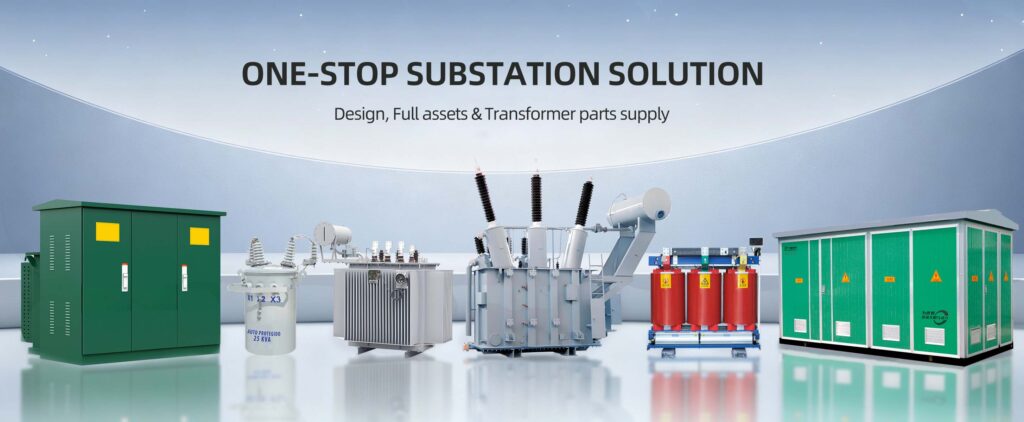
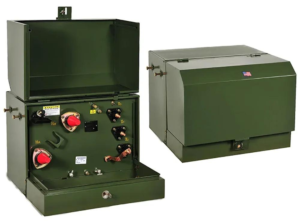
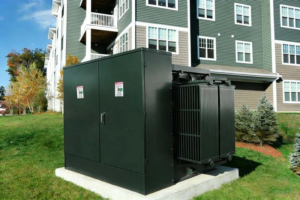
For a prefabricated substation, look at the entire enclosure rather than its transformer bay alone. Doors, ventilation openings, pressure relief routes, LV switchgear, auxiliary controls, and battery equipment may have lower vulnerable elevations. Document the lowest water-sensitive component and the lowest point of any connected electrical pathway. Ask the vendor for sectional drawings and a termination schedule rather than assuming a marketing enclosure rating covers every site interface. The pad-mounted transformer selection discussion for Latin America provides another view of cabinet and access decisions.
| Design input | Decision for EPC and buyer | إصدار الأدلة |
|---|---|---|
| Water level, duration and datum | Set pad and vulnerable opening elevations; define operating or shutdown objective | Flood study, surveyed levels, coordinated general arrangement |
| Drainage and backflow route | Choose gravity exit, pump or barrier; consider blocked-drain case | Drainage plan, sump controls and maintenance access |
| Incoming ducts and cable entries | Place and seal entries without violating cable bend radius | Penetration sections, seal specification and inspection record |
| Oil containment and access | Retain required containment while keeping inspection and lifting feasible | Civil detail, maintenance route and owner approval |
| Recovery after inundation | Define isolation, inspection, testing and authorization to re-energize | Owner procedure, OEM instructions and recorded test results |
The table is a design coordination tool, not a list of universal pass/fail elevations. Its value is in forcing each interface owner to sign off on the same water-level reference and release evidence before site work hides the duct and pad details.
Cable entries, auxiliary equipment and corrosion exposure
Cable ducts are often installed by a different contractor from the transformer supplier. Include the duct ends and cabinet gland plate in a single interface schedule, naming who supplies the seal and who verifies it after cable pulling. The test should match the approved installation detail; do not claim that a generic cable gland is qualified for continuous submersion without a product-specific certificate and a defined depth and duration. Make spare ducts explicit. An unsealed spare can bypass every sealed live feeder.
Put marshalling boxes, indication circuits, SCADA junctions, local controls and LV distribution in the elevation review. A transformer may be electrically sound but inoperable because an auxiliary control supply or cooling starter is flooded. Establish whether protected controls will remain accessible during the design event and whether a shutdown can be performed remotely. Coordinate alarm contacts, pump failure indication, and the owner’s control philosophy. The coastal procurement interface article illustrates why salt, drainage and maintenance details must be tied to procurement drawings; project-specific exposures still govern here.
Coastal air may introduce salt contamination even on a site where mapped floodwater never reaches the pad. Specify coating system, external hardware, cabinet seals, filter maintenance and washdown provisions against the actual exposure category stated by the owner. Do not treat a protective paint grade as a substitute for cable entry design. After a wet event, corrosive residue at terminals and connections can affect recovery decisions. Keep those inspection points reachable without removing energized barriers.
When a barrier is better than a higher pad
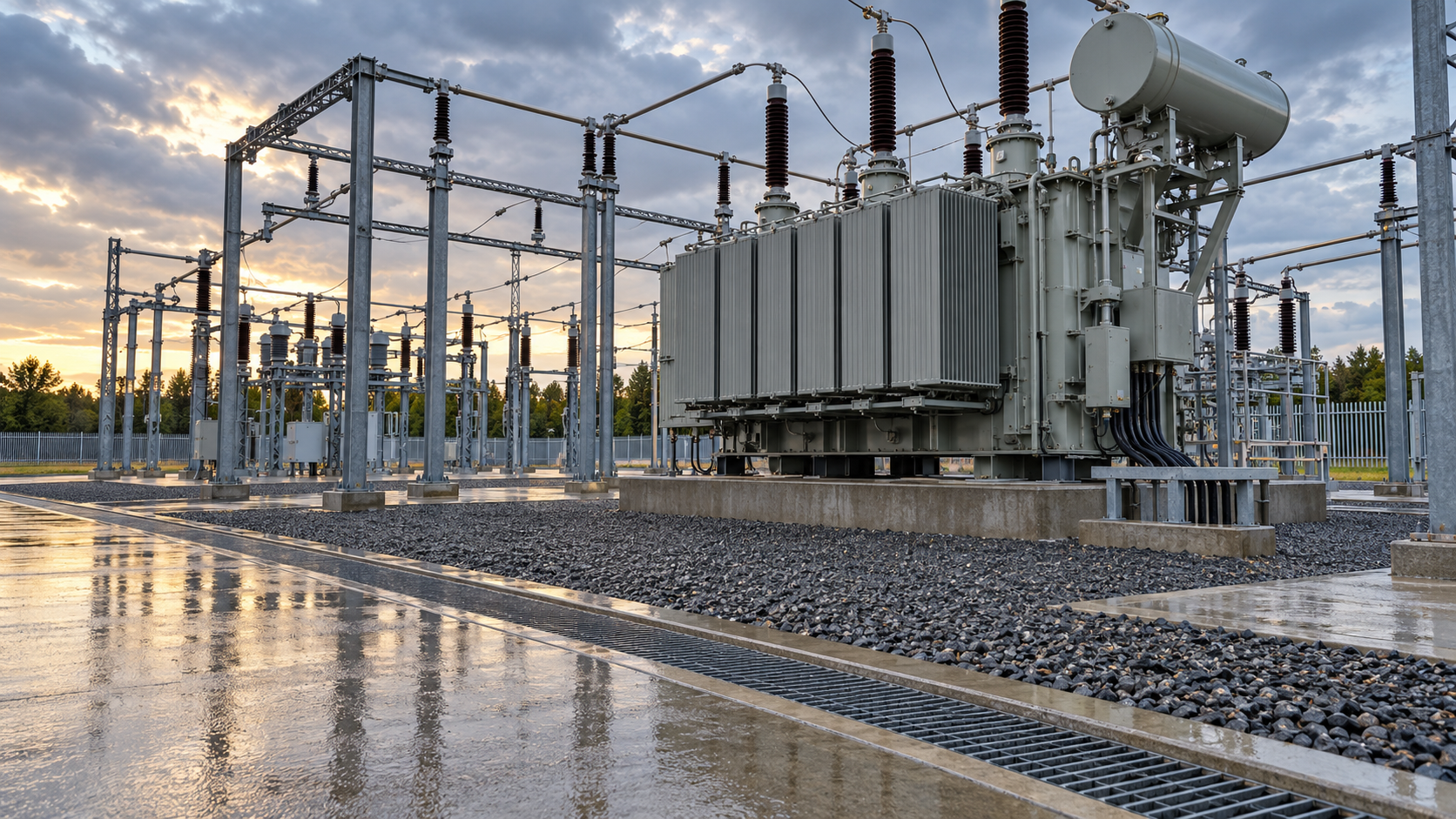
A higher pad can be attractive in a new outdoor yard. On an existing site, cable levels, road geometry, neighboring equipment and crane reach may make a local barrier or site drainage upgrade more practical. A barrier must be checked for water pressure, overtopping, seepage, vehicle and personnel access, and the route water takes once the barrier is in place. It can divert runoff toward another asset. A pump requires reliable power, a discharge point that still works during the event, an alarm, and a plan for service when access is restricted.
Compare options with a life-cycle discussion rather than equipment price alone. Include civil modifications, duct rework, space for future feeders, drainage maintenance, spares, and the consequences of an extended shutdown. For distributor and EPC procurement teams, separate the transformer scope from civil protection scope in the commercial schedule so a low equipment quote does not hide a missing interface. A site acceptance walkdown should trace the water path using the as-built levels, not only check that the supplied transformer nameplate matches the purchase order.
Specify the package so vendors can price the same risk
Issue an RFQ with a marked-up plot plan, design flood level with datum, required operating state during the event, single-line diagram, electrical ratings, fault duty, expected loads, cable approach, and maintenance clearance. State the minimum elevations of cabinet openings and accessories, and identify which elevations are mandatory versus subject to vendor proposal. Ask for the general arrangement, foundation loads, cable entry drawing, lifting requirements, enclosure ingress information and corrosion protection details. Require vendors to list deviations in a separate table.
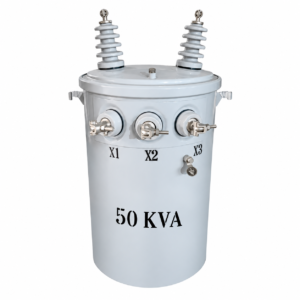
Electrical design cannot be sacrificed to obtain a convenient flood-resistant form. Confirm voltage, frequency, BIL/insulation coordination where applicable, impedance, thermal duty, protection scheme and utility connection from the project specification. Do not infer national parameters from the region name. A محول ثلاثي الأطوار مُركَّب على قاعدة can suit some distribution layouts, whereas a محطة فرعية جاهزة may consolidate transformer and switchgear interfaces. Neither product choice establishes the required flood level on its own.
Inspection, commissioning and return to service
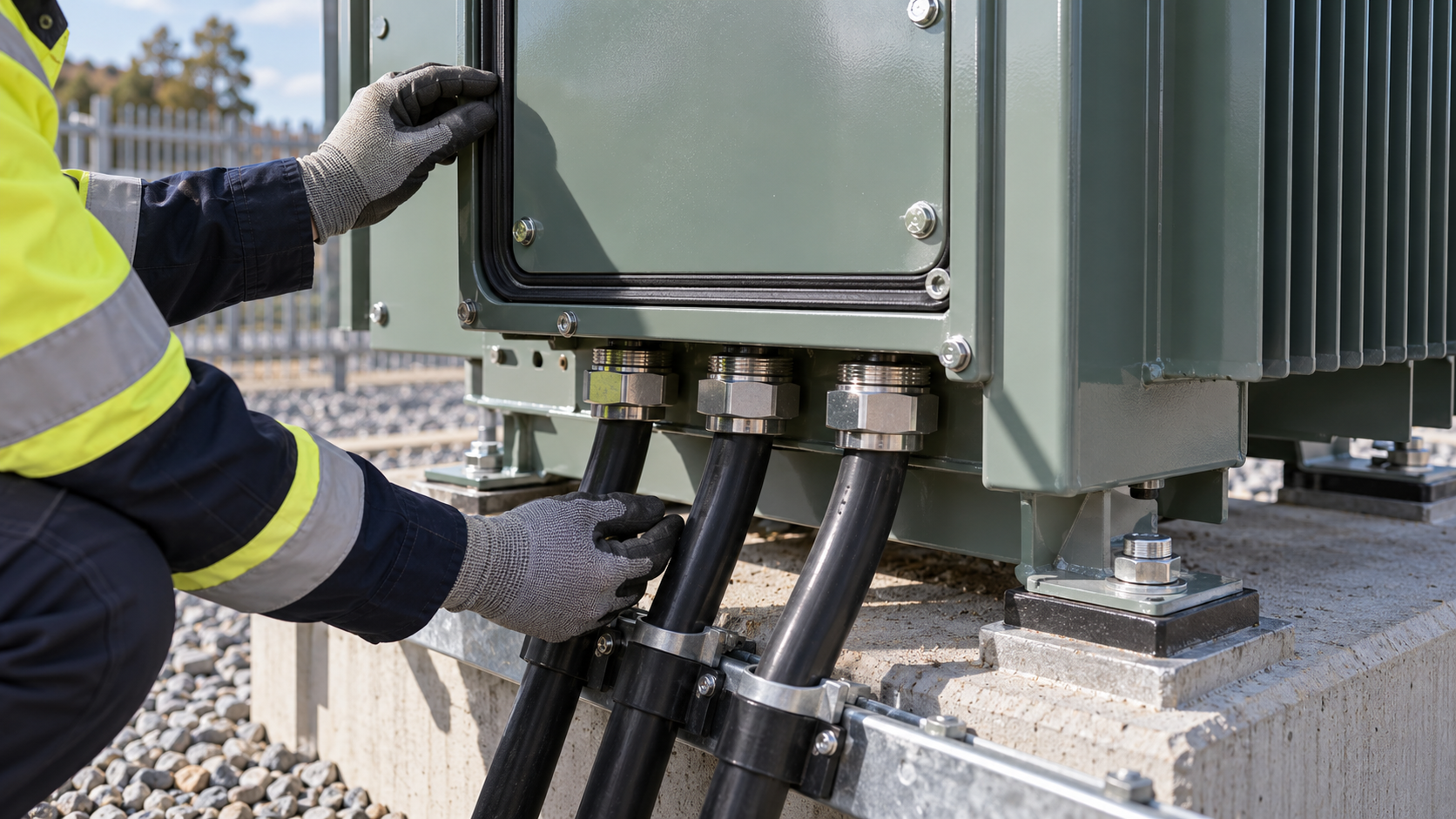
Document the interface split in the contract before material is dispatched. The transformer supplier may supply gland plates and cabinet details, the cable contractor may provide the final seals, and the EPC civil team may construct the pad and drainage. Assign a named witness for each concealed step. Check that substitutions in cable diameter, gland type or duct elevation trigger a drawing review. Otherwise a package can pass factory inspection while its installed water path remains untested. Give the operator a concise as-built drawing showing the lowest sensitive component and the inspection points, with equipment serial numbers and spare-part references.
At delivery, check shipping damage, cabinet doors, seals, exposed coating, ventilation paths and the orientation of cable openings. Before energization, compare actual pad and penetration elevations with the design basis. Inspect the finished seals after cable pulls and after any later cable replacement. Record photographs, dimensions and responsibilities in the commissioning dossier. A dry-weather site visit is still useful: it can reveal a low trench or disconnected sump alarm before an extreme event tests it.
If floodwater has reached electrical equipment, isolate and secure the installation, document the observed level and duration, and consult the equipment manufacturer and owner before inspection or testing. Do not energize merely because the exterior has dried. The recovery plan may need inspection of insulating parts, terminations, controls, oil containment, grounding and cable insulation, with tests selected by qualified personnel for the equipment and exposure. Define who authorizes return to service, how readings are compared with pre-event records, and what components must be replaced. This avoids a hurried restart that damages equipment or places personnel at risk.
Maintenance preserves the design intent. Periodically inspect drains, pump alarms, barrier joints, cabinet gaskets, spare duct seals and the route for emergency access. Update the asset record when nearby construction changes site grading. Keep the vendor drawings and baseline electrical tests accessible to the response team, along with spare seals and a route to obtain replacement auxiliaries. These tasks belong in the operations handover package rather than in a general statement that the installation is ‘flood proof’.
Make the flood decision reviewable
The best transformer flood resilience plan identifies a credible site event, a shared level datum, a coordinated equipment and civil interface, and an explicit recovery authority. Zisheng Electric can review pad-mounted transformer and prefabricated substation options against those inputs. Send the drawings, equipment data sheets, load list, technical specification, single-line diagram, grid parameters, environmental conditions and installation-site conditions, including the flood study and finished-grade survey. Our engineering team will review the requirements and respond to project inquiries within 24 hours.
عن شركة ZISHENG ELECTRICAL
زيشينغ هي شركة متخصصة ذات خبرة تمتد لأكثر من 19 عاماً في التصنيع والإنتاج المحوّلات المغمورة بالزيت, المحطات الفرعية المدمجة, المحوّلات المركبة على القواعد, المحوّلات المثبتة على الأعمدة و المحوّلات الجافة. نحن نمتلك شهادات ISO/CE/IEC 60076 وTUV Rheinland.
تخضع المحولات لاختبارات FAT واختبار المواصفات النوعية بشكل صارم، وتدعم تخصيص الجهد/السعة. نرحب باستشارتكم بشأن كتالوج و المنتج. يمكنك الاتصال بنا عبر البريد الإلكتروني [email protected].