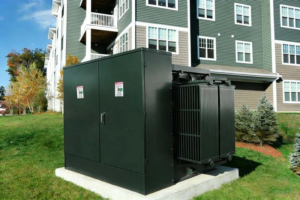
المحولات المثبتة على قاعدة ذات تغذية حلقيّة مقابل تلك ذات التغذية الشعاعية
The loop feed vs radial feed transformer decision starts with the approved network diagram. Choose radial feed when the transformer needs a single feeder connection arrangement. Choose loop-feed provisions when the distribution design requires incoming and outgoing feeder paths or another defined switching arrangement. A loop-feed transformer alone does not guarantee uninterrupted supply, automatic transfer or permission to parallel sources. Zisheng Electric recommends defining the single-line diagram and operating states before selecting the terminal and switch arrangement.
For industrial parks, processing plants and renewable-energy facilities, the purchasing question is often whether a more elaborate connection will improve supply continuity. The answer depends on the whole network: available sources, cable routes, protection, switching devices, operating authority and the load that must be carried after a contingency. The transformer is one component of that decision.
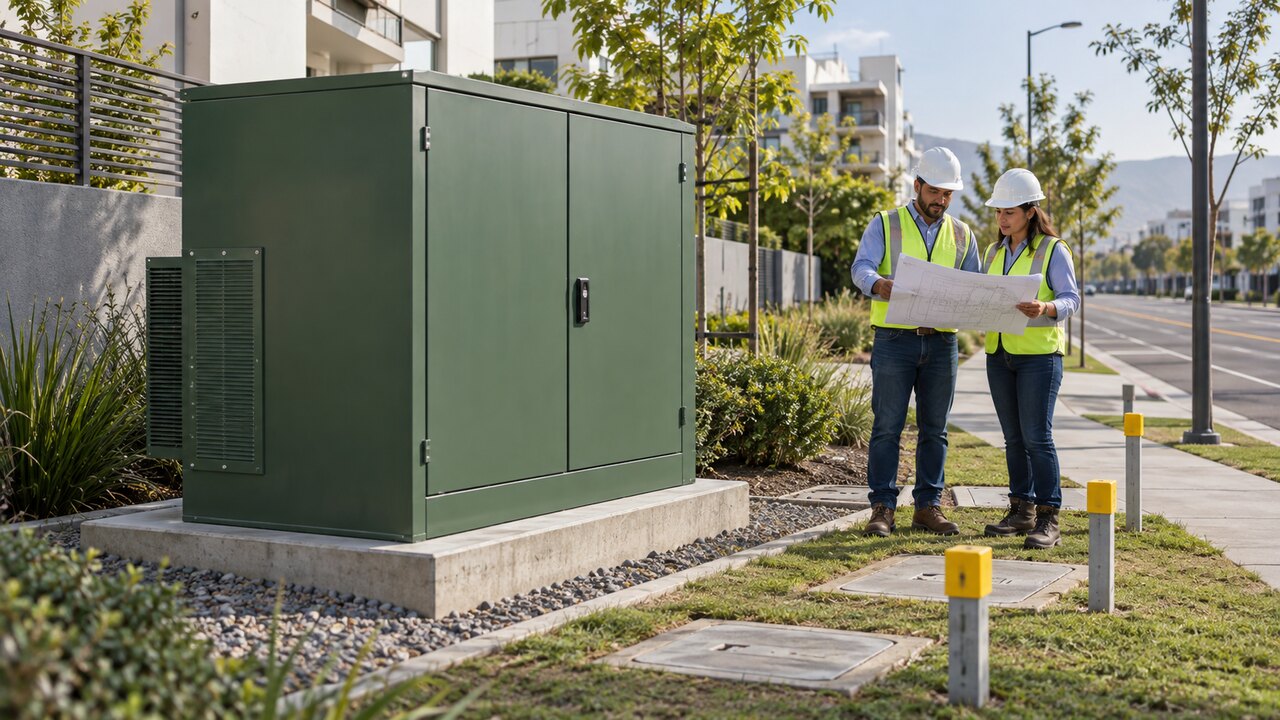
Start with the single-line diagram
A single-line diagram shows the electrical relationships without drawing every conductor. It should identify the supply points, cable sections, transformers, switching devices and normally open connections. Mark the normal state and each proposed contingency state on separate revisions or clearly distinguished diagrams. If the operating states cannot be explained consistently, the equipment specification is not ready for release.
Schneider Electric’s medium-voltage feed arrangement guidance describes typical three-phase radial arrangements with one high-voltage line connection per phase and loop arrangements with two per phase. Its examples also show that neutral connections and switching options require separate consideration. Use the specific approved drawing, rather than a generic bushing count, to establish the supplied arrangement.
Loop feed vs radial feed transformer requirements
| القرار | Radial-feed review | Loop-feed review |
|---|---|---|
| Feeder paths | Confirm the incoming supply and transformer connection | Confirm every incoming, outgoing and transformer branch connection |
| Continuous current | Check the duty of each actual circuit component | Include any through-feeder duty, not only the local transformer load |
| Switching | Identify the upstream and local isolation arrangements | Define each switch’s function, rating and permitted operating states |
| استمرارية الخدمة | Establish the consequence of losing the supply path | Establish which faults can be isolated and which loads can be restored |
| الواجهة المدنية | Coordinate the specified cable entries | Coordinate all feeder cables, entries and required handling space |
The loop arrangement introduces more interfaces to resolve. That can be worthwhile when it supports an agreed restoration strategy. It can also add components and maintenance obligations without delivering useful redundancy if both cable paths depend on the same vulnerable supply point.
Compare local load and feeder duty separately
The transformer kVA rating describes its power duty under the stated conditions. A cable path continuing through a loop arrangement may also supply other transformers downstream. Therefore the engineer must identify the current that each cable, termination, bushing and switch can carry in normal and contingency configurations. Do not select every feeder component from the local transformer current alone.
Provide the load forecast and state which loads transfer after a cable section or supply is unavailable. Ask the designer to check the resulting thermal duty, voltage performance and protection behavior. Those are project calculations. A generic statement that a loop connection provides “extra capacity” does not establish an acceptable contingency rating for either the feeder or the transformer.
Separate restoration from uninterrupted service
A normally open loop can provide another route for restoring some loads after the faulted section is isolated and the approved switching sequence is completed. It does not follow that the affected customers experience no interruption. Restoration time depends on fault identification, access, staffing, switching authorization and the actual automation installed.
Define the required service outcome before purchasing equipment. A process that tolerates a planned interruption and manual restoration has different needs from a process requiring a short automatic transfer or continuously supported critical loads. The latter may require additional switchgear, control, protection or backup-power provisions. Assign responsibility for those elements explicitly; a loop-feed label is not a complete continuity specification.
Eaton’s transformer fundamentals guide illustrates radial and loop network arrangements and the role of an open point. The engineering decision for an actual project still needs its own approved operating and protection study.
Do not confuse loop feed with parallel sources
Two available cable connections do not authorize connecting two sources together. Closing an open point can change fault levels, power flow and protection behavior. The owner and utility must establish which source combinations are permitted and which interlocks or procedures enforce the operating philosophy. A drawing that omits the normal switch positions leaves this central issue unanswered.
Ask the supplier to show switch designations and the connections made in each position. Then reconcile that information with the network diagram. This review is about specifying and approving equipment; live switching instructions must come from the responsible operator and the applicable equipment manuals.
Check the connection system independently
Radial and loop feed do not determine whether the high-voltage terminations are dead-front or live-front. They also do not establish whether a particular connector can interrupt load. State the interface family, current and insulation requirements separately, and obtain compatible component data from the cable and transformer suppliers.
The physical review must include every cable in the final arrangement. Confirm the cable entry window, cable support, bend radius, connector access and door clearance against the selected components. Future feeder extension should be shown as a defined design provision, with clear component and civil requirements, rather than a promise that unused space can always be adapted later.
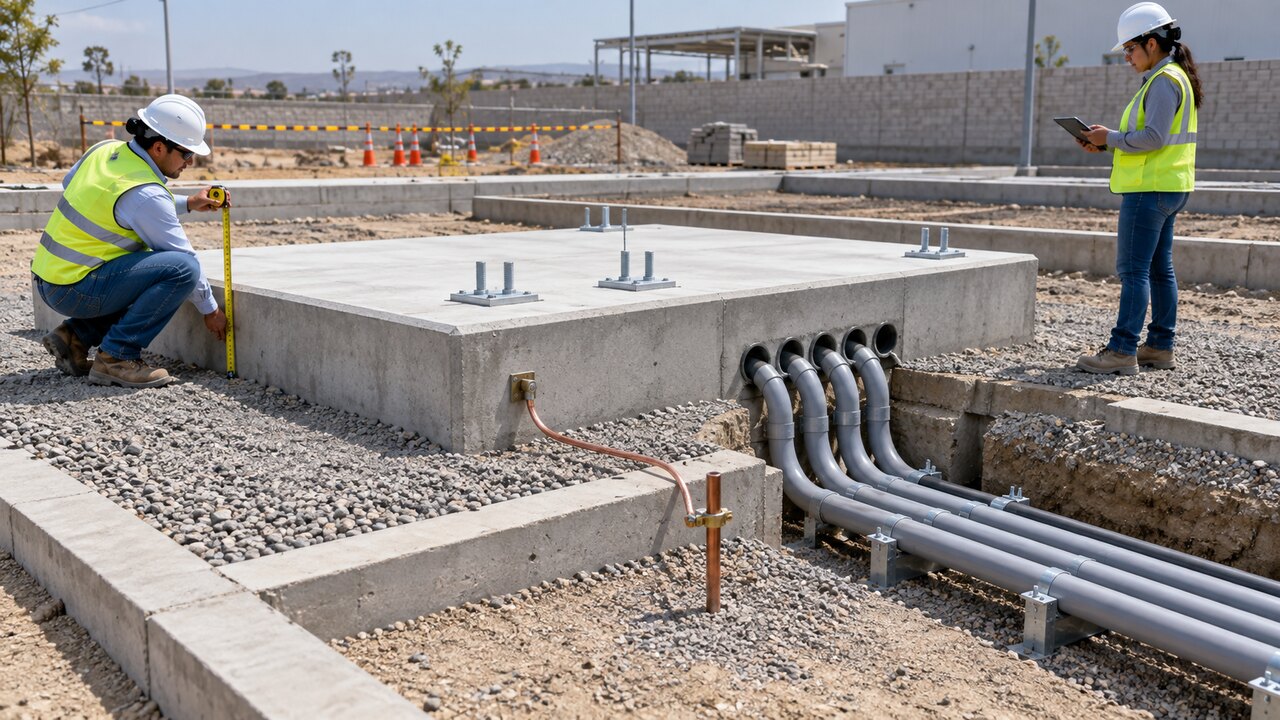
A practical comparison for an industrial expansion
Imagine a plant adding two distribution transformers in stages. This is a hypothetical planning example, with no claimed customer delivery or test result. Procurement should ask the designer for the initial and final network diagrams, the load restored in each contingency and the equipment installed at each stage. A radial first stage might suit the agreed service requirement; loop-capable provisions might be justified if a funded later stage genuinely needs them.
Price the same functional boundary in every bid. Include cables, switches, terminations, protection studies, approved spare components and commissioning documentation wherever the project allocates them. The preferred option is the one that meets the defined operating requirement with an understood implementation cost, not the one with the most elaborate name.
Turn the network decision into an inquiry
محولنا pad-mounted transformer procurement guide explains the broader utility and civil interfaces. For a comparison of available pad-mounted transformer configurations, send Zisheng Electric the normal and contingency single-line diagrams, feeder load information, cable interfaces and the owner’s switching philosophy. Mark every item awaiting utility approval. This makes the loop feed vs radial feed transformer quotation address a defined network duty instead of leaving the switching assumptions unresolved.
عن شركة ZISHENG ELECTRICAL
زيشينغ هي شركة متخصصة ذات خبرة تمتد لأكثر من 19 عاماً في التصنيع والإنتاج المحوّلات المغمورة بالزيت, المحطات الفرعية المدمجة, المحوّلات المركبة على القواعد, المحوّلات المثبتة على الأعمدة و المحوّلات الجافة. نحن نمتلك شهادات ISO/CE/IEC 60076 وTUV Rheinland.
تخضع المحولات لاختبارات FAT واختبار المواصفات النوعية بشكل صارم، وتدعم تخصيص الجهد/السعة. نرحب باستشارتكم بشأن كتالوج و المنتج. يمكنك الاتصال بنا عبر البريد الإلكتروني [email protected].