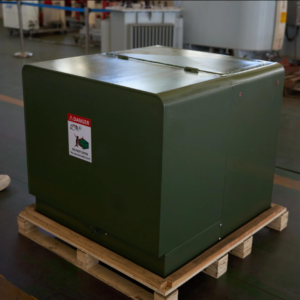
دراسة تزويد المحولات بالطاقة لمشاريع صناعية في الشرق الأوسط
A transformer energization study answers a question that the nameplate cannot: can the available source energize this transformer without unacceptable disturbance to the rest of the plant? Zisheng Electric can provide transformer design information for that assessment, while the EPC contractor coordinates the network model, protection review and operating requirements. For a Middle East industrial project, those interfaces should be settled before the transformer and switching equipment are ordered.
The first energization may take place with an incomplete plant, a temporary source or only part of the permanent network available. Later restoration can present a different condition again. A successful factory test does not establish that every site switching arrangement is acceptable. This guide explains how procurement teams can define a useful study, compare the resulting offers and turn its conclusions into an accountable delivery package.
Frame the transformer energization study around an operating decision
Begin with the decision the report must support. It might be permission to energize from the normal utility connection, selection of a temporary generator arrangement, or approval of a restoration sequence for several transformer bays. State the supply boundary and the equipment that must remain in service during the event. Without that boundary, one bidder may assess an isolated transformer while another includes the adjacent operating plant.
Separate first connection from later restoration
List initial commissioning, planned maintenance return, recovery after an upstream outage and any permitted transfer between sources. Identify which circuit breaker closes in each case and which transformer winding receives the applied voltage. Attach the corresponding single-line diagram revision. Do not assume that the construction-stage supply has the same strength or controls as the permanent connection.
For a regional industrial development, obtain the actual utility connection conditions and the owner’s process constraints. Neither a common regional voltage nor a universal permissible voltage dip is assumed here. An inland site, a coastal installation and an urban industrial campus can have different network arrangements. The study needs the confirmed project data, rather than a country label used as a substitute for an electrical model.
Understand why an unloaded transformer can disturb a loaded bus
When a transformer is connected, its magnetic flux moves from its initial state toward an alternating operating state. The switching instant and residual flux can drive the core into saturation, producing a transient magnetizing current. The secondary load does not need to be connected for this to happen. Consequently, opening outgoing load feeders does not by itself eliminate transformer inrush.
A useful screening exercise considers both current and the associated bus-voltage response. The largest current peak and the most disruptive voltage depression need not identify the same operating case. A source that limits current can still experience a disturbance that matters to contactors, drives or process controls. Ask the study engineer to report the relevant quantities at the actual connection and critical-load buses.
A single rule-of-thumb multiple of rated current is insufficient for a project guarantee. It leaves the switching condition, residual flux, source representation and current definition unspecified. Keep an initial screening estimate clearly separate from a design-specific assessment, and identify which procurement decisions can safely proceed before the detailed model is available.
Request the input data before comparing mitigation prices
The following schedule can accompany the enquiry. Each item has an owner because missing network data cannot be supplied by the transformer manufacturer alone. Agree the required model format and review date before accepting a promise to provide “simulation support.”
| Study input | Evidence and responsible party | Engineering decision supported |
|---|---|---|
| Network configurations | EPC single-line diagrams for normal, temporary and restoration supplies | Define the cases the equipment must accommodate |
| Source representation | Utility or source supplier data, including the applicable operating range and model limitations | Assess voltage disturbance at the connection point |
| Transformer magnetic model | Manufacturer’s saturation representation, core arrangement and assumptions | Avoid treating a linear equivalent circuit as an inrush model |
| Switching behavior | Breaker supplier’s operating characteristics and controller requirements, where relevant | Check whether a proposed controlled-switching solution is feasible |
| Initial magnetic state | Study engineer’s justified residual-flux scenarios and sensitivity method | Expose outcomes hidden by a single favorable starting state |
| Protection and sensitive loads | Approved relay information and equipment ride-through criteria from the relevant suppliers | Evaluate unwanted operation without weakening fault protection |
| Acceptance criteria | Utility and owner requirements with measurement location and evaluation method | Turn waveforms into an auditable pass, fail or open item |
Distinguish guaranteed information from assumptions
Use a data register with a revision, source and confirmation status for every model input. A provisional source equivalent may be adequate for screening but unsuitable for final acceptance. Ask the report author to identify conclusions that would change if that assumption changes. This gives procurement a practical list of hold points instead of a general warning at the back of the report.

Specify a range of credible cases, not one favorable waveform
The study scope should explain how initial magnetic conditions and switching times will be varied. PSCAD’s transformer energization example explicitly varies remanent flux and energization time across multiple runs. That is a useful methodological reference; it is not a ready-made model or acceptance limit for a purchaser’s transformer.
Ask for a case matrix covering the available source configurations, relevant transformer arrangements and the proposed switching sequence. Where other transformers remain connected to the same bus, the study engineer should explain whether their magnetic interaction needs representation. Record any excluded equipment and the reason for excluding it. An unexplained model boundary can conceal the very disturbance the owner is trying to prevent.
Keep unlike current quantities separate
Require clear labels for instantaneous peak current, calculated RMS current and any protection-related quantity. State the winding side and reference base. Report voltage magnitude and recovery against the agreed evaluation method. Comparing an instantaneous current peak in one offer with an RMS value in another creates an apparent commercial advantage with no engineering meaning.
The report should identify the limiting case for each criterion and retain enough information to reproduce it. A collection of attractive plots is less useful than a concise explanation of which assumption controls the equipment choice. For early procurement, request a sensitivity summary showing where additional source or manufacturer data could alter the recommendation.
Keep the acceptance register short enough to use during a bid meeting. For each criterion, record the responsible reviewer, the assessed location, the applicable operating case and the evidence still outstanding. If two offers use different assumptions, return them for clarification before ranking their performance. This is especially useful when a distributor is comparing several manufacturers: a consistent input package makes differences visible without demanding that the buyer become a transient-modeling specialist.
Evaluate the available source before choosing a remedy
If the intended source is a generator or a grid-forming converter, obtain the supplier’s supported transient model and operating restrictions. Continuous power rating alone does not describe its ability to establish transformer flux. The equipment supplier should confirm that the modeled control and limiting behavior correspond to the offered configuration and software revision.
Research on transformer energization from grid-forming inverters evaluates controlled switching and soft energization under different configurations and identifies application limits. Its project relevance is the need to assess the source, transformer and switching arrangement together. A published case study does not establish a universal voltage ramp or inverter size for a new installation.
محولنا Middle East BESS transformer procurement guide covers the wider converter and transformer duty. Use that information to coordinate the steady operating envelope with the separate energization assessment. A source may satisfy the normal loading calculation while still needing a specifically engineered restoration strategy.
Compare mitigation as an installed system
Consider operational arrangements, transformer design options and switching equipment as a coordinated package. Ask each bidder to state the conditions under which its proposal meets the agreed criteria. Include engineering, controls, site integration, maintenance and training in the comparison. A low component price can conceal work that remains with the EPC contractor.
Check controlled-switching compatibility
Controlled switching requires a compatible breaker and an appropriate control strategy. Hitachi Energy’s Switchsync PWC600 information, for example, describes independent pole control and transformer applications using residual-flux handling. This illustrates why a generic instruction to “add a switching relay” is incomplete. Verify the actual breaker, measurement arrangement and controller application with their suppliers.
Where a staged energization sequence is proposed, define the source and bus conditions needed between steps. Do not adopt an arbitrary waiting time from another site. Where a transformer design change is proposed, ask for its effect on losses, dimensions, impedance, cost and delivery. The solution should remain compatible with normal operation, fault duties and the owner’s maintenance capability.

Preserve fault protection while reviewing nuisance operation
Protection acceptance is a separate engineering responsibility within the coordinated study. Provide the proposed relay functions, current-transformer information and relevant switching cases to the protection engineer. Ask that engineer to distinguish security during permitted energization from dependable operation for faults. A recommendation that simply raises a pickup or extends a delay is incomplete without checking the resulting protection performance.
Include upstream devices and sensitive connected equipment in the review boundary where applicable. Document which settings require utility approval and which belong to the plant owner. For a multi-contractor project, assign one party to maintain the approved settings register. The transformer supplier’s study data should support that work without being mistaken for authority to change site protection.
Turn the study into procurement and commissioning evidence
Specify deliverables that remain useful after equipment delivery: the model revision, input register, case matrix, limiting results, open assumptions and accepted mitigation arrangement. Allocate responsibility for updating the assessment when the transformer design, source data, breaker or plant sequence changes. Require a clear statement of whether the final equipment remains within the assessed envelope.
Connect factory records with the site design
Agree which factory records support the model and which require separate explanation from the designer. Routine transformer test results should not be presented as a demonstration of the complete site’s energization behavior. The EPC team should reconcile delivered equipment records with the study before issuing its commissioning release recommendation.
For the broader equipment interface package, see our Gulf industrial transformer procurement guide. Site environmental conditions also remain relevant: confirmed temperature, dust or coastal exposure can affect the selected control cabinets, auxiliary supplies and maintenance arrangements. Specify those conditions for the actual location rather than applying a single regional environmental value.

Issue an enquiry that allows a defensible technical response
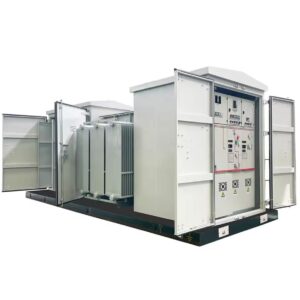
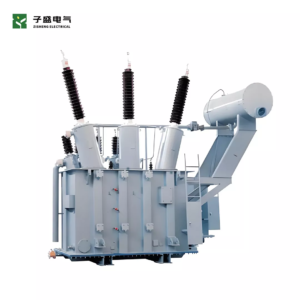
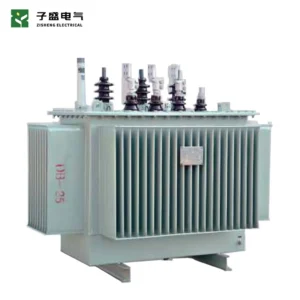
Ask Zisheng Electric to review the proposed transformer duty alongside the study data requirements. Product options can include 35kV and 46kV power transformers or SC(B) series resin-insulated dry-type transformers, according to the project’s confirmed voltage class, rating and installation arrangement. Product-family membership alone does not establish an acceptable energization result.
To prepare a useful transformer energization study enquiry, send drawings, data sheets, the load list, technical specifications and single-line diagrams, together with grid parameters, source information, environmental conditions and installation-site conditions. Identify the permitted switching cases and any unresolved utility inputs. Our engineering team will review the requirements and respond to project inquiries within 24 hours.
عن شركة ZISHENG ELECTRICAL
زيشينغ هي شركة متخصصة ذات خبرة تمتد لأكثر من 19 عاماً في التصنيع والإنتاج المحوّلات المغمورة بالزيت, المحطات الفرعية المدمجة, المحوّلات المركبة على القواعد, المحوّلات المثبتة على الأعمدة و المحوّلات الجافة. نحن نمتلك شهادات ISO/CE/IEC 60076 وTUV Rheinland.
تخضع المحولات لاختبارات FAT واختبار المواصفات النوعية بشكل صارم، وتدعم تخصيص الجهد/السعة. نرحب باستشارتكم بشأن كتالوج و المنتج. يمكنك الاتصال بنا عبر البريد الإلكتروني [email protected].