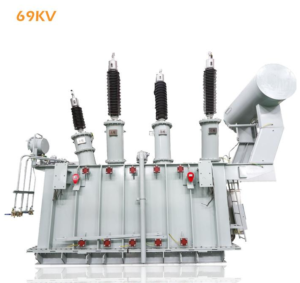
Transformer solutions for Saudi industrial projects: design, compliance and delivery

For industrial projects in Saudi Arabia, from the petrochemical base in Jubail to the seawater desalination plants in Yanbu, and the high-voltage test sites of NEOM City, the test for electrical equipment is far more than just whether the unit can function normally. Extreme high temperatures, sandstorms, grid frequency deviations, local certification barriers, plus transportation restrictions for the final leg from ports to sites — any bottleneck in these links will delay the power energization milestone of the whole project. Today, we will break down several tough, market-specific challenges of Saudi Arabia from the perspective of supply and execution.
1.Ambient Temperature and Heat Dissipation Design — Not a Simple Copy of IEC Standards
Ambient temperatures exceeding 50°C in summer are common across Saudi Arabia, and ground temperatures in some inland regions can even rise above 60°C. The standard service conditions defined in IEC 60076 are normally based on a maximum ambient temperature of 40°C. For certain Saudi projects where technical specifications specify a design ambient temperature of 50°C or higher, temperature rise, cooling capacity and insulation service life must be rechecked, instead of directly adopting design parameters calibrated for standard ambient conditions.
My recommendation: Conduct thermal verification based on an ambient temperature of 50°C. For projects with high ambient temperatures, recalculate the thermal aging margin of the insulation system in accordance with technical specifications where necessary. Solid insulating materials with higher thermal resistance class may be adopted. Long-term thermal aging can be controlled by lowering winding hot-spot temperature, optimizing oil ducts and increasing cooling margin to ensure sufficient allowance for winding hot-spot temperature.
In practical design, we do not simply add radiators at a fixed ratio based on standard models. Instead, thermal calculations are re-performed according to total loss, maximum ambient temperature, permissible temperature rise and cooling mode. For environments of 50°C and above, the heat dissipation area usually needs to be expanded. An ONAN/ONAF combined cooling system may be adopted when needed to reserve extra heat dissipation capacity for extreme high-temperature conditions. Cooling priority goes to ONAN (Oil Natural Air Natural) with switchable forced air cooling, to enable manual heat dissipation reinforcement during extreme heatwaves.
Additionally, for medium and large oil-immersed transformers, we generally equip OTI (Oil Temperature Indicator), WTI (Winding Temperature Indicator) and remote output contacts as specified by the owner’s technical specification. If the equipment connects to SCADA or substation control systems, interface requirements including 4–20mA, RTD or digital communication shall be confirmed at the technical clarification stage. Local on-site display and remote signal transmission have been listed as mandatory clauses in the technical datasheets of numerous Saudi projects.

2. Voltage & Frequency Grid Adaptation — Core 60Hz Redesign
3.Certification Threshold — SABER and SASO Energy Efficiency
Once a Saudi project enters the quotation phase, it is necessary to confirm the corresponding HS Code, applicable technical regulations and SABER compliance route for the equipment. Conformity requirements vary for different product categories, so it is not recommended to arrange certification documents after production is completed.
For equipment requiring product conformity assessment, test reports, technical documents and product information shall be prepared in advance. The specific requirements need to be confirmed with Saudi importers and authorized conformity assessment bodies. The SABER platform supports product registration, certificate filing and Shipment Certificate (SC) application. What often delays the project timeline is the pre-testing, document preparation and conformity assessment, instead of merely the platform submission itself.
The time cost of this procedure is frequently underestimated. Optimistically, it takes 6~8 weeks from sample testing to obtaining the final SC number. The cycle may double if rectification is required due to failed tests. Therefore, our practice is to specify SASO-approved transformer models at the proposal and quotation stage, together with summaries of test reports from similar previous projects.
4. Sea Freight & Inland Transportation — Hidden Weight & Dimension Red Lines
 audi mainstream ports including Dammam, Jeddah and Ras Al-Khair have huge differences in ultra-large cargo lifting capacity and yard space. The transformer supply scheme must strictly match shipping weight, oil-filled state, overall dimensions with port berth parameters and crane rated load.
5.Ingress Protection Grade and Sand & Dust Prevention Design

6.Ingress Protection Grade and Sand & Dust Prevention Design
In sandy and dusty environments, protection design cannot rely solely on a single IP rating. For electrical enclosures such as transformer control boxes, terminal boxes and fan control cabinets, the corresponding IP rating shall be defined in accordance with project specifications. For the transformer main body, key focus shall be placed on sealing structure, bushing external insulation, creepage distance, breather system and dust accumulation on radiators.
For sites with heavy sand and dust, the layout of radiators and fans must also reserve sufficient space for later cleaning. An overly dense filter structure can block sand and dust yet raise wind resistance, which will reduce heat dissipation performance under high-temperature conditions. Therefore, sand prevention and heat dissipation shall be calculated comprehensively rather than handled separately.
Delivery Schedule and Localized Service Commitment
Saudi industrial projects usually have tight construction timelines, while owner approval procedures are extremely lengthy. Our practice is to pre-schedule long-lead critical materials (such as grain-oriented silicon steel, high-voltage bushings and tap changers) immediately after receiving the LOI (Letter of Intent).
Comparison Table of Key Parameters for Transformer Supply in Saudi Industrial Projects
| Supply Stage | Conditions to Be Confirmed for Saudi Projects | Impact on Supply Solution |
|---|---|---|
| Ambient Temperature | Maximum / average ambient temperature of the project | Recheck temperature rise, hot-spot temperature, cooling capacity and thermal aging margin of insulation |
| System Frequency | 60Hz | Verify magnetic flux density, winding design, losses and accessories for 60Hz |
| System Voltage | 13.8kV, 33kV, 110kV, etc., subject to project confirmation | Determine insulation level, transformation ratio, tap range and system interface |
| Energy Efficiency & Compliance | Confirmed by product category, HS Code and project specification | Confirm applicable SASO regulations, testing requirements and SABER route in advance |
| Sand Dust & Environmental Protection | Sand dust, salt mist, humidity, coastal/inland environment | Define enclosure IP rating, sealing, anti-corrosion, creepage distance and radiator design |
| Transportation Conditions | Unit weight, shipping dimensions, road clearance, bridge load capacity | Decide on integral or split shipment and on-site reassembly scheme |
| FAT | IEC + Owner Specification | Define routine tests, type/special tests and third-party witnessing requirements |
| On-site Installation | Lifting, positioning, oil filling and testing conditions | Prepare installation guidance and SAT plan in advance |
| Spare Parts & After-sales | Project warranty requirements and local service conditions | Develop recommended spare parts list, technical support and response plan |
7.Spare Parts Strategy and Long-term O&M Support
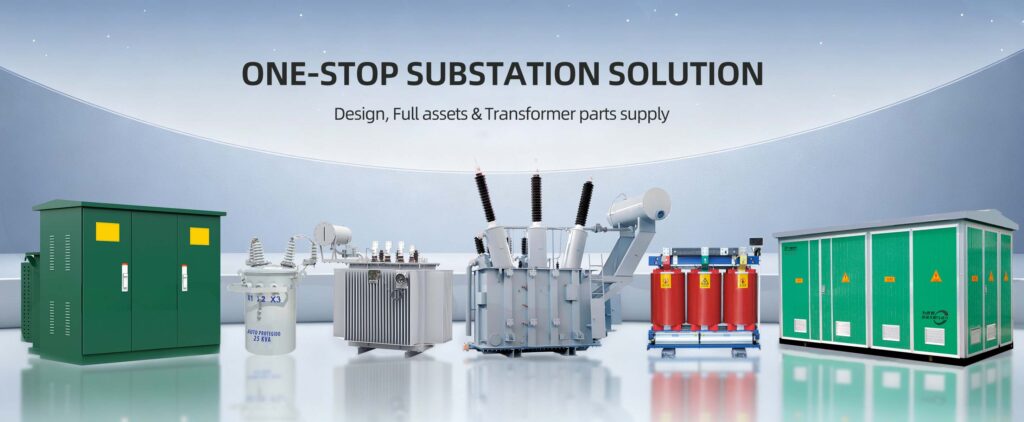
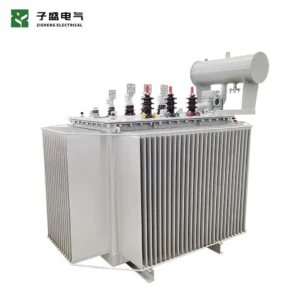
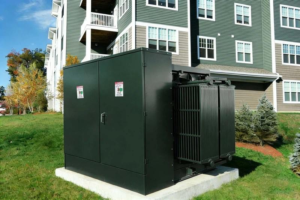
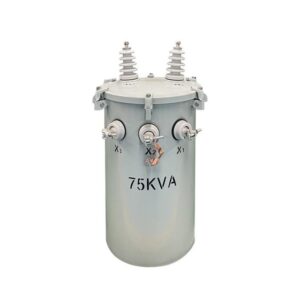
Transformer design life of no less than 30 years is commonly required for Saudi industrial projects, while reliable local spare parts channels are limited in the regional market. Our proposal includes a separate 5-year recommended spare parts list covering consumables such as oil temperature indicators, winding temperature indicators, Buchholz relays, pressure relief valves and secondary terminals of bushing current transformers. Our product portfolio coversOil-Immersed Transformers, Pad Mounted Transformers, Pole Mounted Transformers and Dry Type Transformers. We support IEC-standard design, FAT acceptance and third-party supervision and inspection.
For Saudi industrial projects, the transformer solution should confirm five core aspects at the quotation stage: environmental conditions, system parameters, certification, transportation and on-site services. Problems identified at a later stage will lead to much higher modification costs. Special final confirmation of ambient temperature, 60Hz system parameters and shipping dimensions is recommended before signing the technical agreement.
About ZISHENG ELECTRICAL
Zisheng are a professional 19+ years manufacturer in producing Oil-Immersed Transformers, Compact Substation, Pad Mounted Transformers, Pole Mounted Transformers and Dry Type Transformers. We own the certificates of ISO/CE/IEC 60076 and TUV Rheinland.
Transformers undergo rigorous FAT and type testing, support voltage/capacity customization. Welcome to consult for Catalog and Product. you can contact us at email [email protected].