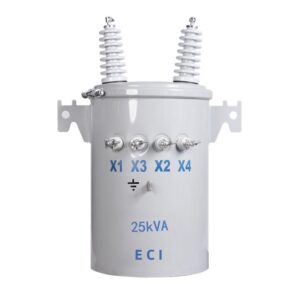
How to Select the Right Power Transformer: Oil-Immersed vs Dry-Type & Key Factors

Having worked in the distribution cabinet industry for over a decade, I can say something that hits home: when purchasing power transformers, focusing solely on price and brand will almost certainly lead to problems. Choosing the wrong model results in a huge hassle and a lot of trouble later on. We’ve seen far too many rework and rectifications on-site due to incorrect model selection, wasting both money and time.
In this article, I will draw on Zisheng Electric’s years of practical experience in the complete electrical system field to break down the classification logic and key selection points of power transformers. I won’t just pile on parameters; I’ll focus on what’s practically helpful for your purchasing decisions.
There is more than one way to classify power transformers.

Many people tend to classify transformers into “oil-immersed transformers” and “dry-type transformers” by insulating medium, which is indeed the most common classification method. However, for actual type selection, multiple dimensions including cooling method, voltage regulation mode and winding material shall be taken into consideration simultaneously.
The table below summarizes the core differences and application scenarios of several mainstream power transformers. It is recommended to skim through it first before reading the supplementary notes that follow.
表格
| Type | Insulation / Cooling Method | Common Capacity Range | Core Advantages | Typical Application Scenarios | Notes for Type Selection |
|---|---|---|---|---|---|
| Oil-immersed Power Transformer (ONAN/ONAF) | Mineral oil insulation, natural oil circulation natural air cooling / forced air cooling | 10 kVA ~ 100 MVA+ | Strong overload capacity, good heat dissipation, high cost performance | Outdoor substations, industrial power distribution, new energy booster stations | Accident oil pit is required; fire separation distance shall comply with requirements |
| Dry-type Power Transformer (Epoxy Resin Cast) | Solid epoxy resin insulation, natural air cooling (AN) / forced air cooling (AF) | 10 kVA ~ 20 MVA | Flame retardant and self-extinguishing, maintenance-free, eco-friendly | Indoor power distribution rooms, metro systems, data centers, high-rise buildings | Sensitive to ambient humidity during operation; higher price than oil-immersed transformers |
| Amorphous Alloy Power Transformer | Amorphous alloy core + oil-immersed or dry-type structure | 10 kVA ~ 3150 kVA | No-load loss reduced by 70%~80% | Rural power grids, photovoltaic power stations, intermittent load scenarios | Weak short-circuit withstand capability, relatively higher noise |
| On-load Tap Changer Power Transformer (OLTC) | Either oil-immersed or dry-type, equipped with on-line tap changer | Not limited | Output voltage adjustable without power outage, high voltage stabilization accuracy | Industrial parks with severe voltage fluctuation, terminals of long-distance power transmission | Remarkably higher cost; regular maintenance of tap changer required |
| Packaged Substation (American / European Type) | Transformer integrated with high & low voltage cabinets in an enclosure | Commonly 100 kVA ~ 5000 kVA | Small footprint, fast installation, factory prefabrication | Temporary power supply, residential communities, urban landscape power distribution | Restricted ventilation and heat dissipation; temperature rise under full load in summer shall be verified |
Oil-immersed or dry-type? It is not an either-or question

Many buyers directly ask, “Which is better, an oil-immersed transformer or a dry-type transformer?” This question itself is flawed. The right question to ask is: “Given the site conditions of my project, which type is more suitable?”
Oil-immersed Power Transformer
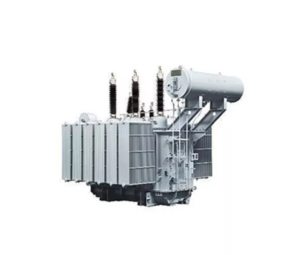
Its strengths lie in heat dissipation efficiency and overload capacity. Mineral oil has a specific heat capacity more than four times that of air. Under the same load conditions, oil-immersed transformers deliver more stable temperature rise control. For outdoor substations, main step-down substations in industrial and mining enterprises, or booster stations for wind and photovoltaic power, oil-immersed transformers remain the mainstream option. Among projects handled by Zisheng Electric, oil-immersed transformers account for the vast majority of large-capacity applications above 3150 kVA.
Dry-type Power Transformer
Its core merit is safety. It contains no flammable liquid, making fire approval easier. It can be installed directly inside power distribution rooms close to load centers. Dry-type transformers are a mandatory requirement for locations with stringent personal safety standards, such as metro platforms, hospital operating rooms and data centers. However, dry-type transformers have environmental prerequisites for operation: workshops with humidity above 85% or heavy dust must be equipped with enclosures or dehumidification measures; otherwise, insulation performance will degrade rapidly.

Does an amorphous alloy transformer really save power?
We get asked this question quite often. The conclusion is clear: its no-load loss is substantially reduced, but only on the condition that the transformer operates under light or no load for a long time.
Take rural power grid irrigation pumping stations as an example. They run at full load for only a few months a year, while the transformer stays mostly unloaded for the rest of the time — in such cases, amorphous alloy transformers deliver remarkable energy-saving benefits. On the contrary, for factories operating three shifts nonstop where the transformer load factor remains 60%~80% all year round, the savings from lower no-load loss cannot offset its higher procurement premium.
Another reminder: amorphous alloy cores have inferior withstand capability against sudden short circuits compared with silicon steel cores. Comprehensive evaluation on operational reliability is required if the power grid suffers severe harmonics or frequent lightning strikes.
When is on-load tap regulation truly necessary?

Voltage Qualification Rate is the core indicator of power supply quality. If the industrial park under your charge hosts multiple large motor manufacturers, the voltage tends to surge during light-load nighttime and drop sharply at full load in daytime. Conventional off-circuit tap regulation cannot resolve this issue at all, since tap positions cannot be adjusted without power outage.
On-load tap-changing power transformers can adjust the transformation ratio in real time via an electrically driven tap changer while remaining energized. This solution costs approximately 20%~30% more than standard transformers. Nevertheless, its overall investment may be lower compared with adding a new set of SVG or STATCOM compensation equipment. This practical insight has been repeatedly verified in our steel plant and chemical project deliveries.
Packaged Substation ≠ Small-sized Transformer
When sourcing packaged substations, do not focus merely on the transformer core. The essence of a packaged substation lies in its compact layout and sheet metal enclosure. American-type packaged substations feature a simple structure with a fuse-load switch combination on the high-voltage side. They are compact and cost-effective, suitable for residential districts and street lighting projects with moderate power reliability requirements. European-type packaged substations are equivalent to a miniature power distribution room integrated inside an enclosure, with fully functional high and low voltage cabinets. They can be equipped with relay protection and automation terminals, making them more suitable for commercial complexes and industrial parks.
Special attention should be paid: the rationality of the internal heat dissipation channel design directly determines the actual output of the transformer under full load in summer. Measured data from one of our projects in South China shows that the same 1000 kVA dry-type transformer can carry 92% of its rated capacity in a well-ventilated European-type packaged substation in summer. In contrast, the identical transformer will trigger an alarm once the load reaches only 78% inside an American-type packaged substation with flawed ventilation design.
Three Easily Overlooked Details for Final Type Selection
When procuring power transformers, three items are frequently omitted in technical agreements yet cause major troubles in later operation:
- Selection of impedance voltage Standard impedance values are 6% or 8%. If your distribution room is close to the upstream substation with high system short-circuit capacity, moderately increased impedance can limit short-circuit current and protect downstream switchgear. It is recommended to calculate the system short-circuit level before finalizing this parameter.
- Vector group Dyn11 and Yyn0 cannot be chosen arbitrarily. Dyn11 performs better with unbalanced single-phase loads, ideal for projects with a high proportion of lighting and office loads. Yyn0 has a simpler structure and slightly lower cost, suited for industrial loads with balanced three-phase power.
- Derating correction for altitude and ambient temperature For areas above 1000 meters above sea level, reduced air density weakens heat dissipation performance. The transformer must operate with derated capacity, or a plateau-rated design shall be specified during ordering. The same rule applies to locations where the annual ambient temperature stays above 40℃.
Recommendations from Zisheng Electric

There is no “best” power transformer, only the “most suitable” one. Comprehensive evaluation combining the project’s load characteristics, installation conditions, investment budget and operating costs carries far more weight than simply comparing a single parameter.
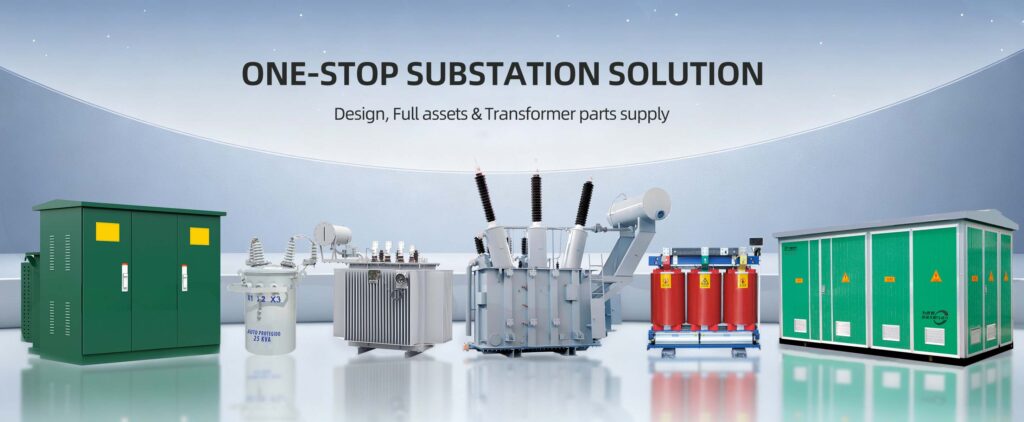
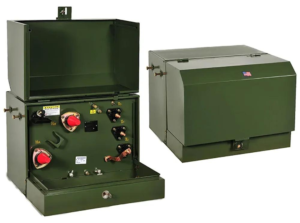
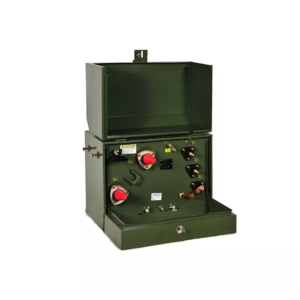
Zisheng Electric’s product portfolio covers Oil-Immersed Transformers, Compact Substation, Pad Mounted Transformers, Pole Mounted Transformers and Dry Type Transformers. We support IEC standard design, FAT (Factory Acceptance Test) and third-party supervision during manufacturing.
Zisheng Electric — Specialized in complete electrical packages and supporting solutions for power transformers.
FAQ
Q: What are the most critical technical parameters when purchasing power transformers? A: Rated capacity, impedance voltage, vector group, insulation class and protection class are the five core parameters. It is recommended to first verify whether these items meet project requirements.
Q: Can oil-immersed transformers still be installed indoors? A: Domestic codes permit indoor installation with strict restrictions. For an oil-immersed transformer with oil volume exceeding 100 kg per unit, it shall be placed in a separate transformer room equipped with emergency oil drainage facilities and a fire alarm system. Confirmation with the local drawing review authority in advance is advised.
Q: How to determine whether a transformer needs replacement or upgrade? A: Replacement assessment is recommended if the transformer operates at a load factor above 85% for a long time with frequent alarms, or if insulation aging tests (such as dielectric dissipation factor) show obvious deterioration. Zisheng Electric can provide site survey and type-selection recommendations.
Q: Can the noise issue of amorphous alloy transformers be resolved? A: Amorphous alloy features greater magnetostriction than silicon steel, resulting in typically 3~5 dB higher noise. Noise can be mitigated by acoustic enclosures or transformers adopting low-noise core technology, but the cost will increase accordingly. Environmental impact assessment in advance is suggested for noise-sensitive projects such as residential areas.
Q: Can Zisheng Electric provide customized transformer solutions? A: Yes. We support non-standard customization for voltage class, overall dimensions, outlet arrangement, protection class, voltage regulation mode and many other specifications. Please contact our technical team for detailed discussion.
About ZISHENG ELECTRICAL
Zisheng are a professional 19+ years manufacturer in producing Oil-Immersed Transformers, Compact Substation, Pad Mounted Transformers, Pole Mounted Transformers and Dry Type Transformers. We own the certificates of ISO/CE/IEC 60076 and TUV Rheinland.
Transformers undergo rigorous FAT and type testing, support voltage/capacity customization. Welcome to consult for Catalog and Product. you can contact us at email [email protected].